If you’ve spent any time shopping for antique beds, you’ve probably heard someone say:
“Don’t those old iron beds squeak?”
It’s a common assumption, but in reality, the opposite is often true.
For more than a century, antique iron beds have earned a reputation for being remarkably solid, sturdy, and quiet. Surprisingly, the beds that are more commonly associated with squeaks, rattles, and movement are often antique brass beds, not antique iron beds.
Understanding why requires a look at how these beds were originally manufactured during the late 1800s and early 1900s. The difference comes down to engineering, materials, and construction methods—areas where antique iron beds had a significant advantage.
Why Noise Develops in Any Bed
Before discussing antique iron beds specifically, it helps to understand what causes noise in a bed frame.
Most squeaks come from one simple source:
Movement between two parts that are supposed to stay rigid.
When components loosen over time, they begin to shift against one another. That movement creates friction. Friction creates sound.
The most common sources of bed noise include:
- Loose bolts
- Worn threaded connections
- Metal rubbing against metal
- Flexing joints
- Movement between rails and headboards
- Weak frame construction
The more moving parts a bed contains, the greater the opportunity for squeaks and rattles to develop.
This is where antique iron beds and antique brass beds begin to differ dramatically.
How Antique Brass Beds Were Constructed
Brass beds became extremely popular during the Victorian Era and remained fashionable into the early 1900s.
Their appeal was obvious.
Polished brass reflected light beautifully and projected wealth and elegance. A high-quality brass bed could become the centerpiece of an entire bedroom.
However, brass presented a manufacturing challenge.
Unlike iron, brass could not easily be used to create large structural castings that would permanently lock bed components together.
As a result, many brass beds relied heavily on:
- Threaded screws
- Bolts
- Mechanical fasteners
- Internal connectors
- Compression fittings
These systems worked well when new.
But decades of use eventually created wear.
Every time someone sat down, rolled over, or got into bed, small stresses were transferred through those mechanical joints. Over many years, the connections could loosen slightly.
Even a tiny amount of movement can create:
- Clicking
- Rattling
- Creaking
- Squeaking
In many cases, when people think of “old beds that squeak,” they’re actually remembering experiences with brass beds rather than antique iron beds.
How Antique Iron Beds Were Engineered Differently
The manufacturers of antique iron beds took a completely different approach.
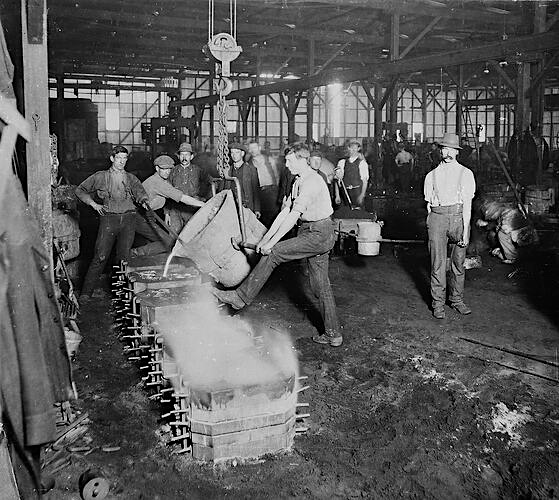
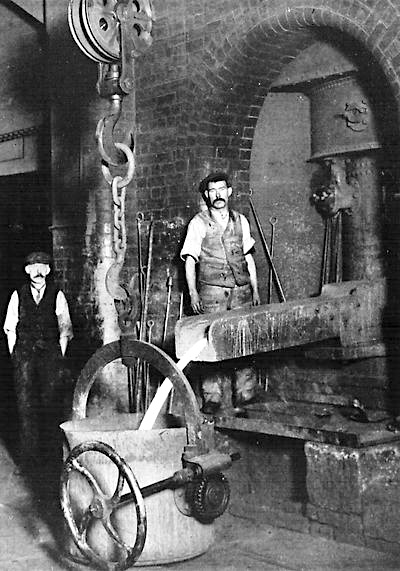
Foundries throughout America—particularly in the industrial regions surrounding Pittsburgh—developed construction methods that emphasized strength and permanence.
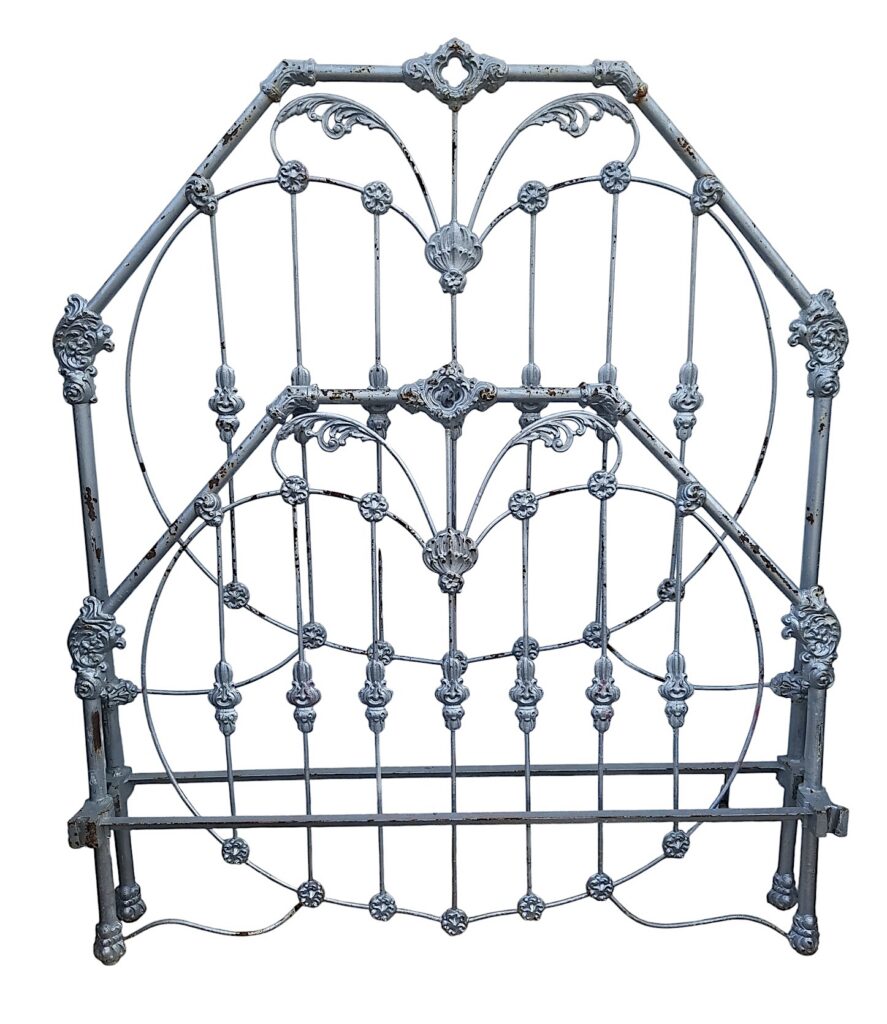
Instead of relying primarily on threaded mechanical connections, antique iron beds incorporated cast iron joints.
Molten iron was poured into molds to create decorative and structural castings, often called “chills.”
These castings served two important purposes:
1. Decorative Beauty
The castings featured detailed designs including:
- Flowers
- Grapes
- Horseshoes
- Butterflies
- Crosses
- Lions
- Scrollwork
- Art Nouveau motifs
These details gave antique iron beds much of their visual character.
2. Structural Strength
More importantly, those castings created rigid connection points throughout the bed.
The cast iron components effectively locked major structural sections together, reducing the opportunity for movement.
The result was a bed frame with significantly less flex than many brass counterparts.
Less movement meant less friction.
Less friction meant less noise.
Why Cast Iron Joints Matter
Think about a house.
If the framing members are securely connected, the structure feels solid.
If every connection depends on bolts that gradually loosen, movement begins to develop.
The same principle applies to antique beds.
Many antique iron beds were built with robust castings and thick-wall iron tubing. Once assembled, the structure behaved almost as a single unit.
 Because the joints remained rigid:
- Components stayed aligned.
- Stress was distributed more evenly.
- Connections resisted loosening.
- Noise-producing movement was minimized.
This engineering advantage is one reason so many antique iron beds remain functional more than 120 years after they were manufactured.
The Difference Between Flex and Rigidity
One of the hidden causes of bed noise is flex.
When a frame flexes under weight, tiny movements occur throughout the structure.
Over time, those movements create wear.
Antique iron beds were generally designed to resist flexing.
The combination of:
- Thick-wall iron tubing
- Heavy castings
- Rigid side rail systems
- Durable hitch mechanisms
created a surprisingly strong structure.
Many original antique iron beds feel exceptionally stable even today.
That rigidity helps explain why owners are often surprised by how quiet these beds remain after more than a century of use.
Why Some Antique Iron Beds Can Still Make Noise
To be fair, not every antique iron bed is completely silent.
Any bed that is over 100 years old can develop issues.
Noise occasionally occurs when:
- Side rail connections become worn
- Replacement hardware is improperly fitted
- Castings have been damaged
- Modern conversions are installed incorrectly
- Loose mattress supports shift during use
However, these issues are usually repairable.
In many cases, the noise is not coming from the original iron bed itself but from later modifications or support systems added decades afterward.
A properly restored antique iron bed is typically far quieter than many people expect.
Why Reproduction Beds Are Different
An interesting comparison can be made between authentic antique iron beds and many modern reproductions.
Today’s reproduction beds are often manufactured using:
- Thin-wall tubing
- Lightweight materials
- Aluminum castings
- Mass-production techniques
While these beds may resemble antiques visually, their structural integrity can be very different.
The thinner materials often allow more movement throughout the frame.
More movement can create more opportunities for noise.
This is one reason many people who have owned both reproduction beds and authentic antique iron beds notice a substantial difference in overall solidity.
The original beds were built during an era when durability was expected.
Manufacturers assumed their products would last generations.
Many succeeded.
Why Antique Iron Beds Have Survived So Long
One of the greatest endorsements of antique iron beds is simply their survival.
Thousands of original examples remain in daily use throughout the United States and abroad.
Think about that for a moment.
These beds have survived:
- Multiple generations of owners
- Household moves
- Changing decorating trends
- Decades of use
- Storage periods
- Renovations
- Cross-country relocations
Yet many remain remarkably sturdy.
Their continued functionality is not an accident.
It reflects the quality of their engineering and construction.
The same rigid design principles that helped reduce noise also contributed to exceptional longevity.
The Marriage of Beauty and Strength
What makes antique iron beds especially appealing is that their strength never came at the expense of beauty.
Victorian and Art Nouveau manufacturers understood that furniture needed to be both functional and decorative.
The elegant castings found on antique iron beds served dual roles:
- They enhanced visual appeal.
- They strengthened the structure.
In modern manufacturing, decorative elements are often separate from structural components.
In antique iron beds, the two frequently worked together.
This combination of artistry and engineering is difficult to replicate today.
A Century Later, Still Doing Their Job
When customers visit Cathousebeds.com, one of the questions that occasionally arises is whether antique iron beds squeak.
The answer often surprises them.
In many cases, authentic antique iron beds are among the quietest bed frames available.
Their construction methods minimized the very movement that creates noise.
Meanwhile, many antique brass beds relied on threaded connections that could loosen over time, making them more susceptible to squeaks and rattles as the decades passed.
This isn’t meant as a criticism of brass beds. Many are beautiful pieces of furniture with tremendous historical value.
But from a purely structural perspective, antique iron beds often enjoyed a significant advantage.
The Lasting Legacy of Antique Iron Beds
The best antique iron beds represent a remarkable period in American manufacturing.
Craftsmen worked with heavy materials.
Foundries produced intricate castings by hand.
Designers blended engineering and artistry into a single piece of furniture.
The result was a bed that offered:
- Beauty
- Strength
- Durability
- Stability
- Longevity
And perhaps one additional benefit that many people don’t realize:
Silence.
More than 120 years after they were built, countless antique iron beds continue to provide solid, dependable service in homes across America.
That durability is one reason they remain highly sought after today.
While decorating styles have changed, quality craftsmanship never goes out of fashion.
And when it comes to antique iron beds, the absence of squeaks may be one of the clearest reminders of just how well these remarkable pieces were engineered in the first place.
Looking for authentic antique iron beds from the 1800s? At Cathousebeds.com, we specialize in original antique iron beds—not reproductions. Every bed reflects the craftsmanship, durability, and timeless beauty that have allowed these remarkable pieces to survive for well over a century.