The Colorful History of America’s Victorian Iron Beds
Ask most people what colors antique iron beds were originally painted, and you’ll probably get one of two answers: black or white.
It’s an understandable assumption. After all, those are the two colors most frequently associated with antique iron beds today.
But the history of their original finishes is considerably more colorful than most people realize.
During my more than 50 years of buying, selling, and restoring original 19th-century American iron beds at Cathouse Antique Iron Beds, I’ve encountered an extraordinary variety of original factory finishes.
Gold, white, black, red, apple green, blue, cream, and numerous combinations of colors all found their way into Victorian bedrooms.
And perhaps the most interesting part of this history is why certain colors became popular in the first place.
The evolution of antique iron bed colors tells us a great deal about changing tastes, manufacturing techniques, household economics, and the remarkable versatility of these beautiful pieces of American furniture.
1. Gold: When Iron Beds Tried to Look Like Brass Beds
 To understand the earliest popular finishes on antique iron beds, we first need to understand their competition.
During much of the Victorian era, brass beds were considered desirable bedroom furnishings. Their warm golden appearance suggested elegance, refinement, and prosperity.
But brass was expensive.
Iron bed manufacturers recognized an opportunity. They could produce attractive, sturdy iron beds at a price that made them accessible to a much larger portion of the population.
There was just one problem.
Many customers still wanted the appearance of brass.
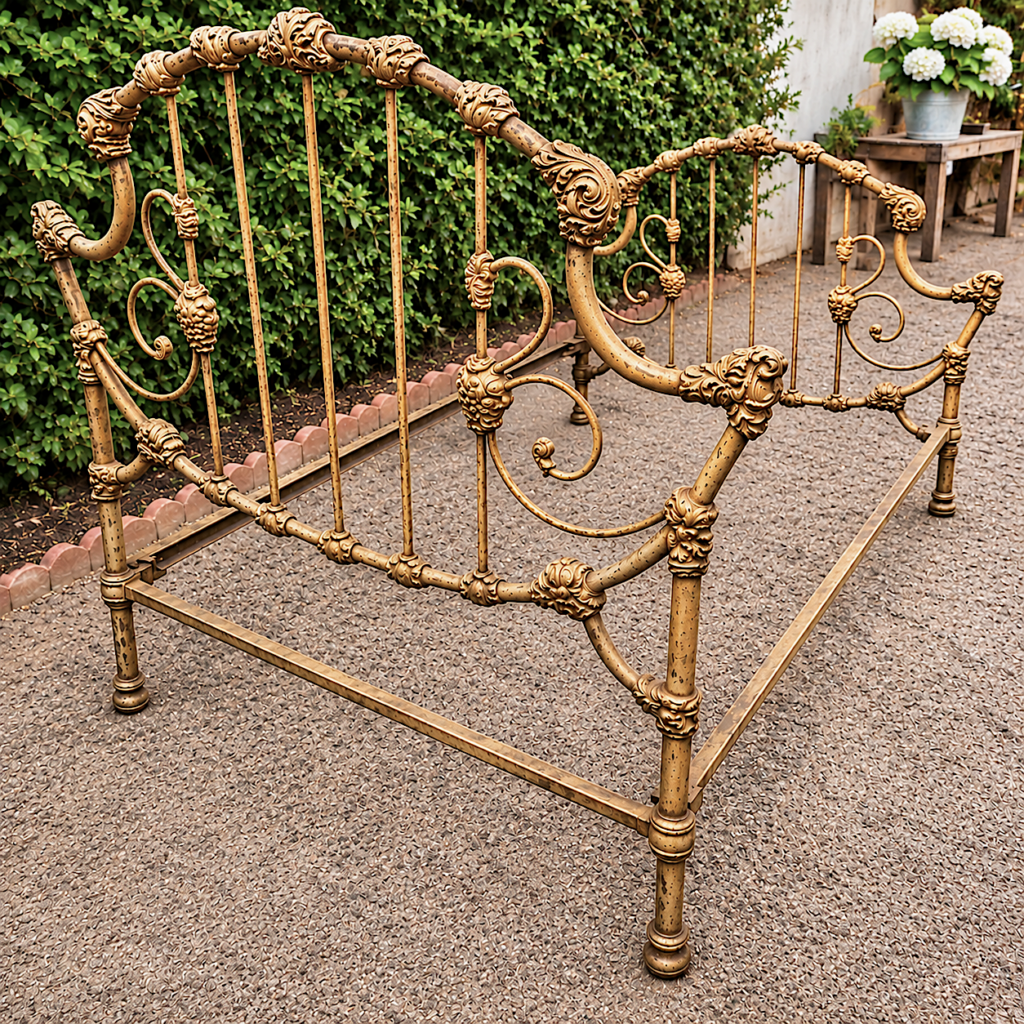
One solution was to paint iron beds in gold-colored finishes that imitated the appearance of their more expensive brass counterparts.
Gold paint, bronze-toned finishes, and metallic gilding effects allowed manufacturers to offer the visual impression of a brass bed without the cost of constructing the entire frame from brass.
The popularity of brass and iron beds was part of a much larger story of American manufacturing and changing household furnishings during the 19th century. Institutions such as the Smithsonian’s National Museum of American History preserve and document this remarkable period of American industrial history. https://americanhistory.si.edu/
Some iron beds also incorporated actual brass components, particularly decorative finials, ornamental rods, and accents.
The combination of iron construction, gold-colored paint, and selective brass decoration could produce an exceptionally attractive bed.
In my years of handling antique iron beds, I’ve encountered original finishes that clearly reflect this desire to capture the appearance of brass.
Today, these surviving gold finishes can be particularly beautiful, especially when decades of wear have softened their original brightness.
They also remind us that the history of iron bed colors didn’t simply begin with black and white.
2. White: A Fresh, Elegant Look for Victorian Bedrooms
 As iron beds became increasingly popular, white emerged as an important and enduring finish.
White iron beds offered a very different appearance from their gold-colored predecessors.
Instead of attempting to imitate brass, they developed an identity of their own.
Their light finish complemented the decorative fabrics, wallpaper, painted furniture, and elaborate bedroom furnishings popular during the late Victorian period.
But these beds weren’t necessarily painted entirely white.
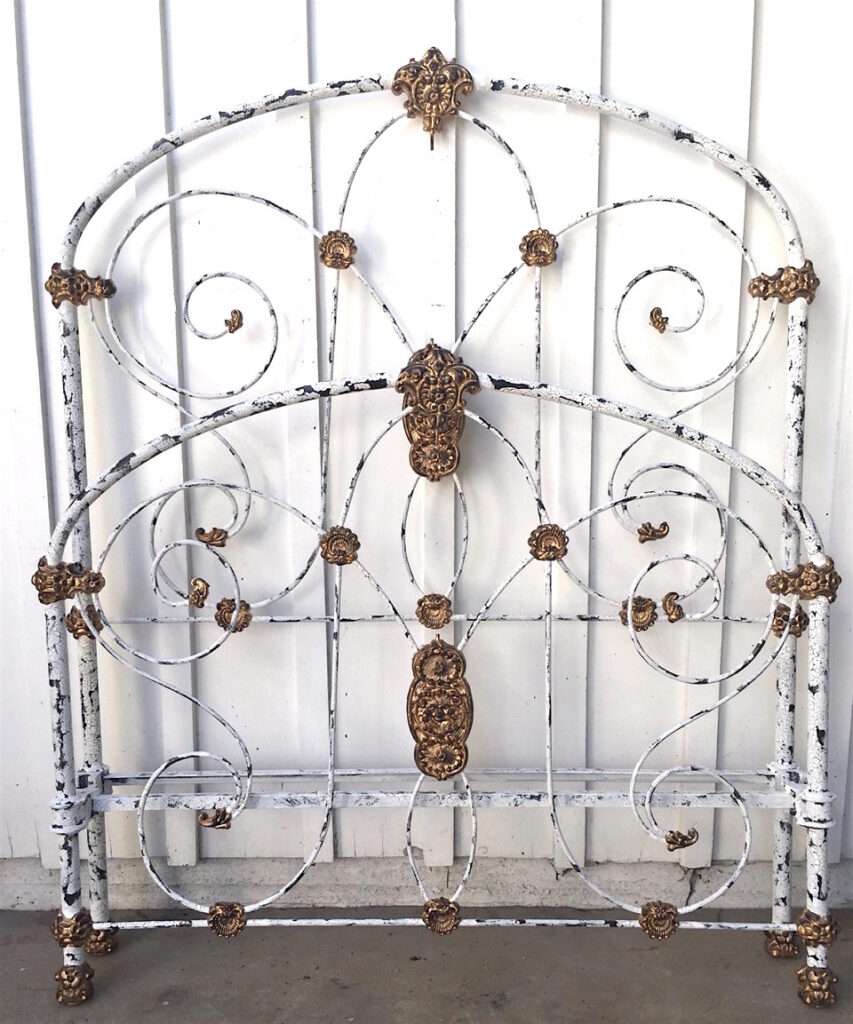
One of the most attractive combinations was a white iron bed with decorative castings highlighted in gold or another contrasting color.
This allowed the intricate cast-iron ornamentation to become more visible.
Consider the amount of craftsmanship that went into manufacturing a decorative corner casting featuring flowers, leaves, scrollwork, or other Victorian motifs.
Painting the entire casting one color could diminish the visual impact of those details.
Highlighting selected areas in gold, however, made the ornamentation stand out.
White also developed associations with cleanliness and freshness, particularly as household attitudes toward sanitation evolved.
For iron bed manufacturers, it was an appealing combination of beauty, practicality, and fashion.
Even today, white antique iron beds remain among the most versatile pieces we offer.
They can look equally comfortable in a traditional Victorian bedroom, a French country interior, or a bright contemporary setting.
3. Black: The Sophisticated Choice Black eventually became another extremely popular color for iron beds.
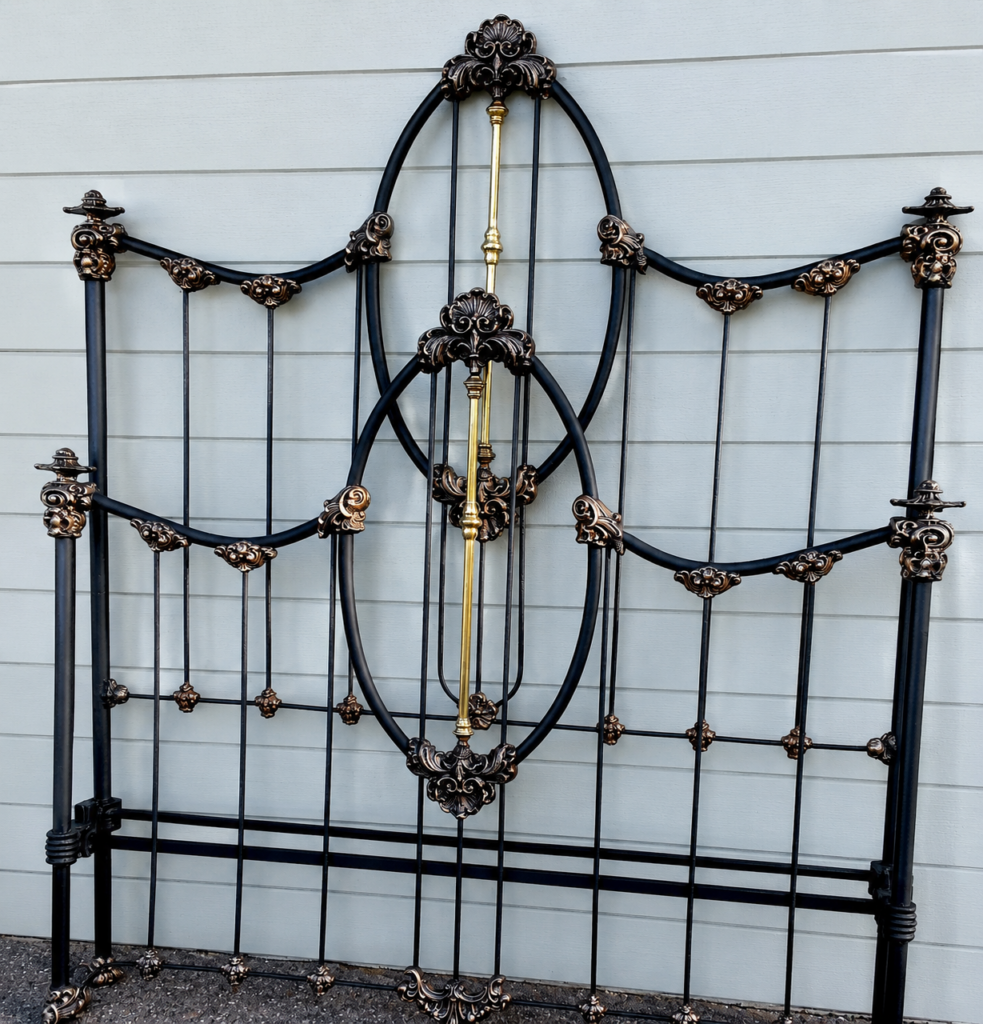 But contrary to what many people assume, it wasn’t the only traditional finish, nor should it automatically be considered the original color of every antique iron bed.
Black offered something quite different from white or gold.
It created a strong, substantial appearance that worked particularly well in darker, more formal interiors.
During the Victorian era, bedrooms could feature richly colored wallpaper, heavy draperies, dark wooden furniture, and elaborate textiles.
Against these surroundings, a black iron bed could look exceptionally elegant.
Black also provided an excellent background for decorative castings.
Manufacturers could highlight those castings in gold, bronze, silver, or another contrasting finish, creating a striking combination.
In fact, some of the most dramatic antique iron beds I’ve encountered have been black with carefully accented ornamental details.
There was also a practical consideration.
Darker finishes could make certain marks and signs of everyday use less noticeable than lighter colors.
Today, black remains one of our most frequently requested finishes, especially for clients seeking a sophisticated or dramatic bedroom design.
But its popularity should never lead us to assume that every old iron bed was originally black.
4. Red: From America’s Farms to Its Bedrooms
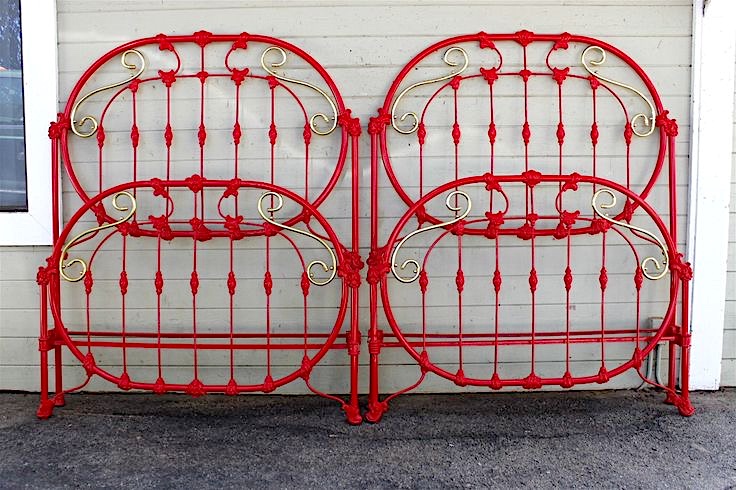 One of the more interesting colors associated with antique iron beds is red.
And the story behind its popularity takes us away from fashionable city bedrooms and into rural America.
For generations, American barns have been associated with the color red.
Why?
Historically, farmers often relied on economical paint mixtures made from readily available materials.
Some traditional red barn paints used iron oxide pigments, commonly associated with red ochre, combined with ingredients such as linseed oil and other locally available materials.
Recipes varied considerably, and the familiar red barn color became associated with affordability, practicality, and protection of wooden structures.
That rural painting tradition offers an interesting connection to red iron beds.
In farming communities, where materials were often reused and household furnishings maintained for generations, red paint could also find its way onto bedroom furniture.
Over the years, I’ve encountered antique iron beds with red finishes that suggest this practical approach to decorating.
In some cases, the red may have been a factory finish. In others, it may have been applied by the owner long after the bed was purchased.
That’s an important distinction.
An old painted finish isn’t necessarily an original factory finish.
Nevertheless, red became part of the colorful history of American iron beds, especially in rural settings where household practicality often mattered more than fashionable decorating rules.
And there’s something particularly appealing about an old red iron bed that has spent generations in an American farmhouse.
Its color becomes part of its story.
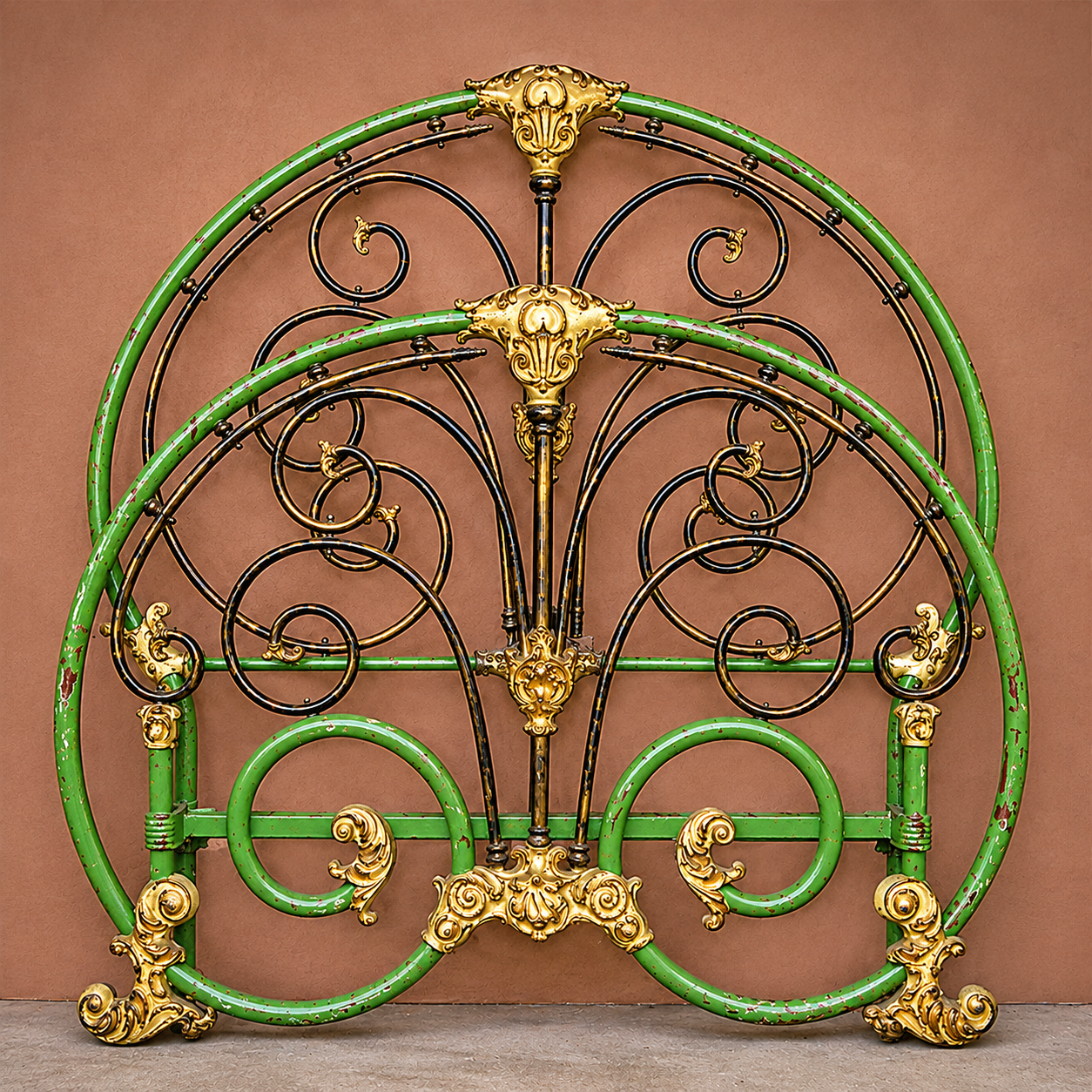
5. Apple Green: A Victorian Favorite
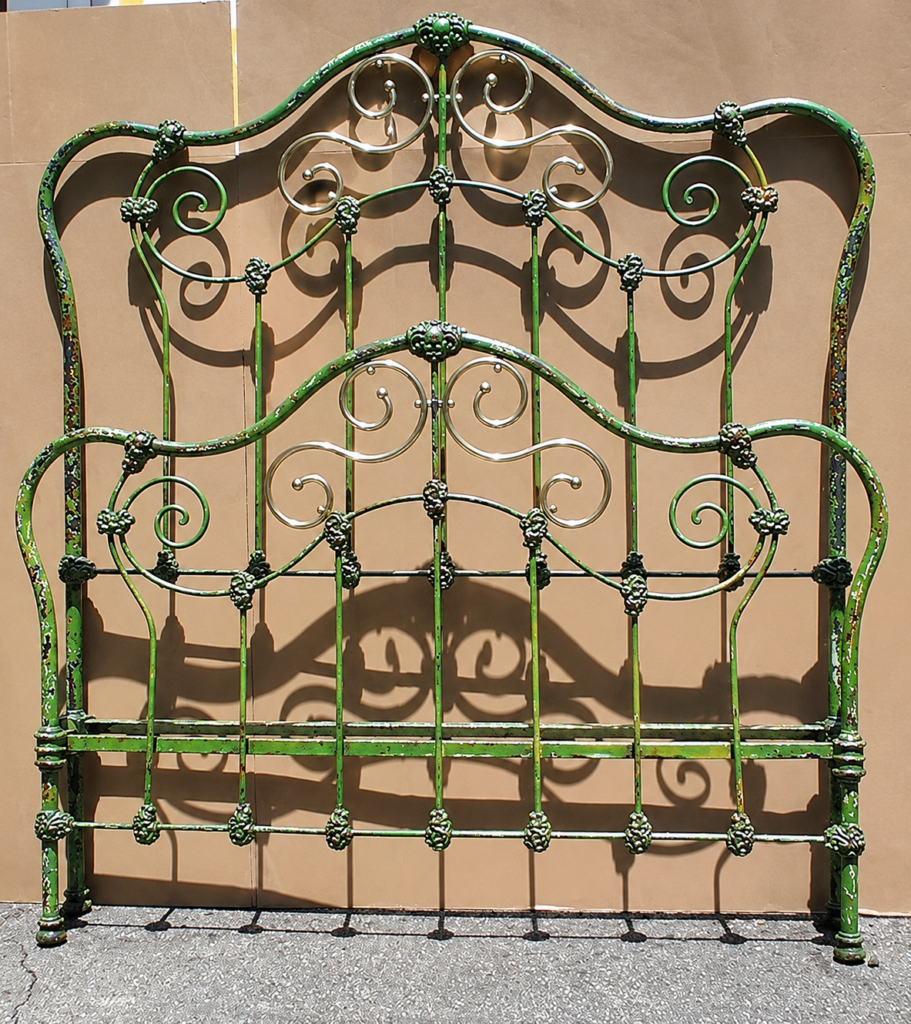 Of all the unusual original colors I’ve encountered during my career, apple green deserves special recognition.
This wonderfully distinctive shade enjoyed periods of popularity and remains one of my personal favorites.
Apple green offered a cheerful alternative to the more conventional colors.
It was light enough to brighten a room but possessed considerably more personality than white.
And when combined with gold-highlighted castings, the results could be spectacular.
I’ve handled antique iron beds with original apple green finishes that were every bit as attractive as more traditionally colored examples.
The color also worked beautifully with the floral patterns, decorative wallpapers, and natural motifs that were so popular in Victorian interiors.
Victorian decorating frequently embraced botanical imagery, including flowers, leaves, vines, and other natural forms.
A green iron bed could complement those surroundings wonderfully.
Today, an antique iron bed retaining its original apple green finish can be especially appealing to collectors and decorators.
The challenge, of course, is finding one whose original finish has survived.
When we encounter an attractive original apple green finish, our preference is generally to preserve it rather than repaint the bed.
After all, why erase a beautiful piece of history?
6. When the Rainbow Opened Up
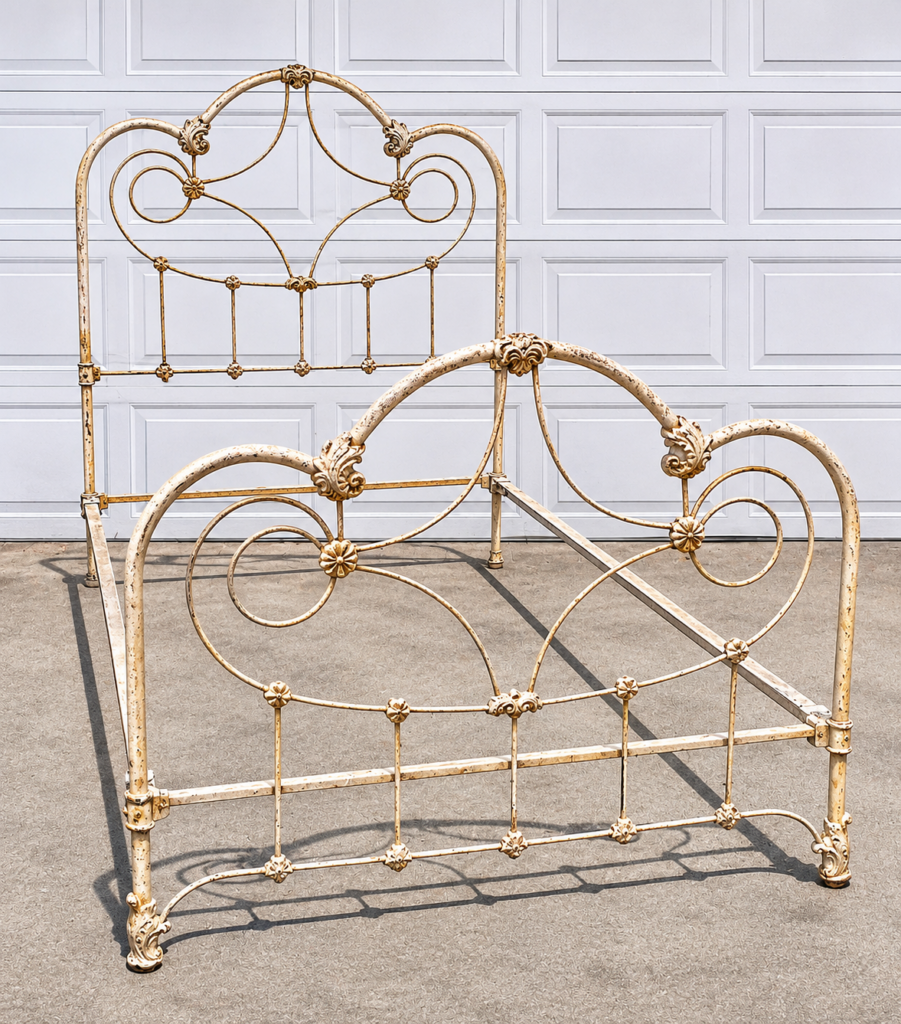 Perhaps the greatest advantage iron beds eventually offered over their brass counterparts was the freedom to choose almost any color.
A brass bed was, for the most part, expected to look like brass.
An iron bed presented an entirely different opportunity.
It could be painted to complement practically any bedroom.
Manufacturers and owners could experiment with blues, greens, reds, creams, yellows, metallic finishes, and combinations of contrasting colors.
The decorative castings themselves provided additional opportunities for artistic expression.
A bed might feature one color on its tubular framework and another on its castings.
Some designs incorporated multiple colors to emphasize flowers, leaves, and other decorative elements.
This flexibility helped establish iron beds as more than simply inexpensive alternatives to brass beds.
They became desirable furnishings in their own right.
And as their popularity expanded, so did the range of finishes available to consumers.
The ability to coordinate an iron bed with virtually any decorating scheme became one of its greatest selling points.
That same advantage remains relevant today.
7. Why Original Factory Finishes Matter
After more than five decades in the antique iron bed business, I’ve developed a tremendous appreciation for surviving original finishes.
There’s something special about finding a bed that still wears the paint applied when it left the factory more than a century ago.
Perhaps the finish has chipped.
Maybe the gold highlights have faded.
There might be areas where the underlying iron has become visible, or where years of use have created a beautiful, irregular patina.
To me, these imperfections aren’t necessarily defects.
They’re evidence of age and authenticity.
An original finish can help tell the story of a bed’s manufacturing history, changing fashions, and generations of ownership.
Of course, not every old finish is original.
Many antique iron beds have been repainted several times during their lives.
Determining whether a finish is original requires careful examination of paint layers, wear patterns, and areas that may have escaped later repainting.
Sometimes the original color can be discovered beneath newer paint.
Other times, a bed’s original finish remains largely intact.
Whenever possible, I believe these historic finishes deserve serious consideration before restoration begins.
A century and a half of history shouldn’t automatically disappear beneath a fresh coat of paint.
8. Choosing Colors for Antique Iron Beds Today
One of the great pleasures of working with antique iron beds is helping clients choose finishes that complement their homes.
Some clients want the traditional elegance of black.
Others prefer the softness of white.
Still others choose aged gold, distressed crackle, sandblasted pewter, or a color matched to their wallpaper, upholstery, or other furnishings.
We’ve even matched bed finishes to decorative elements such as chandeliers and other architectural details.
And that’s perfectly consistent with one of the characteristics that made iron beds so appealing in the first place.
Their versatility.
When an original finish is beyond saving, refinishing can give an authentic antique bed an entirely new life.
The important thing is to preserve the craftsmanship beneath the paint.
The original castings, tubing, decorative shapes, and structural details are what distinguish a genuine 19th-century iron bed from a modern reproduction.
A new finish should enhance those features rather than conceal them.
For clients who prefer an aged appearance, our distressed finishes can provide character without pretending that a newly applied finish is original.
9. So, What Was the Most Popular Color?
Here’s where the answer becomes interesting.
There probably isn’t one single color that can accurately be called the most popular throughout the entire history of American antique iron beds.
Styles changed.
Manufacturers responded to customer preferences.
Regional tastes differed.
And the available colors expanded as iron beds became more established.
Gold-colored finishes reflected the early influence of brass beds.
White became associated with brightness, elegance, and decorative versatility.
Black offered sophistication and contrast.
Red found a place in rural American decorating traditions.
Whether you’re searching for a beautifully preserved original finish or considering a custom color for your bedroom, explore the authentic 19th-century antique iron beds available through Cathouse Antique Iron Beds. https://www.cathousebeds.com/
Apple green and other fashionable colors demonstrated that Victorian bedrooms could be considerably more colorful than we often imagine.
Without comprehensive surviving factory production records, it would be difficult to establish a definitive nationwide ranking of these colors.
But one thing is certain from the many thousands of antique iron beds I’ve encountered during my career:
Black and white tell only a small part of the story.
Final Thoughts: A Colorful Piece of American History
The next time you see an antique iron bed, take a moment to consider its finish.
Was it originally gold, designed to imitate a more expensive brass bed?
Was it white with beautifully highlighted castings?
Was it black, intended for a formal Victorian bedroom?
Or was it one of the many colorful examples that demonstrated the extraordinary freedom iron beds offered their owners?
The answer may reveal more about its history than you expect.
At Cathouse Antique Iron Beds, we’ve spent over 50 years locating, restoring, and preserving authentic American antique iron beds from the 1800s.
We believe their original craftsmanship deserves to be appreciated, and whenever possible, their surviving historic finishes deserve to be preserved.
Because sometimes the most beautiful thing about an antique isn’t how new you can make it look.
It’s how much of its history you can save.
Explore our collection of authentic antique iron beds at CathouseBeds.com.