Why Have Antique Iron Beds Remained Popular for Over 125 Years?
The fascinating story of how Victorian iron beds challenged brass beds—and why their beauty, versatility, and craftsmanship continue to stand the test of time.
Walk into a beautifully decorated Victorian bedroom, a historic country home, or even a contemporary Manhattan apartment, and you may find something that has been around for more than 125 years: an original antique iron bed.
While countless furniture styles have come and gone, antique iron beds have demonstrated remarkable staying power. Their distinctive designs, exceptional craftsmanship, and ability to complement almost any decorating style have kept them desirable for generations.
But their popularity didn’t happen by accident.
During the late 1800s and early 1900s, iron beds emerged as serious competitors to the brass beds that had long represented elegance and prosperity in American bedrooms.
And they offered something brass beds couldn’t easily match: an extraordinary combination of affordability, design versatility, colorful finishes, and structural strength.
Understanding why antique iron beds became so popular more than a century ago also helps explain why original examples remain so desirable today.
1. Affordability: Beautiful Beds Without the Brass Bed Price In the Victorian era, brass beds were frequently associated with wealth and social standing.
 Their gleaming brass tubing, decorative finials, and polished surfaces created an impressive appearance. However, that beauty often came with a substantial price tag.
Brass was expensive, and manufacturing a bed with extensive brass components added considerably to its cost.
For many American families, purchasing an elaborate brass bed simply wasn’t practical.
Antique iron beds offered an attractive and significantly more affordable alternative.
Iron was more economical to manufacture, and American foundries were becoming increasingly efficient at producing iron furniture.
Families who might never have considered purchasing an expensive brass bed could now afford an iron bed with beautiful scrollwork, elaborate castings, and graceful Victorian styling.
Manufacturers also understood that many customers still admired the appearance of brass.
Their solution was ingenious.
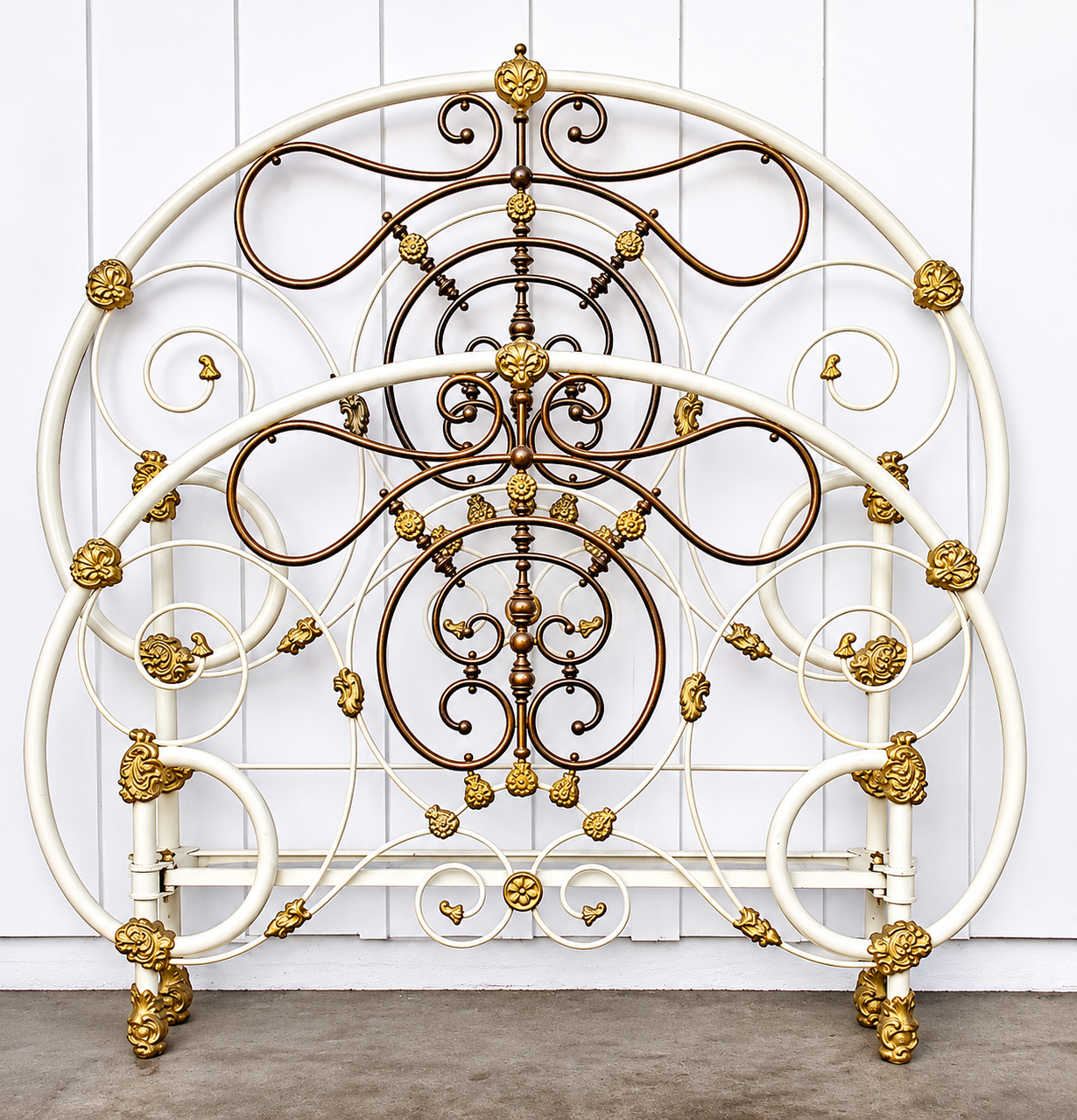
Rather than constructing an entire bed from expensive brass, they incorporated small brass accents into iron beds.
Brass finials, decorative knobs, short brass spokes, and occasional brass tubing provided the visual appeal of brass without the expense of an entirely brass bed.
Some manufacturers used these accents sparingly, while others incorporated them throughout their designs.
The result was an enormous variety of attractive beds available at prices that appealed to a much broader market.
Iron beds were no longer simply practical bedroom furniture. They could be beautiful, fashionable, and affordable at the same time.
2. Design: Iron Beds Opened the Door to Extraordinary Creativity
 Perhaps the most visually striking advantage antique iron beds had over brass beds was the freedom they gave manufacturers to create elaborate designs.
Brass beds certainly had their own elegance, but their construction generally favored relatively straightforward arrangements of tubing, connectors, and decorative components.
Iron beds allowed manufacturers to explore a much wider range of shapes and patterns.
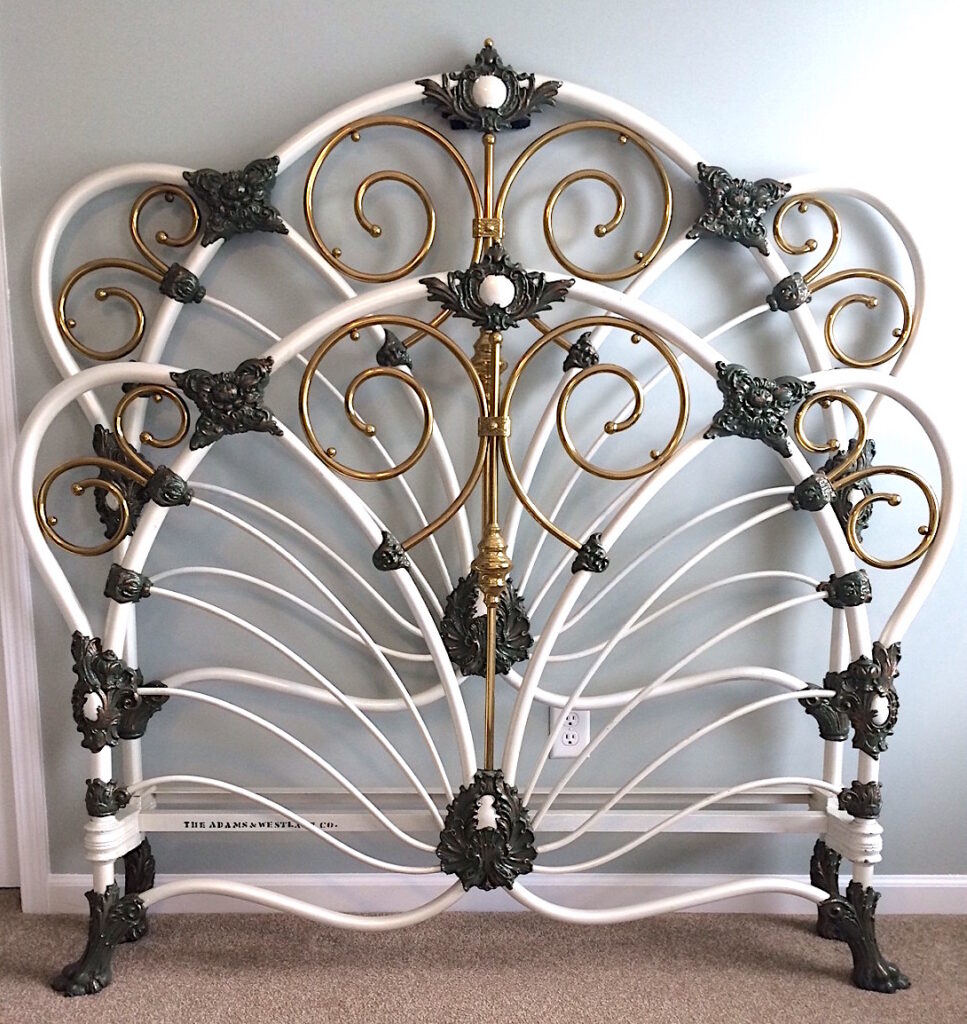
Graceful arches, sweeping curves, delicate scrollwork, floral motifs, and elaborate ornamental castings became defining characteristics of Victorian iron bed design.
The secret was the combination of iron tubing, shaped rods, and cast iron.
Manufacturers could bend iron rods into intricate patterns and permanently secure them using molten cast iron poured into molds around the connecting components.
Once cooled, those castings formed rigid connections that held the decorative elements together.
This manufacturing method allowed iron bed designers to create remarkable combinations of strength and artistry.
Some beds featured simple, understated arches. Others incorporated elaborate floral castings, intricate scrollwork, and decorative details extending across the entire headboard and footboard.
Manufacturers competed to introduce designs that would distinguish their products from those of competing foundries.
The resulting variety was extraordinary.
Even today, after more than 50 years of working exclusively with original antique iron beds, we continue to encounter unusual designs that demonstrate the imagination of those early manufacturers.
Unlike modern mass-produced furniture, many of these beds have an unmistakable individual personality.
That individuality is one of the reasons interior designers continue to appreciate them.
An original antique iron bed isn’t merely a place to sleep. It can become the architectural centerpiece of an entire bedroom.
3. Color: The Decorating Advantage That Changed Everything
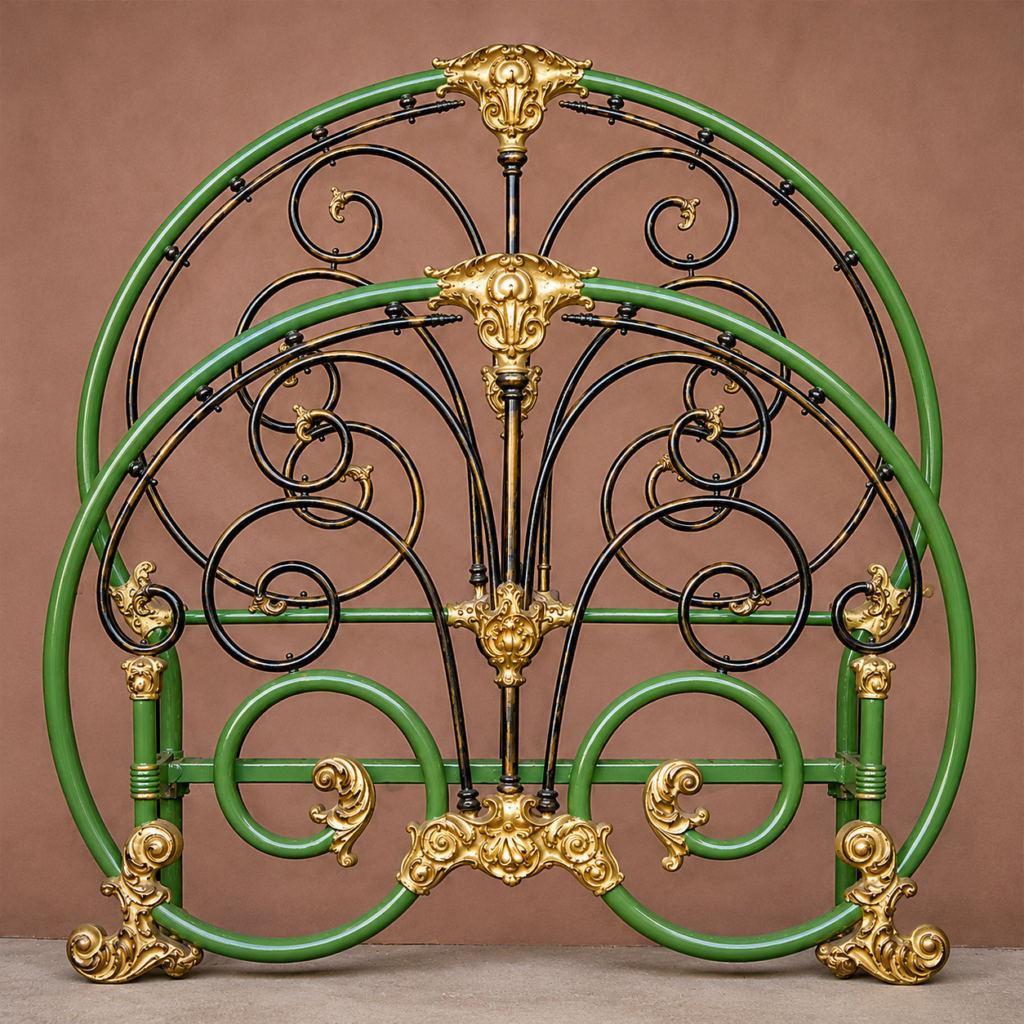 One of the most misunderstood aspects of antique iron beds concerns their original finishes.
Many people assume that Victorian iron beds were manufactured primarily in black or white.
Nothing could be further from the truth.
One of the greatest advantages iron beds offered was their ability to be painted in an almost unlimited variety of colors.
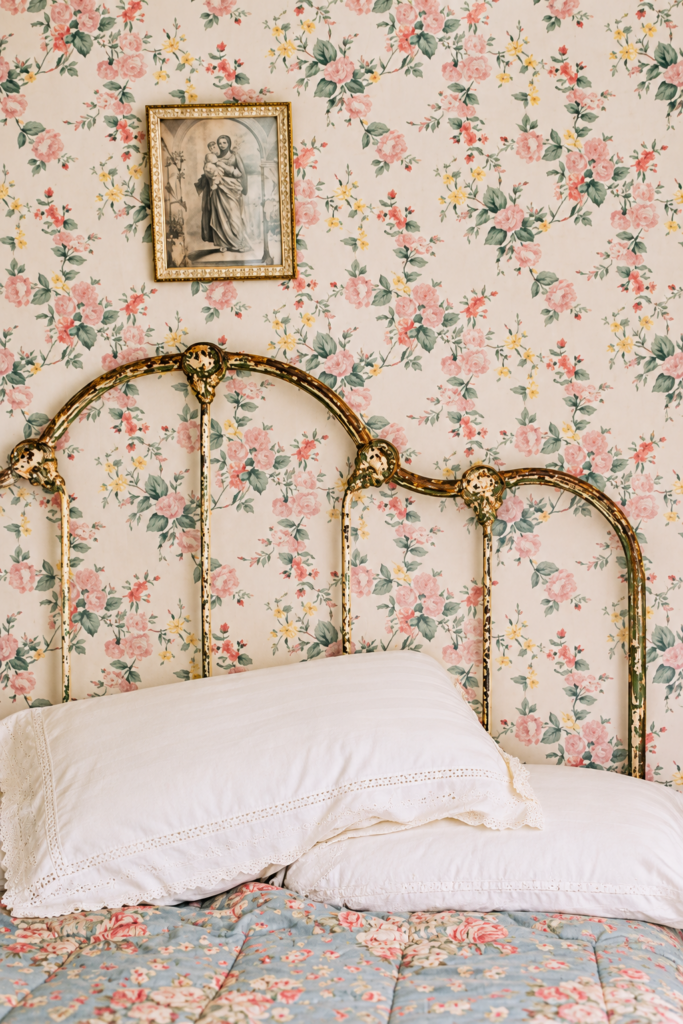 While brass beds were generally purchased for their characteristic metallic appearance, iron beds could be finished to complement virtually any bedroom.
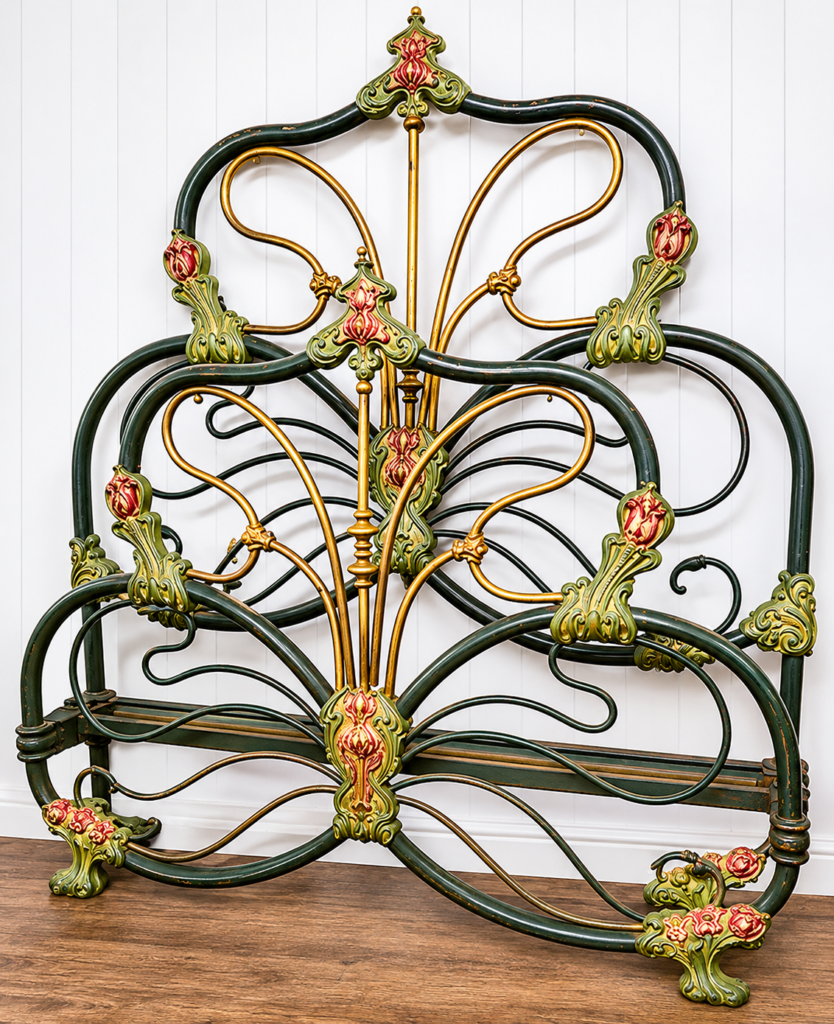
Victorian manufacturers offered colors that included greens, creams, blues, reds, browns, and numerous other decorative shades.
Some finishes were subtle and understated. Others were remarkably colorful.
Manufacturers could also highlight individual castings with contrasting colors, decorative gilding, or metallic accents.
Imagine a Victorian bedroom with patterned wallpaper, richly colored fabrics, elaborate draperies, and ornate furnishings.
An iron bed could be painted to coordinate beautifully with that setting.
A soft green bed might complement floral wallpaper. A cream-colored bed could brighten a smaller room. A richly colored finish with gilded castings could become a dramatic focal point.
This flexibility gave iron beds an enormous advantage.
And that advantage continues today.
At Cathouse Antique Iron Beds, we’ve worked with designers who wanted an original bed’s finish coordinated with everything from antique chandeliers and decorative fabrics to wallpaper and existing architectural details.
Sometimes that means creating a carefully selected custom finish.
Other times, the most beautiful choice is preserving the bed’s original distressed paint.
We particularly appreciate beds that retain their original colors, worn surfaces, and naturally aged finishes.
Those imperfections tell a story.
The small chips, subtle oxidation, faded paint, and accumulated patina represent generations of use and more than a century of history.
Why erase 150 years of character when that character is precisely what makes an antique so special?
4. Construction: Why So Many Antique Iron Beds Are Still Rock Solid
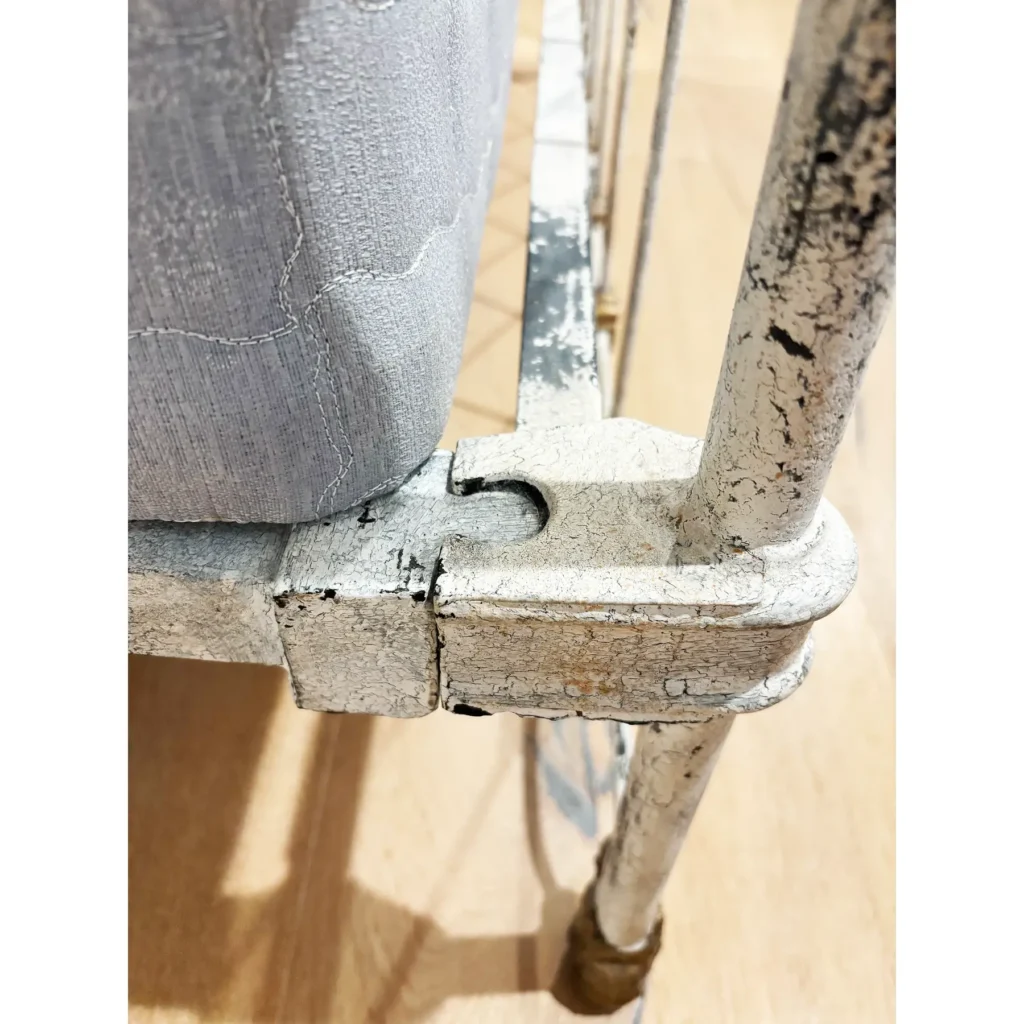 Beautiful design and colorful finishes helped make antique iron beds popular, but their construction played an equally important role.
One common complaint associated with older brass beds was squeaking.
Many brass beds relied on mechanical connectors, threaded fittings, and fasteners to join their various components.
Over time, repeated movement could loosen those connections.
When metal components began rubbing against one another, the result could be unwanted noise, movement, and instability.
Traditional American antique iron beds were constructed differently.
Their decorative rods and tubing were commonly joined through cast iron connections formed during manufacturing.
Rather than relying on numerous threaded fasteners throughout the headboard and footboard, the principal decorative components became part of a rigid structure.
The result was a remarkably strong assembly.
Many original American iron beds also incorporated heavy-gauge tubing and substantial castings.
Their construction was designed to withstand years of everyday use.
Another important feature was the method used to attach the side rails.
Many antique American iron beds utilized a tapered, self-tightening hitch system.
Instead of ordinary bolts holding the rails to the headboard and footboard, specially shaped rail ends fitted into corresponding receivers.
When properly assembled, the weight of the bed and mattress helped seat these connections securely.
This ingenious arrangement contributed to the stability of the bed while allowing it to be disassembled for moving.
Of course, any antique bed should be carefully inspected, particularly its rail connections and original castings.
After more than a century, damage, missing components, or improper alterations can affect structural integrity.
Nevertheless, the number of original iron beds still in daily use is an impressive testament to the quality of their construction.
Furniture manufactured more than 125 years ago is still supporting modern mattresses and providing comfortable nights of sleep.
That’s a remarkable achievement.
5. American Foundries and the Rise of the Victorian Iron Bed
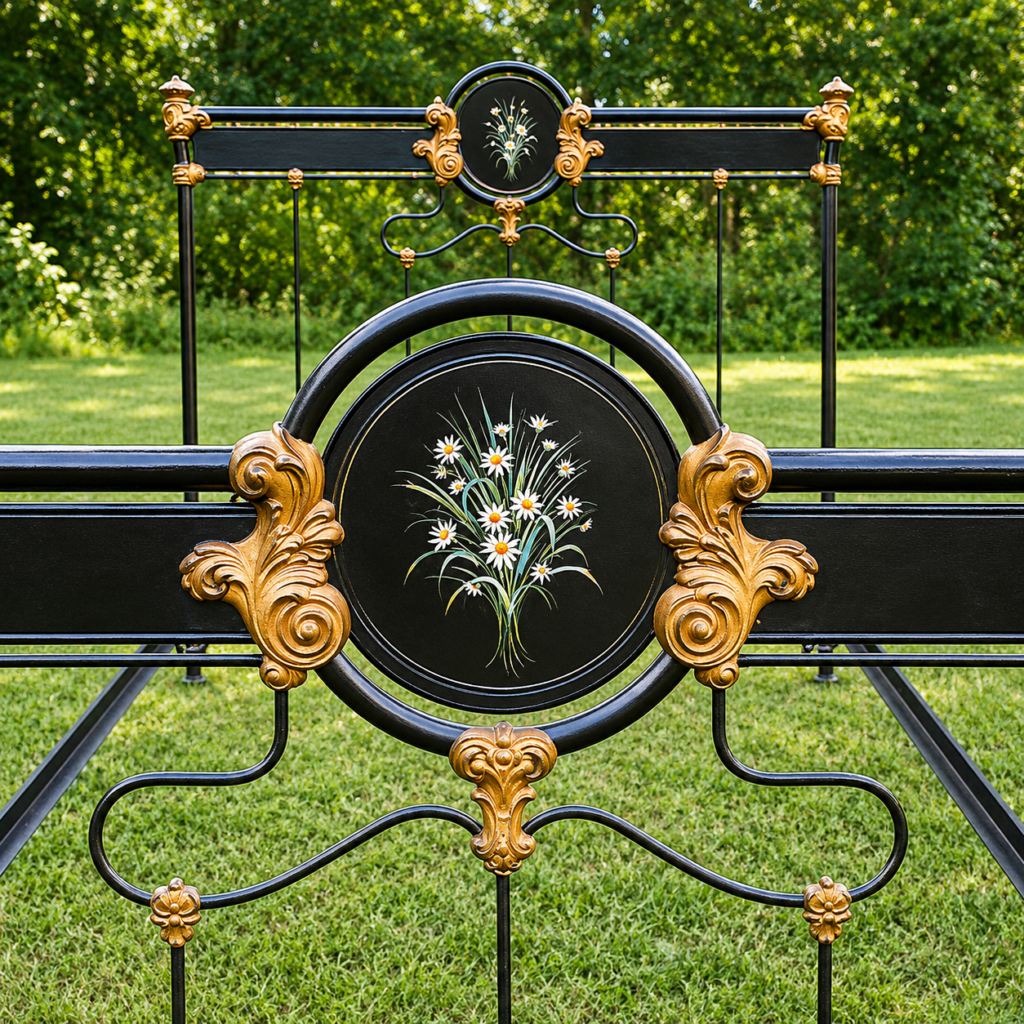 The growing popularity of iron beds coincided with an extraordinary period of American industrial expansion.
During the late nineteenth century, advances in iron production, metalworking, and manufacturing helped make decorative iron furniture more widely available.
Industrial centers around Pittsburgh, Chicago, and other manufacturing regions supported the development of companies producing beds for an expanding American market.
The growth of rail transportation also helped manufacturers distribute their products to communities far beyond the cities where the beds were produced.
Furniture catalogs and retail merchants introduced consumers to an increasingly diverse selection of iron bed designs.
Customers could choose from relatively simple, affordable models to elaborate examples featuring substantial castings and decorative metalwork.
Some manufacturers became particularly creative.
The Art Bed Company of Chicago, for example, produced beds with distinctive round metal panels that could feature decorative floral artwork.
Surviving examples retaining their original painted decoration are especially interesting because they demonstrate how manufacturers combined metalworking with decorative art.
Unfortunately, many of these original finishes were painted over during subsequent generations.
Today, finding an antique iron bed that retains unusual original decoration can be a genuine pleasure.
These surviving examples remind us that Victorian iron beds were not simply utilitarian products.
They were an important expression of American furniture design and manufacturing ingenuity.
6. Why Antique Iron Beds Remain Popular in Today’s Bedrooms
The reasons antique iron beds became popular during the Victorian era are surprisingly similar to the reasons people continue purchasing them today.
Their open designs allow them to work beautifully in rooms where heavier wooden furniture might appear overwhelming.
Their graceful lines complement traditional interiors, while simpler designs can be equally effective in contemporary spaces.
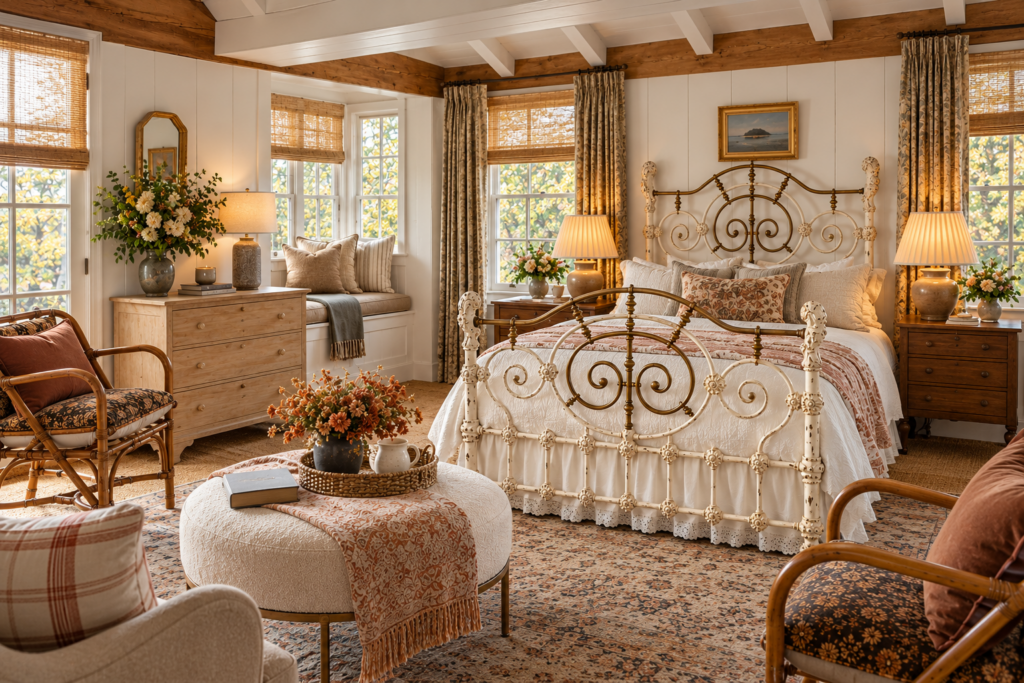
An elaborate Victorian iron bed can look magnificent in a historic home, yet that same bed might create a wonderful contrast in a modern loft or an otherwise understated bedroom.
Their versatility extends beyond decorating styles.
Original antique iron beds were generally manufactured in the mattress sizes common to their period, including twin, three-quarter, and double.
Queen and king mattress sizes did not become standard options until much later.
Today, specialized conversions can allow selected original antique double beds to accommodate modern queen or king mattresses while preserving their distinctive headboards, footboards, and original design details.
This has opened another chapter in the history of antique iron beds.
Beds originally manufactured for Victorian homes can now serve as centerpieces in spacious modern bedrooms.
And perhaps most importantly, an authentic antique iron bed offers something no reproduction can truly duplicate.
History.
Every original casting, decorative curve, and surviving finish represents craftsmanship from an earlier American generation.
These beds have passed through families, moved between homes, and witnessed more than a century of changing lifestyles.
Yet their beauty remains.
A Century and a Quarter Later, the Appeal Hasn’t Faded
 When antique iron beds began challenging the popularity of brass beds in the late 1800s, their success was based on practical advantages.
They were more affordable, offered greater decorative variety, could be painted in virtually any color, and featured exceptionally strong construction.
Those advantages helped establish iron beds as an important part of American bedroom furniture.
More than 125 years later, their appeal has evolved from practical necessity to an appreciation of authentic craftsmanship, distinctive design, and historical character.
At Cathouse Antique Iron Beds, we’ve spent over 50 years specializing exclusively in original antique iron beds from the 1800s.
We continue to believe that their greatest beauty lies not simply in how they look, but in the remarkable history they represent.
Trends come and go. Genuine craftsmanship never goes out of style.
And perhaps that’s the best explanation for why antique iron beds have remained popular for so long.
Explore our collection of original antique iron beds at Cathouse Antique Iron Beds, where Victorian craftsmanship continues to find a place in today’s homes.