When people first discover antique iron beds, they tend to look at the obvious things.
The shape. The color. The brass. The castings. The amount of decoration.
After more than 50 years of buying, selling, restoring and taking apart antique iron beds, I’ve learned to look at something else first:
How was the bed actually made?
That’s where things get interesting.
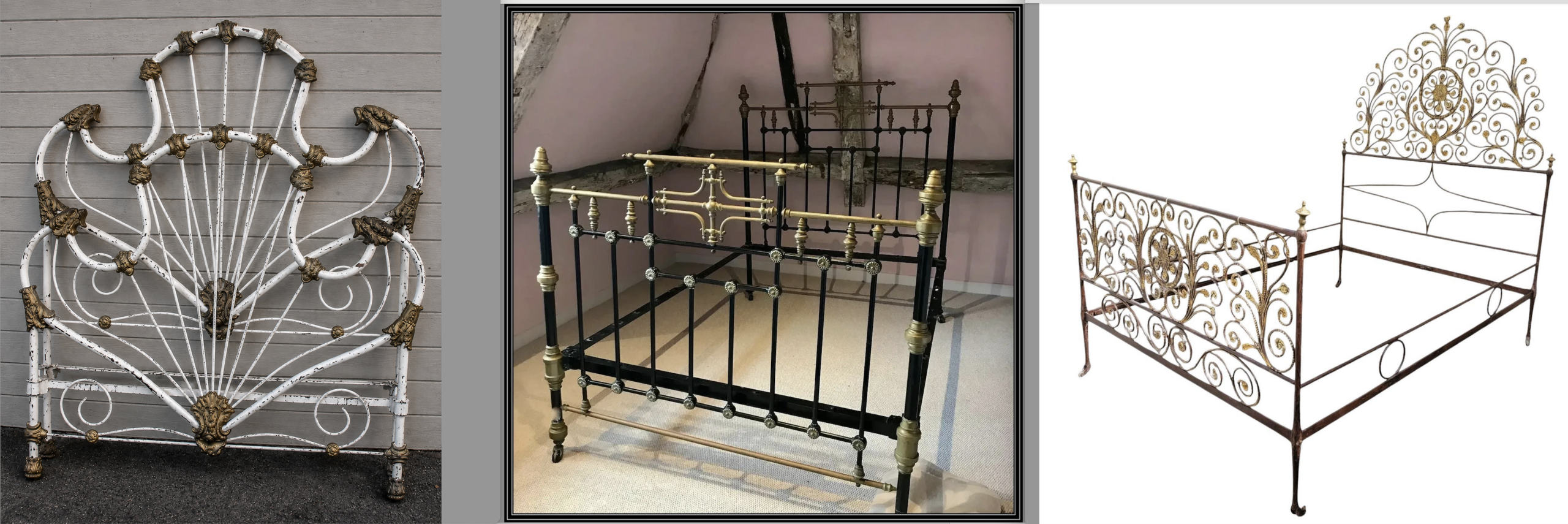
England, France and the United States all produced beautiful iron beds, and each country developed its own recognizable approach to their manufacture. English beds could be wonderfully decorative. French beds frequently possessed an unmistakable lightness and elegance. American beds ranged from extraordinarily simple to almost unbelievably elaborate.
But if the question is strictly about construction, strength, engineering and longevity, my experience has consistently led me in one direction.
The American-made antique iron bed was generally the best constructed of the three.
That doesn’t mean every American bed was superior to every English or French bed. Far from it. Each country produced different grades and qualities, and exceptional examples exist from all three.
But there were fundamental differences in the way these beds were manufactured—and those differences become very apparent 100 to 150 years later.
England Helped Establish the Iron Bed Tradition
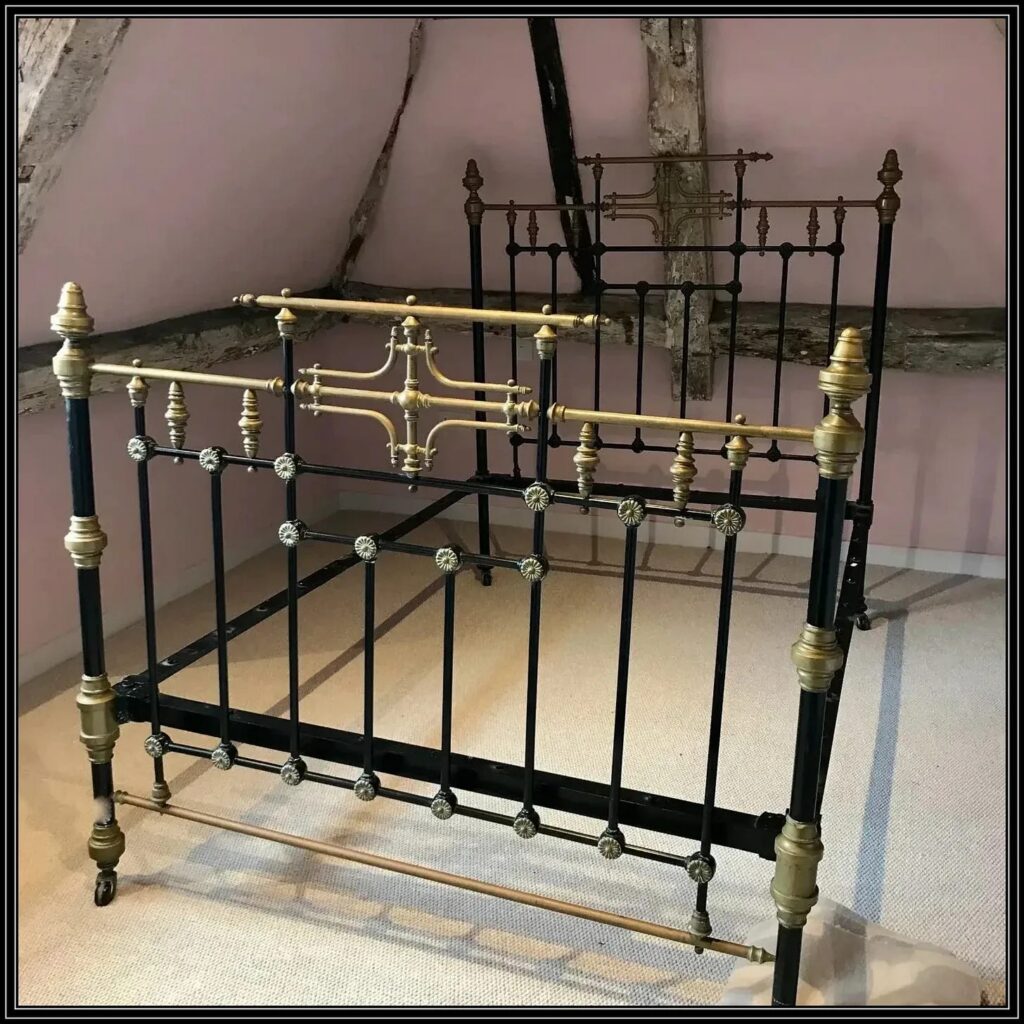 The British deserve considerable credit in the history of iron beds.
England had an enormous ironworking tradition, and British manufacturers were producing metal bedsteads well before the American iron-bed industry reached its stride.
By the Victorian period, English manufacturers were turning out everything from simple institutional iron beds to wonderfully elaborate household bedsteads incorporating iron and brass.
And some were absolutely beautiful.
One characteristic I have encountered repeatedly in English beds, however, is lighter-gauge tubing than was commonly used in better American beds.
Much of the British construction I’ve handled also relied heavily on mechanical fittings. Brass connectors, screws, decorative collars and small brass balls could be used to join or disguise connections between different components.
It was an ingenious way to construct a bed, and it could create extremely attractive results.
But there is a basic mechanical reality involved:
Every additional fitting is another potential point of movement.
After decades of being assembled, disassembled, moved from house to house and slept in night after night, screws can loosen, fittings can wear and thinner tubing can become damaged.
That doesn’t make English antique iron beds undesirable. Some are spectacular.
It simply makes their construction different.
The American Approach: Build It Heavier
When American manufacturers began producing iron beds in large numbers during the 19th century, they were operating in the middle of an extraordinary period of industrial expansion.
Pittsburgh became one of America’s great iron and steel centers, while Chicago and other manufacturing regions developed their own thriving metalworking industries. American iron-bed manufacturers had access to increasingly sophisticated foundries, skilled pattern makers, mold makers and metalworkers.
And American manufacturers seem to have embraced a very American philosophy:
If something needs to be strong, make it substantial.
One of the first differences I notice when comparing many American and European antique iron beds is simply the tubing.
Better American beds frequently used remarkably substantial tubing.
Pick up the headboard of a good American bed from the late 1800s and you immediately know you’re holding something serious.
There is weight to it.
That weight wasn’t accidental.
The heavier tubing provided rigidity, resisted bending and gave manufacturers a strong framework onto which the rest of the bed could be constructed.
It is one reason so many American antique iron beds remain structurally usable today.
American Castings Changed Everything
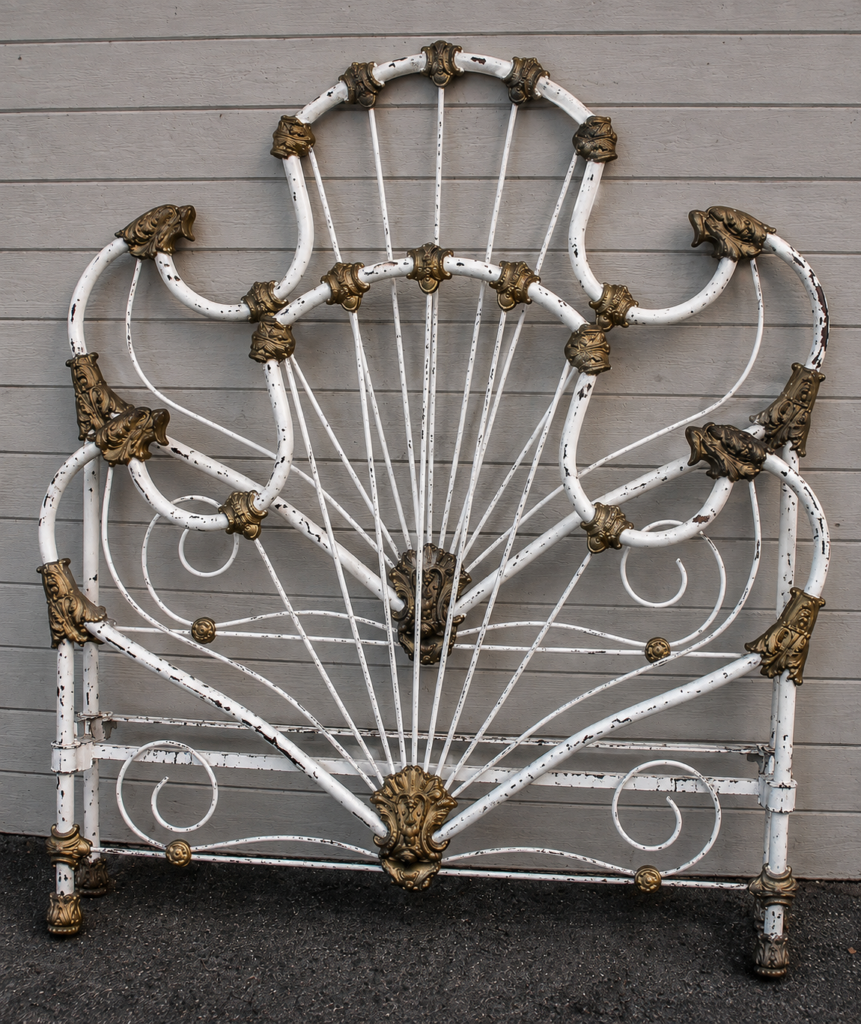 This may be the area where I believe American manufacturers truly distinguished themselves.
The castings on an American antique iron bed weren’t necessarily there just for decoration.
They could also become an integral part of its construction.
At the intersections of tubing and solid rods, molten metal could be poured into molds to create the decorative castings collectors sometimes refer to as “chills.” These castings concealed and reinforced junctions while simultaneously transforming them into decorative elements.
Modern makers reproducing traditional American construction still describe these castings as structural rather than merely ornamental.
And what decoration they created!
Flowers.
Leaves.
Scrolls.
Ribbons.
Rosettes.
Shells.
Crowns.
Horseshoes.
And countless designs that are difficult to describe at all.
The best American foundries learned how to make a structural necessity into an artistic signature.
Look closely at an exceptional American antique iron bed and you may find dozens of individual castings—each one requiring a mold, molten metal, finishing and assembly.
That was expensive manufacturing.
It’s also one reason the finest examples were never inexpensive furniture.
American Engineering Went Beyond Decoration
There is another detail beneath the mattress that most people never see.
The side-rail connection.
American inventors spent considerable effort improving the way an iron bed’s rails connected to its posts. An 1899 U.S. patent, for example, specifically describes a coupling intended to allow a bedstead to be taken apart while keeping the assembled structure firm and preventing movement and loosening.
That is exactly the kind of detail that fascinates me.
The customer saw a beautiful bed.
The manufacturer was thinking about engineering.
Good American beds developed extremely effective rail-and-hitch systems that tightened as the bed was assembled and loaded. They didn’t depend simply upon somebody periodically tightening a collection of little bolts and screws.
After well over a century, that difference matters.
And Then There Were the French
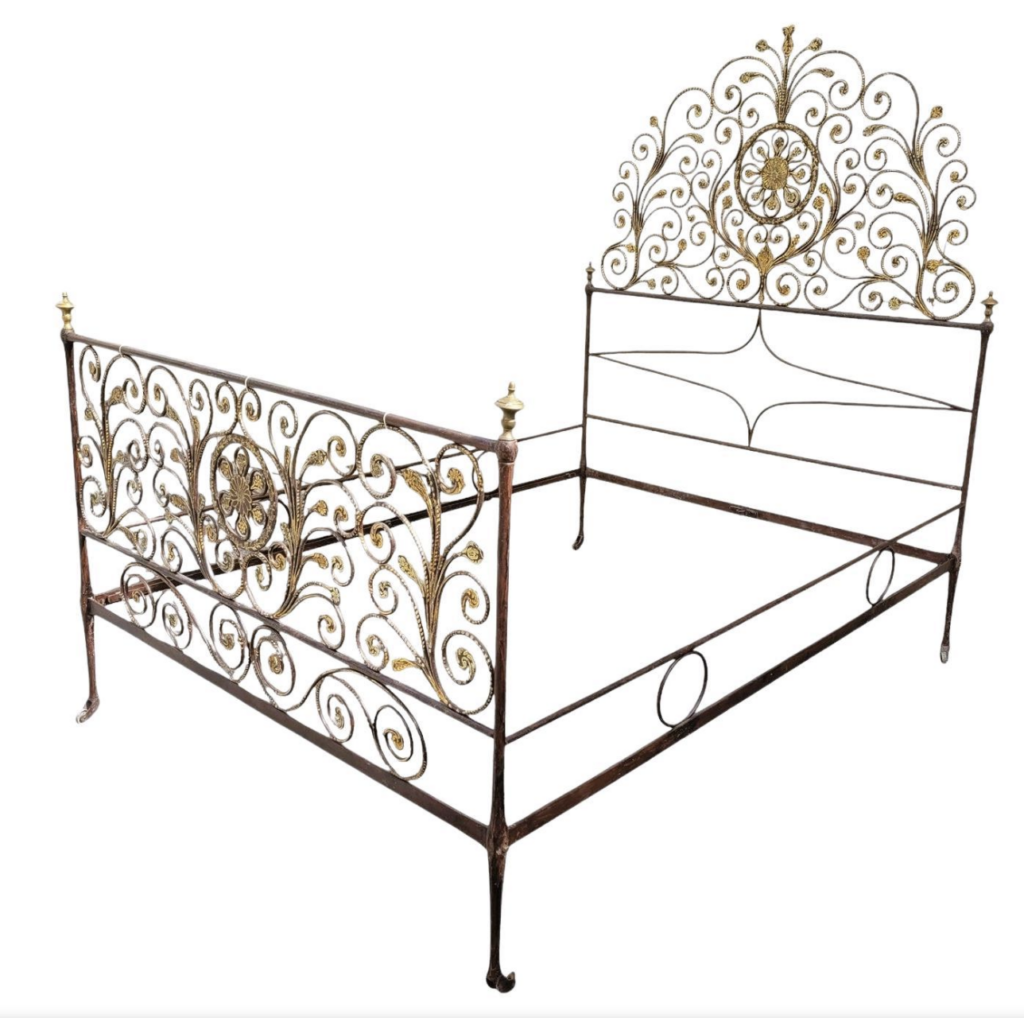 French antique iron beds deserve their own category because many have a completely different personality.
Where the Americans often celebrated castings and substantial construction, French makers frequently achieved beauty through line.
Curves.
Scrolls.
Sweeping ironwork.
Graceful proportions.
Much of what people casually describe today as a “French wrought iron bed” uses relatively restrained ornamentation compared with highly cast American Victorian beds.
On examples I’ve handled, the construction can be comparatively straightforward. Iron members meet and are joined, with the visual interest coming from the shaping and arrangement of the metal rather than from numerous elaborate castings.
The result can be wonderful.
Put one of those old French iron beds in a room with linen bedding, an old painted chest and a faded rug and it can look as though nothing else could possibly belong there.
But that raises an important distinction.
Beautiful isn’t necessarily the same thing as best engineered.
France may win someone’s vote for romance.
England may win for certain combinations of iron and brass.
But if I’m judging the bed primarily as a piece of metal furniture that had to withstand generations of use, I keep coming back to American construction.
What About the Quality of American Iron?
 This is an area where I think we need to be slightly careful.
It is tempting to say simply that America had “better iron ore,” and therefore made better beds.
The real story is more complicated.
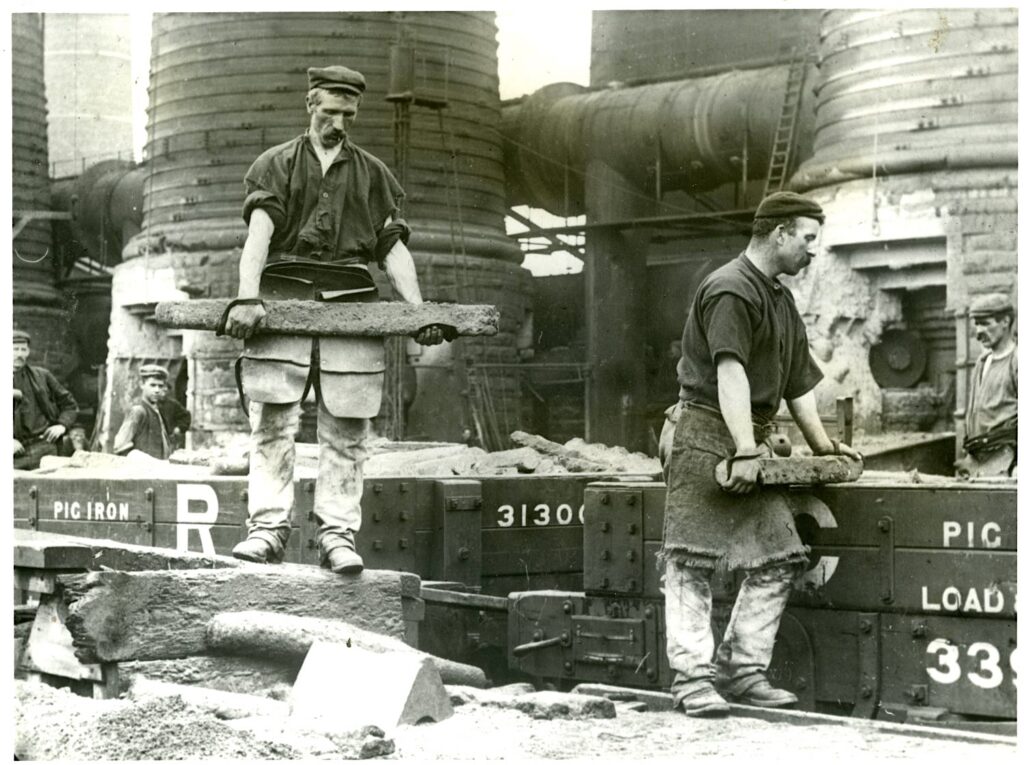
The enormous American iron and steel industry certainly gave manufacturers access to raw materials, foundries, metalworking expertise and increasingly sophisticated manufacturing technology. Industrial centers such as Pittsburgh and Chicago helped create exactly the environment in which iron-bed production could flourish.
But I wouldn’t attribute American superiority to ore alone.
What matters when examining the finished bed is the entire combination:
Material quality + tubing thickness + casting quality + joint design + engineering + workmanship.
Put all of those together and you begin to understand why so many American antique iron beds survived.
The Evidence Is Still Sitting in Bedrooms Today
Perhaps the best evidence isn’t in a history book.
It’s the beds themselves.
I’ve handled thousands of antique iron beds during my career. When you’ve stripped them, repaired them, converted them, removed damaged rails, examined broken castings and looked inside the tubing, you begin noticing patterns.
A heavy American bed can sometimes look remarkably unimpressive when you first find it.
It may have six coats of paint.
There may be rust.
Someone may have painted it pink in 1938, green in 1954 and white sometime during the 1970s.
But underneath all of that may be an extraordinarily well-made piece of 19th-century American furniture.
That is why I continually tell customers:
Don’t judge an antique iron bed solely by its finish.
Paint is temporary.
Construction isn’t.
So Which Country Made the Best Antique Iron Beds?
If we’re judging purely by decoration, there can be no winner.
Beauty is personal.
If someone loves delicate French scrolling, an American bed covered with elaborate castings may never appeal to them.
Likewise, a collector who loves an English brass-and-iron bed may find an all-iron American example too restrained.
But if we’re talking about the combination of structural strength, substantial tubing, casting techniques, rail engineering and long-term durability, my experience has consistently favored the American-made bed.
The fascinating thing is that the manufacturers who made them probably never imagined we’d still be having this discussion.
They were building furniture.
They weren’t building antiques.
Yet more than a century later, many of those American iron beds are still standing, still supporting mattresses, still being slept in and still becoming the centerpiece of beautifully designed bedrooms.
That may be the greatest compliment we can pay the craftsmen who made them.
They built them so well that we still haven’t finished using them.
— Cathouse Antique Iron Beds
Cathousebeds.com