More Than 150 Years Later, What Makes These Remarkable Beds So Desirable?
Furniture styles come and go. What was fashionable in one generation often becomes outdated in the next. Yet some pieces of furniture seem almost immune to the changing tastes of time.
Antique iron beds are among those rare exceptions.
For well over 150 years, these beautifully crafted beds have found their way into American bedrooms, surviving changing decorating trends, technological advances, and countless shifts in how we furnish our homes.
Today, original antique iron beds are just as comfortable in a sophisticated Manhattan apartment as they are in a historic New England farmhouse, a California beach house, or an elegant Southern estate.
So what accounts for their remarkable staying power?
After more than 50 years of buying, selling, restoring, and converting original antique iron beds, I’ve developed a few thoughts about why these extraordinary pieces of American furniture history continue to capture the imagination of homeowners and interior designers alike.
And I believe the answer goes well beyond their appearance.
1. Antique Iron Beds Were Built to Last Generations
Perhaps the most obvious explanation for the sustained popularity of antique iron beds is their extraordinary durability.
During the latter half of the 19th century, American iron foundries were producing furniture using materials and manufacturing techniques that were intended to provide decades of service.
The better American-made iron beds featured substantial, thick-walled iron tubing, heavy cast iron decorative elements, and ingenious mechanical connections that allowed the beds to be assembled without the bolts and screws commonly found in modern reproductions.
One particularly impressive feature was the self-tightening rail connection used by many manufacturers.
The side rails were secured to the headboard and footboard through specially designed tapered fittings. Once properly assembled, the weight and movement of the bed helped keep these connections firmly seated.
It was an elegantly simple solution.
In my business, Cathouse Antique Iron Beds, I regularly encounter original beds manufactured during the 1870s, 1880s, and 1890s that remain remarkably sound structurally.
Think about that for a moment.
These beds were manufactured before automobiles became commonplace, before commercial aviation, and long before television entered American homes.
Yet here they are, still being used and admired.
There is something enormously appealing about furniture that has already survived a century and a half and, with proper care, may well survive another.
2. The Incredible Variety of Antique Iron Bed Designs
One of the greatest misconceptions about antique iron beds is that they all look alike.
Nothing could be further from the truth.
During the height of American iron bed manufacturing, hundreds of foundries and manufacturers produced an astonishing variety of designs.
Some were relatively simple, featuring graceful arches and understated castings.
Others were extraordinarily elaborate, incorporating intricate scrollwork, floral motifs, decorative brass, elaborate corner castings, and architectural elements inspired by European furniture.
I’ve handled beds decorated with everything from flowers, ribbons, and wreaths to unusual animal heads, geometric patterns, and highly imaginative Victorian ornamentation.
Certain designs were produced in substantial numbers, while others were manufactured in relatively small quantities.
After more than five decades in this business, I still occasionally come across an antique iron bed design I’ve never encountered before.
That’s part of the fascination.
Unlike so much modern furniture, which is manufactured in enormous quantities with relatively limited design variations, original antique iron beds offer a remarkable opportunity to own something genuinely distinctive.
For collectors and designers, that individuality is enormously attractive.
3. Antique Iron Beds Complement Almost Every Decorating Style
This may be the single most important reason antique iron beds have remained popular for so long.
They are remarkably adaptable.
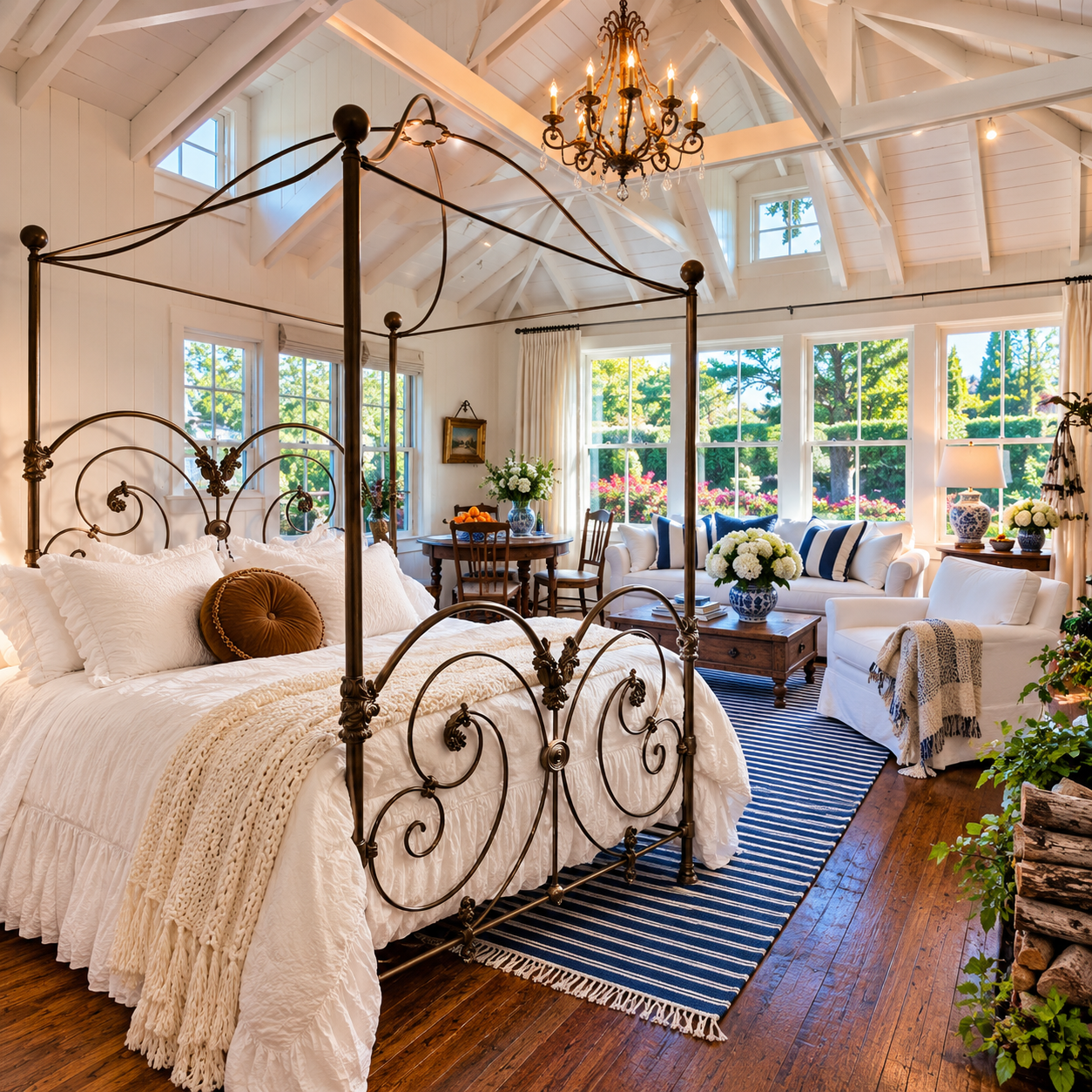
An ornate Victorian iron bed might seem like an obvious choice for a traditional bedroom, but place that same bed in a contemporary setting and something wonderful can happen.
The contrast between old and new creates visual interest that neither style might achieve independently.
I’ve seen antique iron beds work beautifully in minimalist interiors, rustic mountain homes, sophisticated urban apartments, romantic country bedrooms, and luxurious designer residences.
A simple black antique iron bed can provide a strong architectural element against white walls and crisp linens.
A bed with an original distressed painted finish can bring warmth and character to a room filled with contemporary furnishings.
And an elaborately decorated iron bed with aged brass accents can become the focal point of an otherwise understated bedroom.
The beauty of iron beds is that they don’t necessarily dictate the decorating style of the room.
Instead, they often enhance it.
This flexibility helps explain why interior designers continue to incorporate original antique iron beds into projects that have little connection to traditional Victorian decorating.
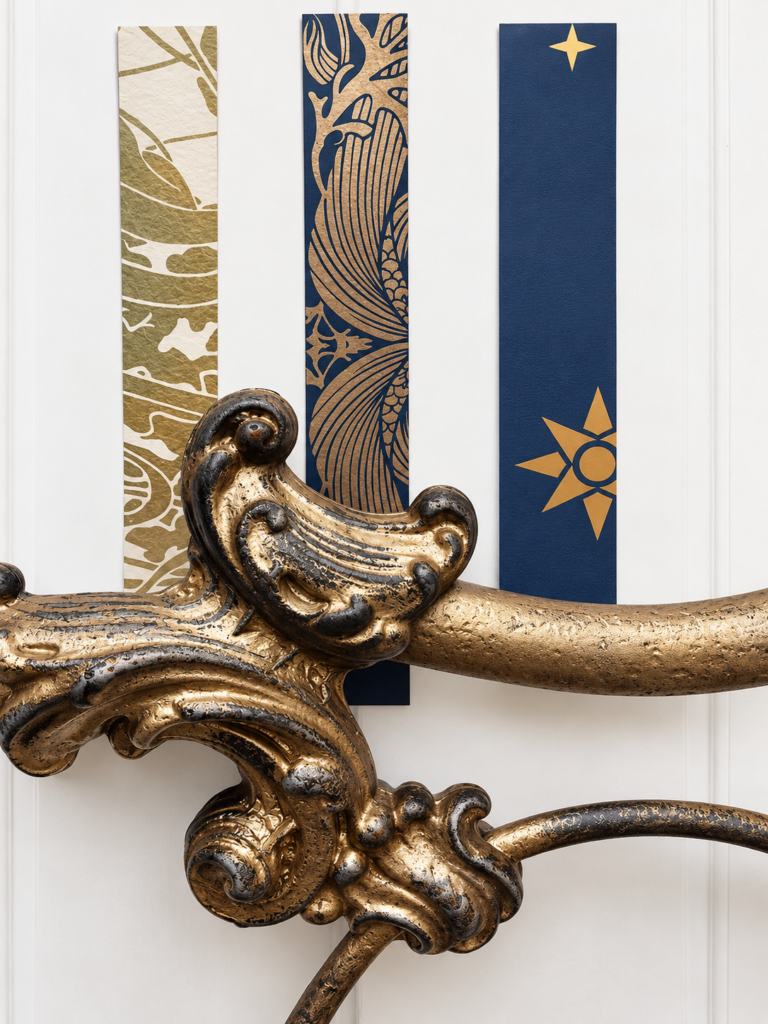
 4. The Beauty of Original Finishes and 150 Years of Patina
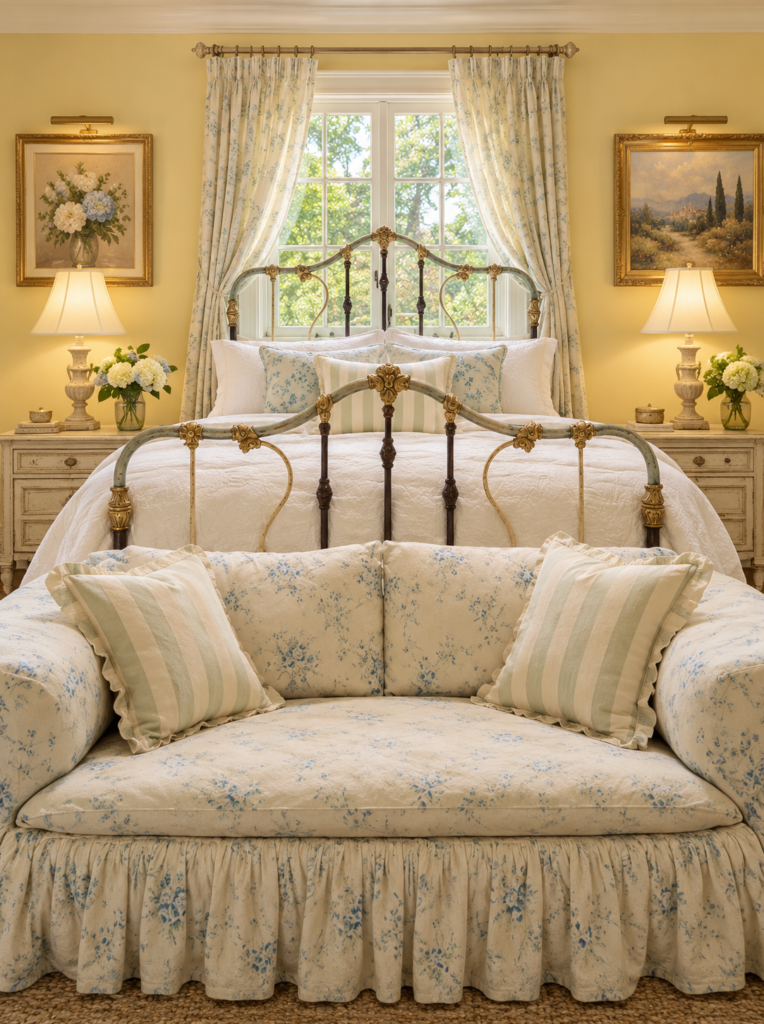
One of the things I’ve always appreciated most about antique iron beds is the character that develops over time.
Original painted finishes often reveal decades of subtle wear, oxidation, small chips, and changes in color.
To some people, these imperfections might appear to be flaws.
To me, they’re part of the bed’s history.
A genuine 19th-century iron bed with its original distressed finish tells a story that simply cannot be duplicated by applying a fresh coat of paint.
That’s why, whenever possible, I prefer preserving an original finish rather than stripping away every indication of age.
After all, 150 years of history shouldn’t be erased simply because the paint isn’t perfect.
Of course, not every antique iron bed arrives with a finish worth preserving.
Some have been repainted numerous times, occasionally with thick layers of paint that obscure the beautiful details of their original castings.
In those situations, carefully removing the accumulated paint and applying an appropriate new finish can reveal craftsmanship that has been hidden for generations.
At Cathouse Antique Iron Beds, we’ve developed several finishes that complement these historic designs, including our Distressed Crackle, Sandblasted Pewter, and other individually tailored treatments.
The objective is never to make an original antique iron bed look like a modern reproduction.
It’s to allow the character and craftsmanship of the original bed to shine through.
 5. Antique Iron Beds Have an Architectural Quality
There’s another characteristic that helps distinguish antique iron beds from most other bedroom furniture.
They have an almost architectural presence.
Unlike large upholstered or solid wooden headboards, iron beds often feature open designs that allow the eye to travel through the frame.
This creates a feeling of spaciousness while still providing a strong decorative focal point.
In a smaller bedroom, that openness can be especially valuable.
The bed makes a statement without visually overwhelming the room.
In larger bedrooms, the graceful arches, decorative castings, and sculptural outlines can provide exactly the architectural interest needed to bring the space together.
And because so much of the design remains visible, the craftsmanship can be appreciated from virtually every angle.
It’s one of the reasons I frequently recommend antique iron beds to designers who want a dramatic bedroom centerpiece without sacrificing the room’s sense of openness.
6. Modern Mattress Sizes Have Given Antique Iron Beds New Life
When most American antique iron beds were manufactured during the late 1800s, the familiar mattress sizes we use today were quite different.
Traditional sizes included twins, three-quarter beds, and doubles.
The modern queen and king sizes didn’t become common until much later.
For years, this presented a practical limitation for people who loved antique iron beds but wanted the comfort and space of a larger mattress.
Fortunately, that limitation can often be overcome.
One of the specialties we’ve developed at Cathouse Antique Iron Beds is converting original antique double beds to accommodate modern king-size mattresses.
These conversions require careful planning, particularly when the bed features elaborate scrollwork, unusual castings, or complex decorative patterns.
The goal is to preserve the original character and proportions as faithfully as possible while providing the additional width necessary for a modern mattress.
A successful conversion should look as though the manufacturer might have produced the bed in that size originally.
We’ve completed these conversions for homeowners, interior designers, historic properties, and hospitality projects throughout the country.
In many cases, converting an antique iron bed to a king size gives a beautiful piece of Victorian furniture an entirely new life.
It’s also one of the reasons original antique iron beds remain practical choices for today’s bedrooms.
7. Every Antique Iron Bed Has a History
There is something special about owning furniture that has already lived through several generations of American history.
Many antique iron beds began their lives in Victorian homes during the late 19th century.
They may have witnessed generations of family life, traveled across the country, survived household moves, or remained in the same family for more than a hundred years.
Occasionally, we’re fortunate enough to learn something about a bed’s original ownership or where it spent much of its life.
I’ve acquired beds from historic homes, old boarding houses, family estates, and properties where the furniture had remained untouched for decades.
Sometimes the stories accompanying these beds are every bit as fascinating as the beds themselves.
And even when their individual histories have been lost, their craftsmanship connects us to an era when American manufacturing was developing into an extraordinary industrial force.
An original antique iron bed is more than a piece of furniture.
It’s a surviving example of the people, materials, artistic influences, and manufacturing traditions of its time.
That connection to history gives these beds an emotional appeal that mass-produced furniture rarely achieves.
8. Sustainability Was Built Into Antique Iron Beds Long Before It Became Fashionable
Today, sustainability has become an important consideration in home furnishings.
Consumers are increasingly interested in furniture that can be repaired, reused, restored, and passed along rather than discarded.
Original antique iron beds represent an excellent example of that philosophy.
These beds have already provided more than a century of service.
Rather than requiring the manufacture of an entirely new frame, an existing antique iron bed can often be restored and adapted for continued use.
Their durable construction makes this possible.
And unlike many contemporary furniture products designed around inexpensive components and short replacement cycles, a well-maintained antique iron bed can remain functional for generations.
There is something wonderfully satisfying about giving a 19th-century piece of furniture a place in a 21st-century home.
9. Original Antique Iron Beds Offer Something Reproductions Cannot
Modern iron beds certainly have their place in the furniture market.
But there is an important distinction between a newly manufactured bed designed to resemble an antique and an original bed produced during the 1800s.
The original materials, casting methods, construction techniques, and natural aging of authentic antique iron beds are difficult to reproduce convincingly.
Even more importantly, an original bed possesses a history that cannot be manufactured.
Over the years, I’ve examined countless modern reproductions alongside genuine antiques.
Differences in the weight of the materials, the character of the castings, and the construction methods can be substantial.
For someone who simply wants the general appearance of an iron bed, a reproduction may be perfectly satisfactory.
But for someone who appreciates authenticity, craftsmanship, and the individuality of historic furniture, an original antique iron bed offers something quite different.
It’s the difference between owning furniture inspired by history and owning an actual piece of it.
10. The Timeless Appeal of Antique Iron Beds
Perhaps the most compelling explanation for the sustained popularity of antique iron beds is also the simplest.
Beautiful design never really goes out of style.
A gracefully arched iron headboard that looked attractive in an American bedroom in 1885 can look every bit as appealing in a beautifully designed home today.
The surrounding furniture may change.
The fabrics, wall colors, lighting, and decorative accessories may evolve with each generation.
But the antique iron bed remains.
And in many cases, it becomes even more interesting as the years pass.
After more than 50 years of working exclusively with original antique iron beds, I can say that my appreciation for them has only grown.
Their craftsmanship continues to impress me.
Their extraordinary variety continues to surprise me.
And their ability to complement virtually every style of interior design continues to make them relevant.
Perhaps that’s the real secret to their enduring popularity.
Antique iron beds aren’t simply surviving changing times. They’re continuing to find new admirers in every generation.
And I suspect they’ll be doing exactly that another 150 years from now.
Craig Spencer
Cathouse Antique Iron Beds
Specializing in Original 19th-Century Antique Iron Beds for Over 50 Years
Explore our collection of original antique iron beds, custom finishes, and king-size conversions at CathouseBeds.com.