Buying antique iron beds can be one of the most rewarding ways to furnish a bedroom. Few pieces of furniture combine the craftsmanship, history, durability, and decorative appeal of an original Victorian iron bed.
But how can you tell whether an antique iron bed is genuinely old? What should you examine before purchasing? And how do you distinguish authentic 19th-century American iron beds from modern reproductions?
These are questions we’ve been answering at Cathouse Antique Iron Beds for more than 50 years.
During that time, we’ve purchased, restored, and sold thousands of original antique iron beds. We’ve encountered everything from relatively simple Victorian designs to extraordinarily elaborate examples that we’ve seen only once in half a century.
If you’re considering purchasing an antique iron bed, here are ten important things you should know before making your decision.
1. How to Identify Authentic Antique Iron Beds
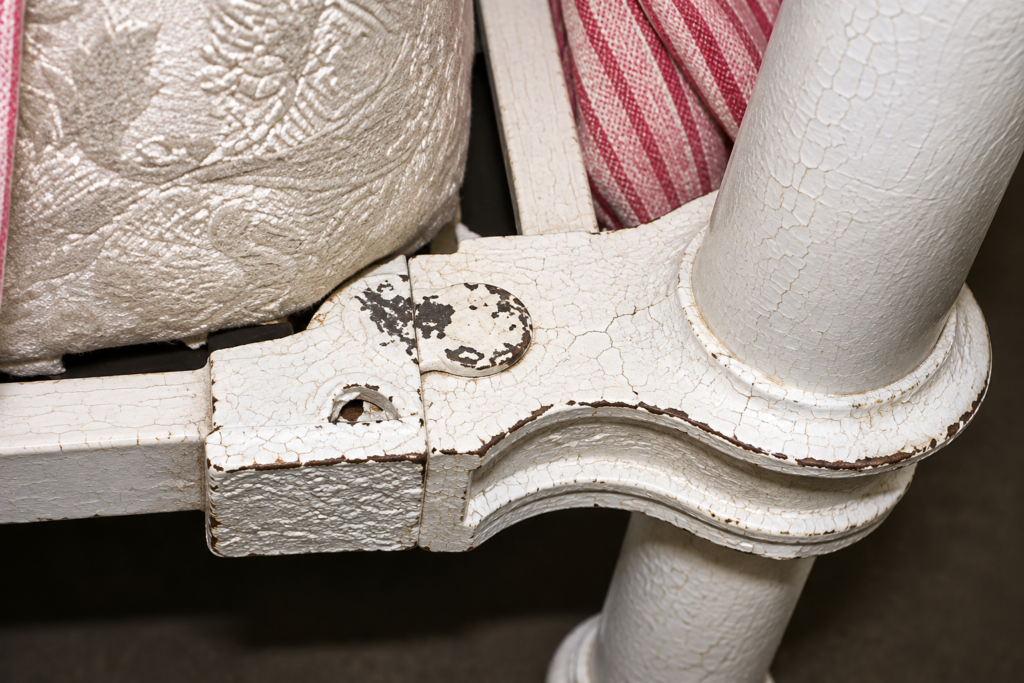
Original self-tightening rail connection, one of the distinguishing construction features found on authentic American antique iron beds.
The first consideration when buying antique iron beds is authenticity
Many beds advertised as antique are actually modern reproductions designed to resemble Victorian furniture.
One of the most revealing differences is the way the bed is assembled.
Original American antique iron beds commonly used a unique self-tightening rail connection system. The side rails fit into tapered receiving brackets attached to the headboard and footboard.
As weight is applied, the connections become increasingly secure.
Unlike many modern reproductions, these original systems generally didn’t require conventional bolts and screws to hold the bed together.
At Cathouse Antique Iron Beds, this is one of the first characteristics we examine when evaluating a prospective purchase.
However, no single construction detail proves a bed’s age. Some older beds have been modified or repaired, and construction varied among manufacturers.
Buying tip: Ask for close-up photographs of the original rail connections, particularly if you’re purchasing an antique iron bed online.
2. Examine the Quality of the Cast Iron and Steel
The quality of materials is one of the most important characteristics of original American iron beds.
During the late 1800s, American manufacturers benefited from the rapidly expanding iron and steel industries, particularly in regions surrounding Pittsburgh, Pennsylvania, and Chicago, Illinois.
The development of the Bessemer process : https://www.britannica.com/technology/Bessemer-process https://www.britannica.com/technology/Bessemer-process
,helped transform 19th-century steel manufacturing, making large-scale production more economical and helping supply the growing American furniture industry.
Many original American antique iron beds were constructed using heavy-walled steel tubing and decorative cast iron components.
The castings are often the most impressive elements.
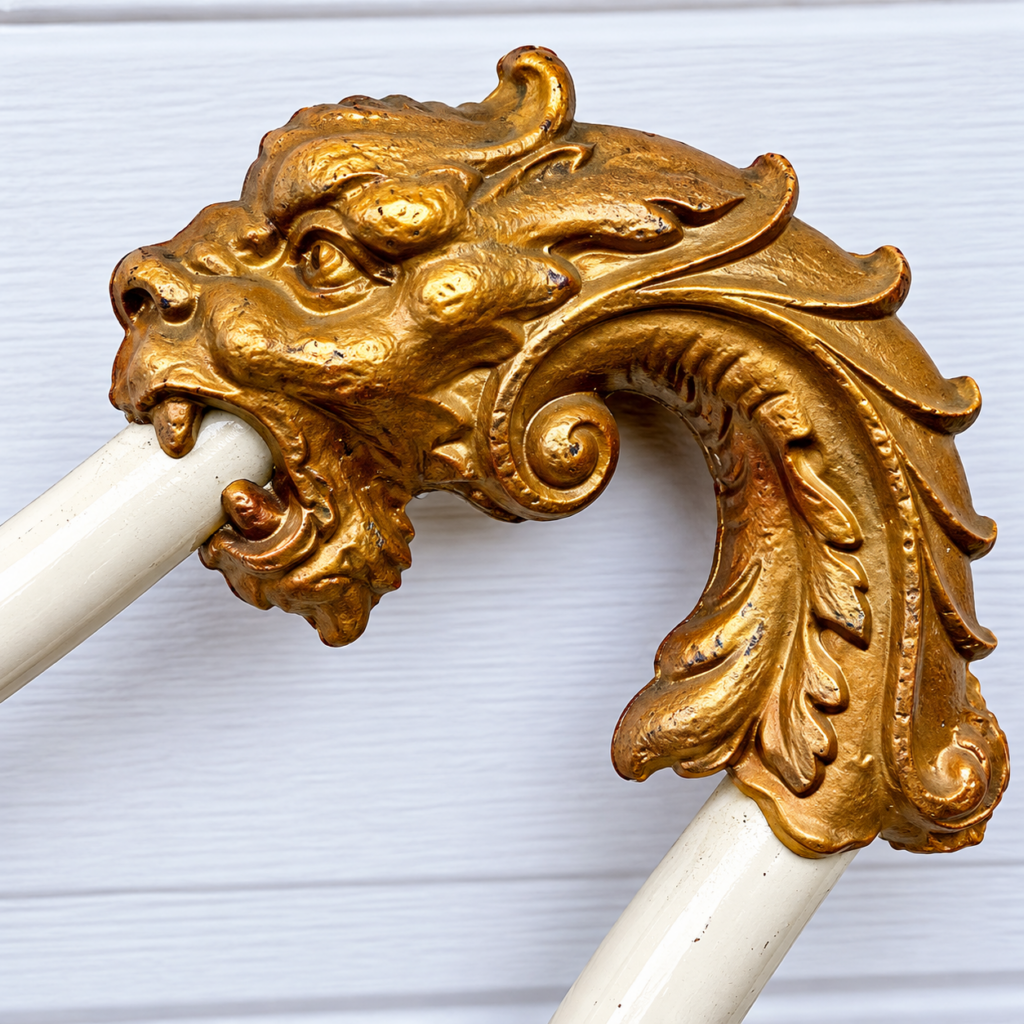 Flowers, leaves, wreaths, scrolls, and elaborate corner ornaments were produced in remarkable detail.
Some manufacturers created designs so distinctive that individual beds became recognizable by their decorative castings.
One useful test involves a simple magnet.
A magnet will generally attach to original cast iron components but not to aluminum castings frequently found on modern reproductions.
This is not a definitive test of age, since modern castings can also be ferrous, but it can help identify the material.
Buying tip: Examine the definition of the castings. Thick layers of paint can conceal some of the finest details of an original antique iron bed.
3. Understand the Differences Between American and European Iron Beds
Not all antique iron beds were manufactured using the same materials or construction techniques.
Many original American iron beds were built with relatively substantial tubing and heavy decorative castings.
British manufacturers frequently used thinner-walled tubing, s
European iron beds also featured distinctive designs and decorative treatments that reflected regional tastes.
Neither origin automatically guarantees quality, but these differences can be important when evaluating durability, restoration possibilities, and potential mattress-size conversions.
At Cathouse Antique Iron Beds, we specialize primarily in original American beds because of their construction, distinctive designs, and suitability for many of the restoration projects we undertake.
Buying tip: Ask where the bed was manufactured, if known, and whether its construction is appropriate for your intended use.
4. Look Carefully at the Original Finish
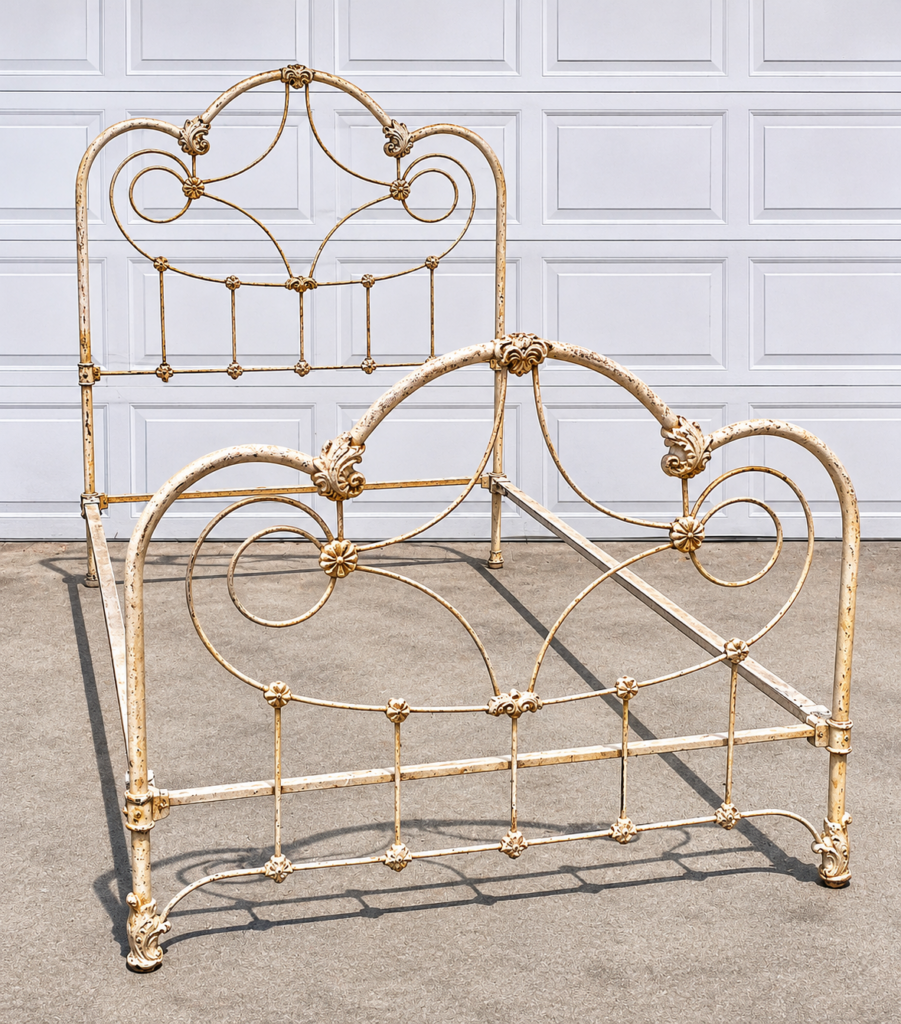 One of the most appealing features of antique iron beds is their extraordinary variety of original finishes.
During the Victorian era, iron beds were available in numerous colors, including black, white, cream, green, bronze, and combinations of decorative colors.
Some featured hand-painted details, gilded castings, or contrasting finishes designed to emphasize the ornamentation.
Today, an original factory finish in attractive condition can be particularly desirable.
Small chips, natural oxidation, faded colors, and areas of wear may contribute to the bed’s historical character.
Our philosophy at Cathouse Antique Iron Beds has always been simple:
150 years of history shouldn’t automatically be erased with a fresh coat of paint.
Whenever possible, we prefer preserving a beautiful original finish rather than completely refinishing the bed.
Of course, some antique iron beds have been repainted numerous times.
Heavy paint accumulation can obscure casting details and leave the bed looking less attractive than it originally did.
Professional refinishing can restore the definition of the decorative elements while allowing the owner to select a finish appropriate for the room.
Our popular finishes include Distressed Crackle, Sandblasted Pewter, distressed white, satin black, and other customized treatments.
Buying tip: Don’t assume that a freshly painted antique iron bed is more valuable or desirable than one retaining its original finish.
5. Inspect the Structural Condition of Antique Iron Beds
An antique iron bed can look beautiful in a photograph while having structural problems that aren’t immediately apparent.
Before purchasing, examine the condition of the headboard, footboard, side rails, and rail connections.
Look for cracks, broken castings, missing components, or previous repairs.
The original rail connections deserve particular attention.
One important fact many buyers don’t realize is that the side rails from different manufacturers were not necessarily interchangeable.
Each foundry could use its own connection design and dimensions.
Consequently, finding replacement rails for an antique iron bed missing its original components may be considerably more complicated than expected.
The receiving brackets should also be inspected carefully because these components bear the weight of the assembled bed.
Original wheels or casters deserve attention as well.
Although historically interesting, old casters can become weak points in an otherwise sturdy frame.
We generally discourage relying on antique casters for everyday use.
Buying tip: Whenever possible, examine the bed fully assembled rather than purchasing separate headboards and footboards without confirming that the proper rails are included.
6. Know Your Antique Iron Bed Sizes Before Buying
One of the biggest surprises for people buying antique iron beds is discovering that Victorian mattress sizes differ from modern standards.
Original 19th-century American iron beds were generally manufactured in three principal sizes:
- Twin: Approximately 38–41 inches wide
- Three-quarter: Approximately 45–48 inches wide
- Double or full: Approximately 54 inches wide
Traditional mattress lengths were generally around 75 inches.
Modern queen and king mattress sizes were not standard offerings during the Victorian period.
This can create practical challenges for today’s buyers.
Three-quarter beds, for example, were once popular but now require special consideration because compatible mattresses are not commonly stocked.
Even an original double bed may not provide enough sleeping space for couples accustomed to a king-size mattress.
Fortunately, an original antique iron bed doesn’t necessarily have to remain its original size.
One of our specialties at Cathouse Antique Iron Beds is converting original double beds into modern king-size beds.
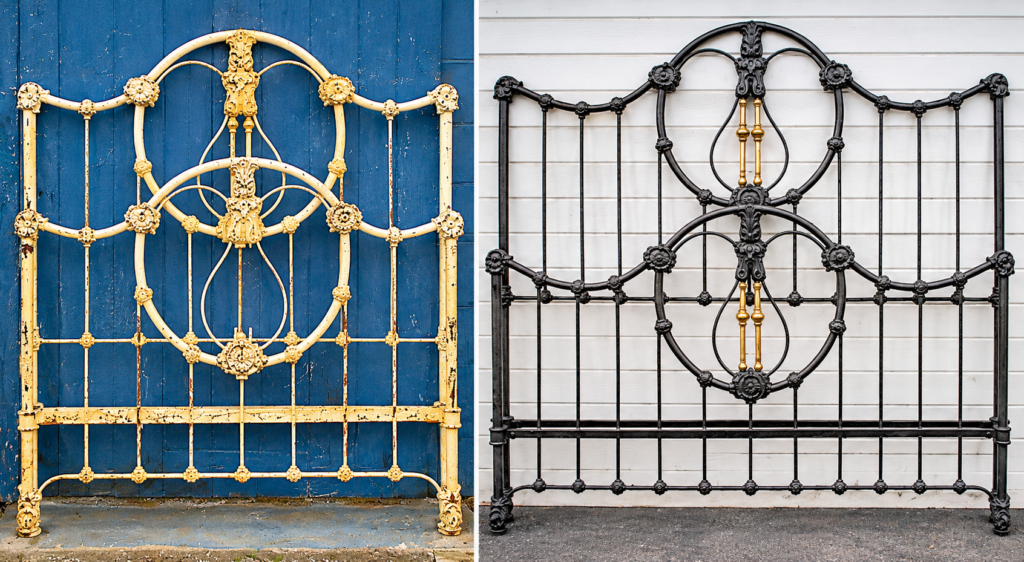 A carefully executed conversion can preserve the bed’s distinctive design while providing the comfort of a contemporary mattress.
However, not every bed is equally suitable for conversion.
The original tubing, casting arrangement, design, and overall construction must be evaluated.
Buying tip: If you’re planning a king-size conversion, consult an experienced specialist before purchasing the bed.
7. Consider the Design and Rarity of the Antique Iron Bed
Some antique iron beds were produced in large quantities, while others were manufactured in relatively small numbers.
The familiar Wedding Band design, for example, became one of the more recognizable styles of American iron bed.
Other designs incorporated elaborate French curves, decorative brass, dramatic corner castings, and unusually intricate scrollwork.
During our more than 50 years in the business, we’ve occasionally encountered antique iron beds unlike anything we’d previously seen.
These unusual examples can be particularly appealing to collectors and interior designers.
When evaluating a bed, consider its overall proportions and decorative balance.
Does the headboard have an attractive silhouette?
Are the castings well-defined?
Do the decorative elements complement the surrounding ironwork?
A highly ornate Victorian iron bed can become the focal point of a traditional bedroom.
A simpler antique iron bed may work equally well in a contemporary interior, where its historical character creates a beautiful contrast.
Buying tip: Rarity can increase desirability, but originality, condition, craftsmanship, and visual appeal are equally important.
8. Examine Original Brass Details and Decorative Elements
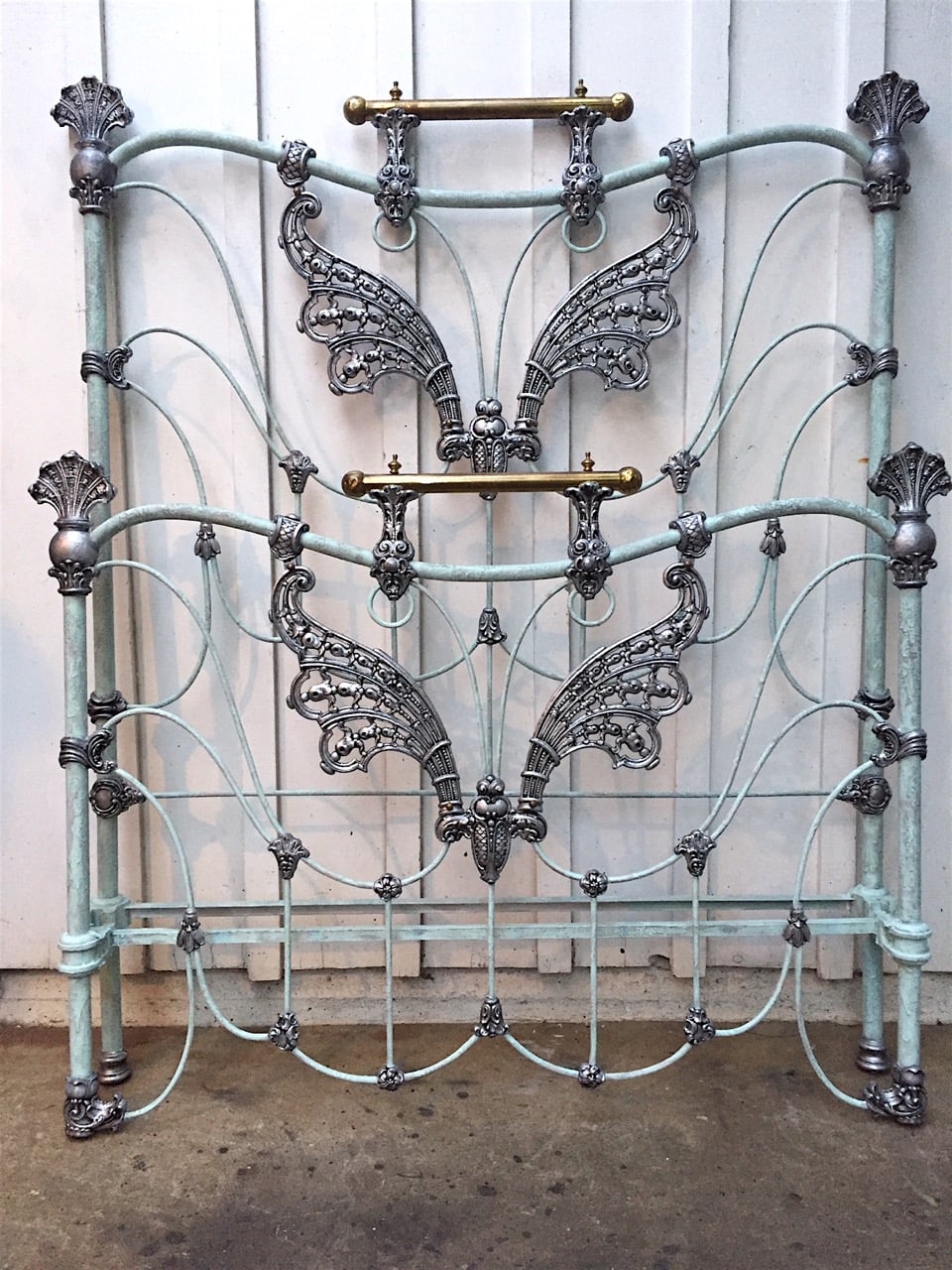
An original Victorian iron bed demonstrating how decorative brass scrollwork enhanced the beauty of traditional iron construction.
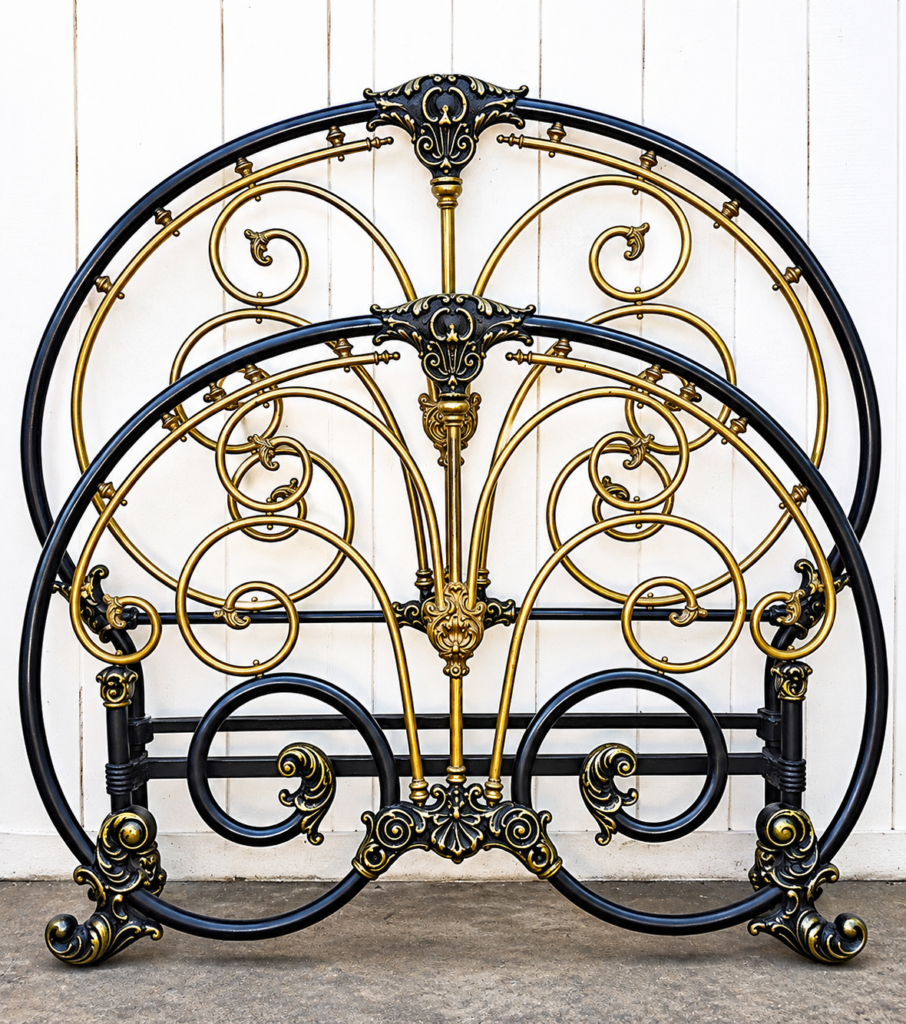
Many Victorian iron beds incorporated brass elements to enhance their appearance.
These included decorative finials, ornamental rods, brass accents, and other embellishments.
During the late 1800s, brass beds were associated with elegance and expense.
Adding brass components allowed manufacturers to offer iron beds with some of that decorative appeal while retaining the strength and affordability of iron construction.
When examining antique iron beds with brass details, look for missing finials, mismatched replacements, or damaged decorative components.
Also consider whether the brass has been excessively polished.
Original brass develops a natural patina over time, and that aged appearance may be desirable.
At Cathouse Antique Iron Beds, we frequently recommend gentle cleaning rather than polishing every brass component to a brilliant shine.
Buying tip: Original brass details should complement the age and character of the bed rather than make it appear newly manufactured.
9. Understand Restoration and Long-Term Maintenance
One of the greatest advantages of owning a properly restored antique iron bed is its durability.
These beds were manufactured as practical household furniture, not simply decorative objects.
Many have survived more than a century of regular use.
With appropriate maintenance, an original antique iron bed can continue serving future generations.
However, restoration requires careful consideration.
Removing excessive paint, repairing damaged castings, maintaining structural integrity, and preserving original decorative elements should be approached thoughtfully.
Before purchasing, ask what restoration work has already been performed.
Has the bed been inspected?
Are all the original components present?
Have structural repairs been completed correctly?
Has the original finish been preserved or replaced?
The answers can significantly influence the bed’s value and suitability for everyday use.
Buying tip: A professionally inspected and properly restored antique iron bed may be a better long-term purchase than a less expensive example requiring extensive repairs.
10. Buy Antique Iron Beds From an Experienced Specialist
Perhaps the most important recommendation we can offer is to purchase from someone who genuinely understands antique iron beds.
These beds are more than decorative furniture.
They represent an important chapter in American manufacturing history.
During the Victorian era, foundries, metalworkers, designers, and craftsmen combined their talents to produce furniture that was functional, beautiful, and remarkably durable.
An experienced antique iron bed specialist can help identify authentic construction, evaluate original castings, assess structural condition, recommend appropriate restoration, and determine whether a bed can accommodate a modern mattress.
That knowledge can make the difference between purchasing an attractive piece of furniture and acquiring something you’ll enjoy for decades.
At Cathouse Antique Iron Beds, we’ve spent more than 50 years specializing in original antique iron beds.
We don’t sell reproductions.
Our work includes locating exceptional original beds, preserving their craftsmanship, providing custom finishes, and converting selected antique beds to modern king sizes.
Frequently Asked Questions About Antique Iron Beds
How can you tell if an iron bed is genuinely antique?
Examine its construction, rail connections, tubing, and decorative castings. Original American antique iron beds commonly used tapered self-tightening rail connections and substantial cast iron ornamentation. No single feature proves authenticity, so the complete construction should be evaluated.
Can an antique iron bed be converted to a king size?
Yes. Many original double-size antique iron beds can be professionally converted to accommodate modern king mattresses. However, the design and structural condition must be evaluated before undertaking a conversion.
Are original antique iron beds stronger than reproductions?
Many original American antique iron beds feature substantial steel tubing and heavy cast iron components. However, strength depends on construction quality, condition, repairs, and design. Not every antique is stronger than every modern bed.
Final Thoughts: Buying Antique Iron Beds With Confidence
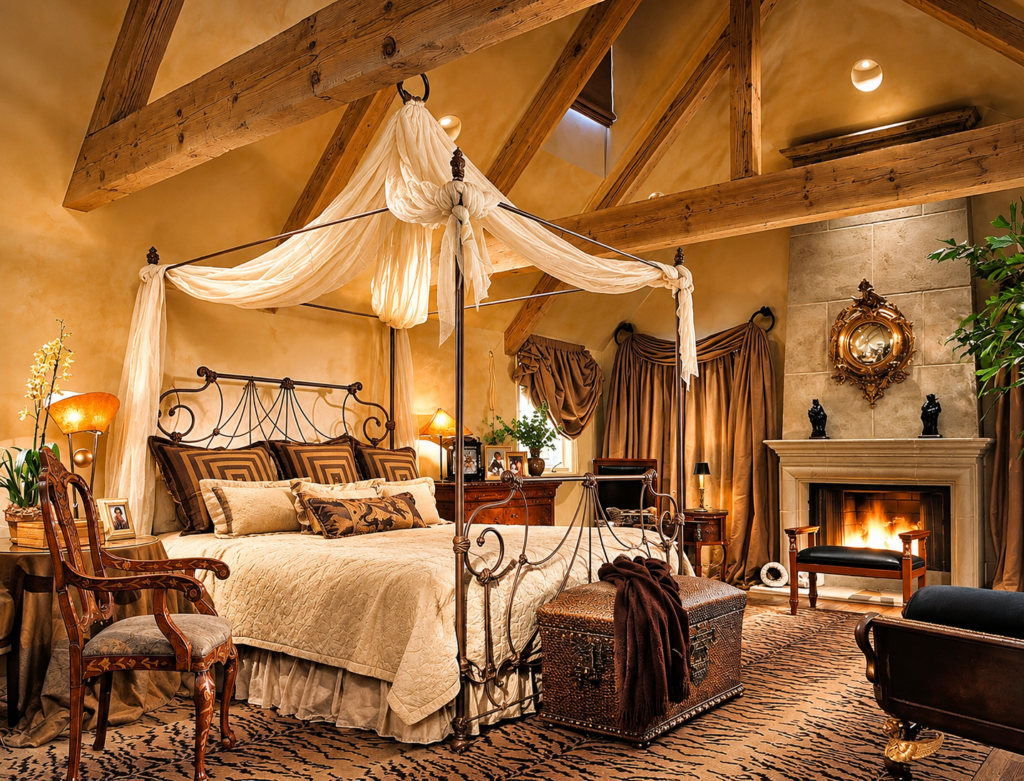 The finest antique iron beds offer something increasingly difficult to find in modern furniture: individuality, historical character, exceptional craftsmanship, and enduring beauty.
Whether you’re searching for a simple Victorian iron bed with its original distressed finish or an elaborate antique iron bed with ornate castings and decorative brass, understanding what to look for makes the buying process far more rewarding.
At Cathouse Antique Iron Beds, we’ve dedicated more than five decades to finding, restoring, and preserving these remarkable pieces of American furniture history.
We believe an original antique iron bed should be appreciated not only for its beauty but also for the craftsmanship and history that made it possible.
If you’re considering purchasing an original antique iron bed, we invite you to explore our website and inquire about our available inventory.
Visit Cathouse Antique Iron Beds to discover authentic antique iron beds, restoration services, and custom king-size conversions.