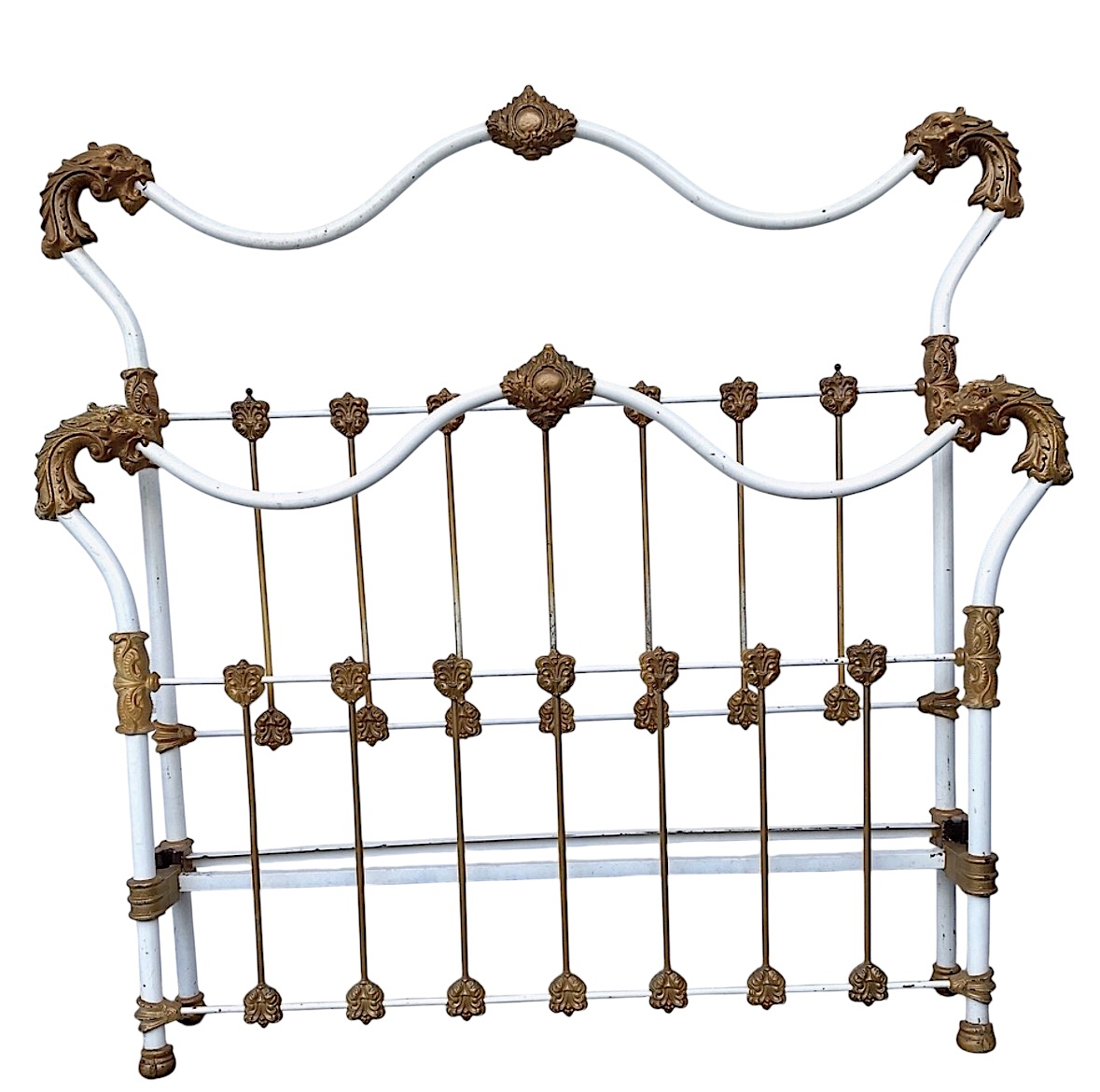
For collectors, historians, and anyone who appreciates beautiful period furniture, antique iron beds offer far more than durability and craftsmanship. The decorative castings found on many Victorian and early twentieth-century iron beds often reveal fascinating stories about the cultural influences, beliefs, and artistic trends of their time. Among the most intriguing motifs found in old bed castings is the dragon.
Dragons have appeared in mythology, folklore, architecture, and decorative arts for thousands of years. Their inclusion in the design of an antique iron bed was rarely accidental. Whether inspired by European legends, Asian symbolism, Gothic Revival design, or the Victorian fascination with the exotic, dragons brought a sense of power, mystery, and protection to the furniture they adorned.
In this article, we explore why dragons appeared on iron beds, what they symbolized, and why these remarkable castings continue to capture the imagination of collectors today.
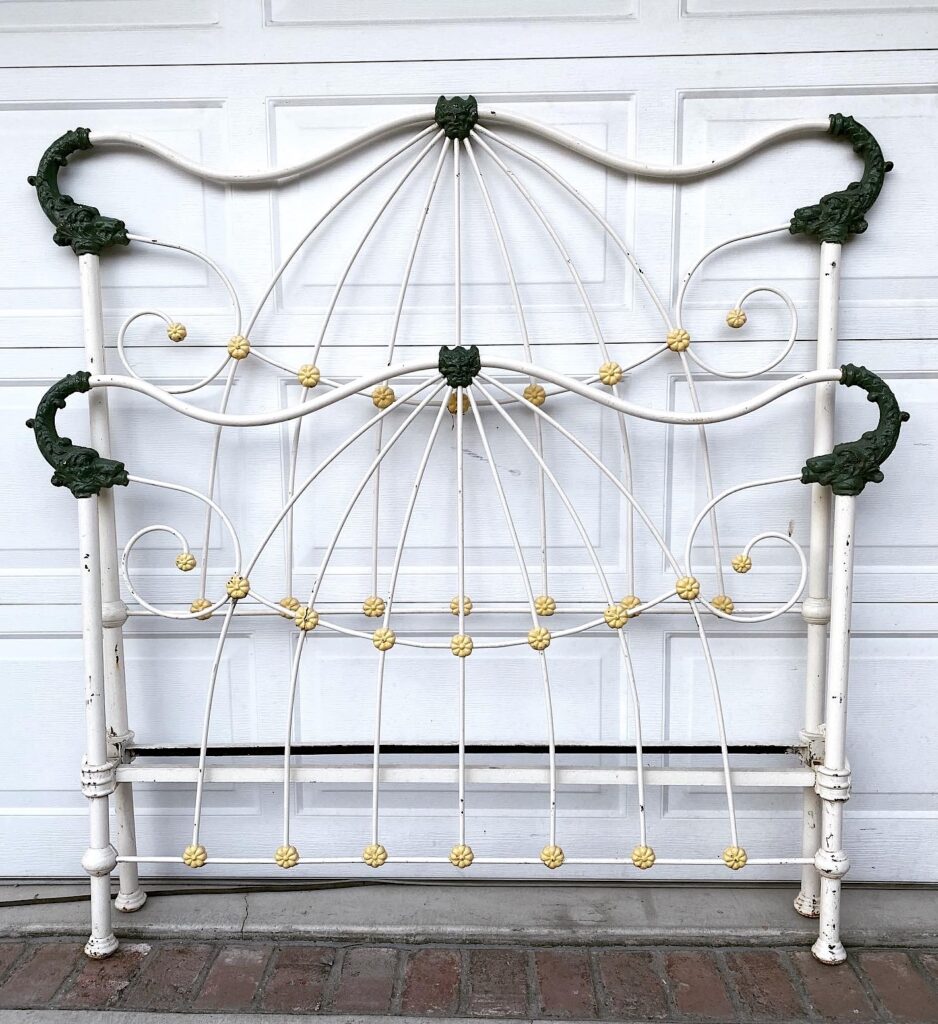 The Dragon: An Ancient Symbol
The dragon is one of humanity’s oldest and most widespread mythical creatures. Virtually every culture has some version of a dragon-like being, although their characteristics vary considerably.
In European traditions, dragons were often depicted as powerful creatures associated with strength, treasure, guardianship, and sometimes danger. Stories of knights battling dragons became central to medieval folklore and later inspired countless works of art.
In contrast, Asian dragons were frequently viewed as benevolent beings connected to wisdom, prosperity, protection, and good fortune. Chinese dragons, in particular, were regarded as symbols of imperial authority and divine power.
By the nineteenth century, when many decorative iron beds were being manufactured, designers were drawing inspiration from a wide variety of historical and international sources. As a result, dragon imagery became an appealing decorative motif that conveyed both prestige and intrigue.
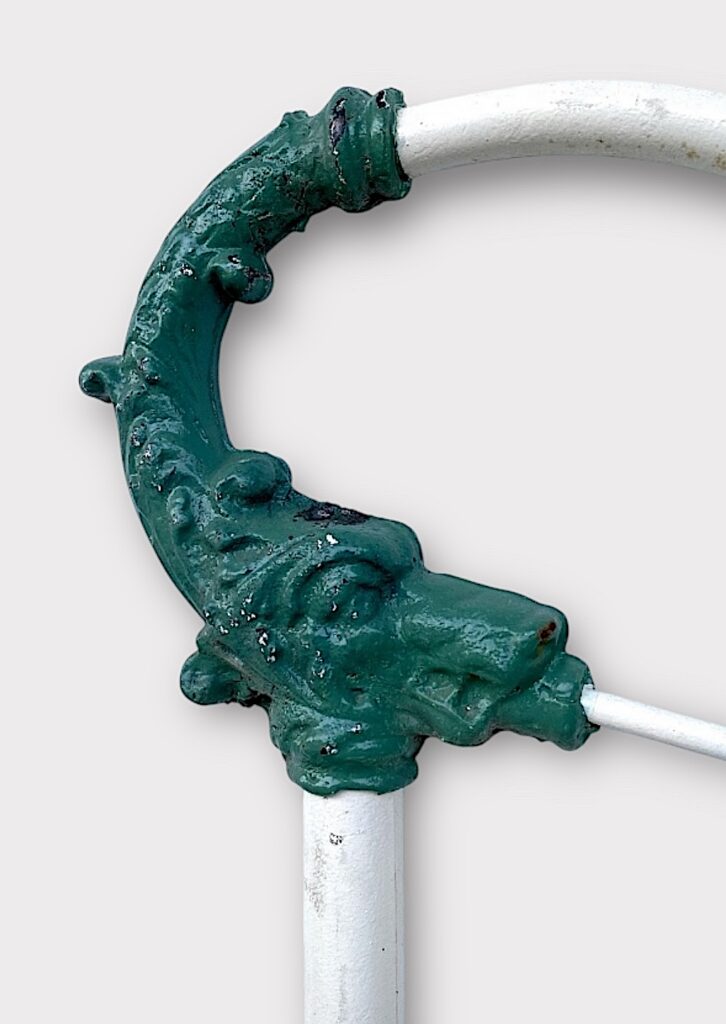 Victorian Fascination with Mythology and Symbolism
The Victorian era was a golden age for ornamental design. Advances in iron casting technology allowed manufacturers to produce highly detailed decorative elements at a scale that would previously have been prohibitively expensive.
Victorian consumers embraced richly ornamented furniture, and antique iron beds became increasingly elaborate. Manufacturers incorporated flowers, scrolls, heraldic devices, classical motifs, and mythical creatures into their designs.
Dragons fitted perfectly into this decorative language. They combined medieval romance, historical references, and exotic appeal. During a period when archaeology, world travel, and international trade were expanding public awareness of different cultures, dragons represented both ancient tradition and worldly sophistication.
For many buyers, a bed featuring dragon castings would have conveyed refinement and an appreciation for fashionable design.
Dragons as Guardians of the Sleeping Chamber
One of the most compelling interpretations of dragon motifs on an iron bed relates to protection.
Throughout history, dragons have frequently been portrayed as guardians. They guard castles, treasure hoards, sacred spaces, and important gateways. In decorative arts, guardian figures were often placed on furniture, buildings, and household objects to symbolize safety and security.
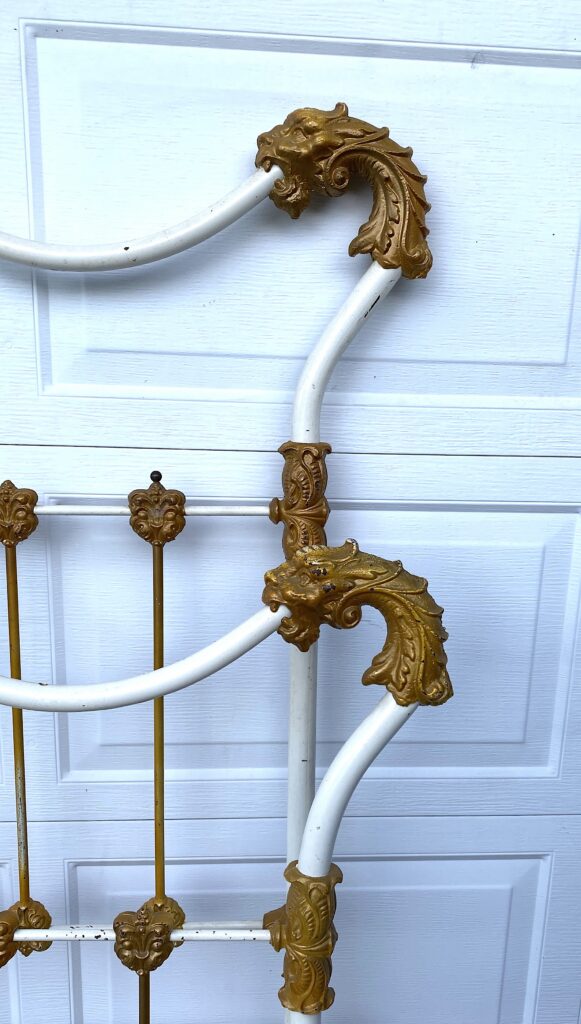
The bedroom has traditionally been considered one of the most private and vulnerable spaces within the home. Incorporating protective symbols into bedroom furniture was not unusual. A dragon positioned on a headboard or footboard could be seen as a symbolic guardian watching over the sleeper.
Victorian households often attached great significance to symbolism, even when the meanings were only loosely understood. A dragon casting may therefore have served both a decorative and psychological purpose, offering a sense of strength and protection within the home.
Gothic Revival Influence
Another important factor behind the appearance of dragons on antique iron beds was the Gothic Revival movement.
Beginning in the late eighteenth century and continuing throughout much of the nineteenth century, Gothic Revival architecture and design celebrated medieval forms and motifs. Designers looked back to castles, cathedrals, heraldry, and legendary creatures for inspiration.
Dragons featured prominently in medieval art and architecture. Gargoyles, carved beasts, and dragon-like creatures adorned churches and public buildings across Europe. Furniture designers adopted similar imagery, incorporating dragons into chairs, tables, fireplaces, and iron beds.
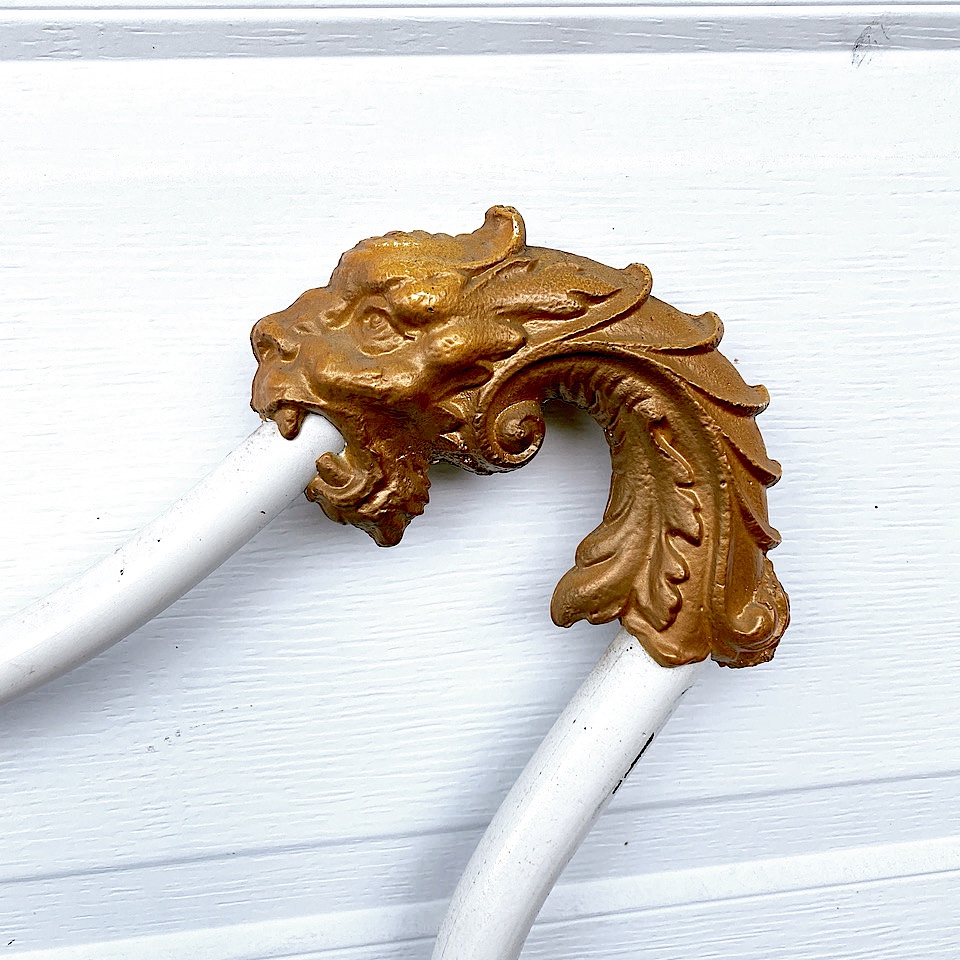
Many surviving examples of Victorian antique iron beds display castings with distinctly Gothic characteristics, including winged dragons, serpentine bodies, and fierce expressions. These details reflected the era’s fascination with romanticized visions of the Middle Ages.
The Influence of Asian Design
The nineteenth century also saw growing interest in Asian art and design. International exhibitions, expanding trade routes, and imported decorative objects introduced Western audiences to new artistic traditions.
Design movements such as Chinoiserie and Japonisme encouraged furniture makers to experiment with Eastern-inspired motifs. Dragons were among the most recognizable and admired symbols borrowed from Asian art.
Some iron bed castings feature dragons with elongated bodies, flowing forms, and stylized details that differ noticeably from traditional European dragons. These examples may reflect the influence of Chinese or Japanese artistic traditions.
For Victorian consumers, such designs offered an appealing sense of sophistication and cosmopolitan taste. Owning an antique iron bed decorated with exotic motifs suggested an awareness of global artistic trends.
Advances in Iron Casting Technology
The popularity of dragon motifs was also closely connected to improvements in manufacturing techniques.
By the mid-nineteenth century, foundries had developed increasingly sophisticated methods for producing decorative cast iron components. Intricate patterns could be reproduced repeatedly while maintaining impressive levels of detail.
This technological progress enabled manufacturers to create highly ornamental iron beds featuring complex dragon castings that would have been difficult or impossible to produce by hand at an affordable price.
Designers embraced the opportunity to showcase the capabilities of modern foundries. Dragons, with their scales, wings, claws, and expressive faces, provided an ideal subject for demonstrating the skill of the pattern maker and the precision of the casting process.
Today, these detailed castings are often among the most admired features of surviving antique iron beds.
Regional Variations in Dragon Designs
Collectors soon discover that not all dragon castings are alike.
Different manufacturers, foundries, and regions developed their own interpretations of the dragon motif. Some designs appear fierce and dramatic, while others are highly stylized and decorative.
British antique iron beds often feature dragons inspired by heraldic traditions and Gothic Revival aesthetics. Continental European examples may display more elaborate and fantastical forms. Meanwhile, some American iron beds incorporate dragons alongside other popular Victorian motifs such as eagles, flowers, and scrollwork.
These regional variations add another layer of interest for collectors seeking to identify the origins and age of a particular bed.
Why Collectors Love Dragon Castings
Dragon-decorated antique iron beds remain especially desirable among collectors for several reasons.
First, they are visually striking. Even among highly decorative Victorian furniture, dragon castings tend to stand out. Their dramatic appearance creates an immediate focal point within a room.
Second, dragon motifs tell a story. They connect furniture to broader traditions of mythology, folklore, architecture, and decorative art. Collectors often appreciate pieces that carry rich symbolic meaning.
Third, many dragon castings demonstrate exceptional craftsmanship. The level of detail found in high-quality examples highlights the artistry of nineteenth-century pattern makers and foundry workers.
Finally, dragon-themed iron beds are relatively uncommon compared with more conventional floral or geometric designs. Their rarity often increases collector interest and can make them particularly memorable additions to a period interior.
Caring for Antique Iron Beds with Decorative Castings
Owners of dragon-decorated iron beds should take special care when cleaning and restoring them.
The intricate details that make dragon castings so attractive can also be vulnerable to damage from aggressive cleaning methods. Gentle cleaning, careful rust treatment, and sympathetic restoration are generally preferable to excessive refinishing.
Preserving original paintwork, decorative highlights, and historic finishes can help maintain both the character and value of an antique iron bed. When restoration is necessary, retaining as much original material as possible is usually the best approach.
Because dragon castings often contain fine details, professional restoration may be worthwhile for particularly rare or significant examples.
Dragons and the Enduring Appeal of Antique Iron Beds
The continued popularity of antique iron beds owes much to their combination of practicality, beauty, and history. Dragon castings perfectly illustrate these qualities.
They demonstrate the remarkable capabilities of nineteenth-century iron founders, reflect the artistic movements of their era, and connect everyday furniture with ancient traditions of symbolism and storytelling.
Whether viewed as guardians, emblems of strength, expressions of Victorian imagination, or simply beautiful decorative elements, dragons continue to fascinate modern collectors. Their presence transforms an ordinary iron bed into something far more distinctive—a piece of furniture with character, history, and a story to tell.
For enthusiasts of antique iron beds, discovering a bed adorned with dragon castings offers a glimpse into a time when furniture was designed not merely for function, but also to inspire wonder. More than a century after they were first cast in iron, these mythical creatures still stand watch from headboards and footboards, preserving their timeless appeal for future generations.