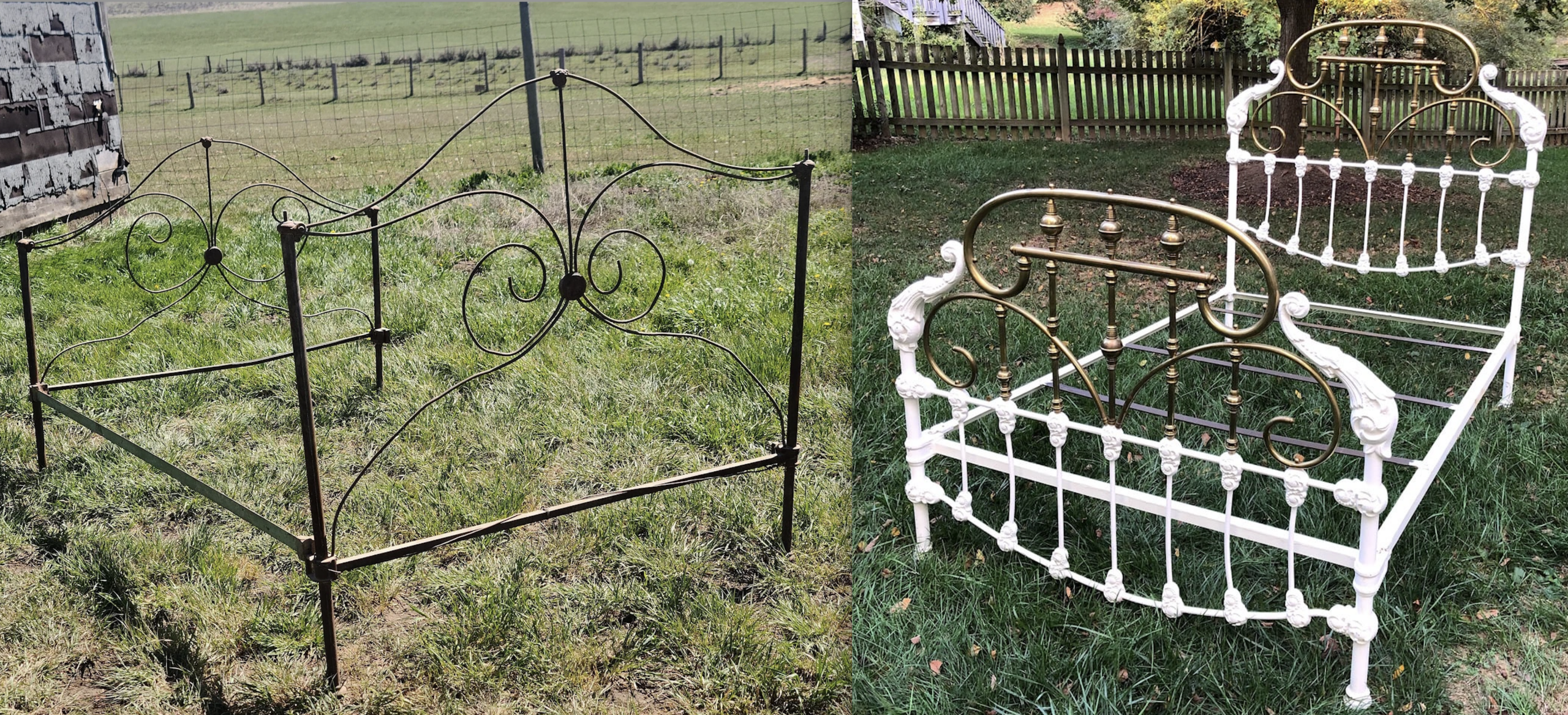
Put two antique iron beds side by side and, at first glance, they may appear to be almost the same. Both are old. Both are made of iron. Both may have beautiful painted finishes and impressive silhouettes. Yet one may be worth several times more than the other.
So, what makes the difference?
It isn’t simply the age of the bed.
And it isn’t always the condition.
More often, the answer is found in something much easier to overlook: how much design, craftsmanship and detailed ironwork went into making it.
Look closely at a truly exceptional antique iron bed and you begin to see that it is much more than a framework for holding a mattress. The curves, scrolls, rods, tubing, castings, feet and decorative elements all tell a story about the amount of time, skill and thought that went into its creation.
In the world of antique iron beds, the details can make all the difference.
Straight Lines Versus Curves and Scrolls
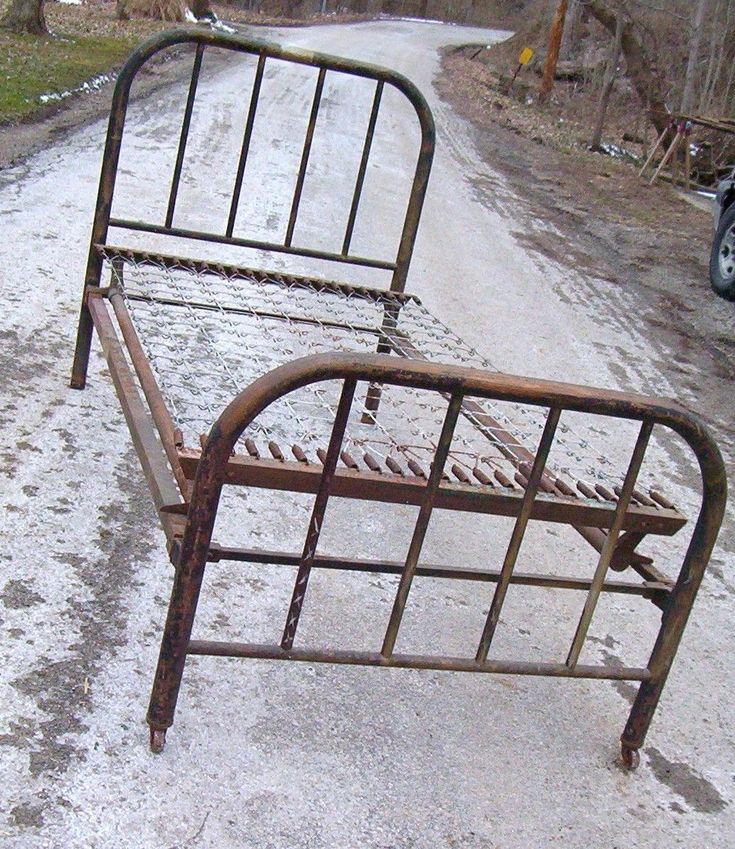 One of the first things to notice when comparing antique iron beds is the amount of ornamental ironwork.
A relatively simple bed may rely heavily on straight iron rods, simple horizontal and vertical lines, and a limited number of decorative connections. There is certainly beauty in that simplicity, and some collectors specifically appreciate a clean, restrained design.
But compare that bed with one filled with graceful curves, sweeping scrolls, rounded tubing and elaborate flowing patterns, and you begin to appreciate the additional work involved.
Curves are not as simple as straight lines.
A decorative scroll has to be shaped correctly. Multiple scrolls need to be balanced and symmetrical. Curved rods have to meet other components precisely. Tubing may have to be bent to specific dimensions. And the finished design has to look right from across the room as well as up close.
The more complicated the design, the more opportunities there are for craftsmanship to show.
This is one reason that an elaborately designed antique iron bed can command a considerably higher price than a simpler example.
It is not just more iron. It is more work.
The Importance of Castings
Another major difference between an ordinary iron bed and a truly exceptional one can be found in its castings.
Cast iron allowed manufacturers and craftsmen to create shapes that would have been difficult, if not impossible, to achieve using simple rods and tubing alone.
And some antique beds made extraordinary use of that capability.
Look for large, substantial castings with crisp, intricate definition. Floral arrangements, leaves, scrollwork, decorative brackets, finials and elaborate feet can transform an otherwise ordinary iron framework into something approaching a work of decorative art.
Some beds feature beautifully formed floral castings that seem almost sculpted. Others have elaborate feet, including wonderfully expressive claw feet, which can become one of the most memorable features of the entire bed.
These aren’t insignificant decorations.
They represent design decisions, patterns, molds, production work and assembly. They also add visual weight and character to the bed.
And when you see a bed with numerous substantial castings, you are often looking at evidence of considerably more manufacturing effort than you would find on a bed assembled primarily from straight rods.
Why More Castings Can Mean More Work
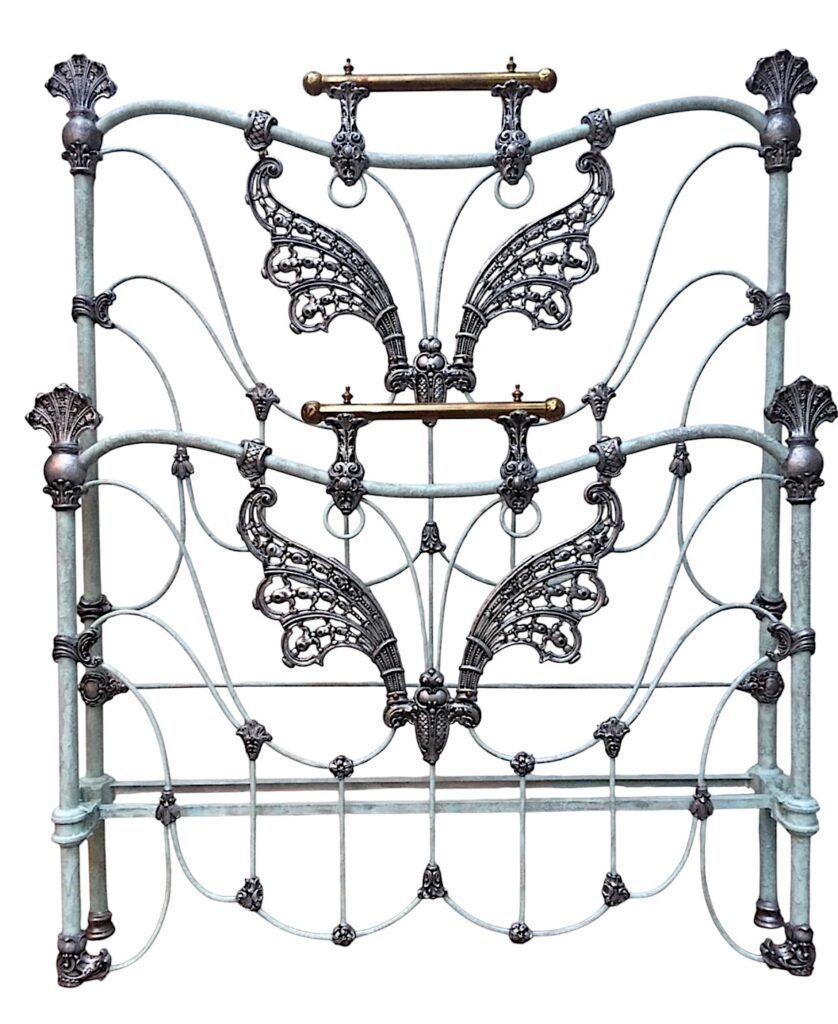 There is another detail that is easy to miss.
Castings weren’t simply placed on a bed because somebody thought they looked pretty.
They could also play an important role in connecting and securing the various elements of the design.
Imagine a bed built with a relatively simple series of straight rods. There may be only a handful of places where components need to come together.
Now imagine a much more elaborate bed filled with sweeping curves, intersecting rods, ornamental tubing and decorative forms.
All of those elements have to be connected.
That can require additional castings, brackets, sockets and other components to bring the design together properly.
In other words, an elaborate bed can require considerably more than simply bending a few pieces of iron into attractive shapes. The entire structure has to be engineered so that the decorative design and the functional purpose of the bed work together.
That is where craftsmanship becomes particularly important.
When Ironwork Becomes Art
There is a point where an antique iron bed stops looking like a simple piece of furniture and starts looking like a piece of sculpture.
That transformation usually happens through design.
A beautiful antique iron bed may have a strong architectural shape, but it is the ornamental details that draw you closer.
Your eye follows a sweeping scroll.
Then another.
You notice how the curves mirror one another.
You see a floral casting tucked into the design.
Then you notice the feet.
Then the finials.
Then the unusual shape of the tubing.
Suddenly, you’re no longer looking at “an old iron bed.”
You’re looking at the work of people who cared about how that bed was going to look.
That distinction matters.
During the great period of ornamental iron furniture manufacturing, foundries and individual craftsmen could take considerable pride in the quality of their work. A bed was a functional object, but it could also be an opportunity to demonstrate design ability, technical skill and craftsmanship.
The finest examples reflect that pride.
You Can See the Workmanship
One of the fascinating things about antique iron beds is that their workmanship is often visible.
You don’t necessarily need to be an expert to appreciate it.
Stand back and look at the overall design.
Does it have graceful movement?
Are the curves flowing and balanced?
Do the ornamental elements complement one another?
Then move closer.
Look at the castings.
Are the details sharp and well defined, or are they relatively plain?
Are the floral elements substantial?
Are the feet elaborate?
Are the rods and tubes smoothly formed?
Do the connections appear thoughtfully designed?
The closer you look, the more information the bed gives you.
And that is one of the great pleasures of collecting antique iron beds.
The value is often hiding in plain sight.
Why Two “Antique” Beds Can Have Very Different Values
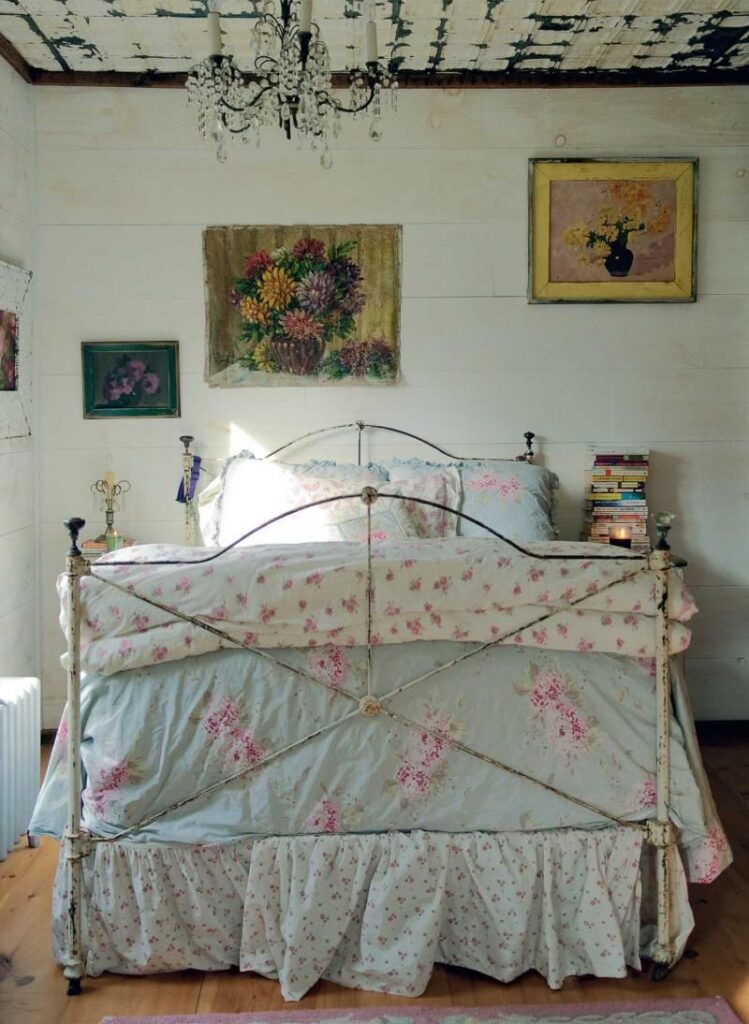 This is where many people become surprised.
They may see two beds described as antique and assume that their values should be relatively close.
But “antique” is only the beginning of the conversation.
Two beds from roughly the same period can have dramatically different levels of design and craftsmanship.
One might have a simple headboard made primarily of straight rods with modest castings.
The other might feature elaborate scrolling, curved tubing, multiple decorative castings, floral motifs, ornamental feet and carefully balanced architectural details.
Both are antique.
But they are not necessarily equal examples of antique ironwork.
The second bed represents a greater investment of design, materials, labor and craftsmanship.
And collectors often recognize that difference.
More Ornament Isn’t the Only Consideration
There is an important qualification, however.
More decoration does not automatically make an antique iron bed more valuable.
Condition matters.
Rarity matters.
Originality matters.
Provenance can matter.
The desirability of a particular design or manufacturer can matter.
And, of course, the quality of the workmanship matters enormously.
A heavily decorated bed that has been poorly repaired or substantially altered may not be as desirable as a simpler bed that retains its original components and excellent craftsmanship.
The goal isn’t simply to count the number of scrolls and castings.
It is to understand what those details tell you about the bed.
Are they beautifully executed?
Are they original to the design?
Do they work together as a cohesive composition?
Do they demonstrate the skill and imagination of the people who created the bed?
Those are much better questions.
Look Beyond the First Impression
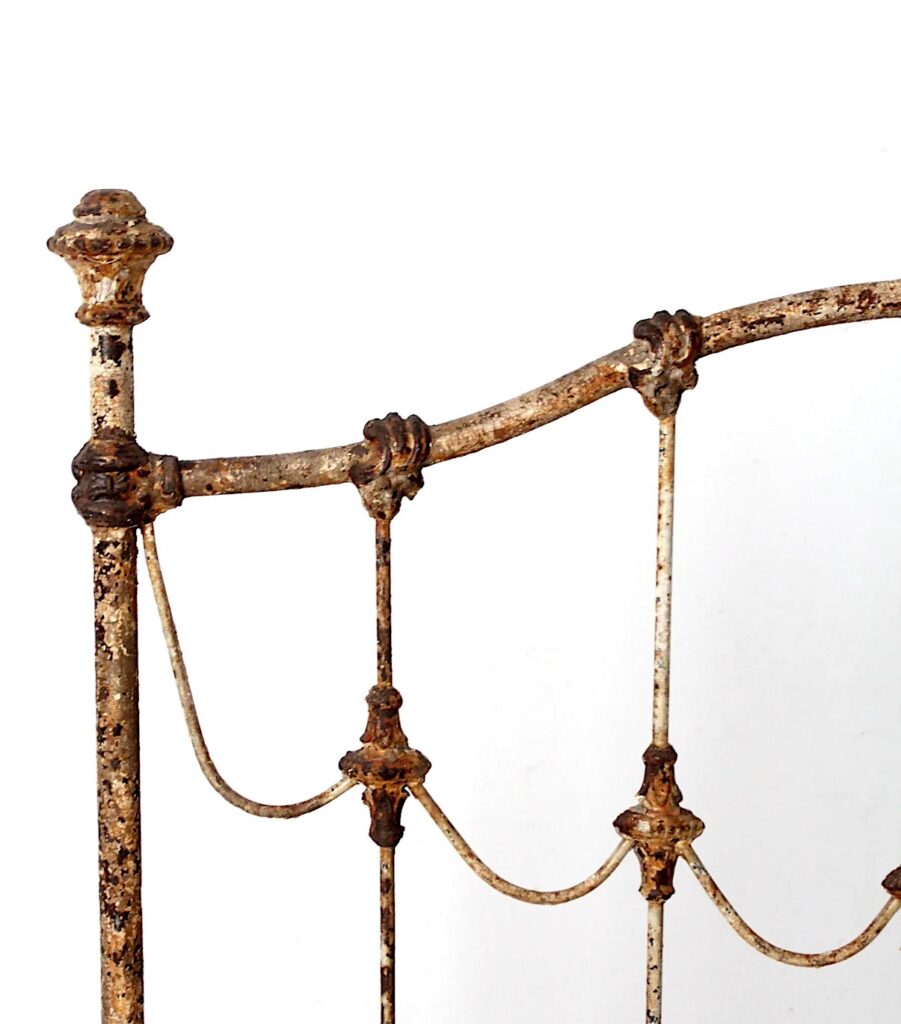 Perhaps the best advice when evaluating an antique iron bed is simple:
Don’t make your judgment from across the room.
A bed may look attractive in a photograph or at first glance, but its real character often reveals itself when you take the time to examine it.
Look at the amount of ironwork.
Study the curves.
Follow the scrolls.
Examine the castings.
Look at the feet.
Notice the floral formations.
Pay attention to how the rods and tubing are secured.
And then ask yourself a very simple question:
How much work did it take to create this?
That question can tell you a great deal.
A straight line is relatively simple.
A graceful curve requires more.
A series of balanced scrolls requires more still.
A detailed floral casting requires design and production.
An elaborate claw foot requires even more.
And when all of those elements are brought together into one beautifully proportioned bed, you’re looking at something that represents far more than its raw material.
You’re looking at craftsmanship.
The Details Tell the Story
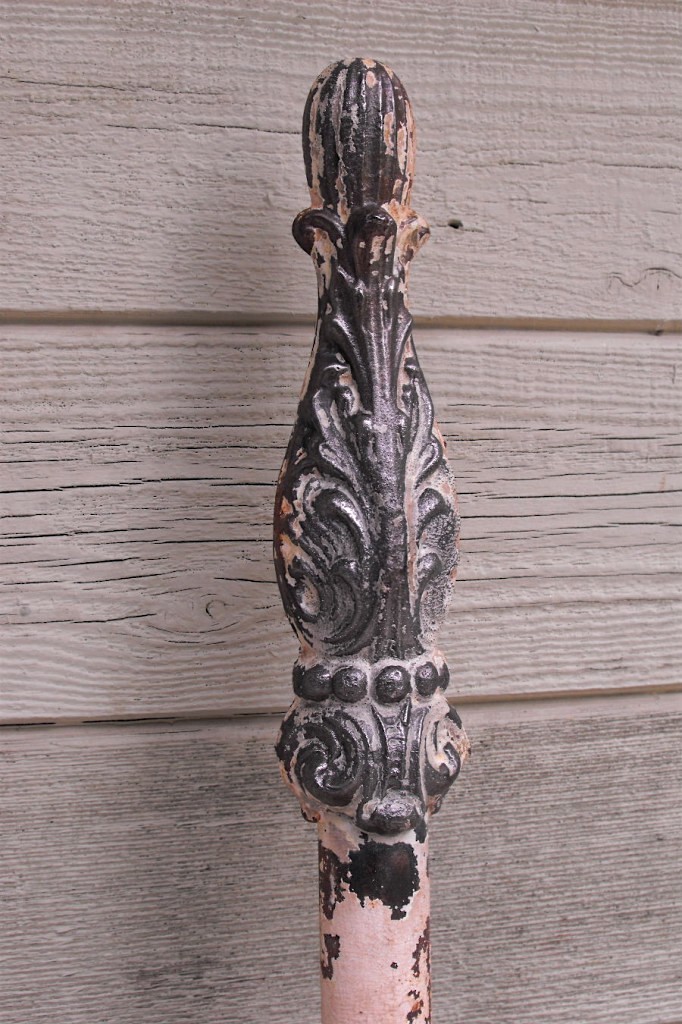 Ultimately, the difference between an ordinary antique iron bed and an exceptional one is often found in the details.
It is in the extra curve.
The additional scroll.
The beautifully defined casting.
The unusual floral element.
The elaborate foot.
The carefully engineered connection.
The symmetry.
The proportion.
The quality of the finished work.
These are the things that separate a bed that was simply made from one that was designed and crafted.
And perhaps that is the most important thing to remember when considering the value of an antique iron bed.
You aren’t simply buying old iron.
You are buying the evidence of the work that someone put into transforming that iron into something beautiful.
The more sophisticated the design, the more intricate the castings, and the greater the quality of the craftsmanship, the more likely it is that the bed will stand apart from the ordinary.
So the next time you encounter two antique iron beds that look similar in age, don’t ask only, “Which one is older?”
Take a closer look.
Count the curves.
Follow the scrolls.
Study the castings.
Look at the feet.
Examine how everything comes together.
Because sometimes the difference between an ordinary antique iron bed and a truly valuable one isn’t obvious at first glance.
It’s in the craftsmanship hiding in the details.