Your antique iron bed isn’t too tall. Your box spring is.
It sounds almost too simple, but after more than 50 years of working with antique iron beds, I’ve seen the same problem countless times.
Someone finds a beautiful 100- or 150-year-old iron bed. They restore it, put it in the bedroom and can’t wait to see the finished result. Then the mattress and box spring arrive.
Suddenly, the bed looks enormous.
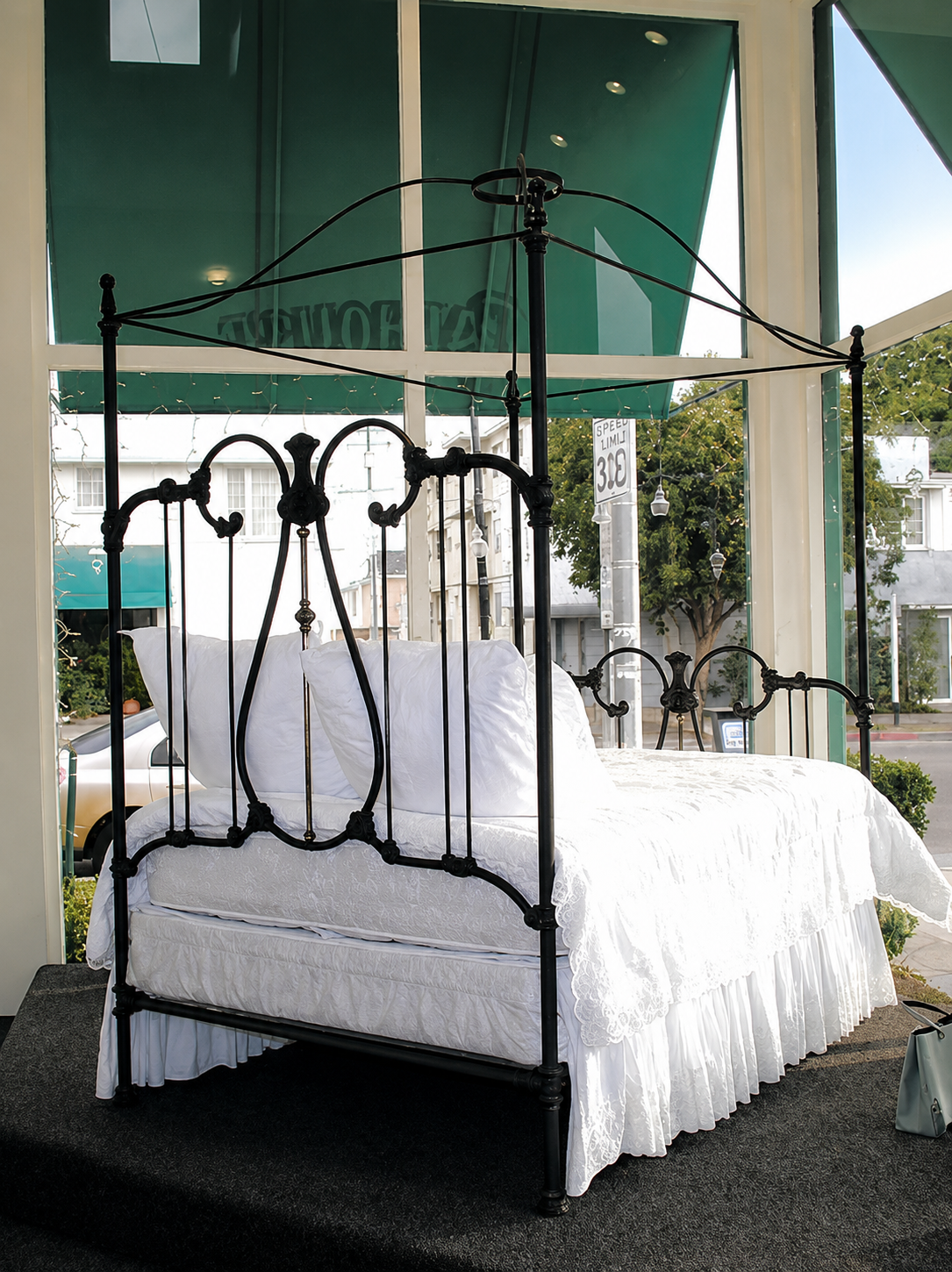
The top of the mattress may sit so high that much of the headboard disappears behind it. Decorative castings that originally helped define the design are hidden by bedding. And instead of looking graceful and beautifully proportioned, the antique iron bed can look awkwardly tall.
The natural reaction is often:
“Why did they make these old iron beds so high?”
But in many cases, they didn’t.
The problem isn’t the antique bed. It’s that we’re putting a modern sleep system—with a thick mattress sitting on an equally substantial box spring—onto a bed that was never designed for that combination.
Fortunately, there is a remarkably simple solution.
It’s called a bunkie board.
Antique Iron Beds Were Designed for a Different Kind of Bedding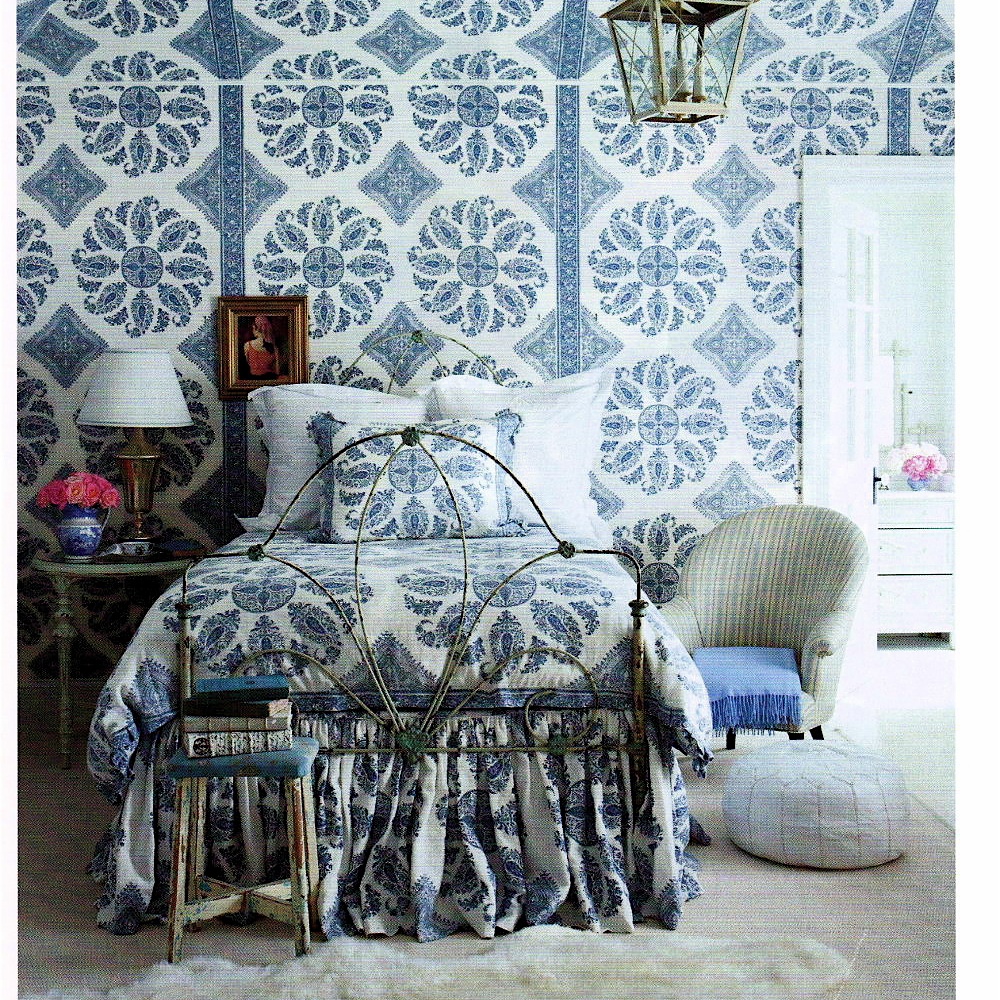
When original American antique iron beds were being manufactured in the late 1800s and early 1900s, bedding was very different from what we buy today.
Mattress construction changed repeatedly over the following century. Today’s mattresses can be remarkably thick, with pillow tops, multiple layers of foam and elaborate internal support systems.
Then we sometimes put that already-thick mattress on top of a conventional box spring or foundation.
That combination can add a tremendous amount of height.
On a contemporary bed designed around today’s bedding dimensions, that may not be a problem.
On an antique iron bed, however, it can completely change the proportions.
Remember, the headboard and footboard of an antique bed weren’t merely there to hold the mattress.
They were the design.
The curves of the tubing, decorative castings, brass accents, porcelain details and ornamental ironwork were intended to be seen. Those details were what distinguished one manufacturer’s bed from another and a simple iron bed from a more elaborate and expensive model.
Cover half of the headboard with a mattress and box spring and you’re hiding the very craftsmanship that makes the bed special.
So What Exactly Is a Bunkie Board?
A bunkie board is essentially a thin, supportive foundation placed underneath a mattress.
Rather than using a tall conventional box spring, a bunkie board provides a lower-profile surface for supporting the mattress.
That’s exactly why it can work so well with antique iron beds.
Instead of stacking a thick mattress on top of another thick foundation, you’re eliminating several unnecessary inches beneath the mattress.
The mattress comes down.
The headboard becomes visible again.
The proportions of the bed begin to look the way they should.
And suddenly the antique iron bed is once again the focal point of the room instead of disappearing behind the bedding.
It’s an incredibly simple change, but visually it can make an enormous difference.
Do Antique Iron Beds Need a Box Spring?
 This is an important question, and the answer depends partly upon the mattress you’re using and the support system beneath it.
A traditional box spring isn’t automatically required simply because that’s what many of us grew up using.
Modern mattresses vary considerably in their support requirements. Some are designed for platform foundations, some for closely spaced slats or solid foundations, and manufacturers may have specific requirements that should always be followed.
That’s why we recommend checking the requirements of your particular mattress before choosing any foundation.
But assuming the mattress manufacturer allows an appropriate low-profile foundation, there is no aesthetic reason to put a tall box spring on an antique iron bed simply because that’s what we’ve always done.
In many situations, a bunkie board or another properly supported low-profile foundation can provide a much better finished height.
Don’t Hide the Best Part of Your Antique Iron Bed
 Imagine buying a beautiful antique painting and then putting the frame over the bottom third of the artwork.
Nobody would do that.
Yet that’s essentially what can happen when we put an unnecessarily tall mattress-and-box-spring combination on an antique iron bed.
Some of the most interesting details on antique iron beds are located fairly low on the headboard.
There may be elaborate cast-iron chills around the intersections of the tubing. There may be decorative scrollwork, floral castings, geometric patterns or wonderful remnants of original painted decoration.
On some beds, those details represent an extraordinary amount of 19th-century foundry work.
Why cover them?
One of the reasons people choose authentic antique iron beds instead of newly manufactured reproductions is because they want the character and craftsmanship of the original.
You should be able to see it.
How High Should the Mattress Sit?
There isn’t one correct height for every antique iron bed.
Antique beds came in countless designs, heights and proportions, and mattress thickness also varies enormously.
Instead, look at the bed as a whole.
How much of the headboard is visible?
Can you see the important decorative castings?
Does the mattress appear visually balanced between the headboard and footboard?
Is the finished bed comfortable to get into and out of?
Those practical and visual considerations are more useful than trying to follow one arbitrary measurement.
When we’re working with an antique iron bed, we’re trying to achieve a comfortable sleeping height without sacrificing the proportions of the original bed.
Sometimes reducing the foundation by only a few inches makes a surprisingly dramatic difference.
Don’t Alter a 150-Year-Old Bed to Solve a Modern Mattress Problem
This may be the most important point of all.
If an antique iron bed looks too tall after the bedding has been installed, resist the temptation to immediately alter the antique.
The bed survived for a century or more exactly as it is.
The mattress didn’t.
Neither did the box spring.
Whenever possible, it makes much more sense to adapt the modern bedding system to the antique than to permanently alter the antique to accommodate modern bedding.
That’s a philosophy we’ve followed for decades.
We’re caretakers of these beds.
An original antique iron bed has already spent 100, 125 or perhaps 150 years becoming what it is. Every original casting, length of tubing, old repair and bit of surviving finish is part of that history.
If a removable bunkie board or lower-profile foundation solves the problem, why change the antique?
A Small Change Can Transform the Entire Room
There’s another benefit that people sometimes don’t anticipate.
Lowering the mattress doesn’t just improve the appearance of the bed.
It can improve the appearance of the entire room.
A mattress sitting unnecessarily high can make an iron bed feel visually heavy. The headboard appears shorter, the bedding dominates the composition and the wonderful open quality of an iron bed can be lost.
Lower the mattress several inches and the visual balance changes.
You see more ironwork.
You see more open space.
The headboard appears taller and more graceful.
The bedding becomes part of the bed rather than overwhelming it.
This is especially important with antique iron beds because one of their greatest decorating advantages has always been their visual lightness.
Unlike a massive wooden headboard, iron tubing allows you to see through the bed. That makes antique iron beds particularly useful in smaller bedrooms, guest rooms and rooms where you don’t want the bed to visually overpower everything else.
Proper mattress height helps preserve that advantage.
Before Buying a Bunkie Board
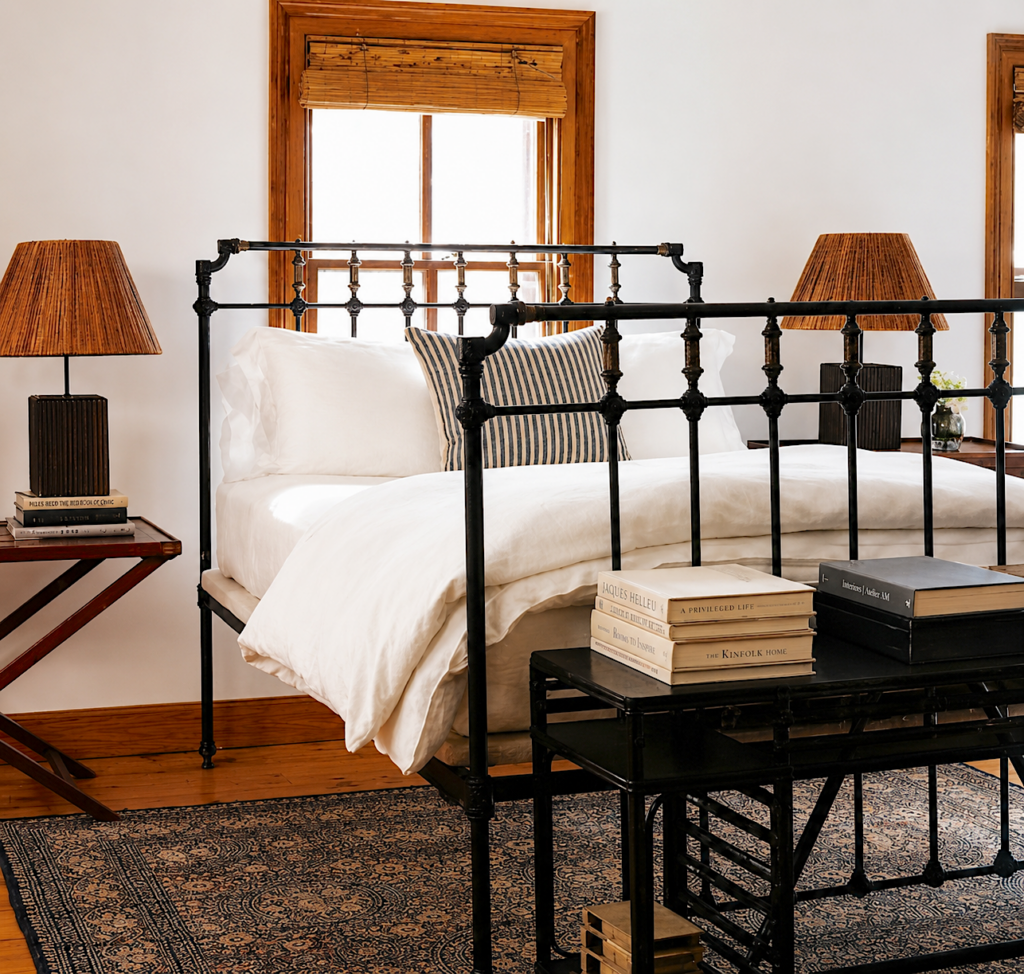 A bunkie board is a simple product, but don’t assume every bunkie board is appropriate for every mattress or antique bed.
Before purchasing one, consider:
- The size and weight of your mattress.
- The mattress manufacturer’s foundation requirements.
- The support already provided by the antique bed’s side rails and cross-support system.
- The spacing and strength of any slats or supports.
- The finished mattress height you’re trying to achieve.
- Whether additional center support is required, particularly with larger beds or converted king-size antique iron beds.
The objective isn’t simply to make the mattress lower.
The objective is to create a properly supported mattress at an appropriate height while preserving the appearance and integrity of the antique bed.
If you’re uncertain, ask your mattress manufacturer what type of low-profile foundation is approved for your particular mattress.
Sometimes the Simplest Solution Is the Best One
After spending more than five decades restoring, converting and living with antique iron beds, I’ve learned that some of the best solutions aren’t complicated.
A bed doesn’t always need to be modified.
The mattress doesn’t necessarily need to be replaced.
And you don’t automatically need a towering box spring simply because that’s how beds were traditionally assembled during much of the 20th century.
Sometimes you simply need to remove several inches from underneath the mattress.
That’s what makes a bunkie board such a useful option for many antique iron beds.
It solves a modern problem without asking the antique to change.
And when you’re dealing with something that has already survived well over a century, that’s usually the direction we prefer to take.
So if you’ve put a mattress and box spring on your antique iron bed and wondered why the finished bed suddenly looks much too high, take another look before blaming the bed.
Because chances are…
Your antique iron bed isn’t too tall.
Your box spring is.
To see our constantly changing collection of authentic original antique iron beds, visit CathouseBeds.com.