One of the questions I’m occasionally asked by customers is:
“Why did Victorian iron beds have those brass balls on the corners?”
It’s a great question. Surprisingly, after more than fifty years restoring and selling antique iron beds, I can tell you that there isn’t one definitive historical answer.
Unlike many Victorian inventions that were carefully documented in patents and engineering journals, the humble brass knob—or brass finial—on an iron bed remains something of a mystery. Manufacturers certainly fitted thousands of beds with them, but they rarely explained why.
After handling and restoring hundreds of original Victorian iron bedsteads over the decades, I’ve come to believe there are several likely reasons, with one standing out above the rest.
Victorian Iron Beds Were Competing with Brass Beds
 To understand the brass knobs, we first have to understand the Victorian bed market.
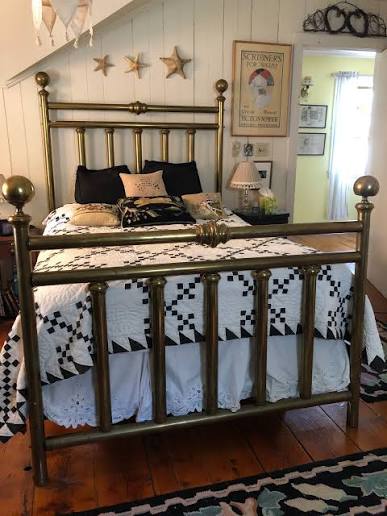
During the late nineteenth century, brass beds were the luxury choice. Their warm golden colour, polished appearance and association with wealth made them highly desirable. Unfortunately for many families, solid brass beds were also expensive.
At the same time, hundreds of small independent foundries across Britain and America were producing beautifully designed cast iron beds.
Those manufacturers had a problem.
How could they persuade customers to buy an iron bed instead of spending more money on a brass one?
One obvious solution was to borrow some of the appearance.
Adding polished brass balls, brass caps and decorative brass trim instantly transformed the appearance of an iron bed. From across the room, the gleaming brass caught the eye in much the same way a brass bed did.
It gave buyers much of the elegance of a brass bed while retaining the strength, durability and affordability of cast iron.
Many Victorian catalogues even described iron bedsteads as having “brass mountings” or “brass trimmings,” suggesting that the brass itself was an important selling point.
In my opinion, this was almost certainly the primary reason brass knobs became so popular.
Victorian Foundries Were Fierce Competitors
People often imagine Victorian manufacturers as huge industrial companies.
The reality was often very different.
Many iron bed makers were relatively small foundries competing with dozens of similar businesses. Every catalogue contained subtle differences in styling designed to attract buyers.
One company might offer heavier castings.
Another might advertise stronger side rails.
Others concentrated on decorative details.
The addition of polished brass finials gave manufacturers another feature to advertise while making their beds appear more expensive than they really were.
In many ways, it wasn’t much different from today’s car manufacturers offering chrome trim packages or luxury appearance upgrades.
The function hadn’t changed dramatically.
The appearance had.
A Simple Finishing Touch
There’s another explanation that makes practical sense.
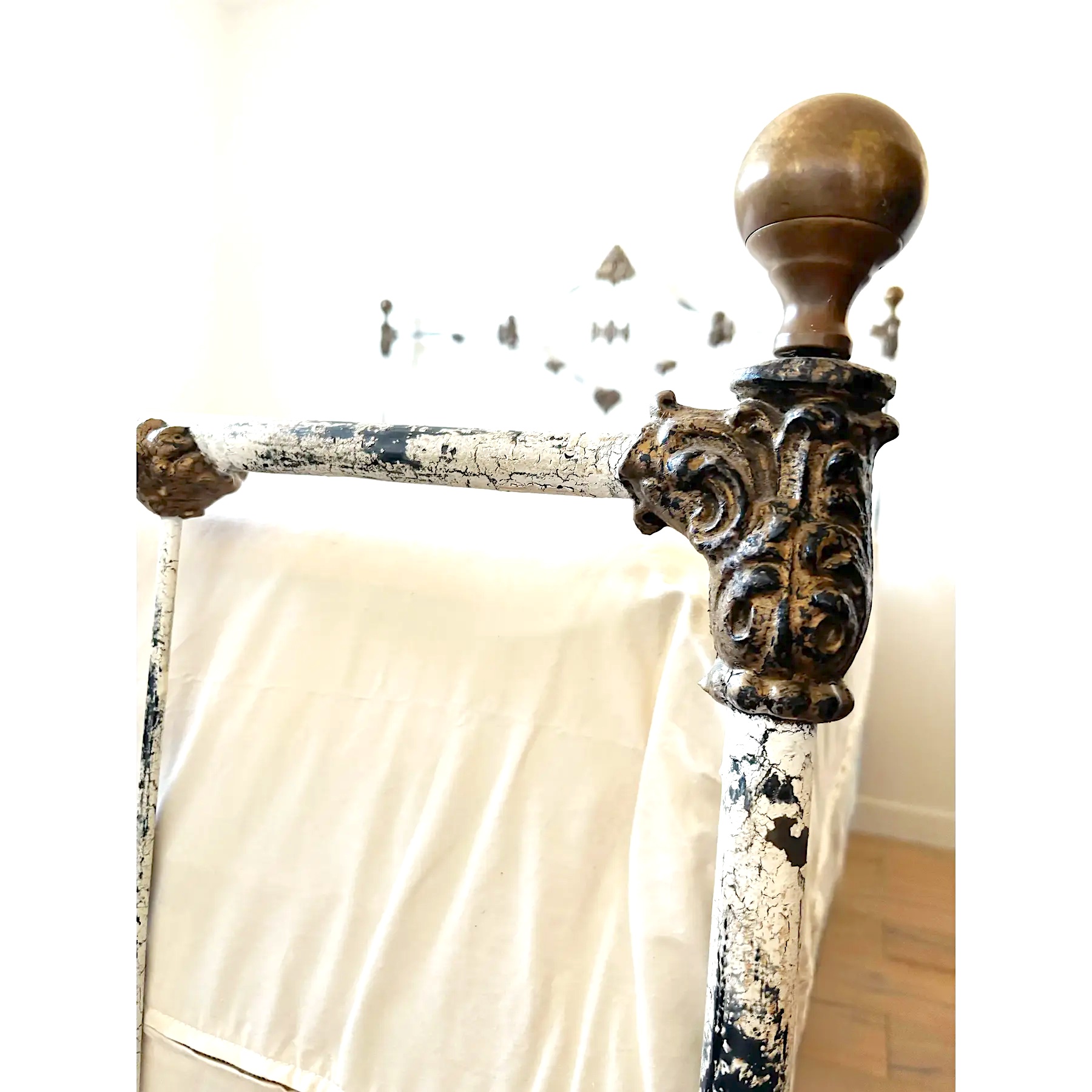
The tops of Victorian iron bed posts were usually threaded to accept decorative fittings.
Without a brass ball, the exposed threaded rod simply didn’t look finished.
The brass finial concealed the working parts of the bed while providing an elegant finishing touch.
Victorians paid enormous attention to decorative detail throughout the home.
Fireplaces had decorative grates.
Door handles were ornamental.
Light fittings were elaborate.
It would have seemed perfectly natural for a quality bedstead to receive the same treatment.
Were Brass Knobs Used as Hat Racks?
 Now here’s a theory that comes not from history books, but from decades of watching how people actually use antique beds.
How many times have you seen clothes hanging from the corner of a bed?
Quite a lot.
Even today.
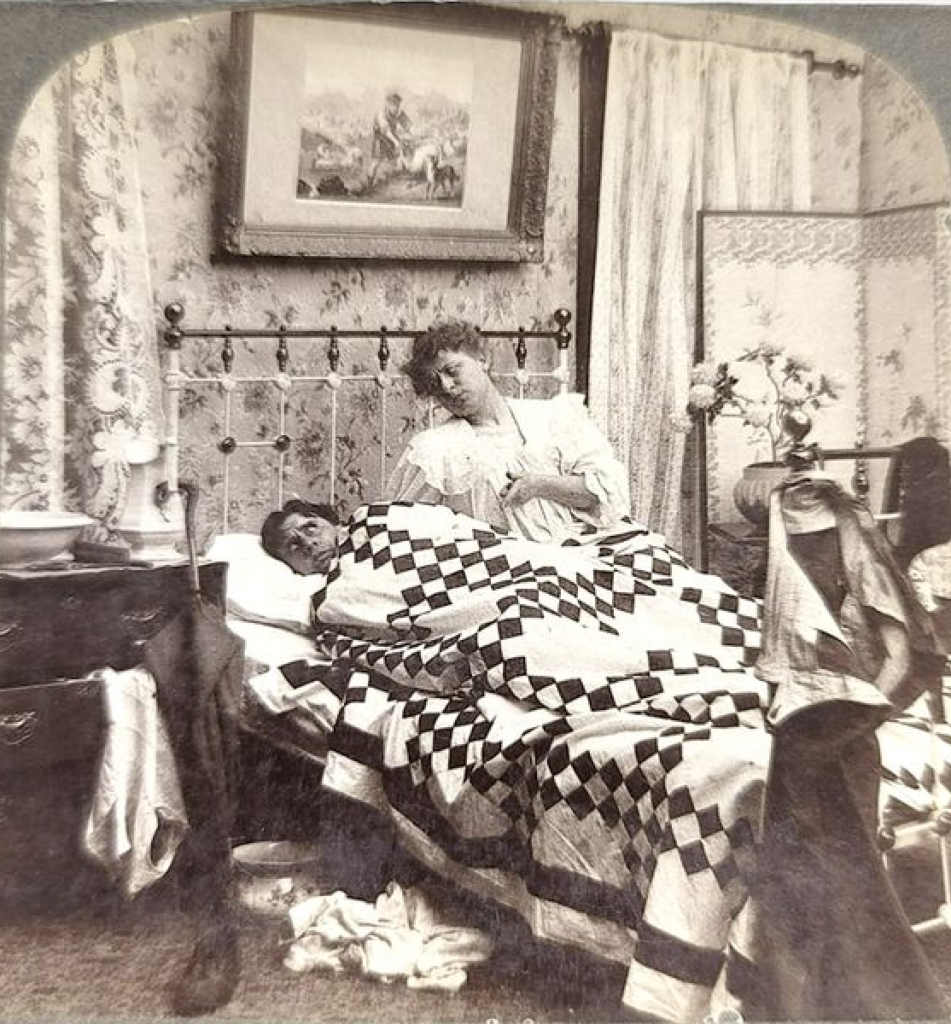
The rounded brass balls on Victorian iron beds are perfect for hanging a dressing gown, hat, shawl or tomorrow’s clothes.
Before fitted wardrobes became common, bedrooms were often much simpler than they are today.
People frequently used chairs, bedposts and hooks to keep everyday clothing close at hand.
Could the brass knobs have served that purpose?
Possibly.
Can I prove Victorian manufacturers designed them specifically for hanging clothing?
No.
But after more than fifty years around antique iron beds, I wouldn’t dismiss the idea either.
Sometimes practical uses develop naturally, whether or not they were originally intended by the designer.
Brass Was Easier to Keep Looking Beautiful
Victorian households valued cleanliness.
Unlike painted iron, polished brass developed a rich appearance that could easily be restored with regular polishing.
The contrasting combination of black or coloured enamel with bright brass also became one of the defining looks of late Victorian furniture.
That visual contrast helped iron beds feel lighter and more decorative than entirely painted bedsteads.
Why Some Iron Beds Have Brass Knobs—and Others Don’t
Collectors often notice that not every Victorian iron bed has brass finials.
That’s perfectly normal.
Some manufacturers produced plain utilitarian beds intended for hospitals, boarding houses or servants’ quarters.
Others created elaborate decorative models with large brass balls, brass collars and ornamental castings.
As with furniture today, buyers could often choose different levels of decoration depending upon their budget.
The brass was an upgrade.
What Experience Has Taught Me
Having restored antique iron beds for over fifty years, I’ve learned that history isn’t always as tidy as we’d like it to be.
Sometimes there simply isn’t one correct answer.
If someone asked me today why Victorian iron beds had brass knobs, this would be my answer:
First—and most importantly—they helped iron bed manufacturers compete with the popularity of expensive brass beds by giving customers much of the same elegant appearance.
Second, they provided an attractive finishing touch that completed the design of the bed.
And finally, whether intentionally or not, they became remarkably useful places to hang hats, dressing gowns and clothing, something many owners probably appreciated every single day.
The Enduring Appeal of Victorian Iron Beds
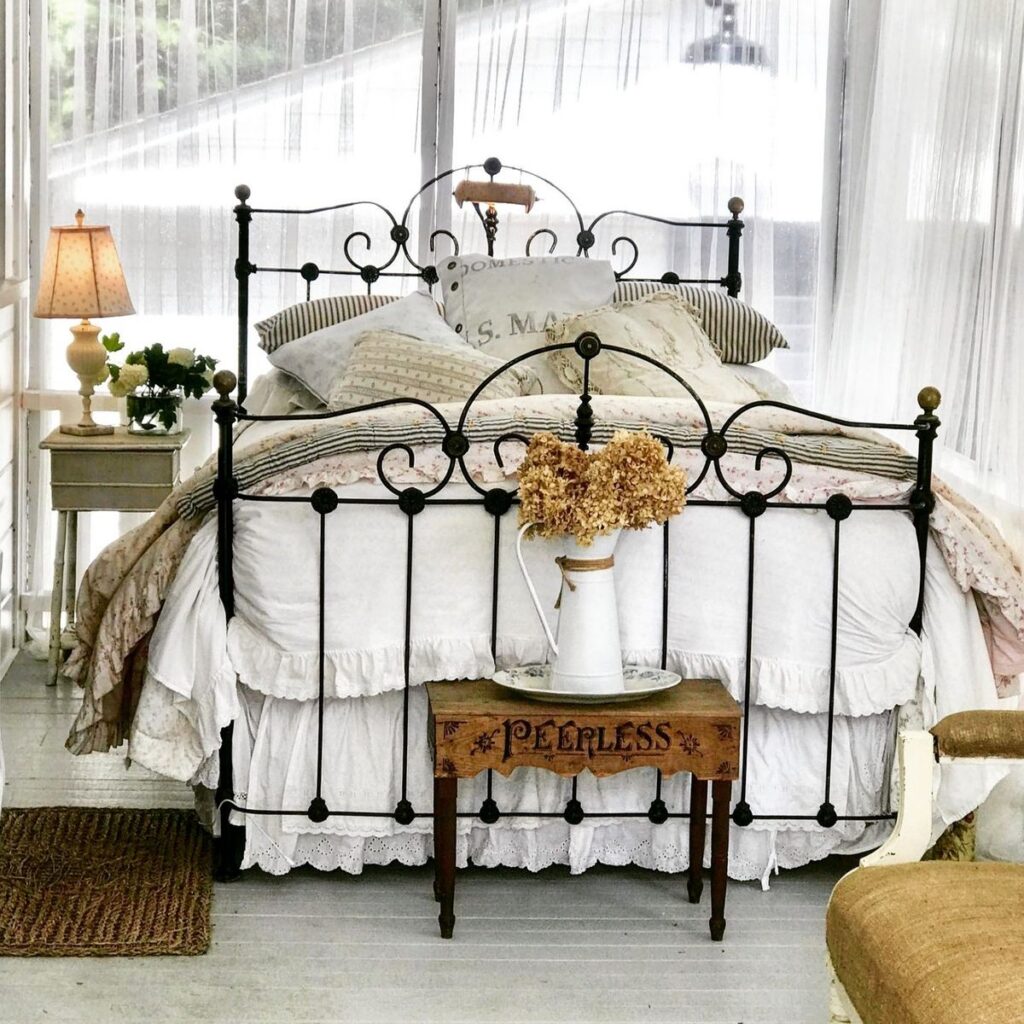 Today, the polished brass knobs remain one of the most recognisable features of an authentic Victorian iron bed.
They remind us that great furniture isn’t just about function.
It’s also about craftsmanship, style and the desire to create something beautiful.
Whether those gleaming brass balls were inspired by clever Victorian marketing, thoughtful design, everyday practicality—or perhaps a combination of all three—they continue to give antique iron beds a character that modern reproductions rarely capture.
After half a century working with original Victorian iron bedsteads, I still find it remarkable that such a small detail can generate so much curiosity.
Perhaps that’s part of the charm of genuine antique furniture.
Some of its greatest stories are still waiting to be discovered.