If you have ever wondered when the first antique iron beds were made in America, you might naturally assume the answer has something to do with Pittsburgh.
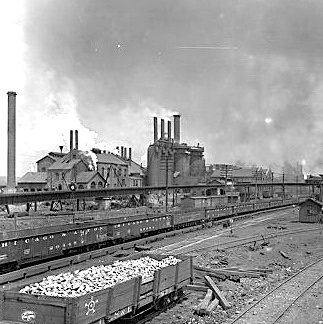
After all, Pittsburgh became synonymous with American steel. Andrew Carnegie’s Edgar Thomson Steel Works in Braddock, Pennsylvania, began producing steel rails in 1875, and the Pittsburgh region soon became one of the greatest steel-producing centers in the world.
“If you think America’s antique iron-bed story began with Pittsburgh’s steel mills, you’re going to have to go back another 40 years.”
Iron beds were already being made in America decades before 1875.
In fact, the history of American iron beds begins before the great Pittsburgh steel mills—and that distinction is important if we want to understand where the antique iron beds we find today really came from.
The Iron Bed Came Before the Steel Industry
 The first thing to understand is that an iron bed did not necessarily require the kind of mass-produced steel associated with Carnegie’s Pittsburgh mills.
During the early 19th century, American ironworkers already had considerable experience working with iron. Foundries, blacksmith shops and metalworking businesses existed throughout the young United States. Iron could be forged, rolled, cast and shaped into useful household and industrial objects long before modern steel production became dominant.
An early iron bed frame could be constructed from wrought iron bars, rods and other forms of iron, with cast iron components used for joints, ornaments or structural details.
That means the arrival of the American iron bed was not dependent upon the opening of a giant steel mill.
And we have some remarkable evidence to prove it.
1837: Iron Beds in the U.S. Army
 One of the earliest American references I have found is particularly compelling because it comes from the U.S. Army.
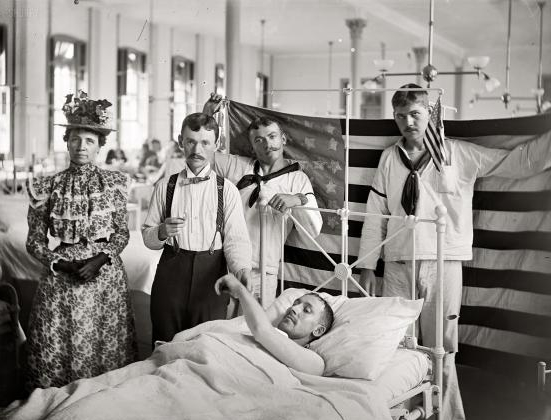
In 1837, the Army’s Surgeon General, Thomas Lawson, was looking for improvements to hospital equipment. The government was interested in replacing traditional wooden bedsteads with iron or metal versions.
Lawson had one single and one double metal bedstead made and sent to the War Department in the fall of 1837. They cost $15 each. The experiment was successful enough that Congress appropriated money for additional metal bedsteads, and the Army began purchasing them for military hospitals and barracks.
That is an extraordinary piece of history.
It tells us that by 1837, Americans were not merely imagining the possibility of an iron bed. American-made metal bedsteads were actually being produced, purchased and put into service.
And the Army quickly discovered some of the same advantages that would eventually make iron beds so popular in American homes.
They were durable.
They took up less space.
And perhaps most importantly in an era before modern sanitation, they were free of insects.
The Army’s experience with these early metal beds was so positive that additional orders followed.
So if someone asks, “When did iron beds first begin being made in America?” it would be difficult to justify giving 1875 as the starting point.
The evidence takes us back at least to the 1830s.
1842: An Even More Remarkable Clue
 There is another fascinating piece of evidence from the U.S. Patent Office.
In December 1842, Charles W. Curtis of New Haven, Connecticut, received a U.S. patent for an improved iron bedstead.
The patent is especially revealing because Curtis did not describe iron bedsteads as a brand-new invention.
Quite the opposite.
In his patent specification, Curtis specifically acknowledged that iron or metal bedsteads “have long been in use.” His invention concerned improvements to their construction.
That little phrase may be more important to the history of antique iron beds than it first appears.
If iron bedsteads had “long been in use” by 1842, their American story obviously began sometime before that date.
Curtis’s bed was designed in part for institutional use, including prison cells. The patent described the benefits of metal construction, including durability, cleanliness and resistance to vermin.
Again, we see the same themes that would later help propel iron beds into American bedrooms.
Cleanliness. Durability. Practicality.
The decorative Victorian iron bed that we recognize today was still waiting to evolve.
But the idea was already here.
So Where Were These Early Iron Beds Made?
 This is where the history becomes somewhat more difficult—and more interesting.
It is tempting to identify one American city as the birthplace of the iron bed. Unfortunately, the surviving evidence does not support such a simple answer.
The earliest American production appears to have been scattered among smaller metalworking operations rather than concentrated in one giant furniture industry.
New Haven, Connecticut, is significant because Charles W. Curtis was working there when he patented his improved iron bedstead in 1842. The U.S. Army’s early metal bedsteads were also being made before the country had anything resembling the enormous steel-producing infrastructure that would appear later in the century.
New York soon became another important center.
Charles P. Rogers & Co., established in New York City in 1855, became a major American bedding company and was involved in both the manufacture and importation of brass and iron bedsteads. The company itself describes Charles Rogers as a pioneer in manufacturing and importing brass and iron bedsteads.
This is important because it places American iron-bed production firmly in the 1850s, well before Pittsburgh’s great steel expansion.
And there were other small foundries and metalworking operations developing throughout the Northeast and Midwest.
Then Pittsburgh Entered the Story
 Now we can bring Pittsburgh into the story—but at the right point in the timeline.
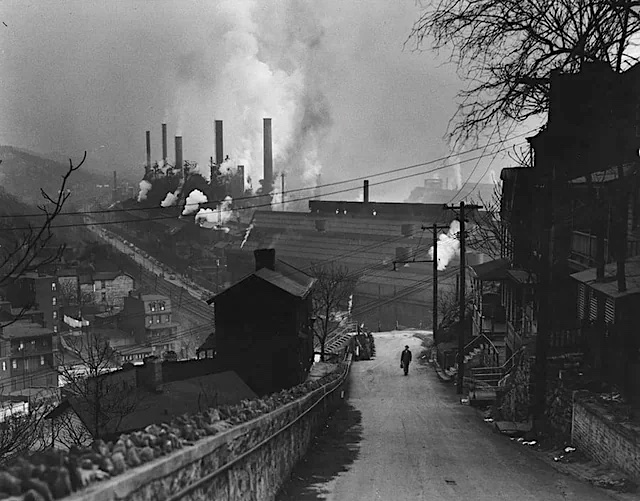
The Pittsburgh region already had an important ironmaking tradition before the rise of Carnegie’s steel empire. What changed dramatically in the 1870s was the scale and efficiency of American steel production.
The Edgar Thomson Works in Braddock, Pennsylvania, was constructed between 1873 and 1875 and began producing steel rails in 1875. The Library of Congress describes it as the first integrated Bessemer steel works constructed in the Pittsburgh district by Andrew Carnegie and an important turning point in transforming the Monongahela Valley from a region of scattered ironworks into an integrated steel-producing district.
So the statement that 1875 marked the beginning of Pittsburgh’s great steel era is quite reasonable.
But it would be misleading to say that 1875 marked the beginning of American iron-bed production.
It didn’t.
Instead, it marked the beginning of something else that would eventually have a profound effect on the iron-bed industry: large-scale, modern American steel production.
Iron Beds and the Rise of American Industry
This distinction also helps explain something I have noticed throughout my years dealing with antique iron beds.
Many of the beds we associate with the great Victorian period were not produced by enormous factories turning out thousands of identical pieces.
Quite the contrary.
During the middle and latter part of the 19th century, numerous smaller foundries and specialized manufacturers were producing iron beds in limited quantities.
Some were located around Pittsburgh and western Pennsylvania. Others were found in places such as Wheeling, West Virginia, and Chicago.
These businesses could be remarkably small compared with the steel giants that would soon dominate American industry.
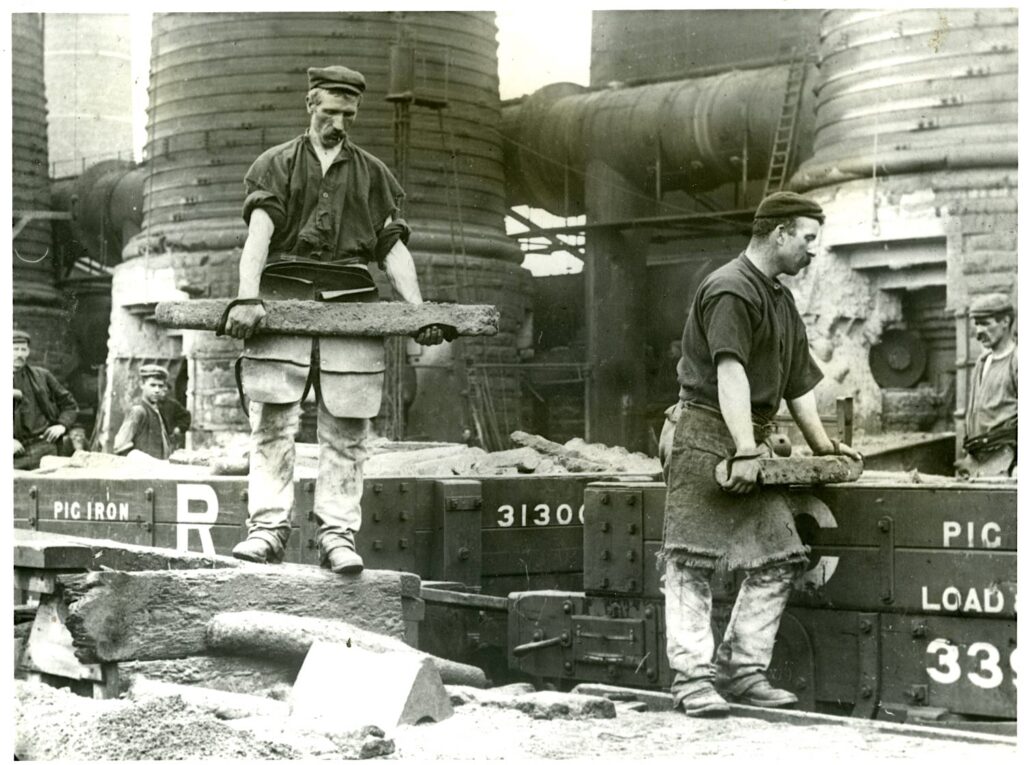
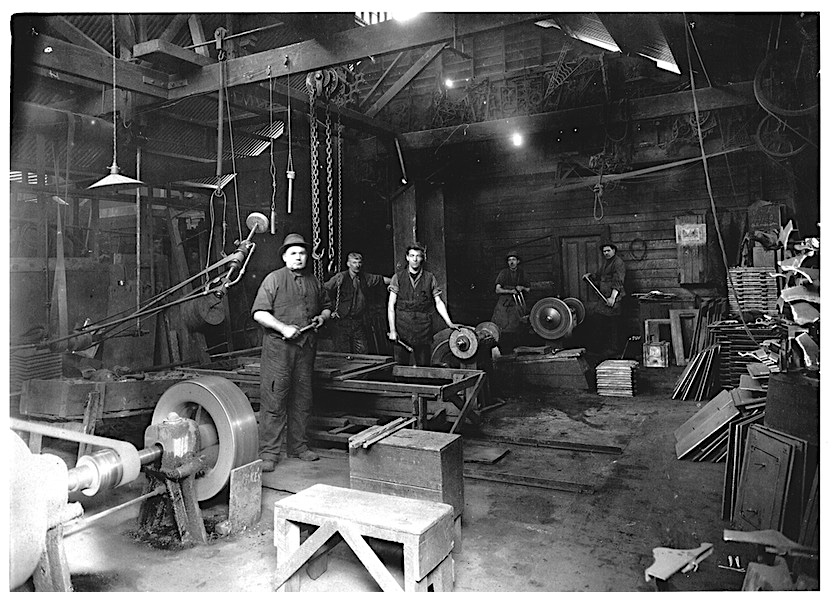
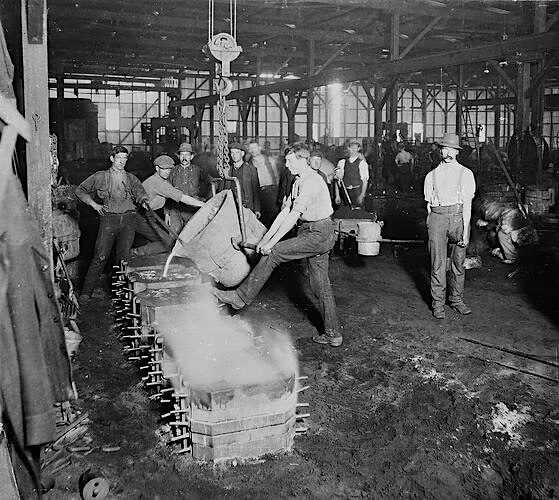
A bed might begin with iron tubing, rods and structural components, while decorative and connecting pieces were produced as individual castings. The castings could be poured into sand molds and then cleaned, fitted and assembled by skilled workers.
This helps explain why so many original antique iron beds have such individuality.
The decorative castings weren’t simply decoration added at the end.
They were often part of the identity of the bed.
A particular foundry could develop its own patterns, its own castings and its own combinations of curves, finials, scrollwork and ornamentation.
That is one reason two antique iron beds from the same general period can look completely different.
Why Pittsburgh Became So Important
If iron beds were already being produced throughout America before Pittsburgh’s steel boom, why does Pittsburgh feature so prominently in their history?
The answer is proximity.
Once the Pittsburgh region became one of America’s great centers for iron and steel production, it made economic sense for manufacturers and foundries requiring substantial quantities of metal to be relatively close to their source of raw materials.
And the transformation was enormous.
The Edgar Thomson Works produced its first steel rails in 1875. By the early 1880s, Carnegie’s Pittsburgh-area steel operations and other manufacturers had established a commanding position in the American steel market.
That expanding industrial infrastructure helped provide American manufacturers with increasingly consistent supplies of iron and steel.
It also helped make possible the transition from the earlier, highly individualized iron bed to the increasingly efficient production of metal beds that would become common in American homes, hospitals, hotels and institutions.
The Iron Bed Was Actually Ahead of Its Time
There is another reason I find this early history so fascinating.
The iron bed wasn’t originally popular because people thought it was an antique.
Obviously, nobody in 1840 was shopping for an “antique iron bed.”
They were buying one because it solved problems.
Wooden bedsteads could harbor insects in their joints and cracks. Iron could be cleaned much more easily. Iron was also durable, resistant to many of the problems that affected wooden furniture and could be constructed in ways that saved space.
The U.S. Army discovered these advantages in the 1830s. By the middle of the century, those same qualities were becoming increasingly attractive to the American public.
And eventually, the practical object became something much more.
American craftsmen began turning iron into furniture that was not merely functional, but beautiful.
That is when we begin to see the elaborate forms that collectors and designers treasure today.
So When Did American Antique Iron Beds Really Begin?
 If I had to put a date on it, I would be cautious about claiming one exact year.
The surviving documentation tells us that American metal bedsteads were definitely being produced and used by the late 1830s, and an 1842 U.S. patent provides further evidence that iron bedsteads were already established enough to be described as having “long been in use.”
By the 1850s, American commercial involvement was becoming much easier to document, including the manufacture and importation of iron bedsteads by firms such as Charles P. Rogers & Co. in New York.
And by the final decades of the 19th century, the expanding American iron and steel industry—particularly around Pittsburgh—provided the material infrastructure that helped the iron bed become an important part of American furniture history.
So perhaps the most accurate answer to the question “When and where did antique iron beds start being produced in America?” is this:
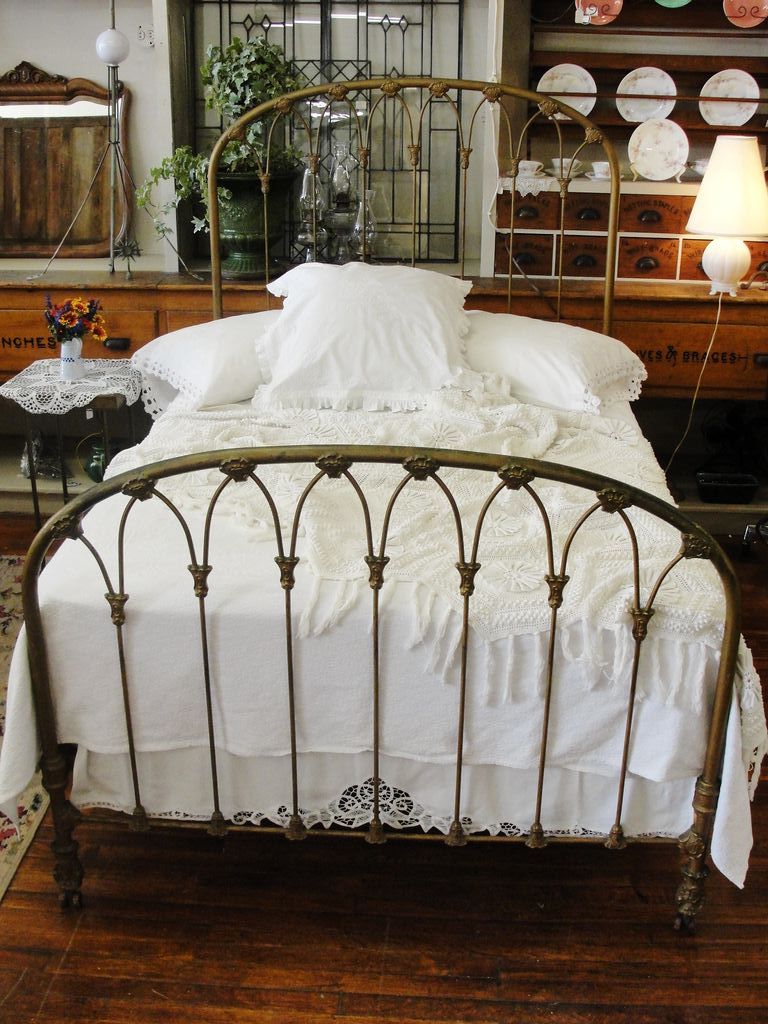
They began appearing in America in the 1830s, well before the great Pittsburgh steel mills. Their earliest production was not confined to one city, but developed among American metalworkers, foundries and manufacturers in several regions. By the middle of the 19th century, New York and other industrial centers were involved, and later in the century Pittsburgh and the surrounding Pennsylvania region became increasingly important as American iron and steel production exploded.
And that, to me, makes the story of an original American antique iron bed even more remarkable.
When you look at one today, you aren’t simply looking at an old piece of bedroom furniture.
You are looking at an object that belongs to a period of American history before Carnegie’s steel empire, before mass production as we know it, and before the modern industrial America that would eventually make iron beds commonplace.
Some of these beds have survived for well over a century.
And perhaps the most amazing part is that their story began before the steel industry that we usually associate with them even existed.
That is a pretty remarkable history for something that was originally made simply to sleep in.
Hope you’ll take the time to circle back around to see what we have to offer with our current inventory. Just click the “See Our Inventory” on our Homepage and we’ll email you photo’s of everything we currently have. https://www.cathousebeds.com/