There are some things about antique iron beds that seem like a wonderful idea—until you understand what can happen when that seemingly innocent feature is put to use.
Wheels are one of them.
For nearly fifty years, I have been buying, restoring, selling, moving and reassembling antique iron beds. And during all those years, I have rarely intentionally sold an antique iron bed with its original wheels attached.
The exception?
When a new owner specifically requests them.
And even then, I make sure they understand the potential problems before I agree to put them back on the bed.
It may sound strange. After all, why wouldn’t you want wheels on an antique bed?
The original manufacturers certainly had a reason for putting them there.
And when those beds were new, wheels could be a very useful feature.
The problem is that the wheels on an antique iron bed today are not dealing with the same circumstances they were dealing with when they were manufactured in the 1800s.
And there is one particular problem associated with those wheels that very few people ever consider.
It can potentially turn a beautiful, authentic antique iron bed into a bed that can no longer be safely used.
Why Did Antique Iron Beds Have Wheels?
 In the 1800s, wheels on beds weren’t necessarily intended to make rearranging a bedroom convenient in the way we might think about it today.
Households were different. Bedrooms were different. Floors were different. And, perhaps most importantly, the beds themselves were frequently moved for practical reasons.
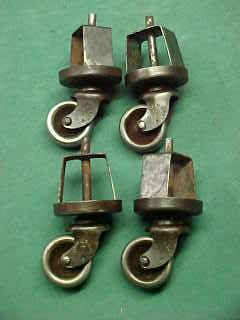
The wheels were generally made of wood, although metal wheels were also occasionally used.
When new, they were perfectly capable of doing what their manufacturers intended.
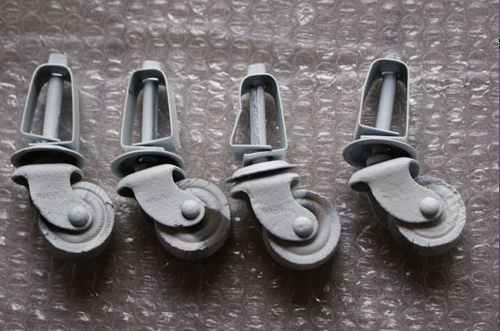
A wheel assembly consists of more than simply the wheel itself. There is an inner shaft and a small pin or axle that allows the wheel to turn and support the weight above it.
When those components were new, they were strong and functional.
But consider what happens over the next 100, 125 or 150 years.
The bed is moved.
Then it is moved again.
It is taken apart.
Reassembled.
Moved to another house.
Taken apart again.
Perhaps stored in an attic, basement, barn or warehouse.
Then moved once more.
Over generations, all of that movement places stress on the wheel assembly, particularly the small components supporting the wheel.
Fortunately, those parts can often be repaired or restored.
But the wheels themselves aren’t necessarily the greatest concern.
The real problem is what happens when people assume that because an antique iron bed has wheels, the entire bed is designed to be pushed or pulled around the room.
It isn’t.
At least not in the way many people assume.
The False Sense of Security
 This is where the problem begins.
Put wheels underneath an antique iron bed and something psychologically happens.
The bed suddenly looks mobile.
It feels as though you should be able to grab the headboard, push or pull it across the floor, and position it wherever you want.
And, technically, the wheels will allow you to do that.
But there is an enormous difference between being able to move something and being able to move it without damaging it.
That distinction is especially important with an antique iron bed.
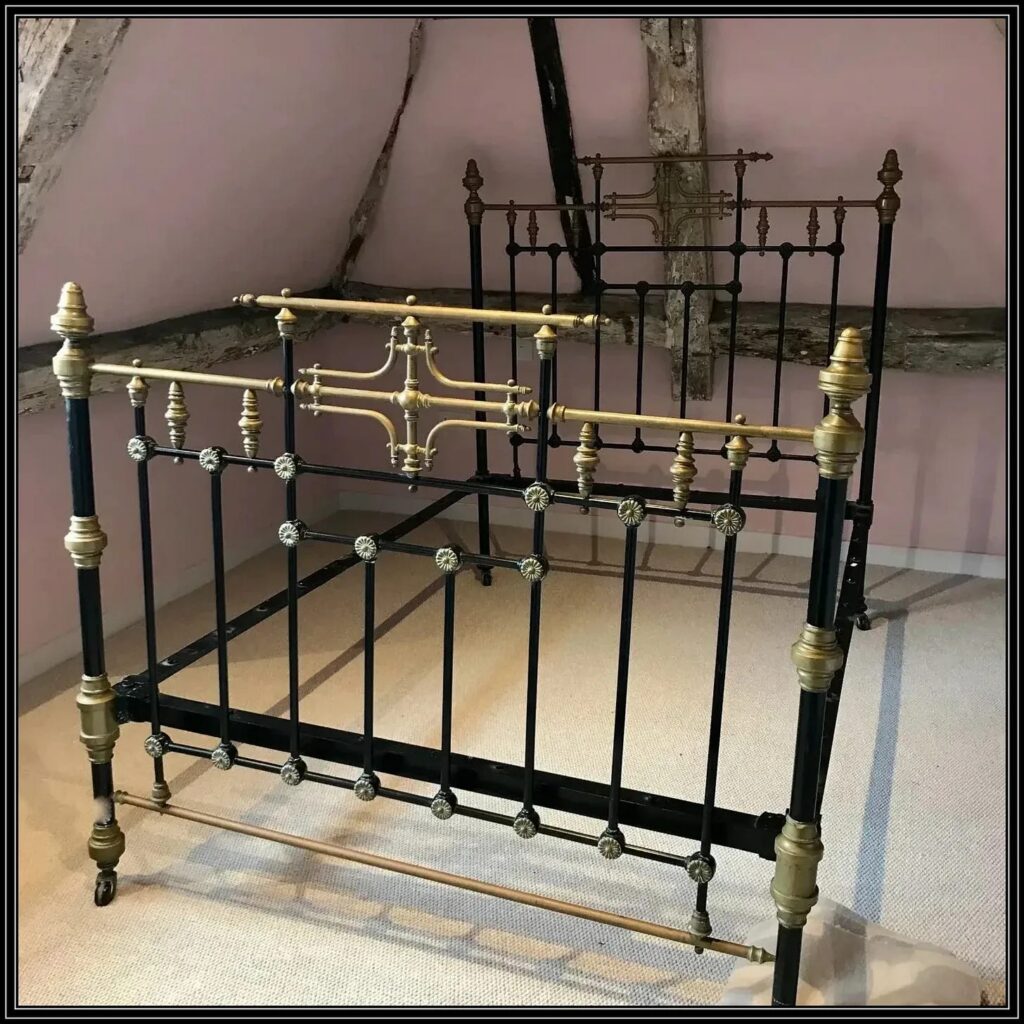
When an antique iron bed is properly assembled, the ends of the side rails are seated down into the cast iron “hitches” or receptacles on the headboard and footboard.
Once properly assembled, those connections are remarkably secure.
The bed is also “in square.”
In other words, the corners are at approximately right angles and the entire frame is sitting in the position in which it was designed to support weight.
That is exactly where you want it to stay.
The problem comes when the bed is moved by pulling on only one end.
What Happens When You Pull an Antique Iron Bed Out of Square?
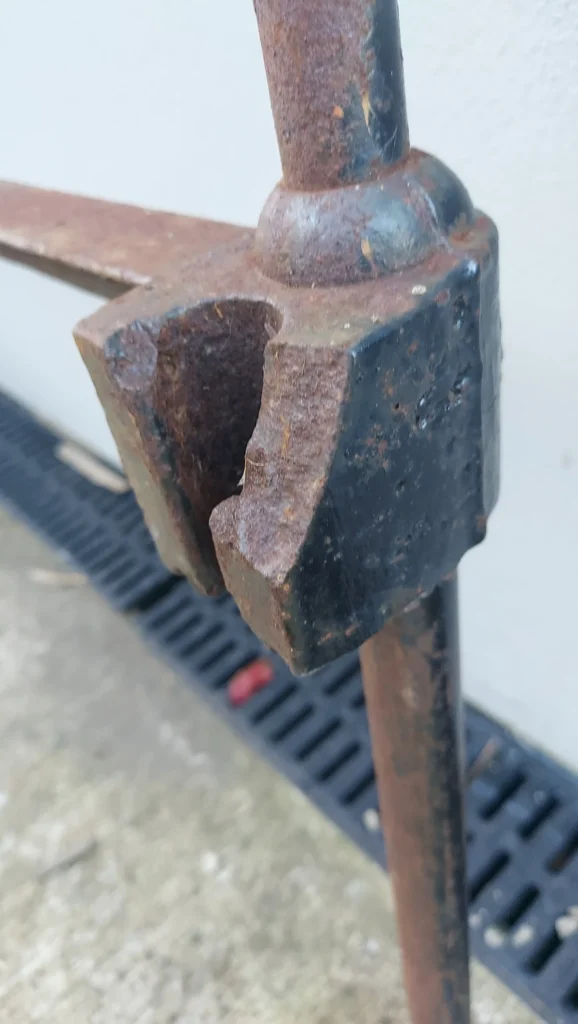 Imagine grabbing the headboard of a fully assembled antique iron bed and pulling it toward you.
The footboard stays where it is.
The headboard moves.
The wheels roll.
Everything appears to be working perfectly.
But the bed is no longer square.
One corner may have moved slightly farther than the other.
And that small difference is creating stress throughout the frame.
The side rails are now trying to pull against the cast iron hitches.
The rail ends are being forced sideways.
The cast iron connections are absorbing stresses they were never intended to absorb.
And this is where the age of an antique iron bed becomes extremely important.
A piece of cast iron that was strong and durable when it was manufactured in the 1800s has now spent well over a century experiencing temperature changes, movement, assembly and disassembly, transportation and countless other stresses.
It can be surprisingly brittle.
What might look like a small amount of movement to us can be a tremendous amount of leverage against a 100-plus-year-old cast iron connection.
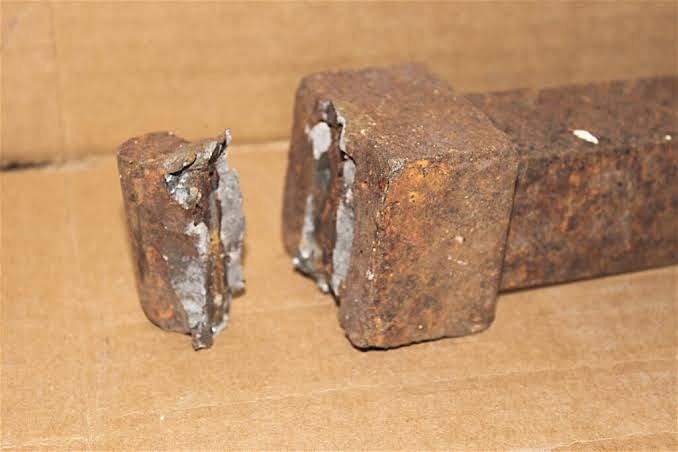
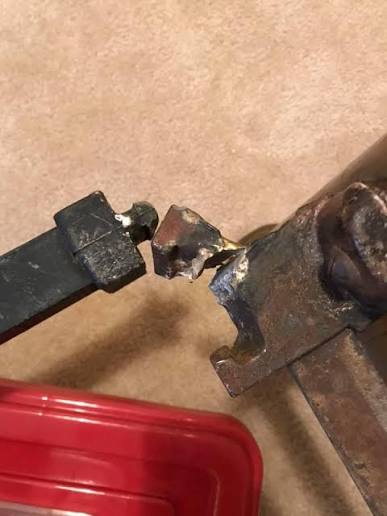
And sometimes the result is a crack.
Or worse.
A broken hitch.
A broken rail end.
And this is where the real nightmare can begin.
“Can’t a Welder Just Fix It?”
This is one of the most common assumptions I hear.
Someone sees a broken piece of cast iron and thinks:
“No problem. Just take it to a welder.”
Unfortunately, old cast iron doesn’t make this nearly as simple as it sounds.
Cast iron is not the same thing as steel.
It has different characteristics, and repairing an old cast iron component properly requires someone who really understands what they’re dealing with.
Traditional welding isn’t necessarily going to produce the kind of strong, structurally sound repair you would want on a bed that is supporting people night after night.
There are methods of repairing cast iron, including brazing, but even that requires considerable skill and knowledge.
The broken pieces generally need to be heated properly and carefully enough for the repair to hold.
And even when the repair is successful, the repaired area may never have the same integrity as the original casting.
Worse, the stress that caused the original break hasn’t necessarily disappeared.
The same area can remain vulnerable to another break in the future.
That is why I take broken antique iron bed castings very seriously.
A beautiful antique iron bed can survive a tremendous amount of ordinary use.
But once a critical cast iron hitch or rail end is compromised, restoring the bed to its original structural integrity can become a very different proposition.
So Should Antique Iron Beds Have Wheels?
 My answer after nearly fifty years in this business is:
Not unless you have a very good reason for wanting them—and understand how to use them.
I’m certainly not suggesting that every antique iron bed with wheels is destined to break.
That’s not the case.
There are many antique iron beds that have survived beautifully with their original wheels.
And the wheels themselves can often be restored.
The problem is the way the bed is moved.
If you have an antique iron bed with wheels and you need to reposition it, the safest approach is to keep the entire bed in square.
Ideally, that means two people moving it together.
One person pulls or pushes the headboard while another person does the same with the footboard.
The important thing is that both ends move together.
You’re not dragging one end while leaving the other behind.
You’re not twisting the frame.
You’re not pulling the bed diagonally across the floor.
You’re moving the entire bed as one unit.
Keeping the frame square minimizes the sideways forces being transferred into those old cast iron hitches and rail ends.
It may seem like a small distinction.
With an antique iron bed, it isn’t.
There Is a Reason I Don’t Automatically Put the Wheels Back On
 When I’m restoring an antique iron bed for a customer, I want the bed to be beautiful.
But more importantly, I want it to be usable.
That’s why I don’t automatically put wheels back on an antique iron bed simply because the bed originally had them.
If a customer wants the wheels, I’ll certainly discuss it.
But I also want them to understand what those wheels can encourage someone to do.
The problem isn’t necessarily the wheel.
It’s the temptation to use the wheel.
That’s an important distinction.
The wheels create a false sense of security.
They make moving a 100-plus-year-old bed appear easy.
And moving it may actually be easy.
The difficult part is moving it without twisting the frame and putting stress on the very cast iron components that have survived for generations.
Sometimes the Best Restoration Is Knowing What Not to Restore
There is a tendency when restoring antiques to believe that everything should be returned to exactly the way it was when it left the factory.
I don’t always agree.
An antique iron bed isn’t simply a 19th-century object anymore.
It is a 19th-century object being asked to function in a 21st-century home.
Those are two very different environments.
Sometimes restoration means preserving an original feature.
Sometimes it means understanding that an original feature may not be the best feature to continue using.
That is particularly true when the feature can encourage behavior that puts the rest of the bed at risk.
I’ve seen too many beautiful antique iron beds damaged because someone assumed the presence of wheels meant the bed could simply be rolled around the room.
It can.
But that doesn’t mean it should be.
A Little Caution Can Preserve Another Hundred Years
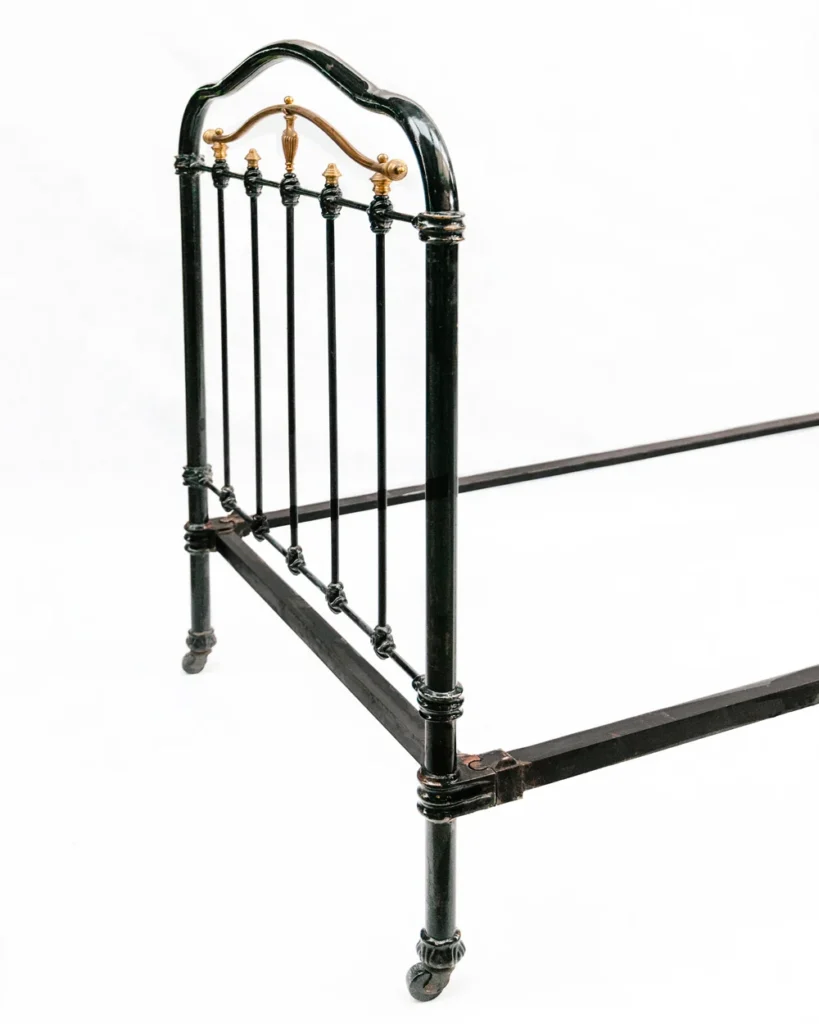 One of the things I love most about original antique iron beds is that they have already survived so much.
They were manufactured more than a century ago.
They’ve been slept in.
Moved.
Taken apart.
Put back together.
Loaded onto trucks.
Stored.
Painted.
Repainted.
And somehow, after all those years, they can still become the centerpiece of a beautiful bedroom today.
That’s remarkable.
And I think we owe these beds a little respect for what they’ve already survived.
So if your antique iron bed has wheels, don’t be afraid of them.
Just understand them.
If you need to move the bed, keep it square.
Have another person help you.
Move the headboard and footboard together.
Don’t pull one end while the other remains stationary.
And above all, don’t let those little wheels convince you that the entire bed is as mobile and forgiving as a modern piece of furniture.
It isn’t.
It’s an antique.
And some of the most important parts of that antique may be hidden where you can’t see them—inside the connections between the rails, the hitches and the castings.
After nearly fifty years of working with antique iron beds, I’ve learned that sometimes the biggest threat to an old bed isn’t age.
It’s something as innocent-looking as a wheel.
Wheels may have been an excellent idea in the 1800s.
Today, they may just be an antique iron bed’s Achilles heel.