After more than 50 years of buying, selling, restoring, and living around antiques, I’ve developed a habit that I suspect many people in the antique business share.
When I look at an old piece of furniture, I wonder where it has been.
Not just where I found it, but where it has been for all those years before it found me.
Who owned it? Who used it? What did the room look like? What was happening in the world while it sat there?
And, perhaps most interesting of all, what did it experience?
I find myself doing this particularly with antique iron beds.
There is something about standing in front of an iron bed that was made 100, 125, or even 150 years ago that makes it difficult not to imagine the lives that have passed through it.
An antique iron bed isn’t simply an old bed.
It is something that has already lived a life.
Look Closely at the Paint
 One of the things that has always fascinated me about antique iron beds is the finish.
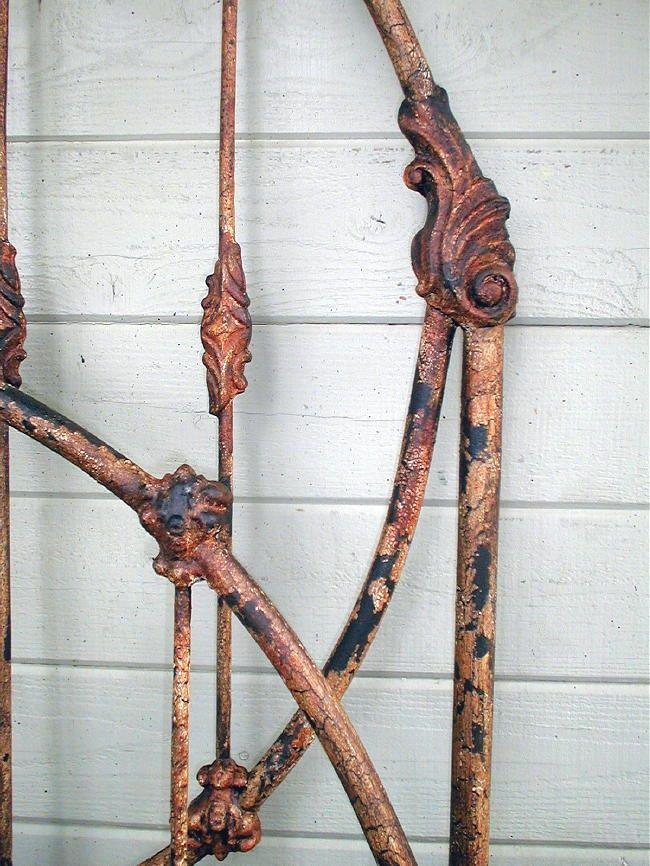
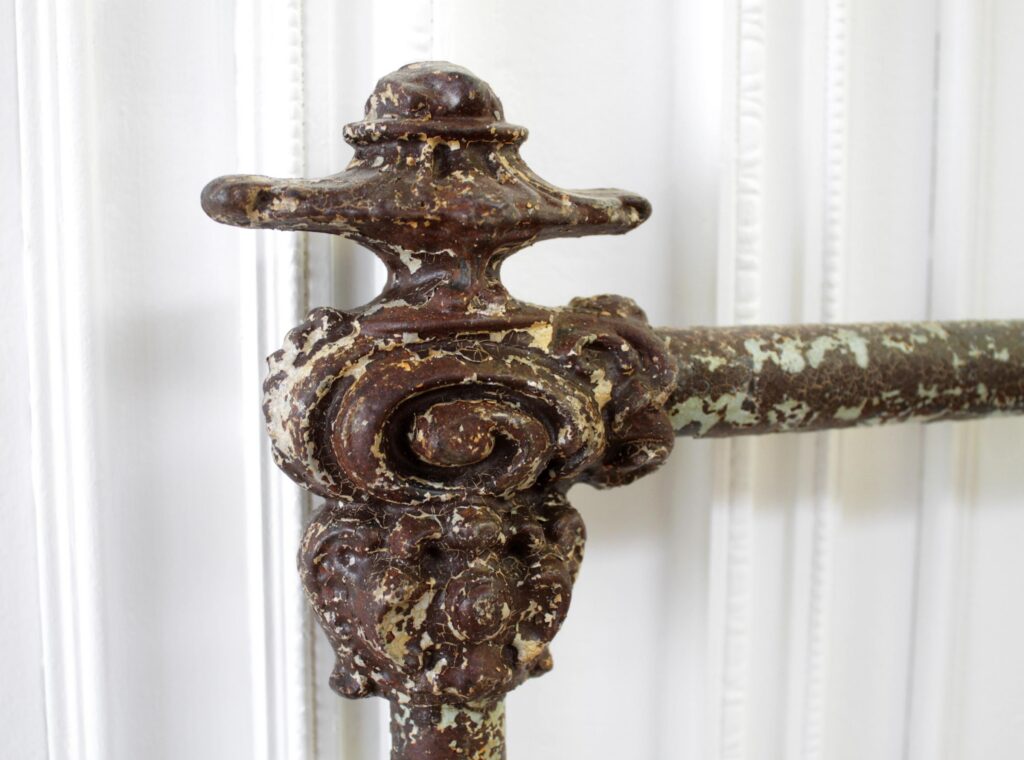
Sometimes you’ll find a bed with layer after layer of old paint. Perhaps there is white underneath a faded green, with a little black showing through somewhere beneath that.
Those layers can represent decades.
Someone painted that bed white. Years later, someone else decided it should be green. Somewhere along the way, perhaps another owner painted it again.
And then there is the rust.
To some people, rust is something that needs to be removed.
To me, sometimes, it is simply another part of the bed’s history.
I occasionally tell a customer that what they are looking at isn’t merely an antique iron bed with an old finish.
They’re looking at 150 years of history in those layers of paint and rust.
So why erase it?
That doesn’t mean an antique iron bed should be left to deteriorate. Quite the opposite. There is a very important difference between preserving an old finish and allowing an antique to continue deteriorating.
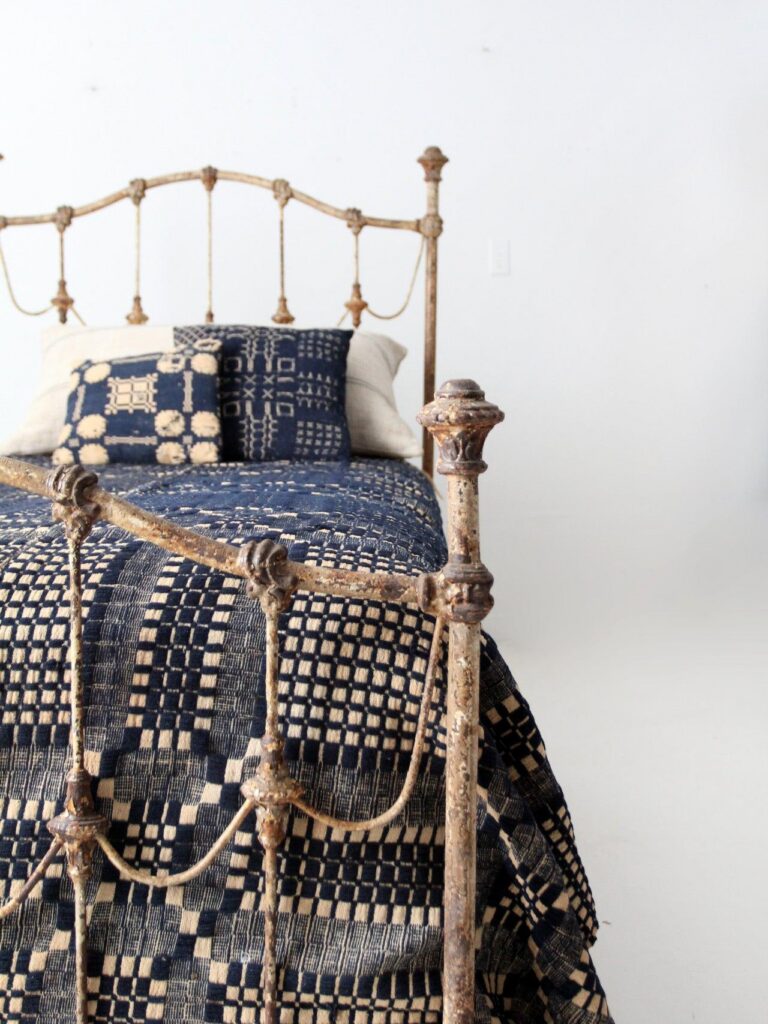
Many of our older beds can be carefully cleaned, stabilized, and protected with a clear preservative, allowing the original finish and the signs of age to remain.
The objective isn’t to make the bed look neglected.
It’s to allow it to look old without looking forgotten.
And to me, there is a considerable difference.
When Restoration Goes Too Far
 There are times when a customer wants an antique iron bed completely stripped and sandblasted down to bare iron.
Then they may ask us to paint it a perfectly clean white or a deep, flawless black.
There is certainly nothing wrong with wanting a particular color. An antique iron bed needs to work with the room it is going into, and I’ve refinished plenty of beds over the years for exactly that reason.
But sometimes, when I stand back and look at the finished piece, I have to admit that something has been lost.
You’ve taken a genuine antique iron bed—something that may have been made in the 1800s—and removed virtually every visual reminder that it is an antique.
The irony isn’t lost on me.
Someone has purchased an authentic antique because they wanted something old and special, and then we’ve made it look remarkably like something that could have come out of a factory yesterday.
That is one reason I have always appreciated an old, distressed finish.
Even when a customer wants a particular color, there are ways to create an aged appearance that allows the bed to retain some of its character.
The result isn’t pretending that the bed is brand new.
It is allowing the bed to look like what it actually is.
An antique.
And Then There Are the Stories
After five decades in this business, I’ve encountered some beds with histories that make you stop and wonder.
I’ve had antique iron beds come out of old brothels where there was a possibility that someone like Wyatt Earp may have stayed—and perhaps even used one of those beds.
Can I prove that Wyatt Earp slept in it?
Of course not.
But that’s part of the fascination.
The possibility is enough to make you stand there for a moment and think about it.
I’ve also acquired beds from old rooming houses that were already in existence when Abraham Lincoln delivered the Gettysburg Address.
Think about that for a moment.
While Lincoln was standing in Pennsylvania delivering one of the most famous speeches in American history, that bed may have already been sitting somewhere in an American rooming house.
And what happened around it over the next century?
That’s something we’ll probably never know.
I’ve encountered countless other beds with histories that aren’t necessarily famous, but may be even more meaningful.
Beds that belonged to families for generations.
Beds where newlyweds began their lives together.
Beds that were present when children were born and grew up.
Beds that were eventually passed down, sold, moved across the country, stored in barns, forgotten in attics, discovered again and eventually found their way to me.
And, over the years, I’ve had beds that were eventually purchased by celebrities and became part of another chapter in their story.
But the celebrity connection isn’t necessarily what makes these beds interesting to me.
It’s the fact that every one of them had a life before I ever saw it.
The History We Know—and the History We Don’t
That’s probably what intrigues me most about antiques.
We can research their age.
We can identify the manufacturer.
We can sometimes determine where they were made and approximately when they were produced.
We can look at the design, the castings, the construction and the finish and learn quite a bit about their origins.
But there is another history that isn’t written down anywhere.
The personal history.
Who slept in that bed in 1895?
Was it in a farmhouse or a grand Victorian home?
Was it in a boarding house in a growing American city?
Was it the bed of a young couple just starting their family?
Did someone lie awake in it worrying about a war, a business, a sick child or an uncertain future?
Did children climb into it on Sunday mornings?
Did someone sit on its edge every night to remove their shoes?
We don’t know.
And perhaps we never will.
But when you look closely at an antique iron bed, you can sometimes see tiny reminders that somebody was there.
Wear on the finish.
Changes in color.
Old repairs.
Imperfections.
Layers of paint.
The places where hands have touched the same metal over and over again.
Those aren’t necessarily flaws.
They’re evidence.
Evidence that this wasn’t simply a decorative object sitting untouched in someone’s house.
It was used.
It was part of someone’s life.
Perhaps That’s What Patina Really Means
We often use the word “patina” when talking about antiques.
But I think patina means more than simply an attractive old finish.
To me, patina is evidence of time.
It is the accumulated appearance of something that has been around long enough to experience life.
A new piece of furniture can be beautiful.
A reproduction iron bed can be beautifully made.
A freshly painted bed can be absolutely perfect for a particular room.
But none of them can reproduce something very important.
They can’t reproduce age.
You can reproduce a shape.
You can reproduce a pattern.
You can reproduce a casting.
You can even create a finish that looks distressed and aged.
But you cannot manufacture 150 years of actual history.
That’s why I sometimes hesitate before completely erasing it.
The Next Chapter
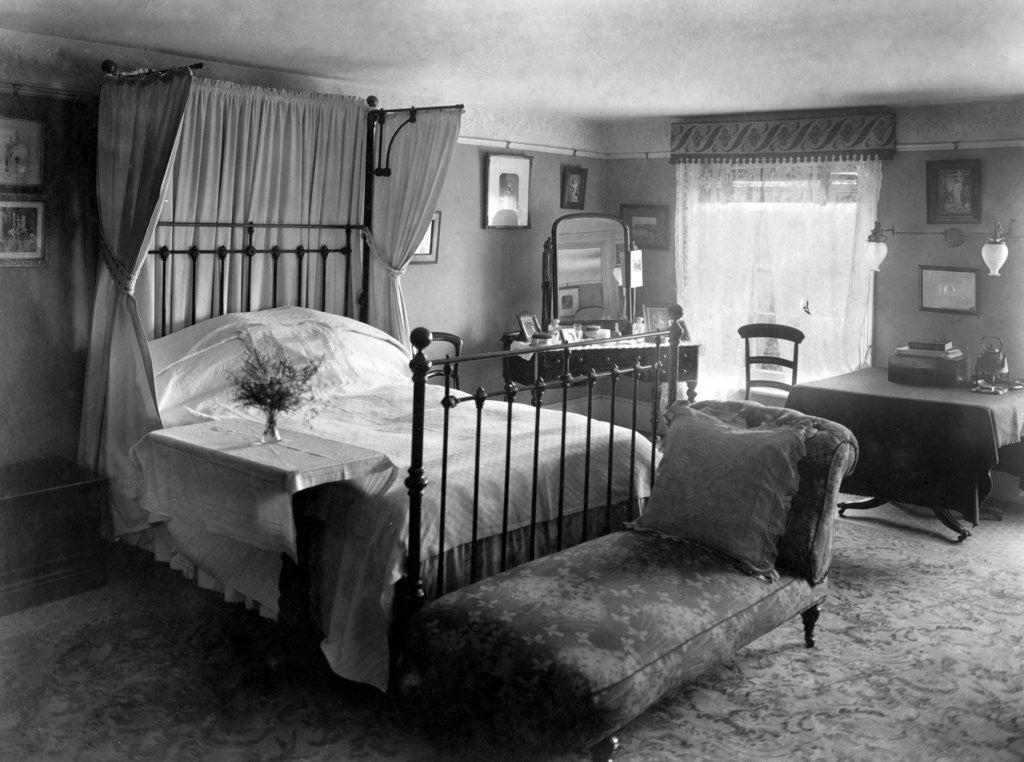 Perhaps the most wonderful thing about an antique is that its history doesn’t end when we acquire it.
It continues.
A bed that has already survived a century and a half may now be headed into a completely different home.
Perhaps it will become the centerpiece of a beautifully designed bedroom.
Perhaps it will be converted to accommodate a modern king-size mattress.
Perhaps it will be painted a new color.
Perhaps it will sit beneath a tall ceiling in a home that looks nothing like the room it occupied in 1880.
And that’s perfectly fine.
Antiques were never meant to stop living.
They were meant to be used.
The goal, at least in my mind, is simply to be thoughtful about what we’re changing.
There is a difference between restoring an antique and erasing it.
There is a difference between protecting an old finish and pretending it never existed.
And there is a difference between making an antique iron bed work beautifully in a modern home and making it look as though it was manufactured yesterday.
After more than 50 years around antiques, I have come to appreciate those differences.
Maybe We Don’t Need to Know the Whole Story
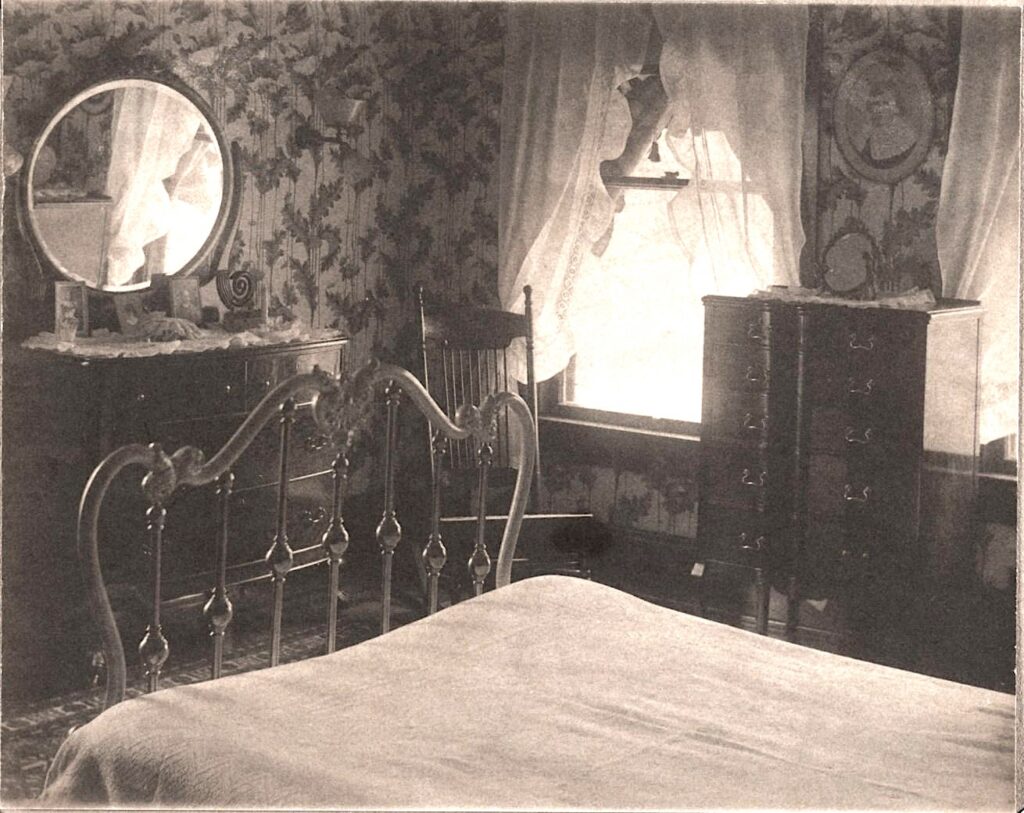 I’ve often wondered whether an antique iron bed somehow carries a little bit of its past with it.
Obviously, the bed can’t tell us where it has been.
It can’t tell us who slept in it.
It can’t tell us what it saw.
But perhaps that’s exactly what makes it so intriguing.
When I run my hand over an old iron bed and see the layers of paint underneath my fingers, I know that somebody else touched that same piece of iron long before I did.
Someone painted it.
Someone moved it.
Someone assembled it.
Someone slept beside it.
Someone cared enough about it to keep it for another generation.
And eventually, somehow, it survived long enough for me to find it.
Now it is going somewhere else.
That’s the part of the antique business that has never gotten old for me.
After 50 years, I still find myself standing in front of an old piece and wondering:
Where have you been?
What have you seen?
Who slept in you?
And perhaps most importantly—
What will your next chapter be?
Because that’s what I believe we are really doing when we bring an authentic antique iron bed into a new home.
We’re not creating its history.
We’re becoming part of it.
And maybe that is why, whenever possible, I would rather preserve a little of that old paint, a little of that patina, and a few reminders of the years that came before us.
After all, an antique iron bed has already spent 150 years becoming what it is.
Why erase the very thing that makes it special?
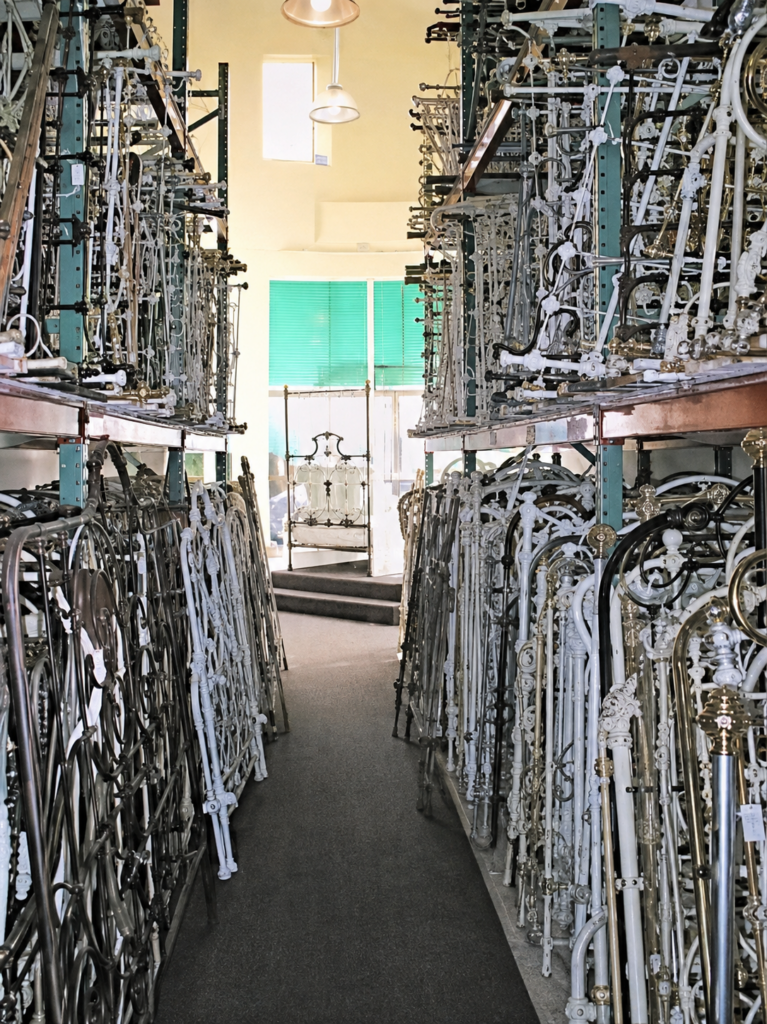
One of the few photographs I have of the inside of my last brick-and-mortar store, nearly 20 years after I began dealing in antiques. After more than 50 years around old things, I still find myself wondering where they’ve been.