An antique iron bed has already spent 150 years becoming what it is. Why erase the very thing that makes it special?
It is a question I have asked myself—and my customers—for many years.
After decades of buying, restoring, selling and living with original antique iron beds, I have developed a deep appreciation for the finishes these beds acquire over a lifetime. There is something about an old, naturally distressed surface that simply cannot be duplicated by a new bed coming out of a factory today.
The scratches, worn edges, layers of old paint, small imperfections and subtle variations in color tell a story. They are evidence that the bed has been used, moved, loved and lived with.
But there is another side to the story.
What happens when you find the perfect antique iron bed, except the color is completely wrong for your room?
Maybe the bed has a beautiful old finish—but it is Pepto-Bismol pink.
Or bright turquoise.
Or an institutional green that might have looked wonderful somewhere around 1900 but simply isn’t going to work with the bedroom you have created.
Do you put it back into the market and keep looking?
Do you strip it down and make it look brand new?
Or is there another possibility?
There is.
Preserve the Character. Change the Color.
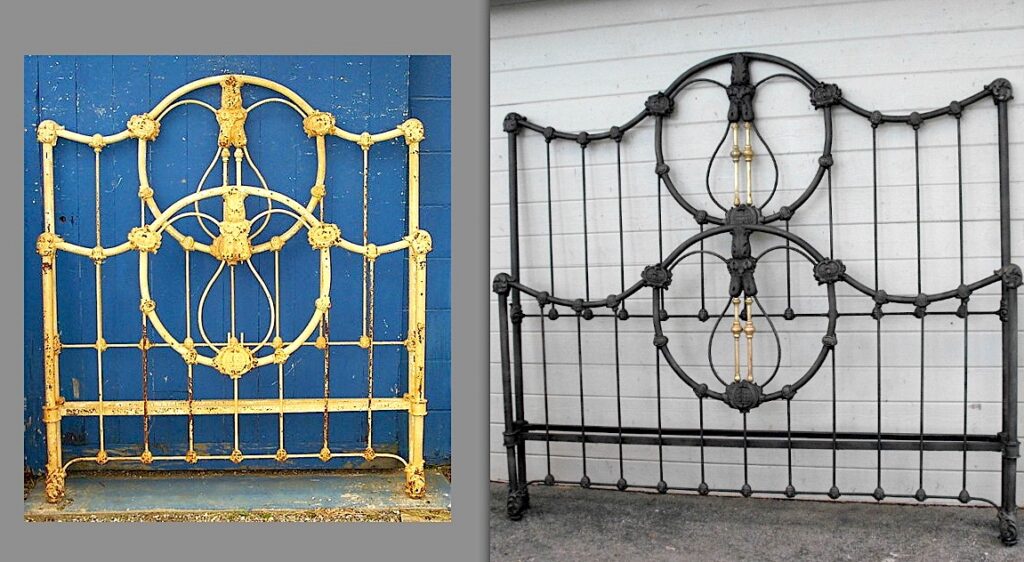 This is where a distressed faux finish can make so much sense on an original antique iron bed.
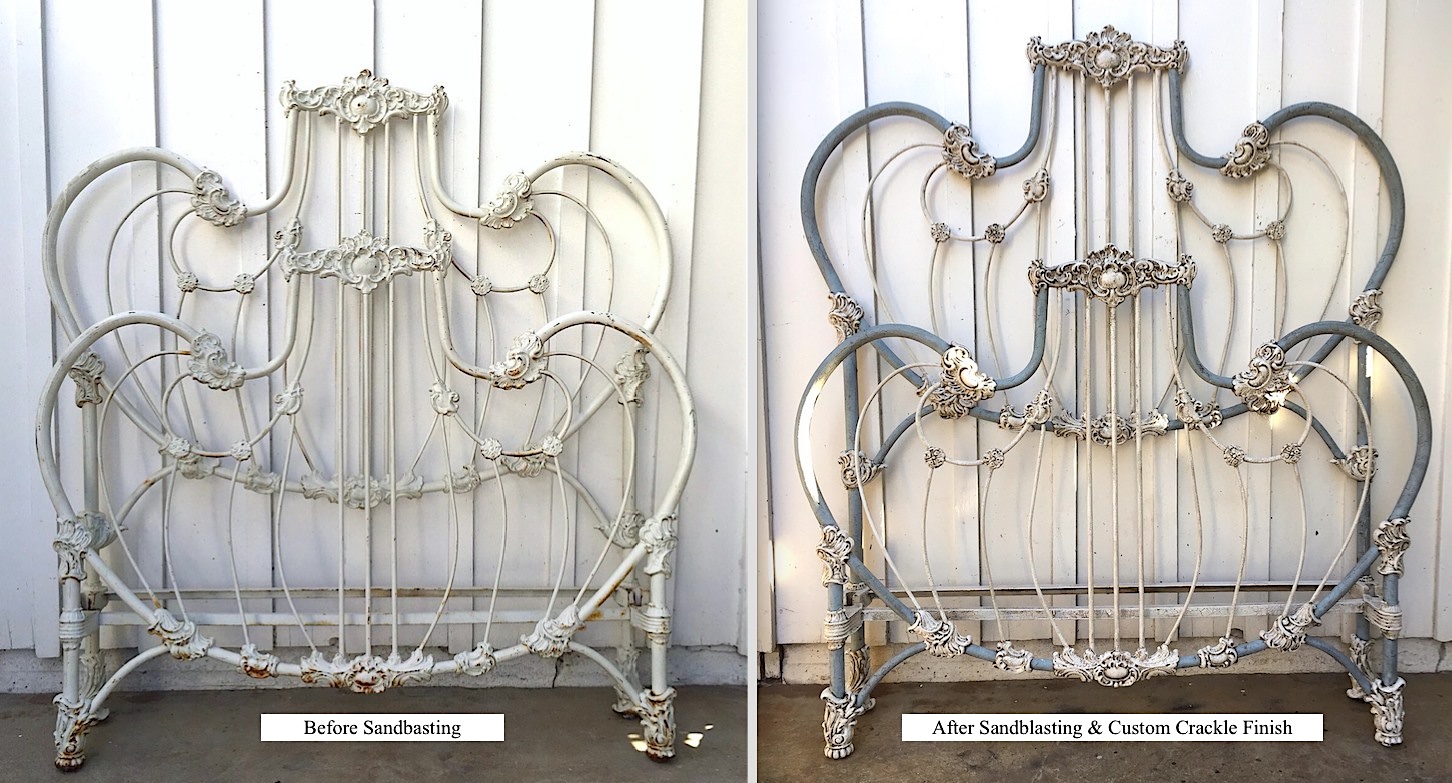
At Cathouse Antique Iron Beds, we have been creating authentic-looking distressed finishes for many years. The objective isn’t to make an antique iron bed look “newly painted.”
Quite the opposite.
The objective is to make a bed look as though it has always been that color.
That distinction is important.
There is a tremendous difference between taking an old bed, painting it a new color and then randomly sanding a few spots around the edges—and creating a finish that convincingly suggests decades of age, wear and use.
The latter requires an understanding of how an old finish actually behaves.
Where does paint naturally wear?
Where would someone’s hands have touched the bed?
Where would the finish have rubbed against a wall, bedding or another piece of furniture?
Where would accumulated dirt, oxidation and age have changed the appearance?
And perhaps most importantly, how do you make all of those things look accidental rather than manufactured?
That’s where the art comes in.
An Antique Iron Bed Doesn’t Have to Look “Restored”
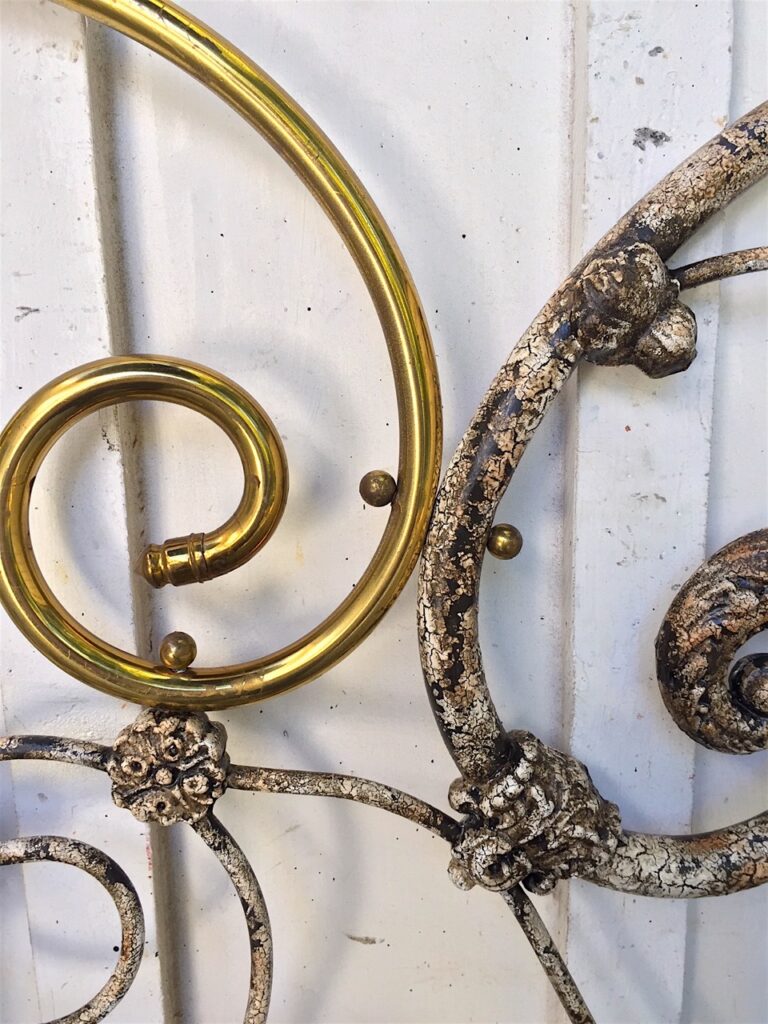 One of the things I have always disliked about the word restored is the assumption that restoration means returning something to a condition that resembles the day it left the factory.
With antique iron beds, I don’t necessarily believe that is the goal.
If an original 19th-century iron bed has survived for 125 or 150 years, its history is part of the object.
I don’t want to erase that history.
I want to preserve it.
Sometimes that means retaining the original finish exactly as we found it. There are beds where the old surface is so beautiful that repainting would be almost sacrilegious.
But there are also beds where the original finish simply doesn’t work for the person who has fallen in love with the bed.
And that is where a carefully executed distressed faux finish can provide the best of both worlds.
You can have the authentic antique iron bed and still have a color that belongs in your home.
Imagine Finding the Perfect Bed in the Wrong Color
Let’s say you have been searching for an antique iron bed for months.
You finally find it.
The proportions are perfect.
The headboard has the right height.
The castings are beautiful.
The design works beautifully with the architecture of your room.
The bed has that wonderful old-world character you’ve been looking for.
There is only one problem.
The finish is completely wrong.
Maybe your bedroom is filled with soft creams, muted greens and warm natural colors, while the bed is covered in a brilliant red.
Or perhaps you have created a sophisticated blue-and-white room and the antique bed you’ve fallen in love with is painted yellow.
Do you walk away from the bed?
Not necessarily.
A new distressed finish can allow the bed’s physical history to remain while giving it a new visual life.
And that is an important distinction.
We aren’t changing the fact that the bed is an antique.
We are changing its wardrobe.
The Beauty Is in the Layers
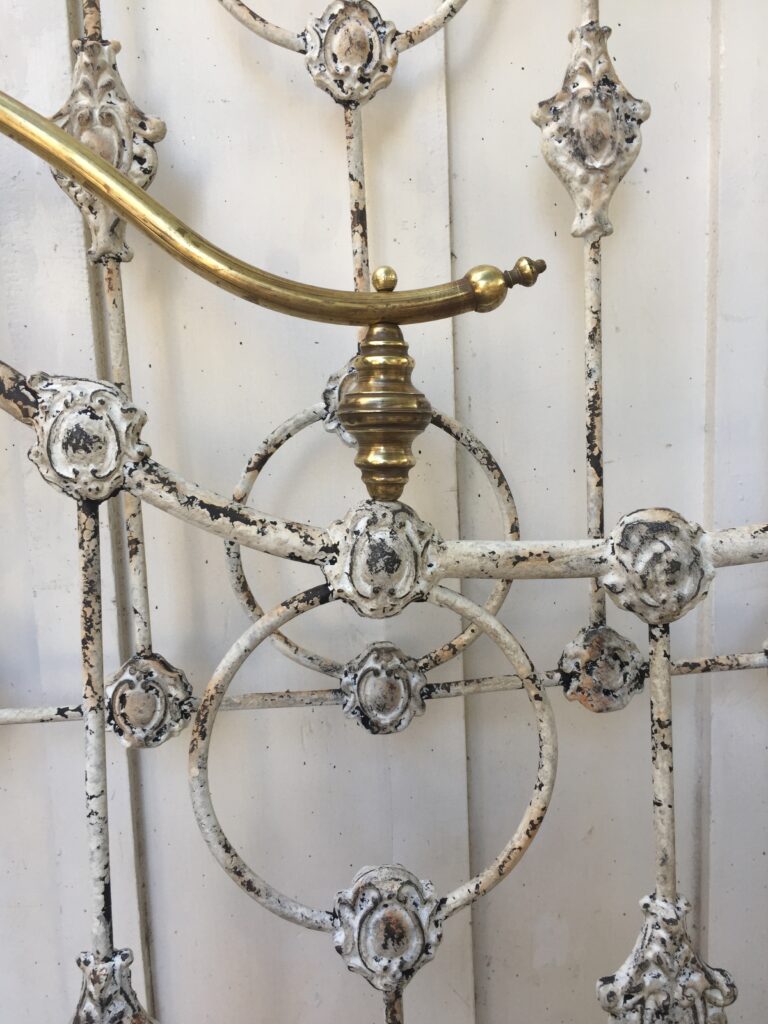 A convincing distressed faux finish isn’t about one color.
Old beds rarely look as though one color was applied once and remained untouched for 150 years.
Over time, surfaces change.
Paint ages.
Edges wear.
Colors become softer.
Previous coats may show through.
Raised areas can become highlighted while recesses retain darker tones.
The result is a visual depth that is difficult to achieve with a single modern coat of paint.
When we create a distressed finish, we can use those same principles.
A client might want a soft French gray.
Another might want an aged cream.
Someone else may want a particular shade of blue, green or even pink.
The color can be customized to the room.
The appearance of age, however, remains.
The goal is to make the new color feel as though it has been there for decades.
We Have Done This for Some Very Particular Clients
Over the years, our antique iron beds have been used by some of the most recognizable names in the home furnishings and design world.
We have created finishes for Ralph Lauren to coordinate with quilts and other textiles being presented in their catalogs.
We have also worked with Shabby Chic and other high-end companies that understood exactly what makes an old iron bed special.
These weren’t simply requests for a bed to be painted a particular color.
The finish had to work with the entire visual story.
The bed needed to look as though it belonged there.
That is one of the reasons distressed finishes can be so effective in interior design. A beautifully aged antique iron bed can become part of the room rather than simply another piece of furniture sitting in it.
“New” Isn’t Always Better
We live in a world where almost everything can be made to look perfect.
Furniture is manufactured with flawless surfaces.
New beds are powder-coated in perfectly uniform colors.
Distressed furniture can even be produced in factories with identical marks placed in identical locations.
And yet, there is something wonderfully imperfect about a genuine antique.
That imperfection is often what draws us to it.
The little variations.
The worn corners.
The places where the original paint has disappeared.
The subtle evidence of another generation.
Those are the things that make an antique iron bed different from a reproduction.
So when we apply a distressed faux finish to an antique iron bed, the intention isn’t to manufacture history.
The history is already there.
We are simply giving that history a different color in which to tell its story.
Faux Doesn’t Have to Mean Fake
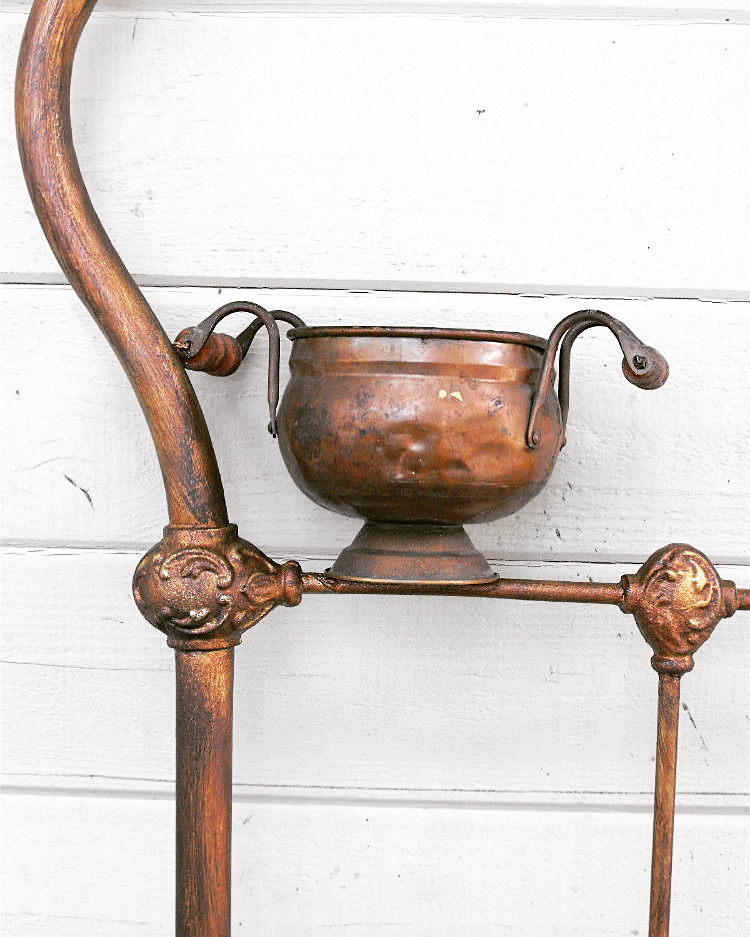 The word faux sometimes makes people nervous.
It shouldn’t.
In this context, “faux” simply means that the appearance of age is intentionally recreated.
The bed itself is not faux.
The iron isn’t faux.
The castings aren’t faux.
The construction isn’t faux.
The history certainly isn’t faux.
The bed remains an original antique iron bed.
What is being recreated is the appearance of an old, naturally weathered finish in a color that better suits its new home.
And there is an enormous difference between that and purchasing a reproduction bed that has been manufactured yesterday and artificially distressed to look old.
One has history.
The other has a marketing technique.
Sometimes Changing the Finish Saves the Bed
There is another reason I have come to appreciate this approach.
Sometimes an antique iron bed with an unattractive or extremely unusual original finish might otherwise be overlooked.
A bed painted an unfortunate shade of pink may sit for years because very few people can visualize what it could become.
But underneath that color may be a magnificent antique frame with beautiful castings, elegant proportions and genuine 19th-century construction.
A thoughtful new finish can give that bed another chance.
It can allow someone to see the antique rather than simply seeing the color.
And perhaps that is the greatest argument for a distressed faux finish.
It can help preserve the bed rather than replace it.
The Question I Always Come Back To
Whenever I see an original antique iron bed, I think about how long it has already survived.
Someone manufactured it more than a century ago.
Someone purchased it.
Someone slept in it.
Someone moved it.
Perhaps it survived a family home, a farmhouse, a boarding house or a hotel.
Perhaps it was painted several times.
Perhaps it sat forgotten in an attic or barn before eventually finding its way back into the world.
That history matters.
So my first choice is always to ask:
Can we live with the finish that is already there?
If the answer is yes, I am all for preserving it.
But if the answer is no, I don’t believe the only alternative is to strip away everything that makes the bed look old.
Sometimes the better answer is to change the color without changing the character.
That is what a good distressed faux finish can accomplish.
Don’t Erase History. Give It a New Chapter.
An antique iron bed doesn’t need to remain exactly as it was yesterday in order to remain an antique tomorrow.
Its history is in the iron.
It is in the craftsmanship.
It is in the castings.
It is in the construction.
It is in the fact that it has survived more than a century while countless modern pieces of furniture have already been discarded.
A beautiful distressed finish can allow that history to continue into another generation—and into another bedroom.
So if you find an antique iron bed that is absolutely perfect except for its color, don’t automatically walk away.
And don’t automatically strip it until it looks like it just left the factory.
Consider another possibility.
Preserve the antique. Preserve the character. Change the color.
Because sometimes the best way to save the history of an antique iron bed isn’t to leave every inch of it untouched.
Sometimes it is simply to give that history a new color in which to live.
An antique iron bed has already spent 150 years becoming what it is. Why erase the very thing that makes it special?