When someone looks at an antique iron bed today, it is easy to think of it simply as a piece of old furniture. We see the finished headboard and footboard, the decorative castings, the curved tubing and the layers of paint that may have accumulated over a century or more.
What we don’t see are the many different hands, skills and specialized trades that went into making that bed.
An antique iron bed produced during the 1800s was rarely the work of one person. Depending upon the manufacturer, the size of the factory and the complexity of the design, it could involve a surprisingly large number of specialized workers before the finished bed ever reached a customer’s bedroom.
And that is one of the things that makes these beds so fascinating.
It Started With an Idea
Before anyone heated a piece of iron or poured a casting, somebody first had to figure out what the bed was going to look like—and, more importantly, how it could actually be manufactured.
This was the job of the designer or draftsman.
The designer had to understand far more than simply how to draw an attractive bed. A beautiful design that could not be manufactured economically was of little use to a nineteenth-century manufacturer.
The designer had to consider the capabilities of the factory, the available materials, the machinery and tooling required, the amount of labor involved and ultimately what the finished bed would have to sell for.
A decorative element might look wonderful on paper, but if producing it required an extraordinarily complicated mold or hours of hand labor, it might not make economic sense.
This is one reason the surviving designs of antique iron beds are so interesting. They represent a marriage between art and manufacturing technology.
Then Came the Patternmaker
 This is one of the occupations that is often overlooked when people think about antique iron beds.
Before a decorative casting could be produced, someone had to create the pattern from which the mold would be made.
Patternmakers were highly skilled craftsmen. They translated the designer’s drawing into a physical three-dimensional form that could be used by the foundry.
That wasn’t simply a matter of carving a shape.
The pattern had to be constructed so that it could be removed from the mold without destroying the mold itself. The patternmaker also had to understand how molten iron would behave as it entered the mold and cooled.
With complicated, open or “see-through” castings, this could become an extraordinarily demanding undertaking.
And this is where some of the artistry of an antique iron bed really begins.
The Moldmaker
 Once the pattern existed, another skilled worker—or sometimes another department of the foundry—had to create the mold.
The moldmaker packed molding material around the pattern, carefully creating the cavity into which the molten iron would eventually flow.
For a simple casting, this was relatively straightforward.
For a large decorative casting containing delicate openings, scrollwork, flowers, leaves or other intricate details, it was considerably more difficult.
The mold had to reproduce the design accurately while also allowing the molten iron to flow into the various sections of the cavity.
A mistake here could mean that the casting was incomplete, distorted or unusable.
And remember: every failed casting represented wasted material, fuel and labor.
The Foundry Workers
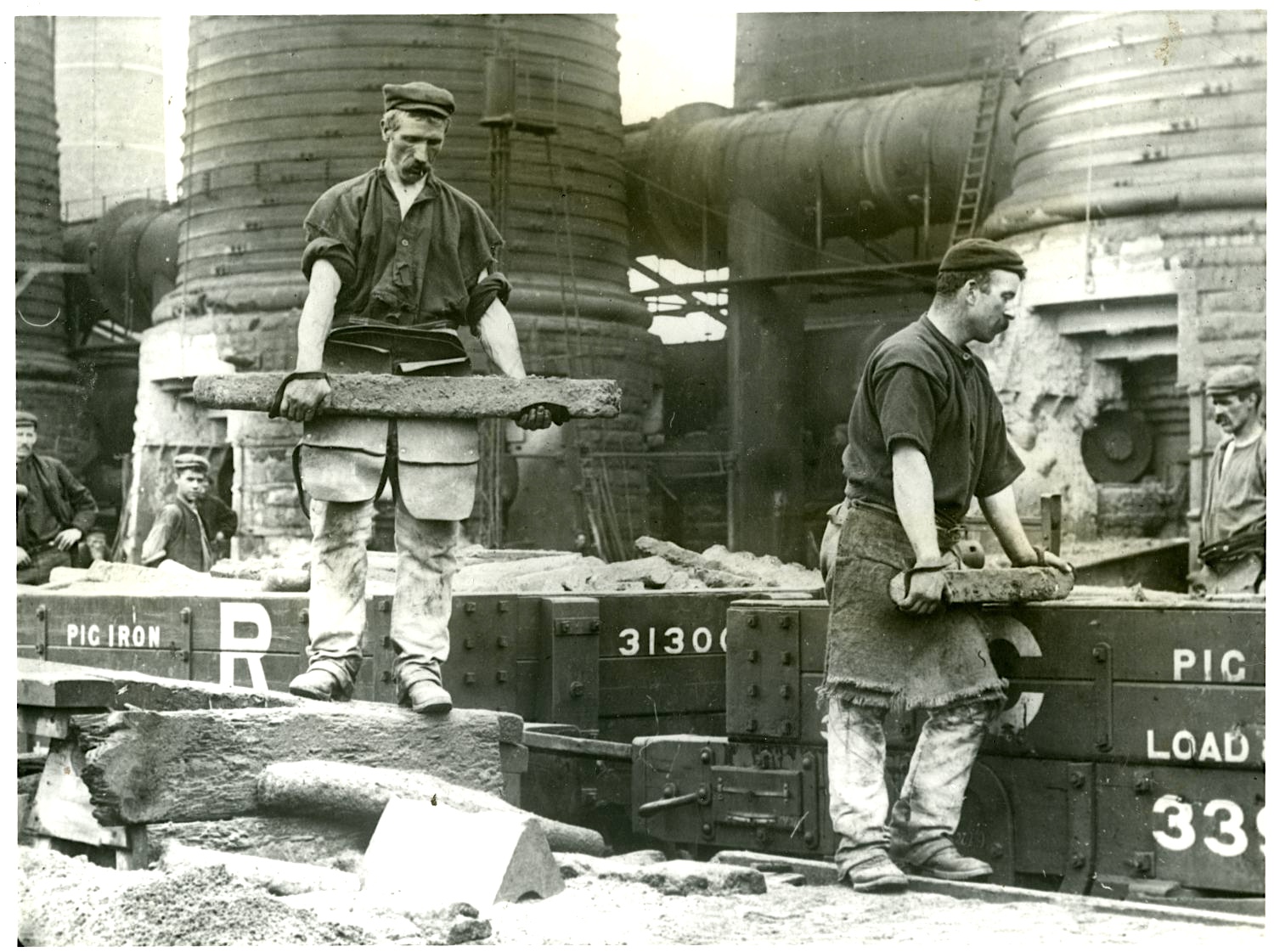
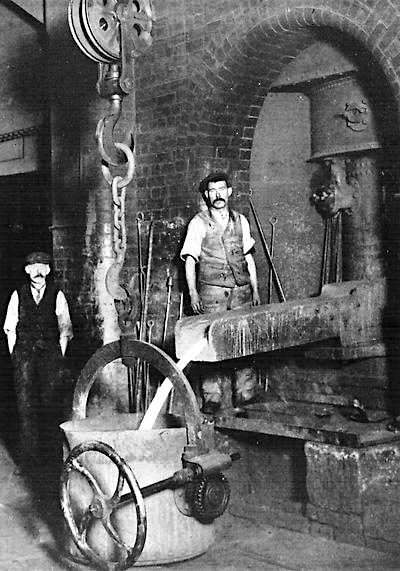 Now we arrive at the part most people associate with iron manufacturing—the foundry.
But even here, there wasn’t necessarily just one person.
Someone had to prepare the furnace.
Someone had to charge it with the appropriate iron.
Someone had to monitor the heat.
Someone had to judge when the metal was ready.
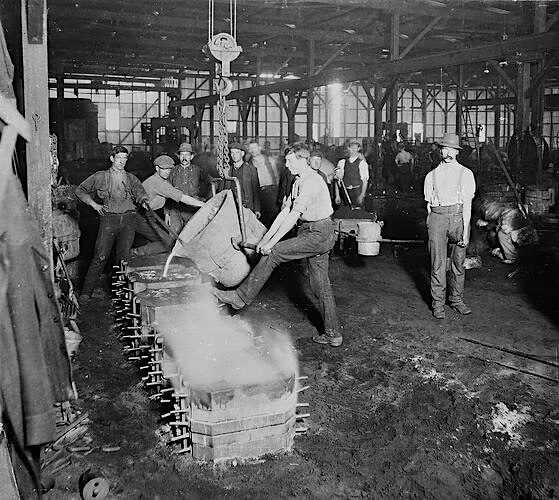
And someone had to handle the ladle and pour the molten iron into the molds.
Depending upon the size of the foundry, several workers could be involved in this operation.
The temperatures involved were tremendous, and pouring molten iron was dangerous, physically demanding work.
Once the metal cooled, the casting had to be removed from the mold and cleaned.
The excess material, gates and other unwanted portions had to be removed, and the casting inspected for defects.
A decorative casting that looked simple to us could therefore represent the work of patternmakers, moldmakers, furnace workers, pourers and finishing workers before it ever became part of a bed.
Meanwhile, Someone Had to Make the Bed’s Tubing and Rods
The castings were only part of the story.
Many nineteenth-century iron beds incorporated tubular components, solid rods and other metal elements that formed the framework connecting the decorative castings.
Those components had to be cut to length.
Some had to be curved.
Some had to be drilled or otherwise prepared for assembly.
And achieving consistent curves was particularly important.
If a manufacturer was producing dozens or hundreds of beds from the same design, those curves had to be remarkably consistent or the various components would not fit together properly.
This is another area where nineteenth-century manufacturing required considerable skill.
There were no modern CNC machines quietly reproducing every component to computer-controlled tolerances.
The workers had machinery, jigs, fixtures, dies and gauges—but they also had experience.
Someone Had to Put It All Together
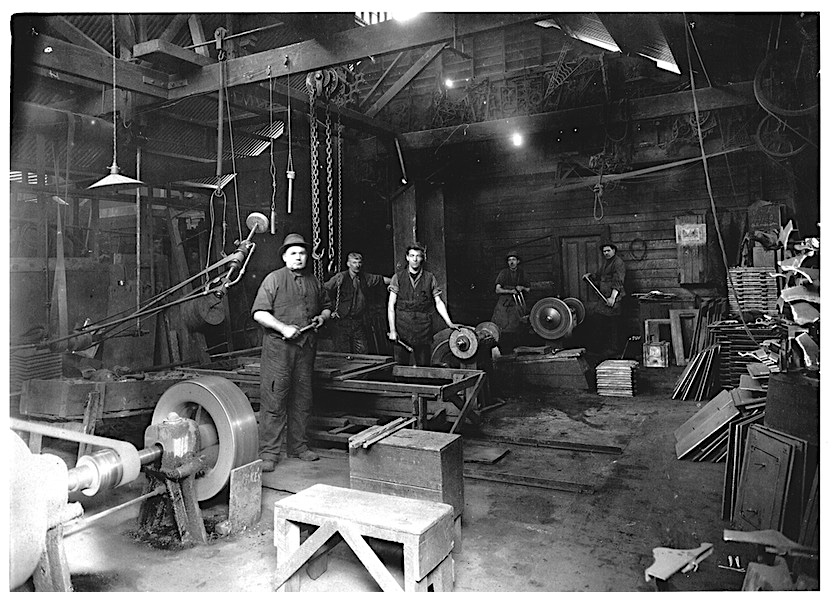 Eventually all of these individual components had to become a bed.
The assembly worker had to bring together the castings, tubes, rods and connecting components.
This is where the accuracy of every previous step became important.
If the patternmaker had made an error, the casting could be wrong.
If the moldmaker had made an error, the casting could be defective.
If the tubing had been cut incorrectly or bent improperly, the pieces might not align.
If the various components weren’t manufactured consistently, assembly could become difficult or impossible.
A good assembly worker was therefore doing more than simply putting parts together.
He was also discovering problems created earlier in the manufacturing process.
Then Came the Finishing Department
Once assembled, the bed still wasn’t finished.
The metal surfaces needed preparation.
Depending upon the manufacturer and period, this could involve cleaning, removing scale, smoothing rough areas and preparing the surface for its finish.
Then came painting.
And painting an antique iron bed was itself a specialized process.
The finish wasn’t merely decoration. It provided protection against corrosion while also giving the bed its intended appearance.
Some beds received relatively simple finishes.
Others were considerably more elaborate, involving multiple colors, decorative striping, gold or bronze accents and other ornamental treatments.
A highly decorated bed could therefore require additional skilled labor after the basic assembly was complete.
 Someone Had to Inspect It
There was also another worker—or workers—we shouldn’t forget:
the person responsible for quality control.
Was the bed square?
Did the components fit correctly?
Were there defective castings?
Was the finish acceptable?
Were the decorative elements properly aligned?
Was the bed structurally sound?
The manufacturer could not afford to send a poorly assembled bed to a customer.
Especially with expensive furniture, reputation mattered.
And There Were People Behind the People
There is another fascinating aspect of this story.
The workers who actually made the bed weren’t operating in isolation.
The factory also required people to purchase raw materials, move iron and finished components, maintain machinery, operate equipment, keep records, package finished products and ultimately ship the beds to furniture dealers.
There were supervisors.
There were salesmen.
There were office workers.
There were warehouse workers.
There were transportation workers.
And, in larger manufacturers, there could be entire departments devoted to particular stages of production.
So when we ask, “How many people did it take to make an antique iron bed?”, there really isn’t one universal answer.
A Reasonable Estimate
For a small operation, perhaps a handful of skilled workers could have been responsible for much of the process, with individual workers performing several different jobs.
A larger manufacturer could have had dozens of people involved in producing a particular bed design, even though not all of them worked on that individual bed continuously.
The important distinction is between:
“How many people physically touched this particular bed?”
and
“How many people were involved in the manufacturing process that produced this bed?”
The second number could be surprisingly large.
And that is perhaps the most important thing to remember when looking at an antique iron bed today.
It isn’t simply an old metal bed.
It is the surviving result of a nineteenth-century manufacturing system that brought together designers, draftsmen, patternmakers, moldmakers, foundry workers, metalworkers, assemblers, finishers, inspectors and many others.
Every decorative casting had a story.
Every curve in the tubing required a worker and a process.
Every layer of paint represented another stage.
And every bed that survived 100 or 150 years represents an extraordinary amount of human labor.
The Remarkable Part
What makes this particularly remarkable to me is that the people who manufactured these beds weren’t simply producing utilitarian objects.
They were producing furniture that was expected to be beautiful.
The castings had to be attractive.
The proportions had to be right.
The curves had to flow.
The decorative elements had to align.
And the finished bed had to be strong enough to survive generations of use.
When you look at an original antique iron bed today, you’re therefore looking at much more than Victorian-era furniture.
You’re looking at the combined work of an entire group of nineteenth-century craftsmen.
And perhaps that is one reason these old beds continue to have a presence that many modern reproductions simply don’t.
The original wasn’t made by a machine in a single afternoon.
It was designed, patterned, molded, poured, shaped, assembled, finished and inspected by people who had spent years learning their individual trades.
Quite literally, there were many hands behind every antique iron bed.