When looking at an antique iron bed, our eyes are naturally drawn to the overall shape of the headboard and footboard, the curves of the iron tubing, and particularly the elaborate castings that hold everything together. But sitting quietly at the very top of many bedposts is another design element that deserves considerably more attention: the finial.
Finials can be simple round balls, beautifully cast decorative ornaments, architectural shapes, flowers, urns, spear points, or highly elaborate brass embellishments. On some antique iron beds they are relatively understated. On others, they become one of the most important decorative features of the entire bed.
But why were they there in the first place? Where did the idea of a finial originate? And why did Victorian iron bed manufacturers devote so much attention to something that, from a purely structural standpoint, often wasn’t necessary?
Like so many details found on original antique iron beds, the answer lies in a combination of architecture, craftsmanship, fashion and Victorian-era marketing.
Finials Existed Long Before Antique Iron Beds
The word finial comes from the idea of something being final—the finishing element placed at the end or top of an object.
Finials had been used in architecture for centuries before they appeared on Victorian iron beds. They could be found crowning church spires, rooftops, towers, gates, fence posts, staircases and furniture.
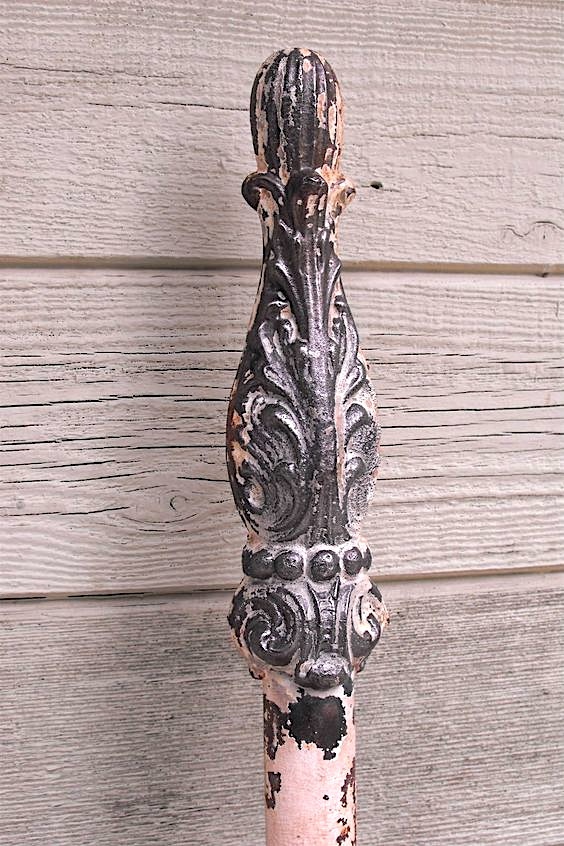 Architecturally, the finial served an important visual purpose. A vertical post or column often looks unfinished when it simply stops. Adding a decorative object to the top gives the eye a natural termination point.
When iron bed manufacturers began producing increasingly elaborate beds during the 1800s, it was only natural that this long-established architectural principle would find its way into furniture design.
The bedpost needed to end somewhere.
A finial gave it a reason to end beautifully.
From Architecture to Furniture
Victorian designers borrowed constantly from architecture.
Arches, columns, scrollwork, floral patterns, Gothic shapes and classical motifs that had appeared on buildings for centuries began appearing on furniture as manufacturing techniques improved.
Iron beds were particularly well suited to this approach.
Unlike wooden furniture, where decorative details were generally carved individually, iron bed manufacturers could create molds and reproduce cast decorative components in quantity. Once a manufacturer had developed a particularly attractive casting or finial, that design could be incorporated into numerous beds.
This allowed manufacturers to produce beds with increasingly sophisticated appearances while still manufacturing them commercially.
It also meant that something as seemingly insignificant as the top of a bedpost became another opportunity for design.
Why Put Finials on an Iron Bed?
There was sometimes a practical reason.
An open piece of tubing at the top of a bedpost is visually unattractive and could collect dust or debris. A cap or finial provided a finished termination to the tubing.
But manufacturers quickly realized that if something had to go there anyway, there was no reason it couldn’t be decorative.
That is where practicality began turning into ornamentation.
A simple metal cap could become a ball.
A ball could become an urn.
An urn could become an elaborate casting.
And once brass became increasingly fashionable on iron beds, that same finial could become polished brass.
What began as a way of finishing the top of a piece of tubing evolved into another important opportunity to distinguish one bed from another.
The Victorian Obsession With Ornamentation
Victorian design was rarely shy.
The second half of the 19th century was a remarkable period of decorative experimentation. Industrial manufacturing made it possible to produce increasingly elaborate objects for a growing middle and upper-middle class.
More ornamentation often suggested greater expense.
That was certainly true with antique iron beds.
A basic iron bed might have simple tubing, relatively small castings and modest ball finials. A more expensive bed could have elaborate scrollwork, larger castings and much more sophisticated finials.
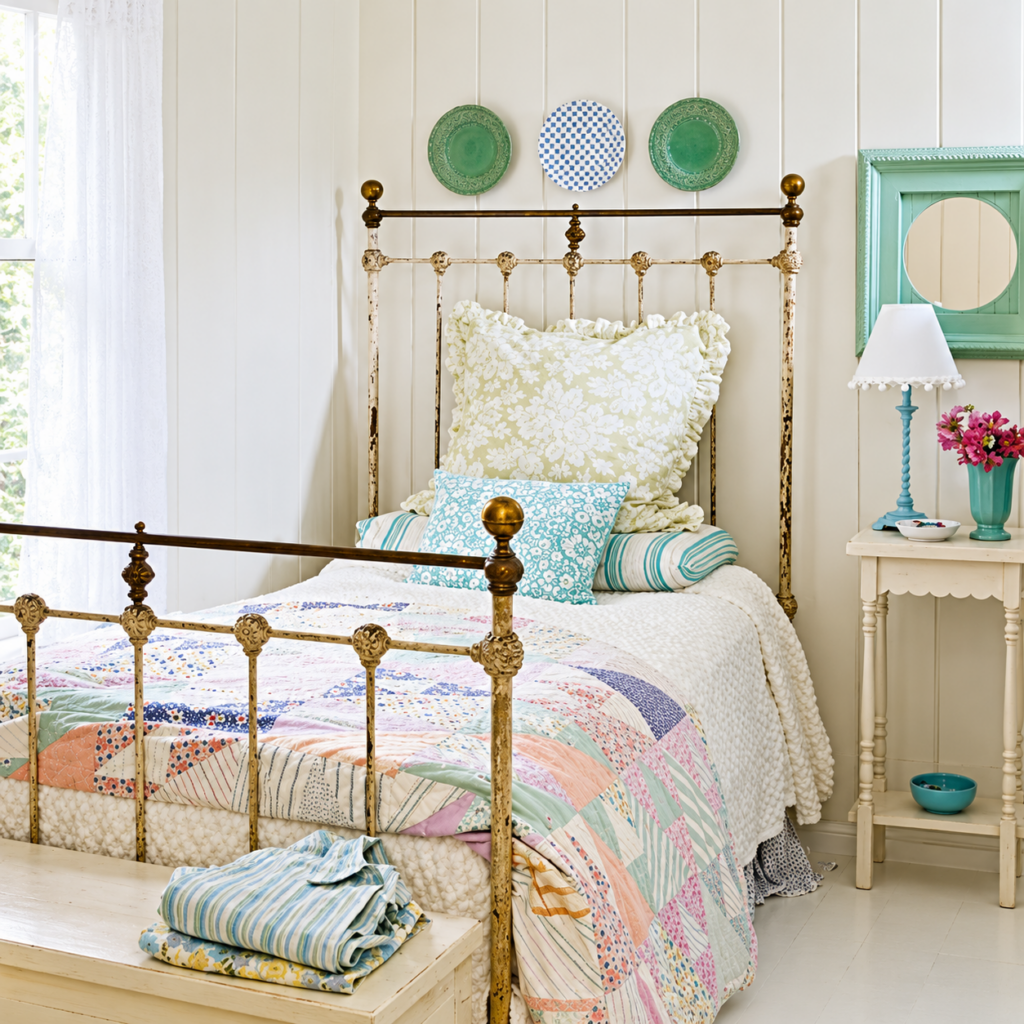 This created a visual hierarchy that customers could immediately recognize.
Even without knowing anything about iron-bed construction, a buyer walking through a furniture showroom in the late 1800s could see that one bed required considerably more manufacturing effort than another.
The finials helped communicate that difference.
Finials Became Part of the Bed’s Personality
After working with original antique iron beds for more than 50 years, I have come to appreciate how much seemingly small details contribute to the personality of a bed.
Finials are a perfect example.
Imagine a highly ornate Victorian iron bed with elaborate castings and flowing curves topped with tiny, insignificant finials. Something would appear wrong, even if you couldn’t immediately explain why.
Conversely, an austere bed with very little decoration might look equally strange with enormous ornate finials.
The better manufacturers understood proportion.
The finial had to relate to the diameter of the tubing, the size of the corner castings, the height of the posts and the overall visual weight of the bed.
On exceptional beds, those relationships were remarkably well considered.
The Many Forms of Antique Iron Bed Finials
There is no single design that defines an antique iron bed finial.
Over the years, we have encountered an extraordinary variety.
Some are simple spheres or elongated balls. Others resemble urns, acorns, pinecones, flowers, architectural ornaments or spear points. Some are heavily detailed cast iron, while others are relatively simple forms made dramatic through the addition of brass.
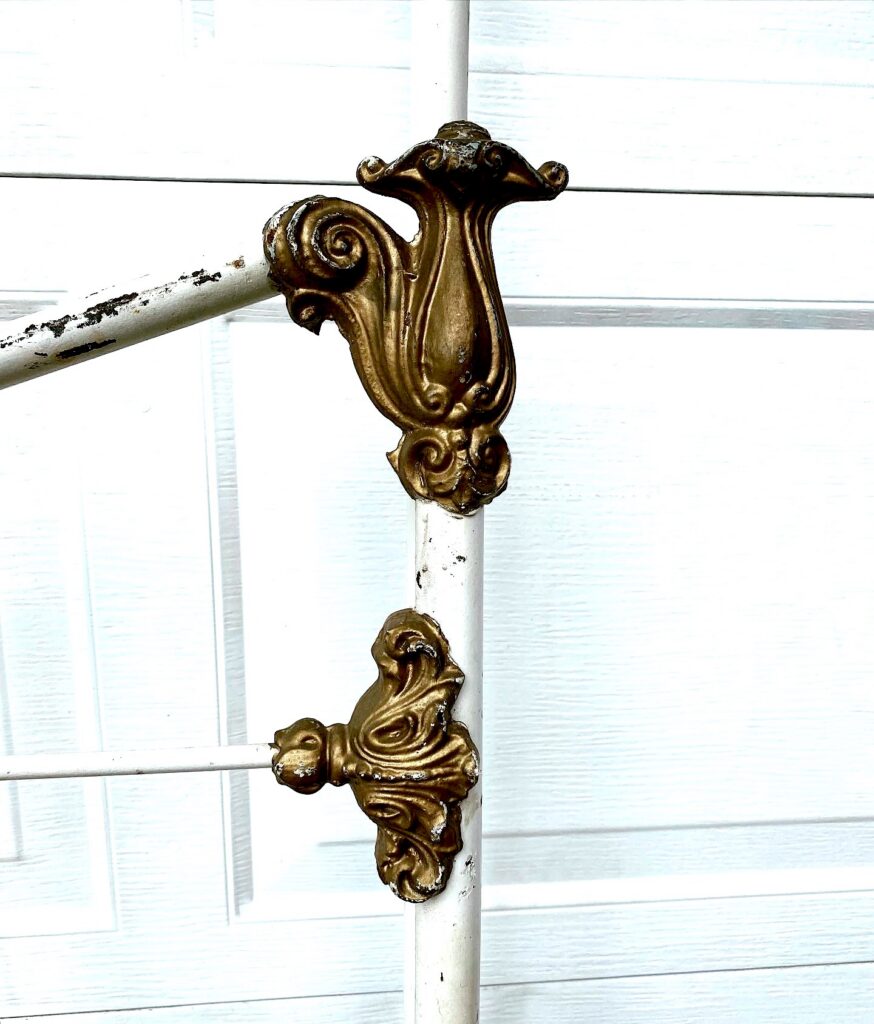 Manufacturers could use finials to move a bed stylistically in one direction or another.
A pointed finial might give a bed a slightly Gothic or architectural feeling.
An urn-shaped finial could suggest a more classical influence.
Floral forms could soften the appearance of the iron.
Simple ball finials could complement beds where the curves and castings were already providing enough ornamentation.
These small components became part of the manufacturer’s design vocabulary.
Brass Changed Everything
The introduction of decorative brass elements had an enormous influence on iron-bed design.
As we have discussed previously, brass was not simply added because manufacturers suddenly discovered that brass looked attractive. Iron bed manufacturers were competing directly with the increasingly popular brass-bed industry.
Adding brass to iron beds allowed manufacturers to offer customers some of the visual appeal of a brass bed without abandoning the strength, affordability and versatility of iron construction.
Finials were an obvious place to use it.
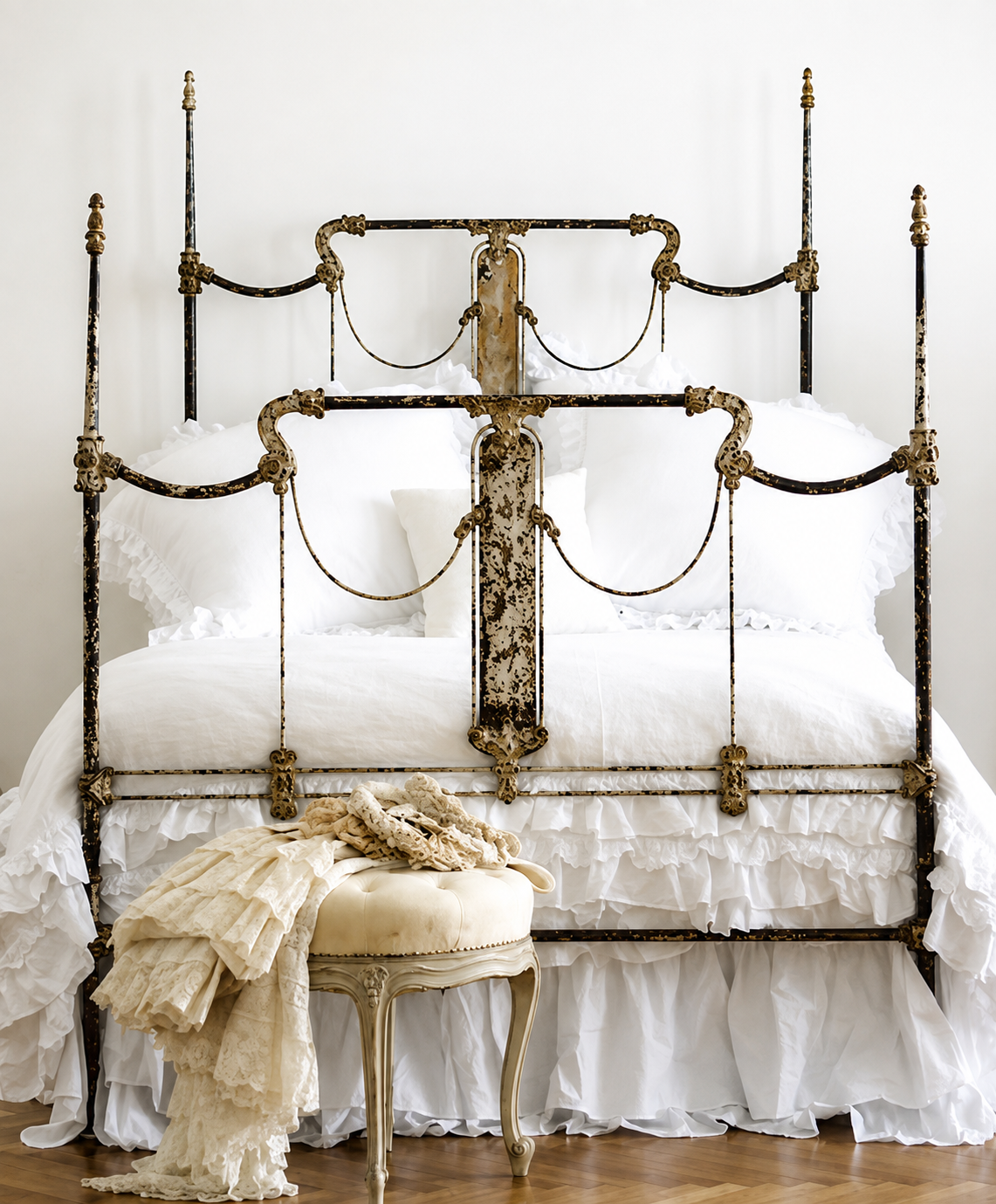
A polished brass finial positioned at the top of a dark iron bedpost immediately attracted the eye.
[PHOTO SUGGESTION #4: Original antique iron bed with prominent brass finials.]
Brass could also be repeated elsewhere on the bed—on collars, decorative bands or other accents—creating a coordinated appearance.
Suddenly, the finial wasn’t merely the object sitting at the top of the post.
It became jewelry for the bed.
Finials Could Help Sell the Bed
We sometimes forget that the manufacturers producing these beds in the 1800s were businesses.
They had catalogs.
They had salesmen.
They had competitors.
And they needed their products to stand out.
If two manufacturers offered beds with similar construction and similar tubing, decorative details could make the difference between which one a customer purchased.
A particularly attractive casting or unusual finial could help distinguish a manufacturer’s bed from competing designs.
This is one reason we see such remarkable creativity in original antique iron beds.
Manufacturers were constantly looking for ways to make their beds appear more substantial, more fashionable or more expensive.
The finial gave them one more place to do it.
Finials Can Tell Us Something About Quality
One of the things I look at when evaluating an old iron bed is whether the decorative components seem appropriate to the overall construction.
There are always exceptions, but better beds generally received better details.
Large-diameter tubing, substantial castings, heavier construction and elaborate finials frequently appear together.
That makes sense.
A manufacturer wasn’t likely to invest heavily in ornate decorative castings and sophisticated finials while building the remainder of the bed as cheaply as possible.
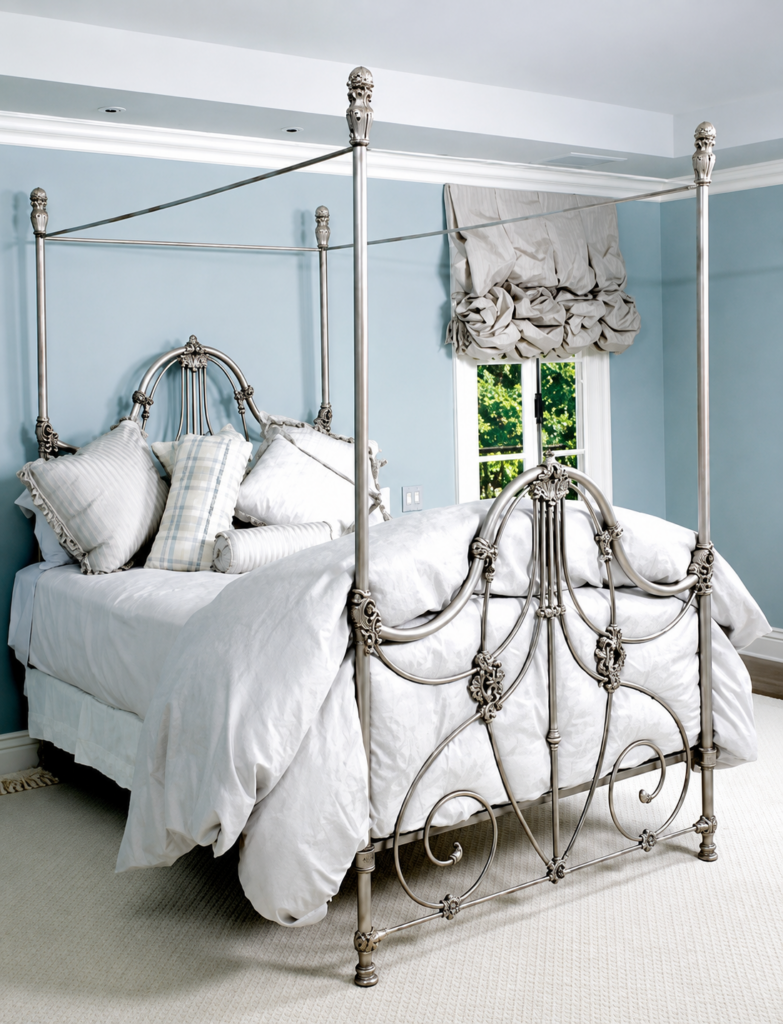 The quality of the casting itself can also tell us something.
Look closely at an original cast-iron finial and you may see remarkably crisp detail. Creating that detail required a good pattern, a good mold and skilled foundry work.
Those little ornaments can therefore offer clues about the quality standards of the company that produced the bed.
When Original Finials Go Missing
Unfortunately, finials are also among the components most frequently missing from antique iron beds.
That isn’t surprising.
Beds were dismantled and moved repeatedly over generations. Finials could be unscrewed, knocked loose, broken or simply misplaced.
A bed might spend decades stored in a barn, basement, garage or attic before being rediscovered. Somewhere along the way, one of those relatively small removable pieces could easily disappear.
For common ball finials, finding an appropriate replacement may not be particularly difficult.
For unusual cast finials, however, it can be considerably more challenging.
And this is where restoration philosophy becomes important.
Replacing a Missing Finial Without Redesigning the Bed
At Cathouse Antique Iron Beds, our approach to restoration has always been to respect the integrity of the original design.
That applies just as much to a missing finial as it does when converting an antique double bed into a queen or king.
We don’t want to redesign the bed.
We want to restore what should have been there.
When an original finial survives, it can sometimes be used as the pattern from which another can be reproduced. Depending on the design and material, that may involve mold-making, casting and considerable hand finishing.
The objective should be that the replacement doesn’t announce itself as a replacement.
It should simply look as though it has always belonged there.
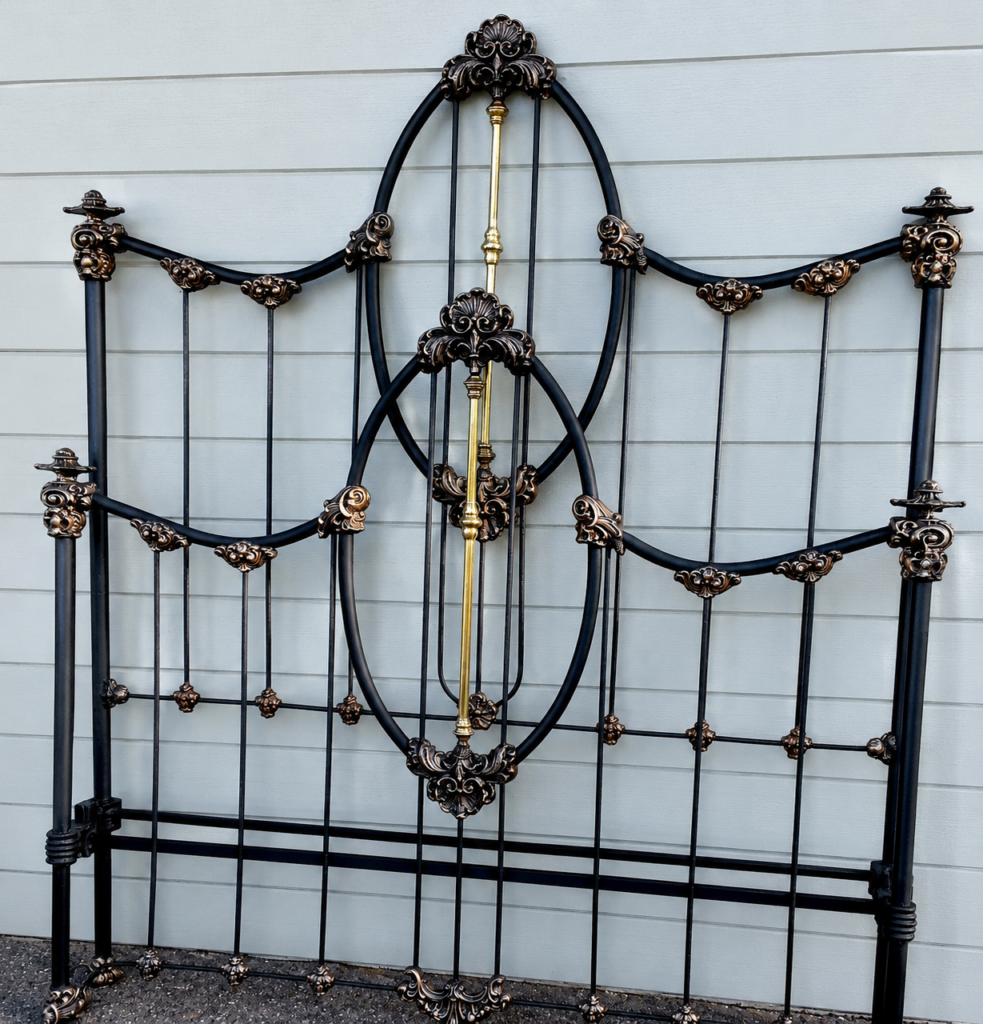 That distinction is important.
Restoration should complement the original craftsman’s work—not compete with it.
Original Patina Matters Too
Not every old finial needs to look new.
In fact, making one look too new can sometimes detract from the bed.
We frequently work with antique iron beds that retain wonderful original painted surfaces, oxidation, wear and evidence of age. When preserving that original finish, the finials should generally remain visually compatible with the rest of the bed.
A perfectly polished, bright new finial sitting on top of a beautifully aged 130-year-old bedpost can look completely out of place.
Age is part of the story.
Where possible, we prefer to preserve it.
Small Details Often Separate Good Antique Beds From Great Ones
One of the pleasures of working with antique iron beds for so many years is that you eventually stop looking only at the bed.
You start looking at the decisions that went into making it.
Why did the manufacturer choose that particular casting?
Why was that curve shaped that way?
Why did they use that diameter tubing?
Why was brass added here but not there?
And why did they choose that particular finial?
Those decisions weren’t accidental.
The finest antique iron beds are collections of hundreds of small design and manufacturing choices that somehow come together into a unified object.
The finial may occupy only a few inches at the top of a bedpost, but remove it and you immediately notice that something is missing.
Preserving Another Piece of Iron-Bed History
Today, original antique iron beds are appreciated very differently than they were when they were first manufactured.
They are no longer simply household furniture.
The best examples represent American industrial history, foundry work, metal craftsmanship and Victorian design.
The finials sitting on top of their posts are part of that history.
Some were cast in iron.
Some were made in brass.
Some were simple.
Others were extraordinarily elaborate.
But each represented a final decision by the person who designed the bed:
How should this bed end?
And perhaps that is the best way to understand why finials matter.
They weren’t necessary to make the bed work.
They were necessary to make the bed complete.