
When we think about the carbon footprint of furniture, we usually think about what is being manufactured today.
Steel is mined. Metal is processed. Factories consume energy. Components are fabricated, finished, packaged and transported. Eventually, the finished product arrives at a store or at our front door.
But what happens when the piece of furniture isn’t new?
What if it was manufactured approximately 150 years ago?
That is the fascinating question surrounding an authentic antique iron bed from the 1800s. At Cathouse Antique Iron Beds, we have always appreciated these beds for their craftsmanship, durability and history. But there is another quality worth considering today: reuse.
Could an antique iron bed actually have a lower carbon footprint for today’s buyer than a newly manufactured metal bed?
The short answer is: very possibly—and the reason has everything to do with how carbon footprints are calculated.
The Carbon Footprint Doesn’t “Dissipate”
First, there is an important misconception to clear up.
The carbon footprint created when an antique iron bed was manufactured in the 1800s does not slowly disappear over 150 years.
The greenhouse-gas emissions associated with producing the iron happened when the bed was made. They are historical emissions.
Carbon accounting doesn’t work like an odometer that resets every year.
A life-cycle assessment looks at the emissions associated with the stages of a product’s life, including raw-material extraction, manufacturing, transportation, use and eventual disposal. Depending on the purpose of the assessment, the boundary can be “cradle-to-gate” or “cradle-to-grave.” [1]
Therefore, if we were somehow able to reconstruct the complete manufacturing history of an iron bed made in 1885, those original emissions would remain part of its historical life-cycle footprint.
But there is an important difference between historical carbon emissions and the additional carbon emissions required to put that bed into service today.
And that’s where reuse changes the equation.
The Metal Has Already Been Made
 An antique iron bed is, in effect, a very old manufactured product that has already completed most of the most energy-intensive stages of its original life.
The ore was extracted.
The iron was produced.
The metal was formed or cast.
The bed was fabricated.
The bed was transported.
And then, remarkably, somebody kept it.
Today, when an antique bed is restored and placed into another bedroom, we aren’t asking a steel mill to make all that metal again.
This is fundamentally different from manufacturing a new bed.
Modern life-cycle assessment methodology recognizes the environmental value of reuse and remanufacturing. The World Steel Association has published specific guidance for modeling products that are reused through multiple lives because the original manufacturing burden can serve more than one period of use. [2]
That is an important concept.
The longer a durable product remains useful, the more years of service we can obtain from the manufacturing that has already taken place.
What Does New Steel Cost in Carbon?
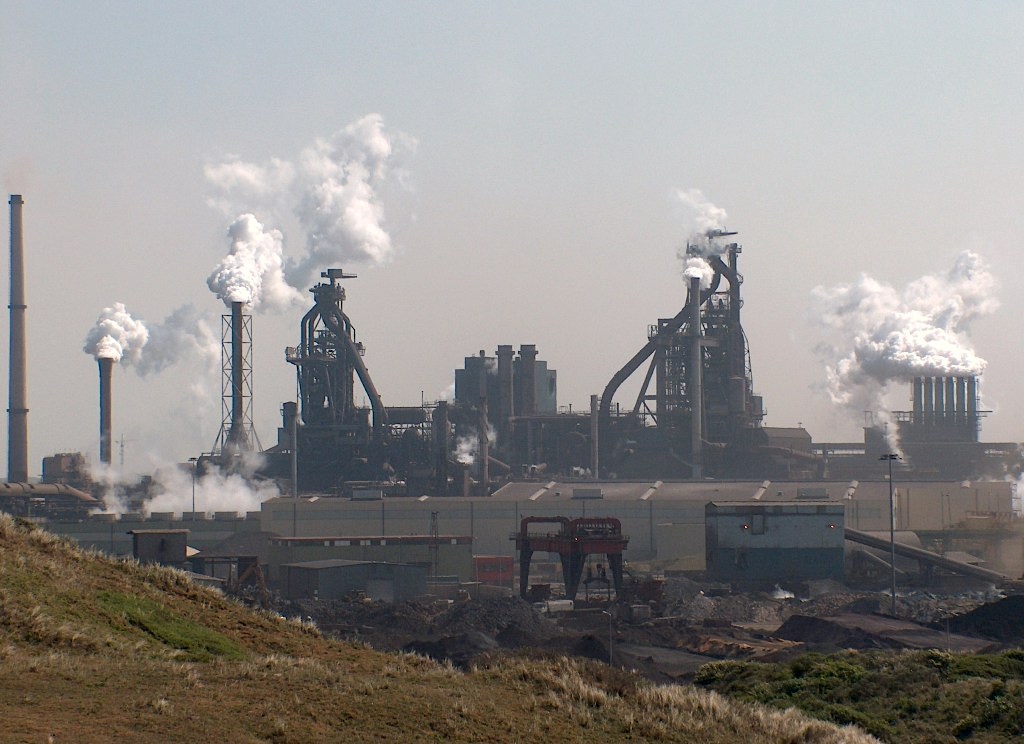
We can get a sense of the scale by looking at modern steel production.
The World Steel Association’s published life-cycle data reports approximately 1.53 tonnes of CO₂ equivalent per tonne of steel product for the cradle-to-gate climate-change impact of one category of global steel sections. [3]
That means, very roughly, that 50 kilograms of newly produced steel could represent about 76 kilograms of CO₂e at the steel-production stage alone.
At 75 kilograms, the figure would be approximately 115 kilograms of CO₂e.
These are illustrative calculations, not the carbon footprint of a particular bed. A real calculation would also need to consider exactly what metals are used, where they are produced, how the bed is fabricated, finishing processes, transportation, packaging and eventual end-of-life treatment.
But the point is easy to understand:
Making new metal has a measurable environmental cost.
An antique bed already contains its metal.
The Interesting Difference Between an Antique and a New “Iron” Bed
There is another reason this comparison can become confusing.
The phrase “iron bed” is used very broadly today.
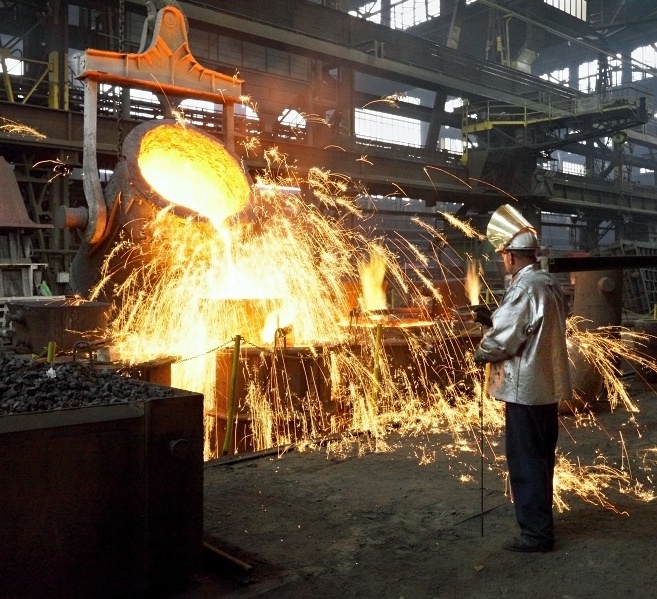
Authentic 19th-century iron beds were made using materials and techniques that are quite different from many inexpensive modern reproductions. Original beds can contain wrought iron, cast iron and other metal components. Decorative castings were commonly produced using sand molds and molten cast iron.
Cathouse has previously documented how these sand-cast components were produced in the 1800s, with individual patterns used to create the molds into which molten cast iron was poured. [4]
Modern reproductions can use steel, aluminum and other materials, depending on the manufacturer and design.
So comparing “antique iron bed” with “new metal bed” isn’t necessarily an apples-to-apples material comparison.
It is really a comparison between two very different approaches:
Reuse an existing, durable product
versus
Extract raw materials and manufacture another product.
That distinction may be more important environmentally than whether the new bed is marketed as iron, steel or metal.
Does the Antique Get a Carbon Credit for Living 150 Years?
 Not exactly.
We should be careful here.
It would be misleading to say that an antique iron bed has “earned back” all of its original carbon emissions simply because it survived for 150 years.
There is no universally accepted formula that says a bed made in 1880 gets a certain number of carbon credits every year it remains in use.
Instead, life-cycle analysis asks a more useful question:
How much environmental impact is required to provide the same function?
For a bed, the function is relatively simple: provide a durable sleeping platform for a person or household.
If an existing antique bed can provide that function for another 20, 30 or 50 years with relatively little additional material and energy, then its original manufacturing burden is being spread over an extraordinarily long useful life.
That is one of the great environmental advantages of durable furniture.
The bed doesn’t have to be manufactured again.
Restoration Has a Footprint Too
Of course, restoring an antique iron bed isn’t carbon-free.
A bed may need transportation.
It may require cleaning, stripping, sandblasting, welding or repair.
It may receive a new finish.
Replacement hardware or side rails may be required.
All of those activities consume materials and energy.
A proper comparison therefore shouldn’t say:
“Antique bed = zero carbon.”
That isn’t scientifically defensible.
The more accurate statement is:
An antique bed that is restored and reused generally avoids much of the raw-material and primary manufacturing burden associated with producing an entirely new replacement.
The exact savings depend on the condition of the antique, how much restoration it needs, how far it travels and what new materials are added.
What About the Carbon Footprint of a New Bed?
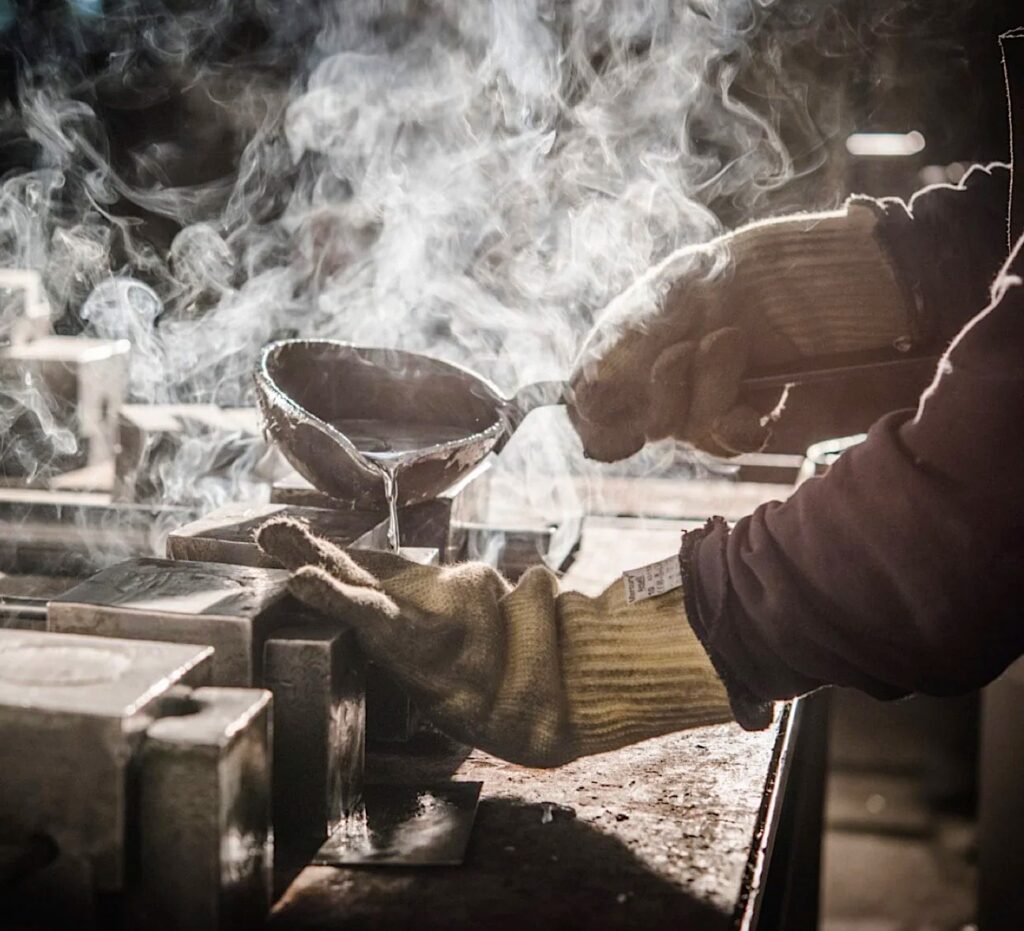 A new metal bed begins another manufacturing cycle.
New material must enter the system.
Metal must be produced or processed.
Components must be fabricated.
The bed must be finished.
It must be packaged.
It must be transported.
And eventually, the bed will reach the end of its useful life.
The U.S. Environmental Protection Agency emphasizes that a product’s environmental impact should be considered across its entire life cycle, including raw materials, manufacturing, packaging, transportation, use, repair, reuse and disposal. [5]
This is precisely why an antique can be so interesting from a sustainability perspective.
The most environmentally friendly product isn’t necessarily the one manufactured with the newest technology.
Sometimes, it is the product that doesn’t need to be manufactured again at all.
Steel Is Particularly Interesting Because It Can Be Reused
Steel has another advantage: it is recyclable.
But recycling and reuse are not the same thing.
Recycling means taking the material apart and processing it so that it can become material for another product.
Reuse means continuing to use the product itself.
If an antique iron bed is still structurally sound, keeping the entire bed in service means that its components don’t have to be melted down and manufactured into something else simply to become useful again.
Research published in Environmental Science & Technology has examined the potential carbon savings from reusing steel and aluminum components rather than immediately sending them into recycling or disposal pathways. The study concluded that substantial quantities of metal products could potentially be reused, while also identifying practical barriers to making reuse more common. [6]
In other words:
The best recycling story for a durable iron bed may be to keep using the bed before recycling the metal becomes necessary.
The 150-Year Test
Perhaps the most compelling environmental argument isn’t a theoretical calculation at all.
It is sitting right in front of us.
An authentic iron bed made in the 1800s has already demonstrated something that many modern consumer products struggle to demonstrate:
longevity.
A bed manufactured around 1880 and still capable of being restored and used today has provided roughly a century and a half of potential service.
And if it is restored today and used for another generation, its useful life could approach 200 years.
Imagine manufacturing a new bed today and asking whether we should expect it to remain useful in 2126.
That is the real sustainability question.
Durability matters.
Repairability matters.
Reuse matters.
And longevity matters.
So Which Has the Smaller Carbon Footprint?
Can we definitively say that every antique iron bed has a smaller total historical carbon footprint than every new metal bed?
No.
We shouldn’t.
We don’t possess the original manufacturing records for every antique bed, and modern beds vary enormously in materials, manufacturing methods, transportation distances and energy sources.
But can we reasonably say that reusing an existing 150-year-old iron bed can have a substantially lower additional carbon impact than manufacturing a new replacement bed?
Yes.
That conclusion is consistent with the principles of life-cycle assessment and reuse.
The original carbon emissions associated with producing the antique bed happened more than a century ago. They haven’t disappeared—but neither do we need to repeat them simply because somebody wants a bed today.
The environmental advantage comes from avoiding another manufacturing cycle.
Perhaps the Greenest Bed Is the One That Already Exists
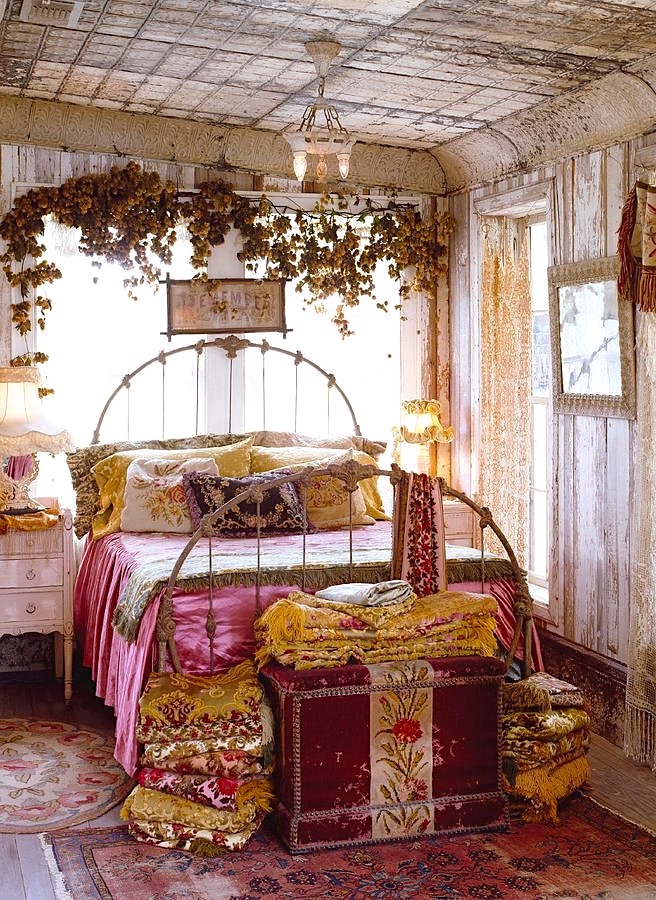 There is something wonderfully appropriate about this idea.
The Victorians who built these beds weren’t thinking about carbon footprints, climate change or circular economies.
They were building furniture.
And they built it to last.
Today, we have a word for what happens when we keep that furniture alive:
reuse.
An antique iron bed doesn’t need to be manufactured again.
It doesn’t need a new mine.
It doesn’t need another furnace to produce its basic material.
It doesn’t need to become a brand-new product simply because it has changed owners.
It simply needs to be restored, maintained and given another room to live in.
That may be one of the most compelling environmental qualities of an authentic antique iron bed.
Its greatest carbon advantage may be the fact that it has already been made—and after 150 years, it is still here.
Sources & Further Reading
[1] Carbon Trust, Product Carbon Footprints — explanation of cradle-to-gate and cradle-to-grave product carbon footprints. [7]
[2] World Steel Association, Guidance on Methodologies for Modelling Reuse and Remanufacture in LCA Studies. [2]
[3] World Steel Association, LCA Eco-Profiles – 2026 Release, including published climate-change impacts for steel products. [3]
[4] Cathouse Antique Iron Beds, Casting With Sand — historical explanation of sand-cast iron-bed components. [4]
[5] U.S. Environmental Protection Agency, Institutional Purchasers of Greener Products and Services — life-cycle considerations including raw materials, manufacturing, transportation, repair, reuse and recycling. [5]
[6] Environmental Science & Technology, Reusing Steel and Aluminum Components at End of Product Life. [6]