If you’ve ever shopped for antique iron beds, you’ve probably noticed something interesting.
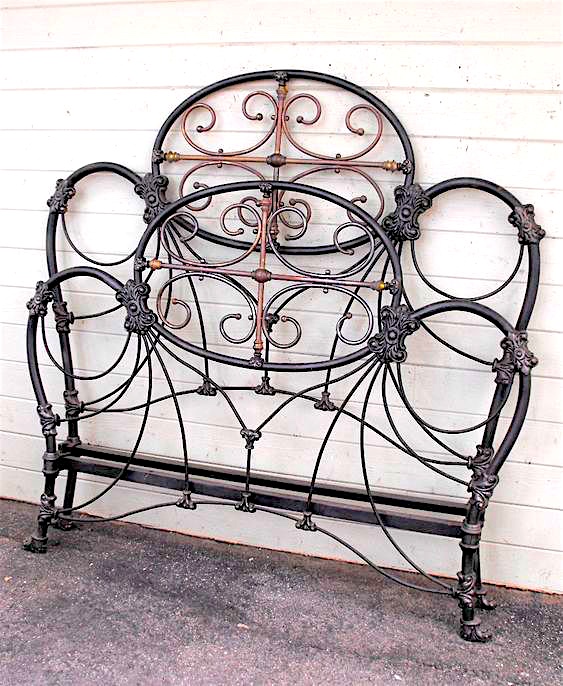
Many beautiful old iron beds feature polished brass knobs, brass finials, brass rail caps, or decorative brass accents. They’re commonly referred to as Iron & Brass Beds.
But have you ever stopped to wonder why?
Why weren’t they called Iron & Silver Beds?
Or Iron & Copper Beds?
The answer has very little to do with metalworking—and almost everything to do with marketing.
During the late 1800s, when antique iron beds were becoming increasingly popular, manufacturers weren’t simply building beds. They were competing for customers in one of the fastest-growing furniture markets in America.
Their biggest competitor?
The magnificent brass bed.
Brass Beds Were the Luxury Choice
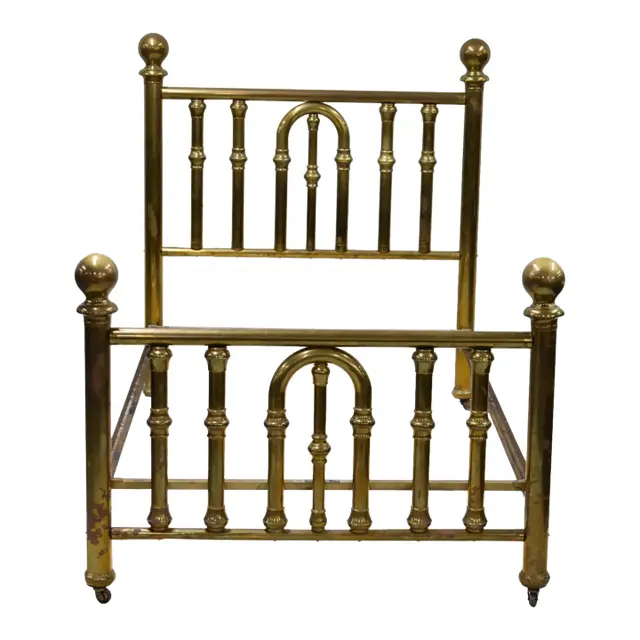 Long before iron beds became household favorites, solid brass beds were considered a symbol of wealth and refinement.
Walk into an upscale Victorian home during the late nineteenth century and there was a good chance you’d find an impressive brass bed in the master bedroom. Their warm golden color reflected candlelight beautifully, and they projected elegance, prosperity, and success.
Unfortunately for many families, they also came with a luxury price tag.
Solid brass wasn’t inexpensive.
Manufacturing an entire bed from brass required more material, more labor, and a much higher selling price.
Many families admired brass beds…
…but couldn’t justify buying one.
That opened the door for one of the smartest marketing ideas in furniture history.
Iron Manufacturers Saw an Opportunity
The manufacturers producing antique iron beds recognized something important.
Customers loved the appearance of brass.
But they also wanted value.
Iron was significantly less expensive than brass while still being incredibly strong and durable.
It could be rolled into graceful tubing.
It could be forged into elaborate scrollwork.
It could support decorative castings that brass simply couldn’t duplicate as economically.
Most importantly…
Iron could be painted.
Manufacturers suddenly realized they could offer buyers something they hadn’t seen before.
Instead of asking customers to choose between an elegant brass bed and an affordable iron bed…
Why not combine the two?
The Birth of the Iron & Brass Bed
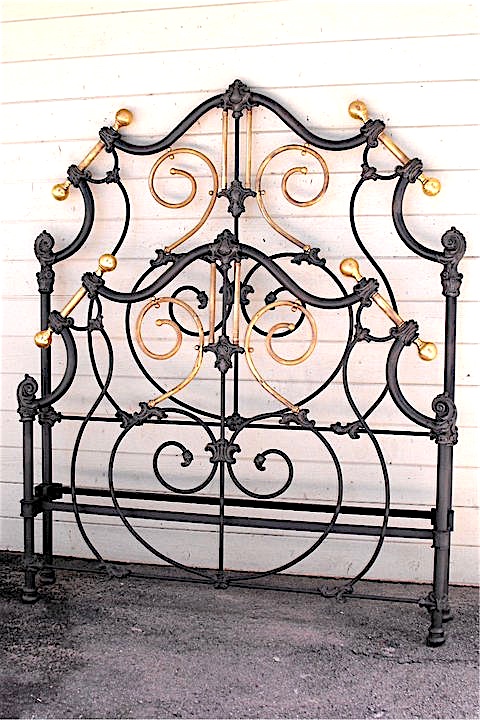 Rather than building an entire bed from brass, manufacturers began adding carefully placed brass accents to beautifully designed iron beds.
Brass finials crowned the posts.
Brass collars highlighted the uprights.
Brass rail caps caught the eye.
Decorative brass trim added warmth and elegance.
The result was striking.
Customers enjoyed much of the luxurious appearance of a brass bed while paying considerably less than they would for a bed made entirely of brass.
It was a winning combination.
Before long, these beautiful creations became known simply as Iron & Brass Beds.
The name wasn’t based on structural engineering.
It was based on what buyers wanted.
Why Not Iron & Silver?
It’s actually an interesting question.
If silver had been the fashionable bedroom metal of the Victorian era, manufacturers almost certainly would have added silver accents instead.
The same would be true for copper.
Or bronze.
The combination wasn’t chosen because brass possessed some magical property that iron lacked.
It was chosen because brass represented luxury.
Manufacturers understood that people often buy with their eyes first.
Adding gleaming brass transformed an already attractive iron bed into something that looked even more sophisticated.
In many ways, it was nineteenth-century product marketing at its finest.
The manufacturers weren’t changing what made the bed strong.
They were changing what made people fall in love with it.
Iron Had Advantages Brass Couldn’t Match
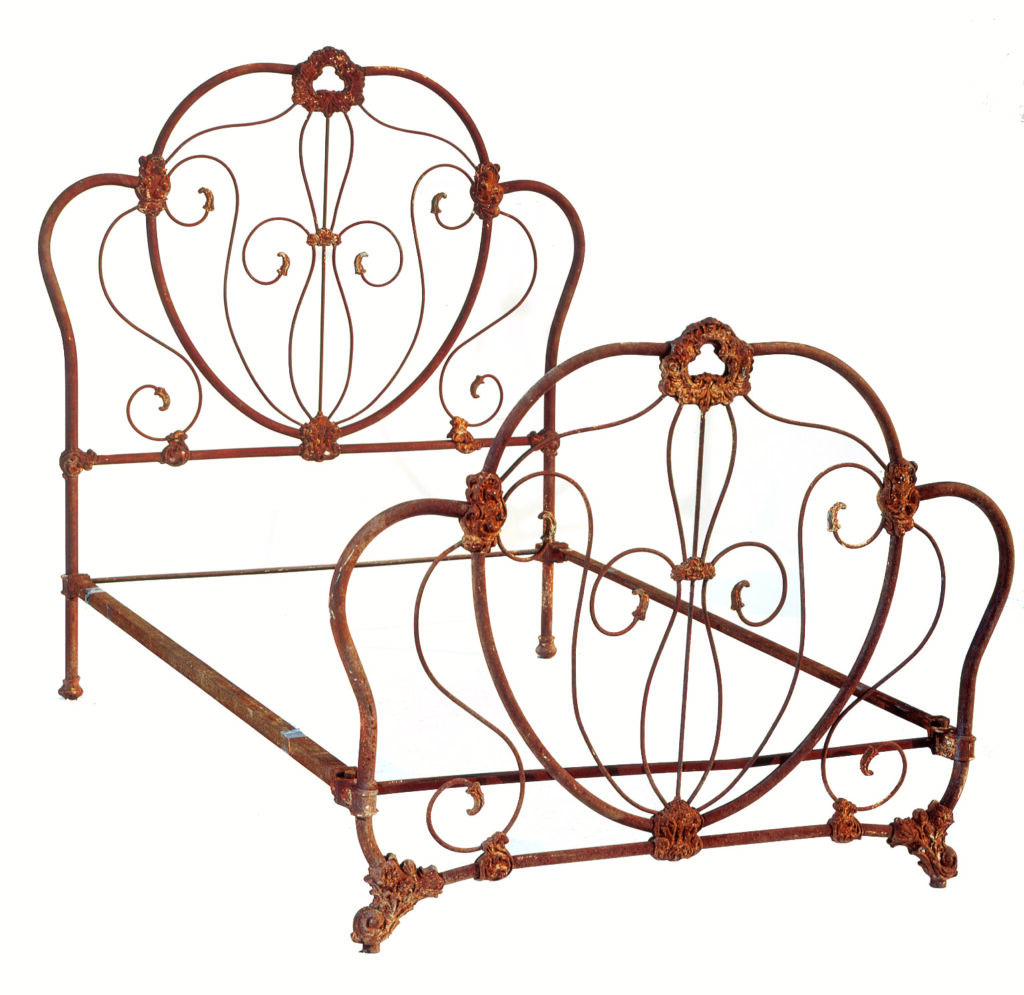 Iron wasn’t merely the affordable alternative.
In many ways, it was actually the superior design material.
Because iron could be bent, rolled, and fabricated into countless shapes, manufacturers enjoyed tremendous creative freedom.
Many antique iron beds featured flowing scrollwork.
Elegant arches.
Curved crowns.
Intricate rod patterns.
Decorative castings.
Graceful silhouettes.
These artistic possibilities often exceeded what was practical for an all-brass bed.
Iron allowed designers to become artists.
Decorative Castings Became a Signature Feature
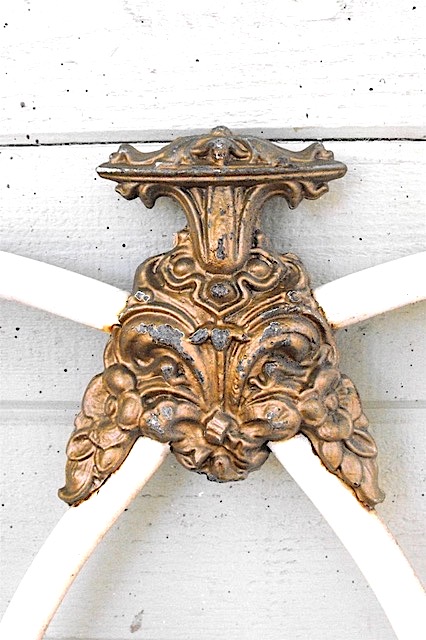 One of the defining characteristics of many high-quality antique iron beds was their remarkable castings.
These decorative pieces weren’t simply ornaments.
They also strengthened the joints where tubing came together.
Foundries produced hundreds of casting designs.
Flowers.
Leaves.
Fans.
Rosettes.
Geometric patterns.
Victorian flourishes.
Art Nouveau motifs.
The castings gave iron beds a personality all their own.
Combined with polished brass accents, they created beds that were both structurally sound and visually stunning.
Another Huge Advantage—Paint
Perhaps the greatest advantage iron beds had over brass beds was something we often take for granted today.
They could be painted.
Victorian homeowners weren’t limited to one finish.
Manufacturers offered numerous painted colors.
Black.
Cream.
White.
Olive green.
Burgundy.
Soft ivory.
Later owners often repainted their beds to match changing tastes and home décor.
Today, one of the greatest joys of owning authentic antique iron beds is that they can still be professionally restored and finished in virtually any color imaginable.
Whether someone wants classic satin black, distressed white, soft French gray, or a custom designer finish, iron offers remarkable flexibility.
Brass beds simply couldn’t compete with that level of customization.
More Beauty for Less Money
When buyers compared the two choices, the decision often became surprisingly easy.
An all-brass bed certainly had prestige.
But an Iron & Brass Bed offered something equally appealing.
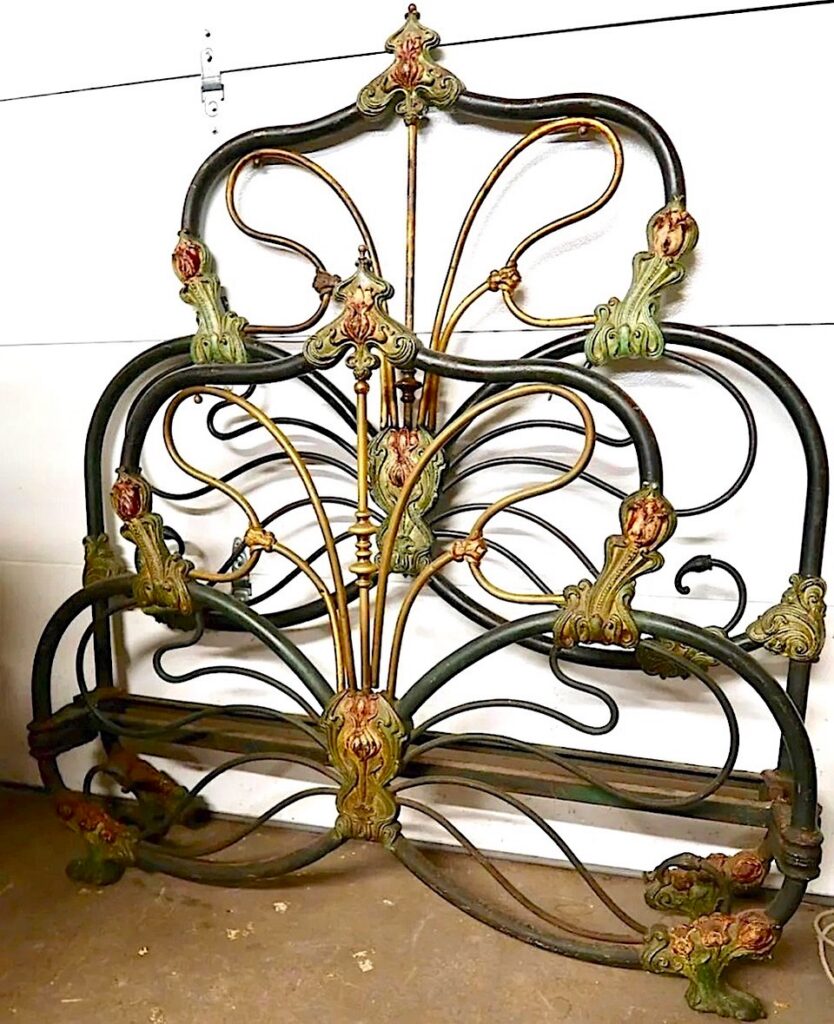 Beautiful design.
Decorative castings.
Graceful curves.
Warm brass accents.
Outstanding durability.
The ability to repaint the bed for future decorating styles.
And all for substantially less money.
It wasn’t difficult to see why families embraced them.
Consumers Quickly Changed Their Minds
As more manufacturers introduced beautiful Iron & Brass Beds, public opinion shifted.
Customers realized they weren’t settling for second best.
In many cases, they were purchasing a bed with more interesting design details than the all-brass alternatives.
Iron beds became increasingly fashionable.
Hotels purchased them.
Boarding houses furnished rooms with them.
Homes across America embraced them.
Before long, antique iron beds had become one of the defining furniture styles of the late Victorian period.
Why Antique Iron Beds Continue to Be Popular Today
More than a century later, these remarkable beds continue to capture people’s imagination.
Interior designers appreciate their versatility.
Collectors admire their craftsmanship.
Homeowners love their character.
Unlike many modern beds that eventually end up discarded, authentic antique iron beds were built to last for generations.
Many remain just as solid today as the day they left the foundry over one hundred years ago.
Their timeless appearance allows them to complement nearly every decorating style—from traditional Victorian homes to modern farmhouse interiors, French Country, Cottage style, industrial lofts, and even contemporary spaces.
That’s an extraordinary achievement for furniture designed more than a century ago.
The Name Says It All
So why are they called Iron & Brass Beds?
Because brass was the material people admired.
Iron was the material that made exceptional design possible.
Manufacturers combined the beauty buyers wanted with the affordability they needed.
It wasn’t about chemistry.
It wasn’t about metallurgy.
It was brilliant marketing.
Had silver been the fashionable luxury metal of the day, history might very well remember them as Iron & Silver Beds.
Had copper been the status symbol, we might all be searching today for Iron & Copper Beds.
Instead, brass captured the public’s imagination, and iron manufacturers wisely incorporated it into their designs.
The result was one of the most beautiful and enduring furniture styles ever created.
More than a century later, authentic antique iron beds and classic Iron & Brass Beds continue to grace homes around the world, proving that exceptional craftsmanship, thoughtful design, and a little marketing ingenuity can truly stand the test of time.