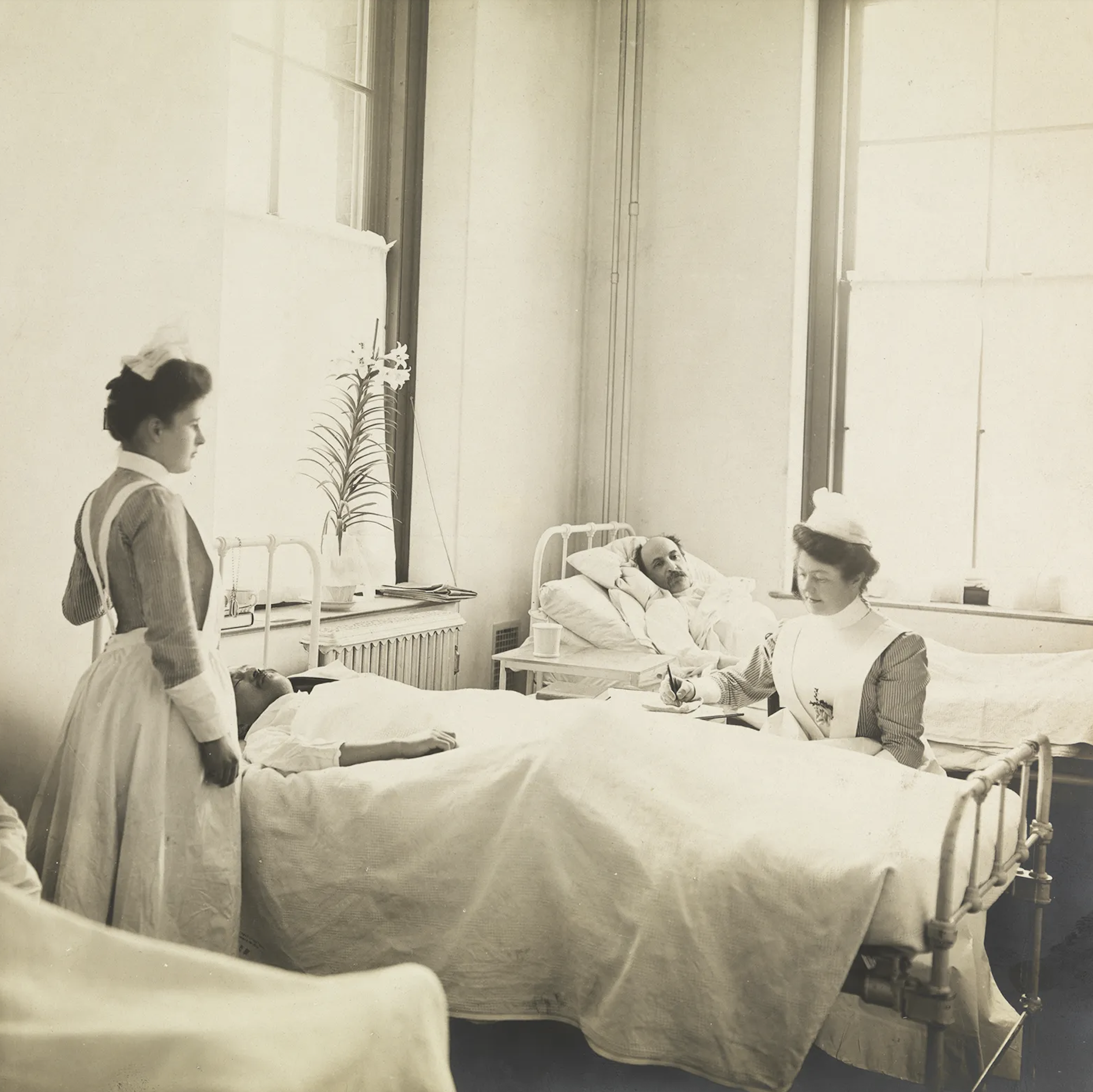
If you’ve ever watched an old movie or looked through historic photographs, you’ve probably noticed that hospital beds from the late 19th and early 20th centuries almost always iron beds, that shared the same appearance: sturdy iron frames finished in glossy white enamel.
This wasn’t simply a matter of style. Those distinctive iron beds were designed to meet some very practical needs during a time when hospitals were rapidly changing and modern medicine was beginning to understand the importance of cleanliness and infection control.
Before Iron: A Breeding Ground for Germs
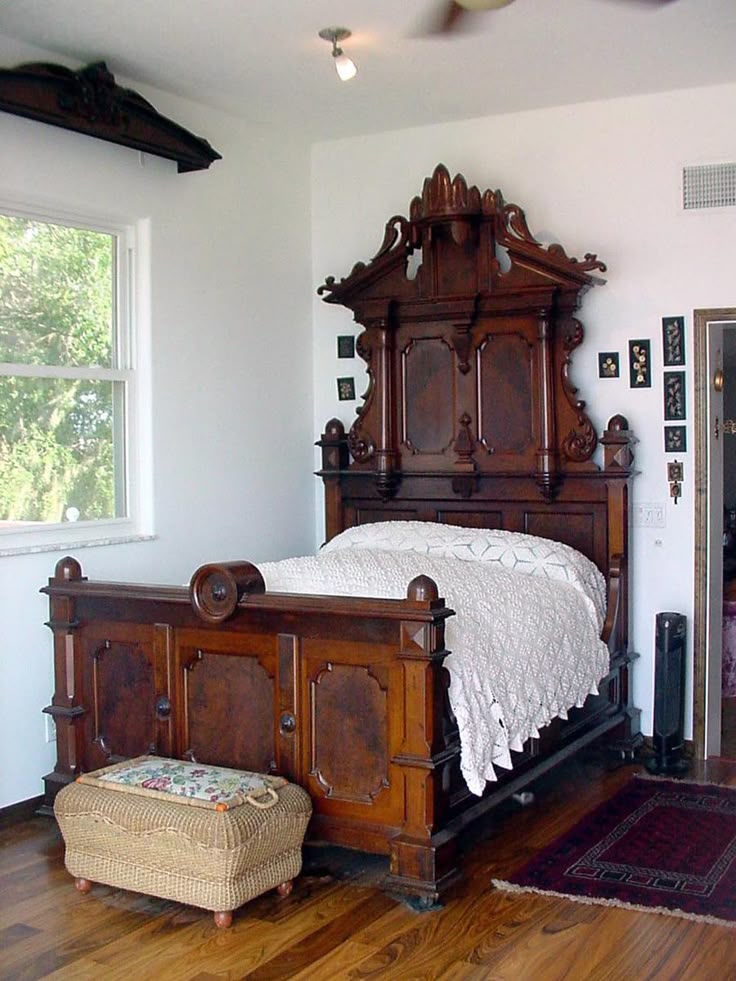
For centuries, most beds were made from wood. While attractive and readily available, wooden bed frames had serious drawbacks in hospitals.
Wood is porous, meaning it can absorb moisture, blood, body fluids, and unpleasant odors. It also develops cracks and joints where dust, insects, and bacteria can accumulate. Before modern disinfectants, keeping wooden furniture truly clean was extremely difficult.
As medical science advanced during the late 1800s, hospitals began looking for materials that could be thoroughly cleaned between patients.
Why Iron Was the Perfect Choice
If you’ve ever watched an old movie or looked through historic photographs, you’ve probably noticed that hospital beds from the late 19th and early 20th centuries almost always shared the same appearance: sturdy iron frames finished in glossy white enamel.
This wasn’t simply a matter of style. Those distinctive beds were designed to meet some very practical needs during a time when hospitals were rapidly changing and modern medicine was beginning to understand the importance of cleanliness and infection control.
Before Iron: A Breeding Ground for Germs
For centuries, most beds were made from wood. While attractive and readily available, wooden bed frames had serious drawbacks in hospitals.
Wood is porous, meaning it can absorb moisture, blood, body fluids, and unpleasant odors. It also develops cracks and joints where dust, insects, and bacteria can accumulate. Before modern disinfectants, keeping wooden furniture truly clean was extremely difficult.
As medical science advanced during the late 1800s, hospitals began looking for materials that could be thoroughly cleaned between patients.
Why Iron Was the Perfect Choice
 Iron proved to be an ideal solution.
Unlike wood, iron has a smooth, hard surface that doesn’t absorb liquids. Hospital staff could scrub the frame with hot water, soap, and disinfectants without damaging it. It was also incredibly durable, resisting years of heavy use.
Iron offered several other advantages:
- It was far less attractive to bed bugs and other pests than wooden furniture.
- It was fire resistant.
- It could support heavier loads without warping.
- The open metal design allowed better air circulation around both the mattress and the patient.
As hospitals expanded during the Victorian and Edwardian eras, iron beds became the standard throughout Europe and North America.
Why Were They Painted White?
The familiar white enamel finish served several important purposes.
Cleanliness Was Easy to See
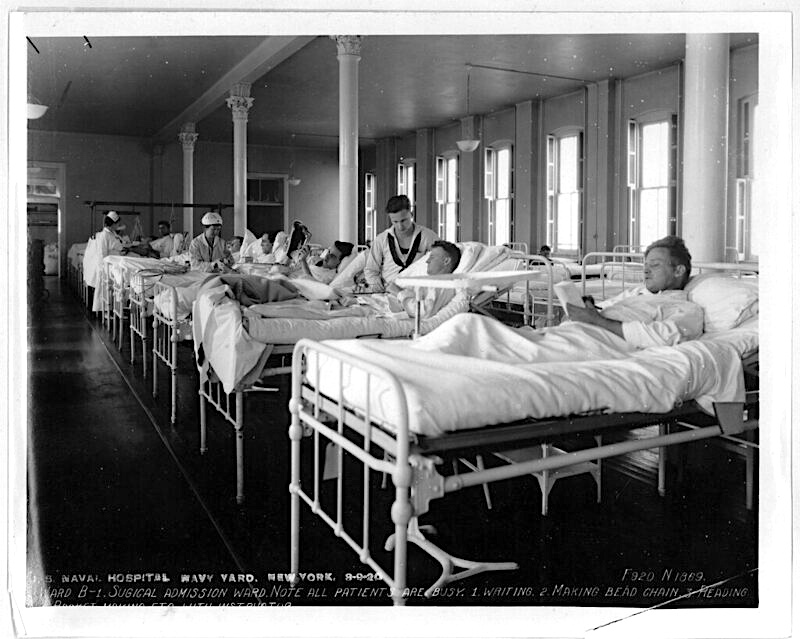 A white bed immediately revealed dirt, dust, stains, or rust.
Doctors and nurses could quickly spot anything that needed attention, reinforcing the new standards of hospital hygiene.
White Inspired Confidence
Hospitals in the 1800s often struggled with public trust. Many people feared them because infections were common and medical treatments were limited.
Bright white surroundings projected cleanliness, order, and professionalism. White walls, white uniforms, white sheets, and white beds all worked together to reassure patients that they were in a sanitary environment.
Enamel Protected the Iron
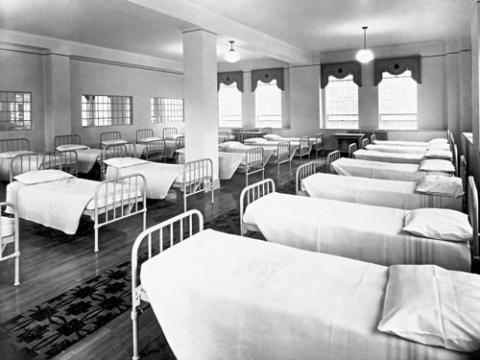 The glossy enamel coating wasn’t just decorative.
It created a hard protective barrier that resisted rust, moisture, repeated washing, and harsh cleaning chemicals. The smooth finish also made the beds easier to wipe clean than bare painted metal.
Many of these enamel finishes lasted for decades with surprisingly little maintenance.
The Influence of Florence Nightingale
Although Florence Nightingale didn’t invent the iron hospital bed, her pioneering work during the Crimean War transformed hospital design.
She championed cleanliness, fresh air, good ventilation, and orderly wards—ideas that dramatically reduced patient deaths.
Iron beds fit perfectly with these principles because they were easier to clean and allowed better airflow than bulky wooden furniture.
As her recommendations spread across Britain, Europe, and eventually the United States, iron hospital beds became the accepted standard.
From Hospitals to Homes
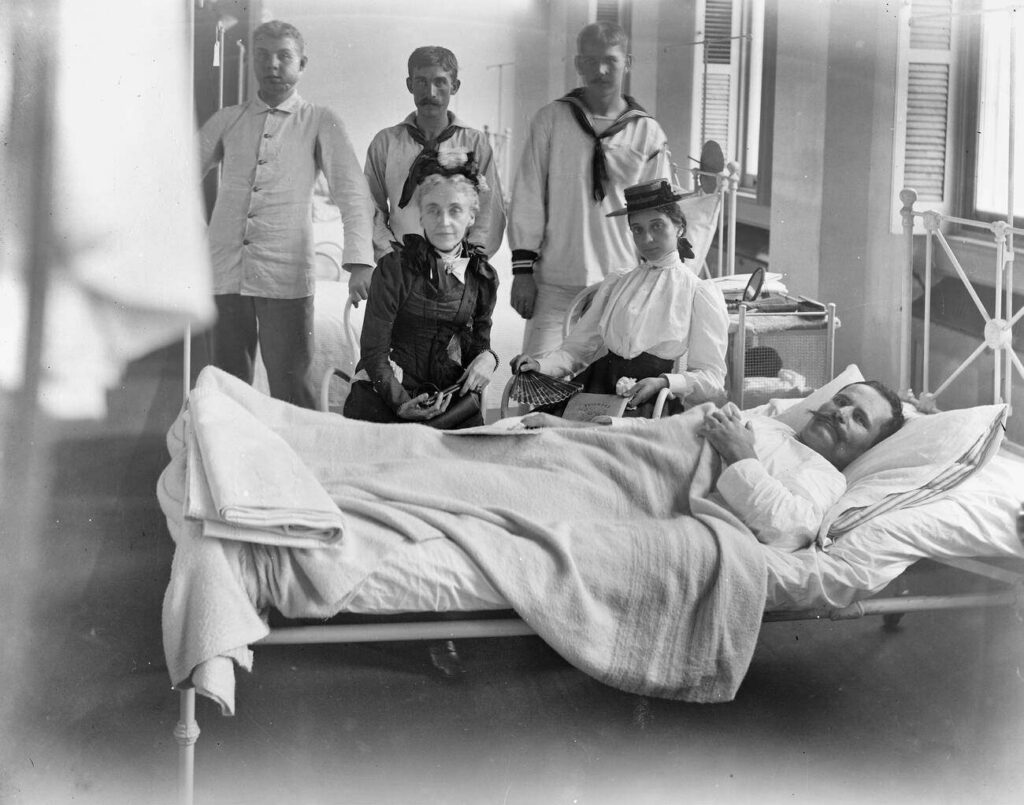
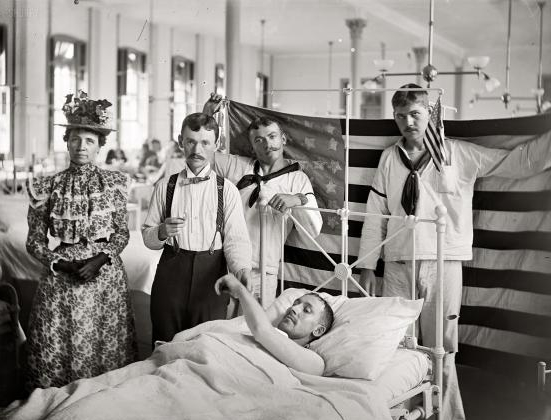
Brooklyn Navy Yard Hospital
By the early 1900s, manufacturers were producing beautifully designed iron beds for domestic use as well.
Families appreciated many of the same qualities hospitals had discovered:
- Exceptional durability
- Easy maintenance
- Excellent ventilation around the mattress
- Resistance to insects
- Elegant, timeless appearance
Decorative castings, brass finials, curved headboards, and intricate scrollwork transformed practical iron beds into beautiful pieces of furniture that suited Victorian, Edwardian, and Art Nouveau homes.
Many antique iron beds built more than a century ago are still being used today—a testament to their remarkable craftsmanship.
Why Iron Beds Remain Popular
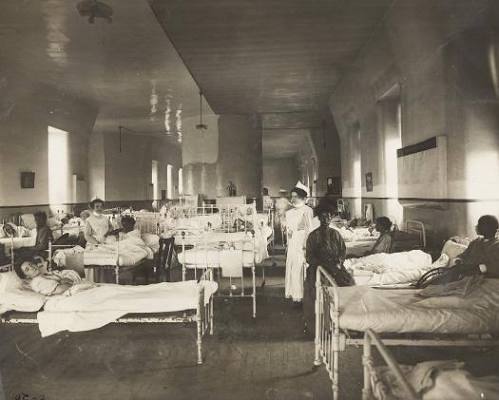
Modern materials have changed the way beds are manufactured, but traditional iron beds continue to appeal to homeowners who appreciate quality and timeless design.
Their clean lines complement everything from country cottages and farmhouse interiors to industrial lofts and contemporary homes. Unlike many mass-produced furniture pieces, a well-made iron bed is built to last for generations.
Perhaps that’s why these classic designs have never truly gone out of fashion.
A Legacy of Strength and Simplicity
The white enamel hospital bed has become an icon of medical history, but its popularity was never about appearance alone.
It represented one of the first times furniture was intentionally designed around hygiene, durability, and patient care. The same qualities that made iron beds indispensable in hospitals—strength, longevity, and ease of maintenance—are the very reasons they’re still admired today.
Sometimes the most enduring designs are those created to solve real-world problems, and the classic iron bed is one of the finest examples.
Hope you’ll take the time to circle back around and see all the antique iron beds we have in our current inventor at: https://www.cathousebeds.com/