There is a difference between furnishing a bedroom and creating a bedroom.
For interior designers and decorators, that difference often comes down to the pieces chosen for the room. A beautiful fabric, an exceptional antique nightstand, an original piece of art or a hand-finished cabinet can give a room something that simply cannot be purchased in a box.
And then there is the bed.
The bed is usually the largest piece of furniture in the bedroom. It is the first thing you notice when you walk through the door, and often the piece around which the entire room is designed.
So why settle for a replica when an authentic antique iron bed can become the heirloom of the room?
At Cathouse Antique Iron Beds, we believe the best bedrooms don’t simply look beautiful today. They should have pieces that will still be beautiful—and meaningful—decades from now.
An Antique Iron Bed Has Already Lived a Life
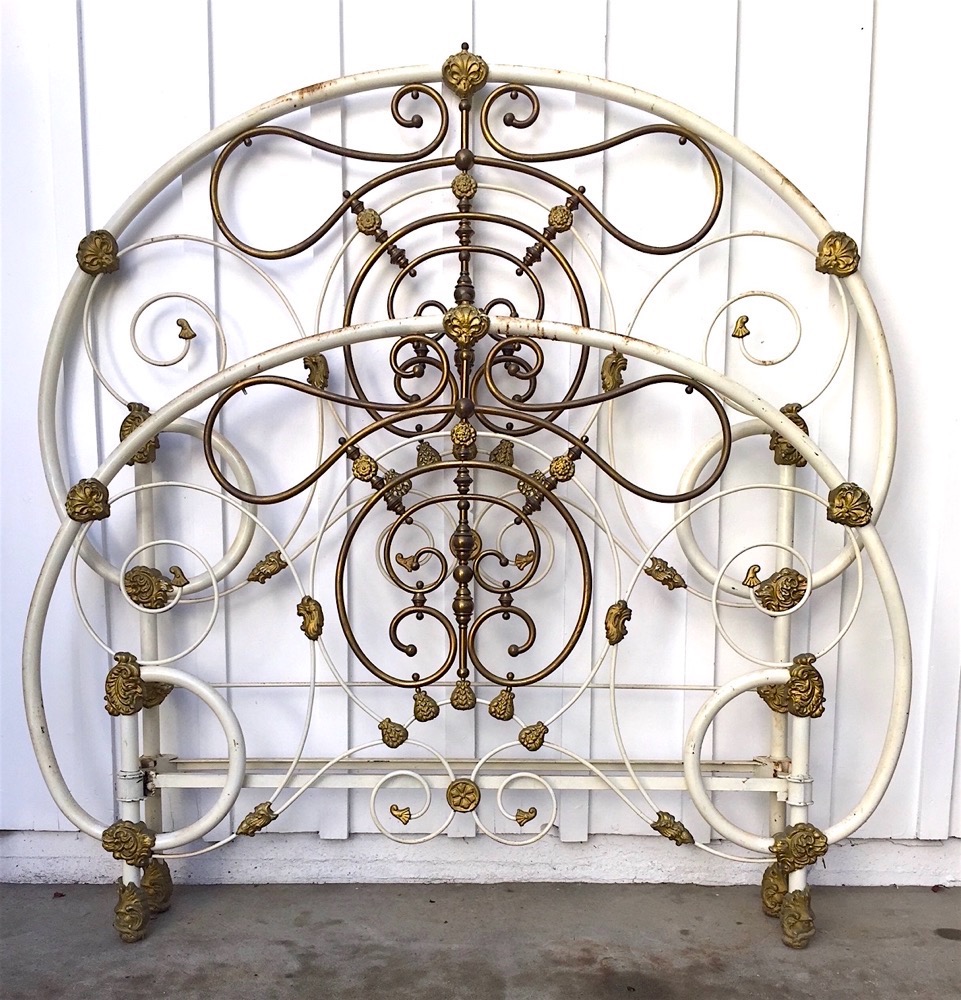 There is something difficult to reproduce about age.
A reproduction manufacturer can copy the shape of an antique iron bed. They can duplicate its curves, its decorative castings and even its finish. They can make something that looks remarkably similar to the original.
But they can’t reproduce its history.
An original antique iron bed may have been manufactured more than a century ago. It may have been in a Victorian bedroom, a farmhouse, a guest room or a grand old home long before today’s modern interiors existed.
The small imperfections, subtle variations and signs of age aren’t flaws. They are part of the story.
That is one of the reasons original vintage iron beds have such appeal to designers. They bring an authenticity to a room that a newly manufactured piece often struggles to achieve.
A designer can build an entire room around a new bed.
Or they can build a room around a piece of history.
Why Designers Look for the Real Thing
Interior design is, in many ways, about creating something personal.
Clients don’t necessarily want their bedroom to look as though it came directly from a showroom. They want a room that feels collected. They want character. They want something their friends haven’t seen a hundred times before.
That is where original antique iron beds can make such a difference.
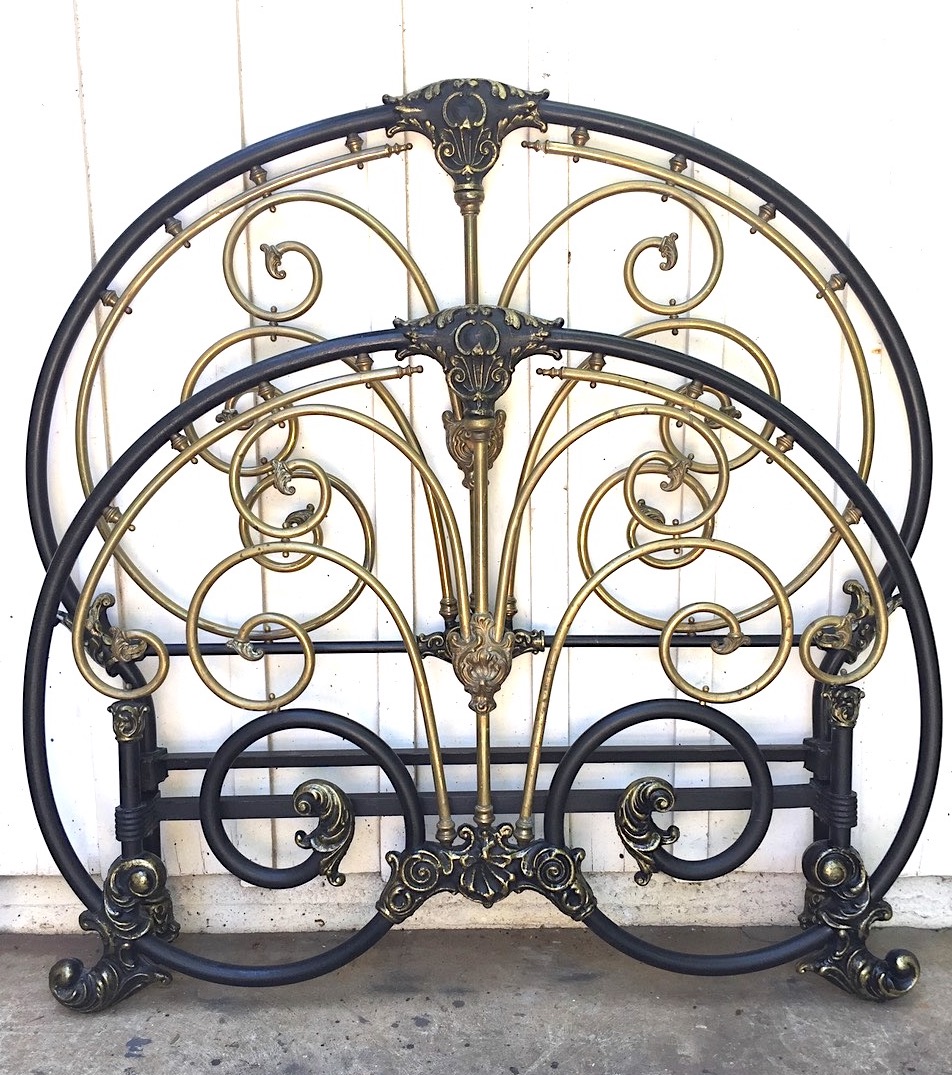
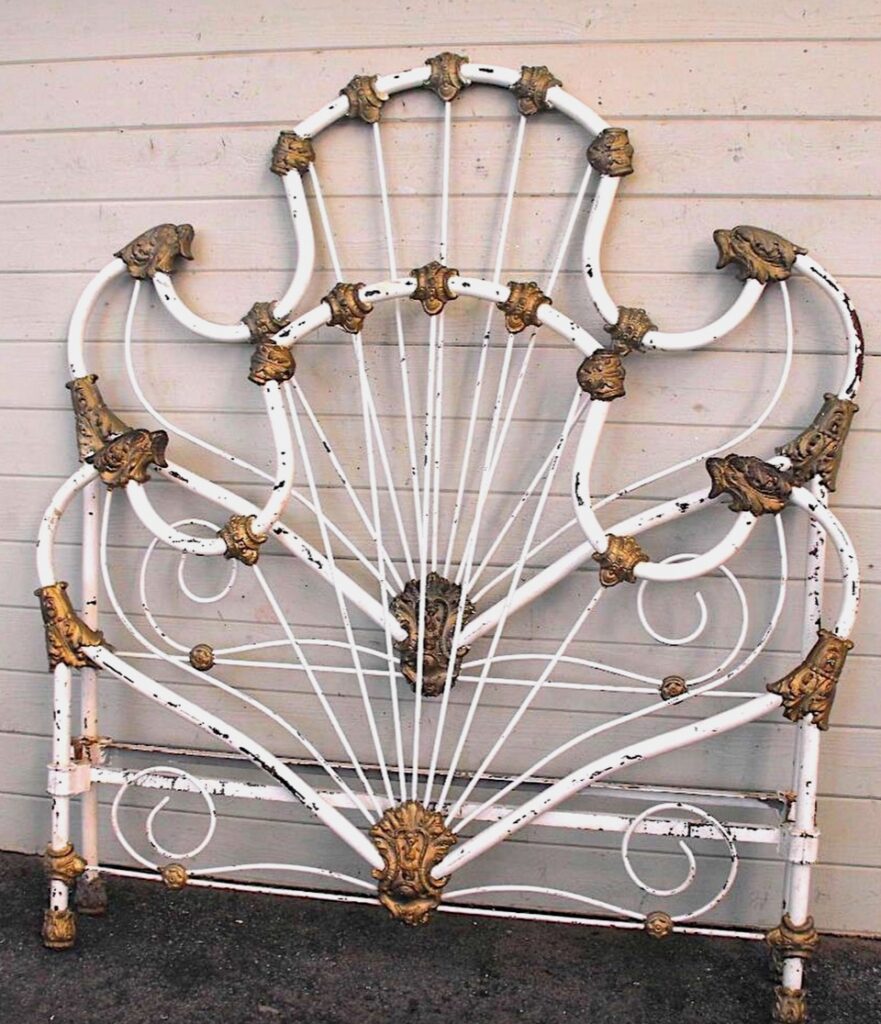
Unlike many contemporary beds, antique iron beds were often designed with an extraordinary amount of attention given to their decorative details. Castings could be both structural and ornamental, incorporating everything from graceful curves to flowers, leaves, horseshoes, crosses, butterflies, angels and other symbolic elements.
These details give an antique bed a personality of its own.
And for a designer, personality is invaluable.
You aren’t simply selecting a bed frame. You’re selecting a focal point that can influence the fabrics, colors, lighting, artwork and accessories surrounding it.
Heirloom Furniture Isn’t Supposed to Look Perfect
Screenshot
There is an interesting irony about today’s obsession with “new.”
We often purchase something brand new and then immediately look for ways to make it appear old.
We buy furniture with distressed finishes. We search for reclaimed wood. We want patina. We want character. We want things that look as though they have a story.
An original antique iron bed doesn’t have to pretend.
It has already earned its character.
Some antique iron beds retain their original finishes. Others have acquired the kind of patina that only comes with decades of use. And sometimes a designer wants something completely different—a particular color, a more sophisticated finish or a look that works with the client’s existing décor.
That is one of the advantages of an iron bed.
It can be restored, refinished or painted to become an entirely different expression while retaining the original craftsmanship and structure.
At Cathouse Antique Iron Beds, we have even finished antique iron beds in custom colors and distinctive finishes, including distressed treatments and our Two Tone Crackle finish.
The result can be wonderfully unexpected:
A 19th-century bed with a 21st-century personality.
And that is something a reproduction simply can’t duplicate.
The Difference Is in the Details
One of the reasons authentic antique iron beds can be so fascinating is that no two are necessarily quite alike.
The manufacturing techniques of the 1800s were different from those used today. Decorative castings were made for specific beds, and components were designed to work together as part of a particular construction.
Look closely at an original antique iron bed and you may discover details that aren’t immediately obvious in photographs.
A decorative casting may have been designed to strengthen a joint.
A curve may have been created not simply for appearance but because it was part of the way the bed was constructed.
The connections, side rails and fittings may tell you something about where and when the bed was made.
Those are the details that make collecting antique iron beds so fascinating.
And they’re precisely the kinds of details that can disappear when an original is reduced to nothing more than a visual template for a reproduction.
Antique Doesn’t Mean Inflexible
One misconception about antique furniture is that choosing an antique means accepting whatever dimensions or configuration originally existed.
That isn’t necessarily the case.
Antique iron beds can often be adapted to meet the needs of today’s homes while preserving their original character.
For example, many antique double or full-size iron beds can be converted to accommodate a modern king mattress. Canopy beds can also be modified depending upon the design and structure of the original frame.
For designers, this opens up considerably more possibilities.
You can choose the bed because you love its architecture, history and craftsmanship—not simply because it happens to fit a particular mattress size.
That distinction can be particularly important when designing larger bedrooms or rooms with tall ceilings, where an appropriately scaled antique iron bed can become an architectural element rather than simply another piece of furniture.
A Bed That Doesn’t Fight the Room
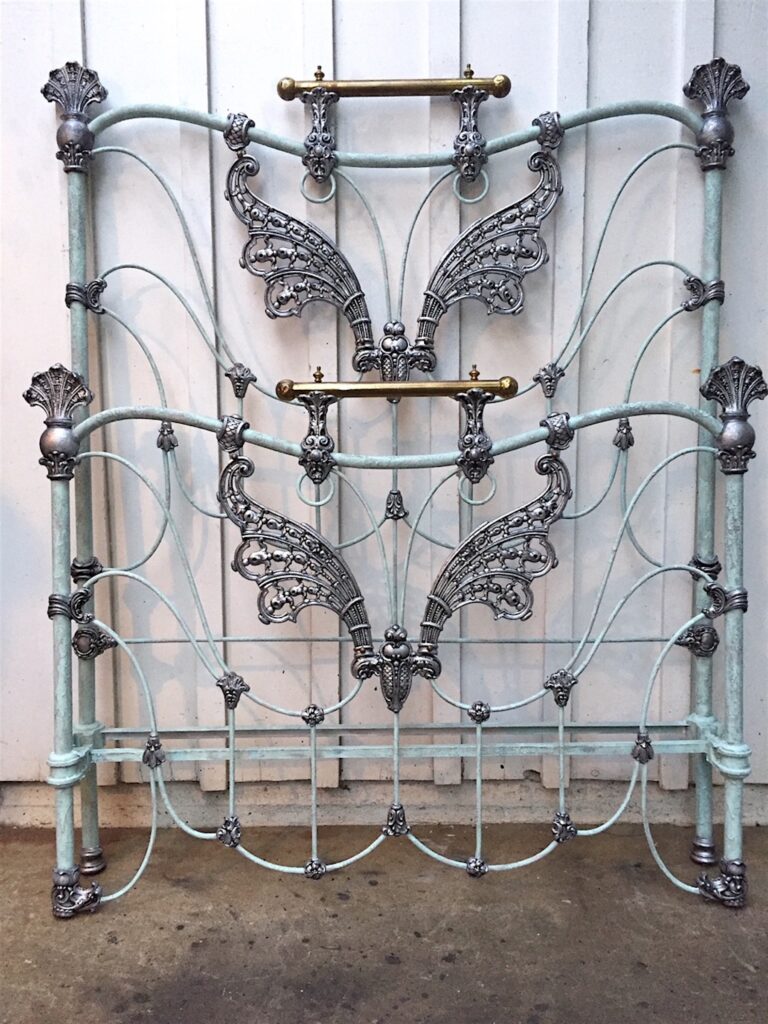 Another quality designers often appreciate about antique iron beds is their visual openness.
Unlike a massive upholstered headboard or heavy wooden bed, the relatively slender framework of an iron bed allows light and architecture to remain visible.
This can be particularly effective when the bed is placed in front of windows.
Instead of creating a solid visual wall, the open framework allows light to pass through the bed.
In a room with tall ceilings, a tall antique iron bed can also take advantage of the vertical space without making the room feel heavy.
And because iron beds can be painted, their appearance can be transformed to complement almost any design direction—from traditional and romantic to coastal, cottage, contemporary or eclectic.
The bed can become a statement.
Or it can quietly support everything around it.
The Sustainability of Choosing What Already Exists
There is another reason the idea of an heirloom matters today.
We live in a time when designers and homeowners are increasingly conscious of where their furniture comes from and what happens to it when a trend changes.
There is something inherently sustainable about using a piece of furniture that has already existed for more than a century.
An original antique iron bed doesn’t need to be manufactured from scratch for today’s bedroom.
It already exists.
Restoring and reusing antique furniture keeps it in circulation rather than replacing it with another newly manufactured product simply because the old one has gone out of fashion.
And unlike disposable furniture, a well-maintained antique iron bed can continue moving from one generation to another.
That is what an heirloom is supposed to do.
What Will Your Client’s Bedroom Look Like 20 Years From Now?
This may be the most important question of all.
Trends come and go.
Colors change. Styles change. What is considered fashionable today may look dated tomorrow.
But a genuinely beautiful antique has a remarkable ability to survive changing tastes.
A Victorian iron bed can look completely at home in a traditional bedroom.
Change the finish and the fabrics, and that same bed can take on an entirely different personality.
That’s because good design isn’t always about following a trend.
Sometimes it is about choosing something with enough character to outlive the trend.
And when a client eventually moves, remodels or redecorates, an authentic antique iron bed doesn’t necessarily need to be discarded.
It can simply move into the next chapter.
An Heirloom Instead of a Replica
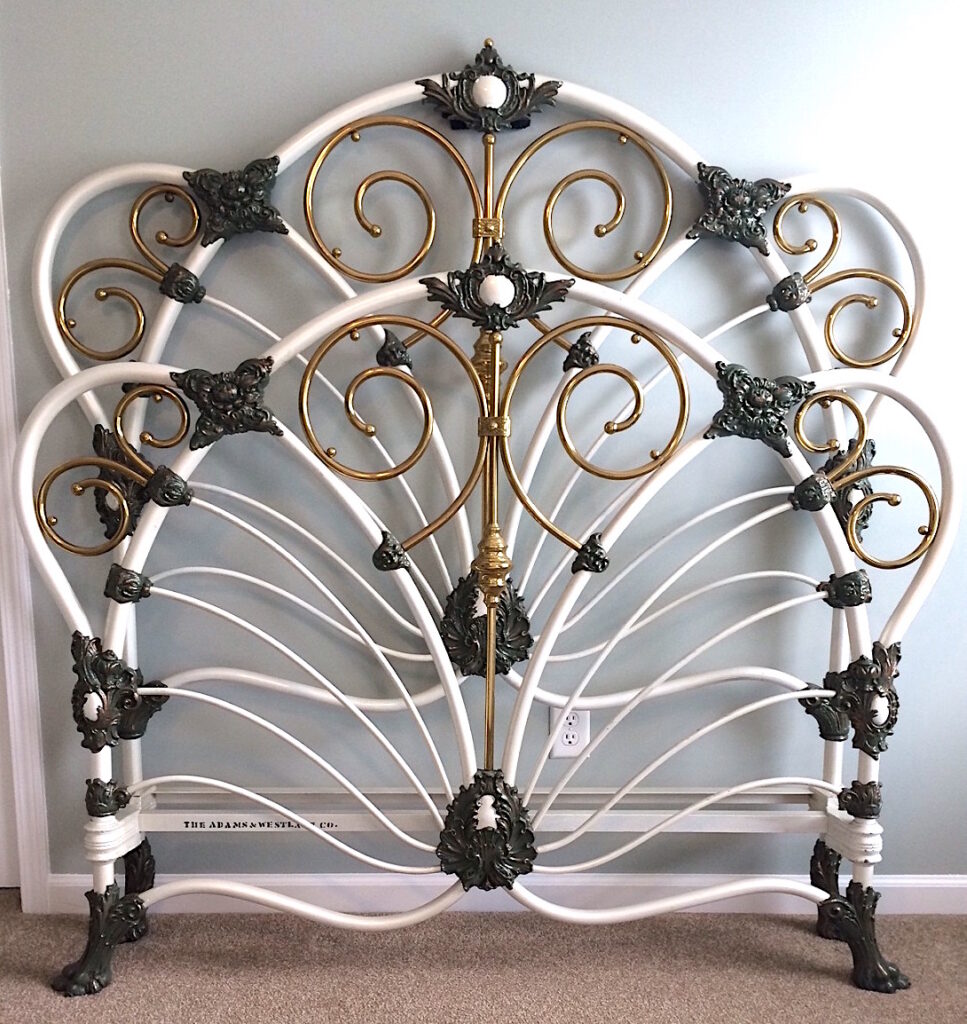 For designers, perhaps the greatest appeal of an antique iron bed isn’t that it is old.
It is that it is original.
There is a profound difference between buying something manufactured to resemble an antique and owning the actual antique.
A replica can reproduce the appearance.
An original carries the history.
A replica can be made to look distressed.
An original has earned its patina.
A replica can imitate craftsmanship from another era.
An original was actually made during that era.
And that distinction becomes especially important when you’re designing a bedroom for a client who wants something beyond the ordinary.
At Cathouse Antique Iron Beds, we specialize in original antique iron beds from the 1800s—not reproductions.
We believe that if a bed is going to occupy the most important position in the bedroom, it should be more than something that fills the space.
It should have character.
It should have craftsmanship.
It should have a story.
And, if you choose wisely, it should have a future.
Because the best furniture doesn’t simply furnish a room.
It becomes part of the family.
For designers who believe their clients’ beds should be heirlooms—not replicas, an authentic antique iron bed may be one of the most meaningful choices you can make.