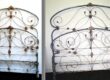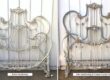
When you’re looking at an antique iron bed from the 1800s, it can be very difficult to tell just by looking at it whether it was made in America, England, or somewhere else in Europe.
The designs can be beautiful. The Victorian styling can be remarkably similar. Both American and British manufacturers produced beds with graceful curves, elaborate details, brass accents and decorative finishes that can still turn heads more than a century later.
But there is a question I have been asked many times over the years:
Did the materials and construction methods actually make a difference in how well these antique iron beds survived?
After more than 50 years of buying, selling, dismantling, restoring and examining antique iron beds, my answer is an emphatic yes.
And in my experience, the difference becomes much more obvious when you stop looking at the finish and start looking at what is underneath it.
The Bed May Look Great. What’s Inside Is What Matters.
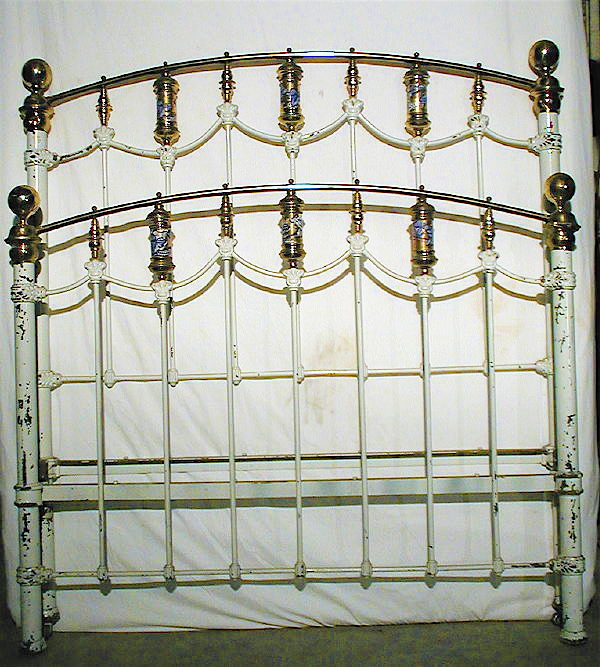 One of the easiest mistakes someone can make when shopping for an antique iron bed is judging its quality by its appearance.
A bed can have beautiful brass decorations, wonderful Victorian detailing and an impressive original finish — and still have serious structural problems.
The opposite can also be true.
I’ve handled American-made antique iron beds that, after 130, 140 or even 150 years, are remarkably solid. Once the old paint is removed and the components are examined, the reason becomes apparent. The tubing is substantial. The castings are heavy and well defined. The connections were designed to withstand movement. The materials were selected with strength in mind.
That is one of the great pleasures of working with authentic antique iron beds.
You occasionally take apart a bed that has been around since the 1800s and find yourself thinking:
“How can this possibly still be this good?”
Then you examine the construction — and you understand.
American Iron Beds Were Built Around Strength
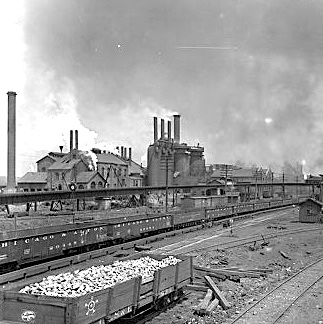
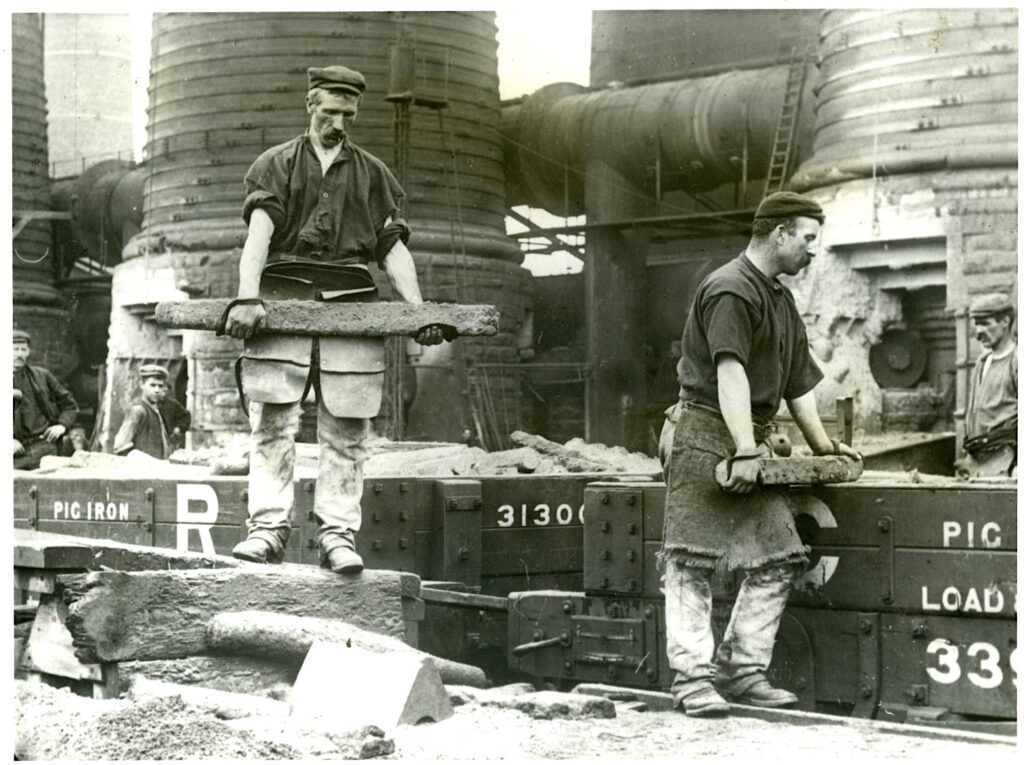 During the second half of the 19th century, America’s iron and steel industries were expanding rapidly. Pittsburgh and other industrial centers became enormously important to the production of iron and steel, giving American manufacturers access to increasingly capable domestic metalworking industries.
That industrial development mattered to furniture manufacturers.
American iron bed makers were not simply making decorative furniture. They were developing beds that could withstand the stresses of everyday use, and many American examples were constructed with heavy-wall steel tubing and substantial castings.
The result is something you can actually feel.
Pick up an American antique iron bed component and there is often an unmistakable solidity to it. The tubing has substance. The joints feel substantial. The castings don’t feel like decorative pieces that were simply attached afterward.
They were part of the structure.
And that distinction is enormously important.
The Tubing May Tell You More Than the Decoration
 If I were allowed to examine only one part of an antique iron bed to get an idea of its quality, I’d pay very close attention to the tubing.
Many American-made antique iron beds used thick-wall tubing. It wasn’t merely there to give the bed its shape. It was part of the bed’s structural integrity.
When you compare that with many British and European beds of the same general period, the difference can be surprisingly apparent.
A considerable number of British beds were made using thinner-wall tubing. Some examples also incorporated tubing and rods connected through systems involving screws, fittings and small brass components. Those methods could produce an attractive bed, but they introduced more individual connection points — and every connection is another place where movement can eventually develop.
This isn’t something you necessarily notice when the bed is standing in an antique shop.
You notice it when the bed is being taken apart.
After decades of movement, repeated assembly and disassembly, and ordinary use, thin tubing and numerous mechanical connections can become much more vulnerable to bending, loosening, splitting or movement.
American manufacturers took a different approach on many of their beds.
More substantial tubing. Fewer vulnerable connection points. Heavier structural components.
It was a very good combination for a piece of furniture expected to survive generations.
The Castings Were More Than Decoration
 Here’s another difference that I think many people completely miss.
When someone looks at a beautifully detailed antique iron bed, they often assume the castings are simply decorative.
On many American beds, they were much more important than that.
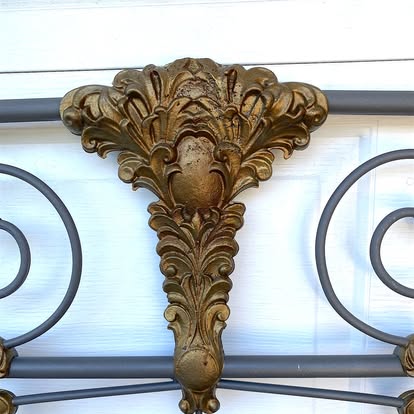
American foundries produced substantial castings that surrounded and reinforced important junctions of the bed. These castings could be both structural and decorative — doing an important job while simultaneously providing the intricate details that make antique iron beds so fascinating.
Those castings became something of a signature.
Flowers, leaves, scrolls, horseshoes, crosses, butterflies, grapes, rosettes and countless other motifs were incorporated into the designs. Foundries developed their own distinctive patterns, and elaborate castings became one of the ways manufacturers could distinguish their beds from the competition.
But what impresses me most isn’t simply how pretty they are.
It is how well many of them have survived.
I’ve taken old finishes off American antique iron beds and found castings with remarkable definition still present after more than a century.
That’s not an accident.
The quality of the original material and the way it was incorporated into the bed made a difference.
British Beds Often Took a Different Approach
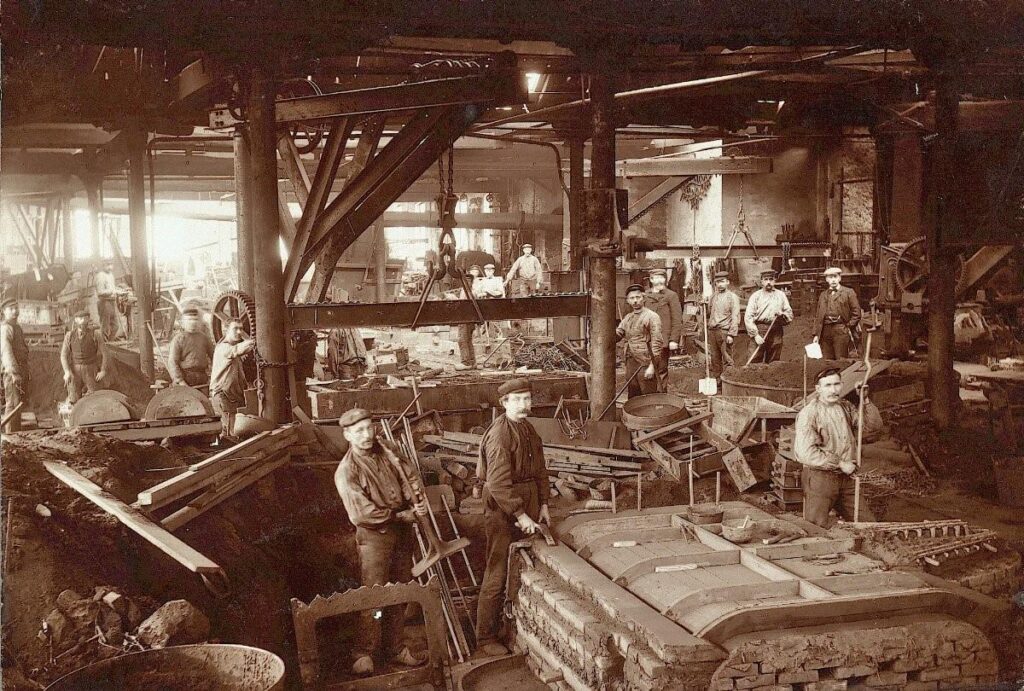 British and European manufacturers certainly knew how to make beautiful beds.
In fact, some British antique iron beds are extraordinarily elegant.
The difference is that many British manufacturers approached the design and construction of the bed differently. Brass was frequently used as an important visual element, with brass finials, medallions and other decorative components appearing prominently on Victorian designs.
And brass can be beautiful.
But beauty and structural strength aren’t necessarily the same thing.
In many of the British beds I’ve encountered, brass and lighter tubing were used in places where American manufacturers were more likely to rely upon substantial iron or steel components.
The problem isn’t necessarily apparent when the bed is new.
It becomes apparent 100 or 150 years later.
Thin materials can become brittle. Tubing can split. Connections can loosen. Brass can crack or deteriorate. And once enough of those small problems accumulate, the bed can begin to move.
That movement is something experienced restorers recognize immediately.
Listen to an Old British Bed
There is actually a rather amusing way to understand what I’m talking about.
Some British antique iron beds can become surprisingly noisy.
When numerous pieces are connected by mechanical fittings, threaded components and small brass connections, there are simply more places where movement can occur.
Move the bed and you may hear it.
Move it again and you may hear it a little more.
I’ve sometimes joked that certain British beds can sound like a small rhythm band when they’re being moved around.
It may be funny, but the underlying issue isn’t.
A bed should feel solid.
A little movement in one connection may not seem important. But multiply that by dozens of connections and then add a century or more of use, and the result can be a bed that feels considerably less stable than it did when it left the factory.
Why Some American Beds Still Feel “New”
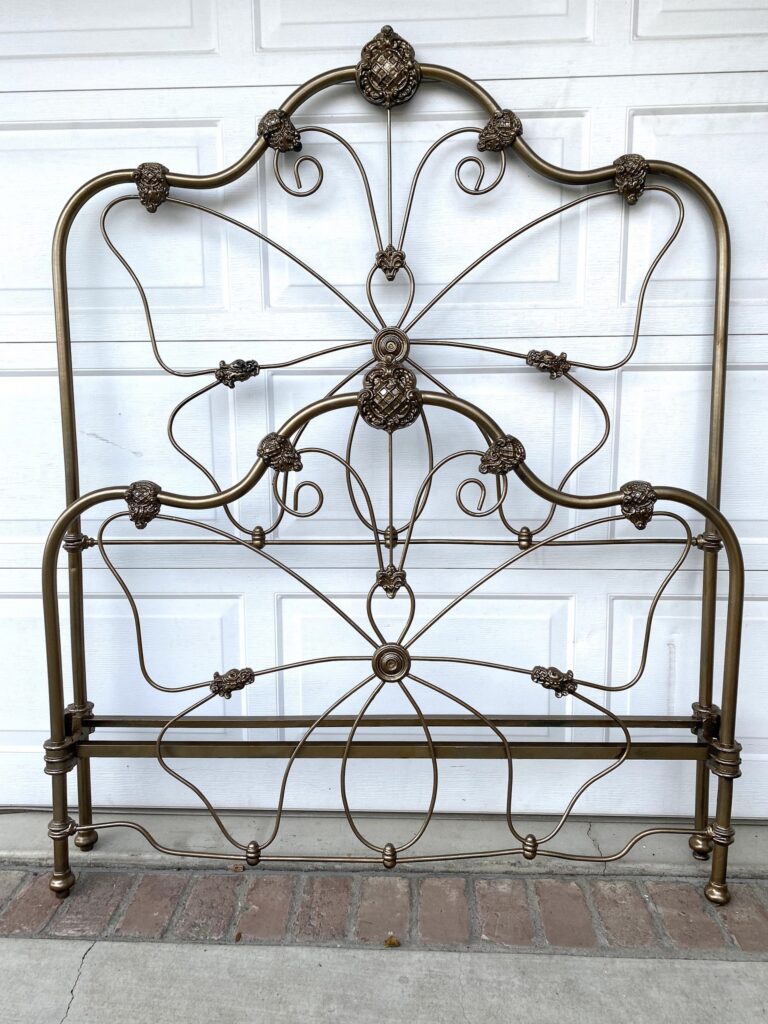 This is where the argument about materials becomes particularly convincing.
There are American antique iron beds that are roughly 150 years old and, once properly restored, can feel remarkably close to the way they must have felt when they were manufactured.
That doesn’t mean every American bed survived perfectly.
Of course they didn’t.
Some were abused. Some were exposed to moisture. Some lost original parts. Some were repaired badly over the years. Some were simply worn out.
But when you find a well-preserved American bed from the 1800s, the original construction can be astonishing.
The heavy tubing is still straight.
The castings are still intact.
The joints are still solid.
The details are still crisp.
And the bed can be perfectly capable of becoming a beautiful piece of everyday furniture again.
That’s quite an accomplishment for something manufactured when Ulysses S. Grant was President.
It’s Not Just About Iron
Another misconception is that you can simply say, “American beds used better iron.”
It’s actually more complicated than that.
The survival of an antique iron bed depends upon the materials, the thickness of those materials, the quality of the castings, the design of the joints, the manufacturing process, and how everything was assembled.
In other words, construction matters just as much as the raw material.
A beautifully designed bed made from inferior or overly thin components isn’t automatically a better bed because it is attractive.
And a relatively simple American iron bed with substantial tubing and excellent structural castings may prove to be the better survivor.
This is one reason I always encourage people shopping for antique iron beds to look beyond the photograph.
So, Were American Antique Iron Beds Better?
After all these years, I think the surviving evidence gives us a pretty compelling answer.
In terms of structural durability, I believe the better American-made antique iron beds generally have an advantage.
That conclusion isn’t based simply on theory.
It’s based on what I’ve seen after decades of handling these beds.
I’ve seen the differences in tubing.
I’ve seen the differences in castings.
I’ve seen what happens when old beds are dismantled.
I’ve seen British beds where thin tubing and numerous connections have created problems.
And I’ve seen American beds from the late 1800s come apart with their original heavy components still remarkably intact.
The beds themselves are the evidence.
But Don’t Count British Beds Out
I would never suggest that every British antique iron bed is a bad bed.
That would be unfair.
There are beautiful British examples, and some have survived exceptionally well. Their designs can possess a delicacy and elegance that is very difficult to duplicate.
If you fall in love with one, there’s nothing wrong with that.
Just know what you’re buying.
The important thing is to understand that a beautiful antique iron bed and a structurally superior antique iron bed aren’t necessarily the same thing.
Look at the tubing.
Examine the castings.
Look closely at the joints.
Check the brass.
See how the components connect.
And, whenever possible, have someone experienced with genuine antique iron beds inspect it before you buy.
The Ultimate Test Is Time
Ultimately, there may be no better quality-control department than the last 150 years.
Manufacturers in the 1800s couldn’t tell us how their beds would perform over a century later.
They couldn’t put a lifetime warranty on them.
They couldn’t predict how many families would sleep in them, how many times they’d be moved, or whether someone would eventually repaint them.
But they did leave us something far more interesting:
the beds themselves.
And when you compare surviving examples from different countries, the differences in materials and construction become much easier to appreciate.
At Cathouse Antique Iron Beds, we’ve had the privilege of working with these remarkable pieces for decades. We’ve seen beds that looked beyond saving become beautiful again. We’ve seen original castings hidden beneath layers of old paint reveal extraordinary detail. And we’ve handled American-made antique iron beds whose structural integrity remains astonishing after a century and a half.
That’s why, when someone asks me whether materials really made a difference between British and American antique iron beds, I don’t have to rely on a textbook answer.
I’ve seen the proof with my own hands.
And perhaps that’s the greatest compliment an antique iron bed can receive.
After 150 years, it is still strong enough to do the job it was originally built to do.
**That’s not just history.
That’s quality that stood the test of time.**