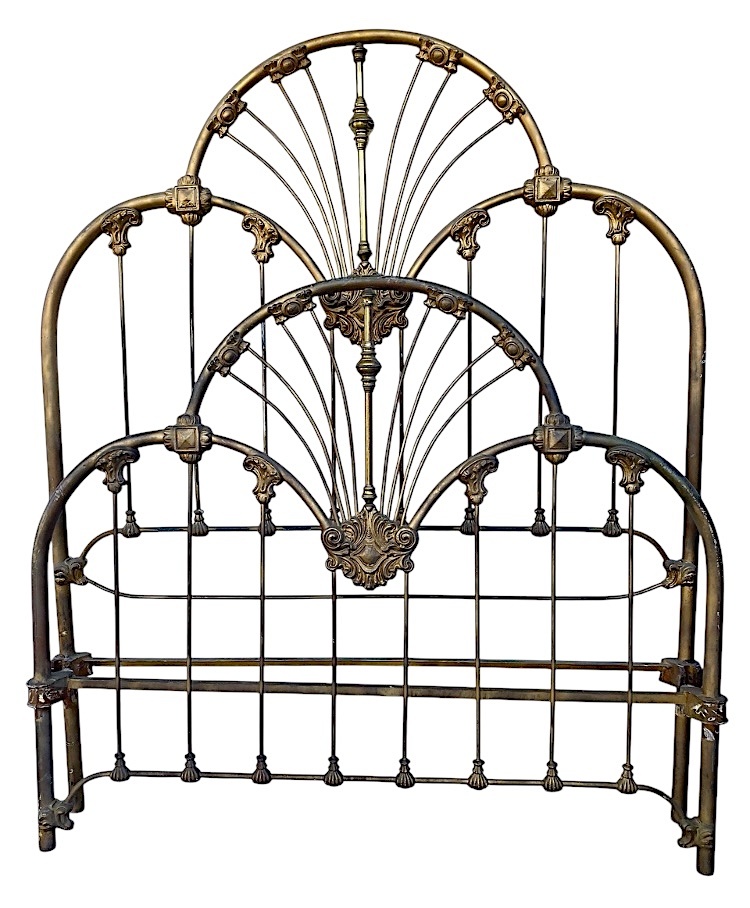
When people think about antique iron beds, they often imagine clearly defined design movements such as Victorian, Art Nouveau, Art Deco, Edwardian, or Craftsman styles. While many examples fit neatly into these well-known categories, a significant number of antique iron beds occupy a fascinating middle ground. These are what collectors, decorators, and enthusiasts often refer to as transitional style antique iron beds.
Transitional iron beds are among the most interesting pieces found in today’s antique marketplace because they represent periods of change in design history. Rather than adhering strictly to a single style, these beds incorporate elements from two—or sometimes even three—different design movements. The result is furniture that offers exceptional versatility, timeless appeal, and a unique glimpse into the evolution of decorative arts.
For collectors and homeowners alike, understanding transitional vintage iron beds can open up a world of possibilities when choosing a bed that combines historical character with enduring design.
 What Is a Transitional Style Antique Iron Bed?
A transitional style antique iron bed is one that bridges the gap between established design periods. Rather than displaying all the defining characteristics of a single style, it incorporates influences from multiple movements that were popular during the time of its manufacture.
Furniture styles rarely changed overnight. Designers, manufacturers, and consumers gradually embraced new trends while still holding onto familiar design elements. As a result, many iron beds produced during periods of stylistic transition exhibit a blend of old and new influences.
For example, a bed may feature the flowing curves associated with Victorian design while introducing the cleaner lines that would later become popular during the Edwardian era. Another may display Art Nouveau-inspired organic forms alongside the geometric simplicity that foreshadowed Art Deco styling.
These hybrid characteristics make transitional antique iron beds particularly appealing because they often fit comfortably into a wider variety of interiors than beds that are strongly representative of a single design movement.
Why Transitional Styles Developed
The late nineteenth and early twentieth centuries were periods of enormous change in architecture, manufacturing, and interior design. New technologies allowed manufacturers to produce increasingly sophisticated iron beds, while changing tastes encouraged experimentation with decorative forms.
As each new movement emerged, manufacturers rarely abandoned previous styles immediately. Instead, they adapted existing designs to reflect evolving preferences. This gradual progression created countless examples of vintage iron beds that sit between recognized style categories.
Several factors contributed to this phenomenon:
- Changing consumer tastes
- Advances in metalworking techniques
- Regional design influences
- Economic considerations
- Manufacturer innovation
- The desire to appeal to multiple markets simultaneously
The result was a rich variety of antique iron beds that resist easy classification but possess remarkable charm and character.
 Victorian to Edwardian: A Common Transition
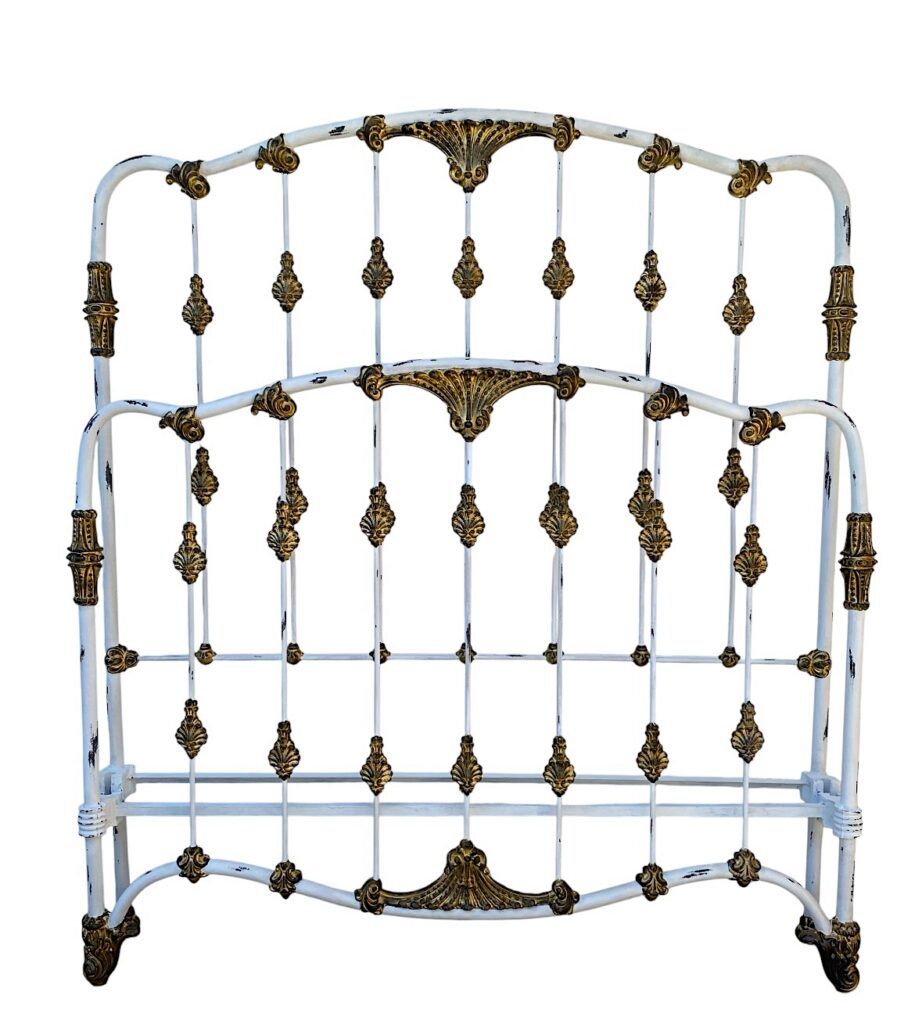
One of the most frequently encountered transitional periods in antique iron beds is the shift from Victorian to Edwardian design.
Victorian iron beds are typically associated with elaborate ornamentation, decorative castings, scrollwork, and visual richness. Edwardian tastes, however, moved toward lighter, more refined aesthetics.
During this transition, manufacturers began simplifying traditional Victorian forms. Heavy decorative castings became more restrained. Ornate details were reduced, while elegant proportions became increasingly important.
Many transitional antique iron beds from this period feature:
- Curved Victorian-inspired rails
- Reduced ornamentation
- More open and airy designs
- Simpler finials
- Greater emphasis on proportion rather than decoration
These beds offer much of the romance associated with Victorian furniture while maintaining a lighter appearance that appeals to modern interiors.
Art Nouveau Meets Early Modernism
Another fascinating category of transitional vintage iron beds emerged during the period between Art Nouveau and the early modern styles that followed.
Art Nouveau celebrated flowing lines inspired by nature. Designers embraced asymmetrical forms, botanical motifs, and graceful curves. As tastes evolved, however, cleaner geometric forms began gaining popularity.
Some antique iron beds from this era beautifully combine both influences. You may find:
- Gentle organic curves
- Simplified floral motifs
- Increased symmetry
- Reduced decorative complexity
- Emerging geometric elements
These transitional iron beds capture a unique moment in design history when artistic expression and modern practicality began to coexist.
 The Bridge Between Art Nouveau and Art Deco
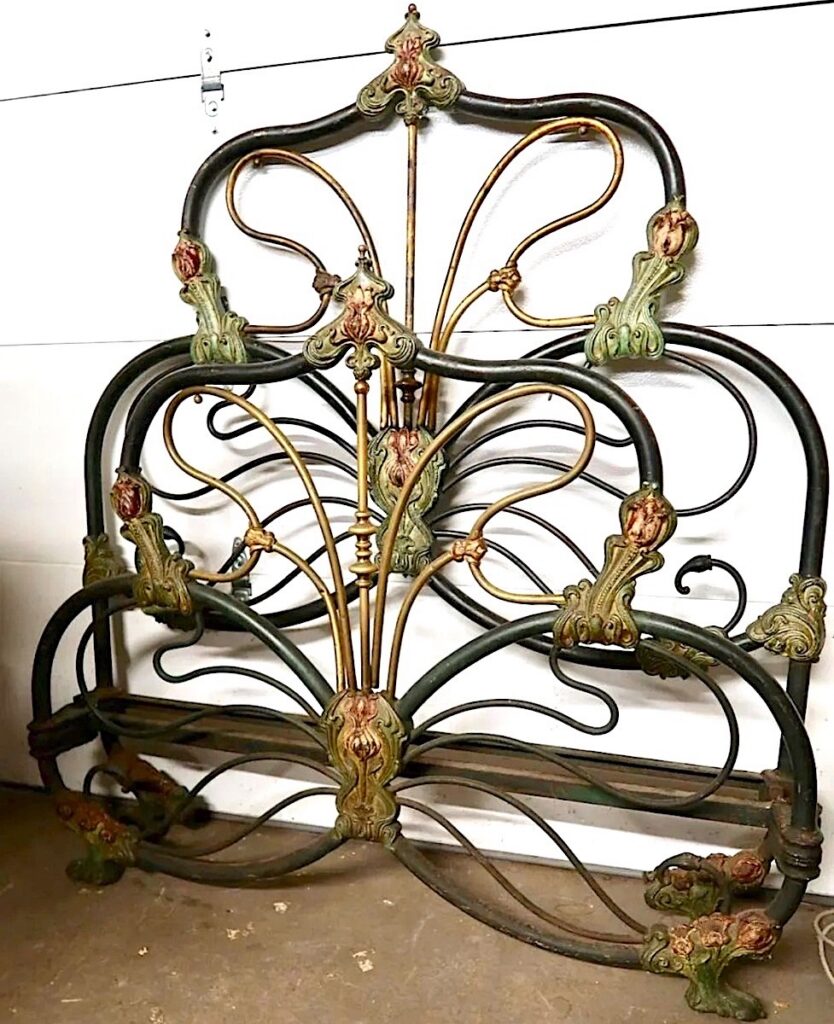
The transition from Art Nouveau to Art Deco produced some of the most visually striking antique iron beds ever manufactured.
Art Deco favored bold geometry, symmetry, and streamlined elegance. Yet many early examples retained traces of Art Nouveau’s softer aesthetic.
A transitional antique iron bed from this period might feature:
- Symmetrical layouts
- Curved geometric patterns
- Stylized floral influences
- Decorative castings with simplified detailing
- A balance of movement and structure
These beds are especially popular among collectors because they embody the excitement of a rapidly changing design landscape.
 Craftsman Influences in Iron Bed Design
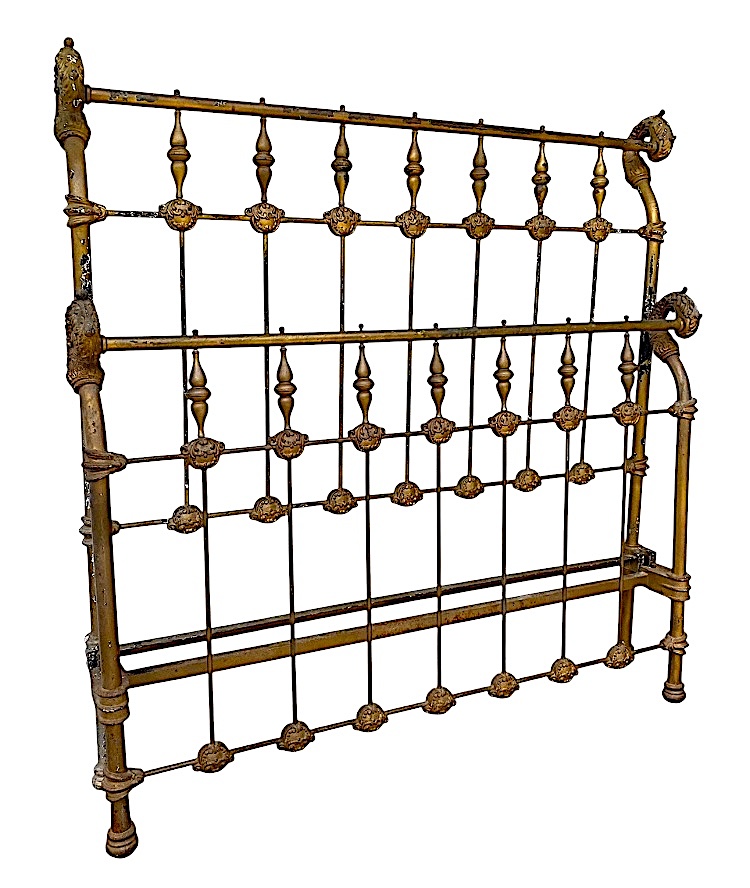
Although Craftsman furniture is often associated with wood construction, its emphasis on honest materials and straightforward design also influenced the development of many iron beds.
Some transitional vintage iron beds combine decorative Victorian elements with the simplicity championed by the Arts and Crafts movement.
Characteristics may include:
- Cleaner vertical lines
- Minimal ornamentation
- Functional design
- Solid construction
- Subtle decorative accents
These transitional antique iron beds appeal to homeowners seeking authenticity and craftsmanship without excessive ornamentation.
Why Transitional Antique Iron Beds Remain Popular
One reason transitional iron beds remain highly desirable is their exceptional flexibility.
Strongly styled furniture can sometimes dominate a room. A heavily Victorian bed, for example, may require complementary furnishings to achieve a cohesive appearance. Transitional antique iron beds, however, often integrate more easily into diverse decorating schemes.
Their blended aesthetic allows them to work beautifully in:
- Traditional homes
- Farmhouse interiors
- Cottage settings
- Eclectic spaces
- Contemporary designs
- Historic renovations
Because transitional vintage iron beds incorporate characteristics from multiple periods, they often feel surprisingly current despite their age.
Identifying Transitional Style Antique Iron Beds
Determining whether an antique iron bed is transitional requires careful observation. The key is recognizing design elements associated with different stylistic traditions.
Look for combinations such as:
Curves Combined with Simplicity
Victorian-inspired curves paired with restrained detailing often indicate a transitional piece.
Decorative Yet Geometric Features
Beds that combine organic motifs with geometric structure may reflect the movement from Art Nouveau toward Art Deco.
Mixed Finial Styles
Finials frequently provide clues about changing design preferences. Transitional iron beds may display traditional shapes alongside more streamlined forms.
Balanced Ornamentation
Many transitional antique iron beds feature decorative elements that are present but intentionally restrained.
Unusual Combinations
Some of the most interesting vintage iron beds include design features that do not fit comfortably within any single recognized style. These examples often represent the very essence of transitional design.
The Beauty of Design Evolution
What makes transitional antique iron beds particularly fascinating is their ability to tell a story about design evolution.
Rather than representing a fixed moment in history, they illustrate a journey. They reveal how manufacturers adapted to changing tastes and how consumers embraced new ideas while remaining connected to familiar traditions.
Each transitional iron bed serves as a physical record of this gradual transformation.
Collectors often find these beds especially rewarding because they invite closer examination. The more one studies them, the more subtle stylistic influences become apparent.
Decorating with Transitional Vintage Iron Beds
From a decorating standpoint, transitional vintage iron beds offer tremendous versatility.
Because they do not belong exclusively to a single style category, they blend naturally with a wide range of furnishings and architectural settings.
Consider pairing transitional antique iron beds with:
- Antique wooden dressers
- Painted cottage furniture
- Contemporary nightstands
- Traditional quilts
- Linen bedding
- Modern lighting fixtures
This adaptability allows homeowners to create spaces that feel collected rather than rigidly themed.
Many designers appreciate how transitional iron beds provide historical character without imposing strict stylistic limitations on the rest of the room.
Investment and Collectibility
Collectors increasingly recognize the value of transitional antique iron beds. As appreciation for nuanced design history grows, these beds are receiving greater attention.
Unlike furniture that perfectly exemplifies a single style, transitional pieces often possess a distinctive individuality. No two examples are exactly alike, making them particularly attractive to buyers seeking something unique.
When evaluating vintage iron beds, factors such as condition, originality, craftsmanship, and rarity remain important. However, transitional characteristics can add another layer of interest and desirability.
For many collectors, the appeal lies not only in the bed itself but also in the fascinating story it tells about changing artistic tastes.
Preserving Transitional Iron Beds
Like all antique iron beds, transitional examples benefit from proper care and preservation.
Maintaining original finishes whenever possible helps preserve historical integrity. Gentle cleaning, appropriate restoration techniques, and the retention of original hardware contribute to long-term value and authenticity.
Because transitional iron beds often feature unique combinations of decorative elements, preserving these details is particularly important.
Thoughtful restoration can ensure that future generations continue to appreciate the craftsmanship and design innovation embodied in these remarkable pieces.
Conclusion
Transitional style antique iron beds occupy a special place in the history of decorative arts. Existing between established design movements, they showcase the gradual evolution of taste, craftsmanship, and manufacturing during some of the most dynamic periods in furniture history.
Whether bridging Victorian and Edwardian aesthetics, blending Art Nouveau with emerging modern influences, or combining decorative and functional design principles, these exceptional iron beds offer beauty that transcends simple classification.
For collectors, decorators, and anyone who appreciates historic furniture, transitional vintage iron beds provide a wonderful opportunity to own a piece that reflects both tradition and innovation. Their versatility, individuality, and enduring appeal continue to make them some of the most sought-after antique iron beds available today.
At Cathouse Beds, we have long appreciated that many of the finest antique iron beds cannot be confined to a single stylistic label. Instead, they represent the rich and fascinating overlap between design eras—making each bed not only a beautiful place to sleep, but also a unique chapter in the ongoing story of furniture design.