When most people look at an antique iron bed, they see the overall design first. Perhaps it is the graceful shape of the headboard, the beautiful old finish, or the elaborate Victorian ornamentation that catches their eye.
But look a little closer.
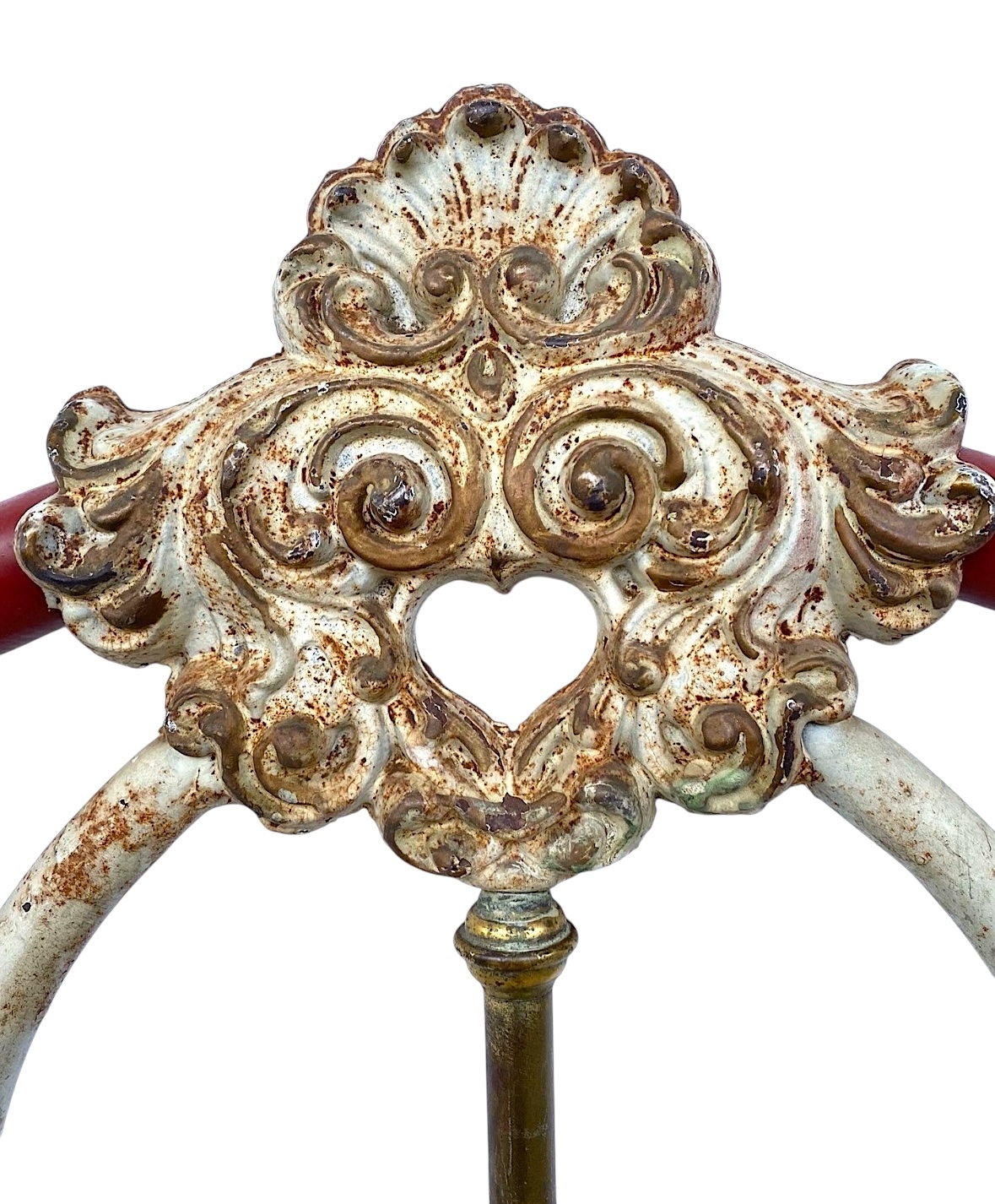
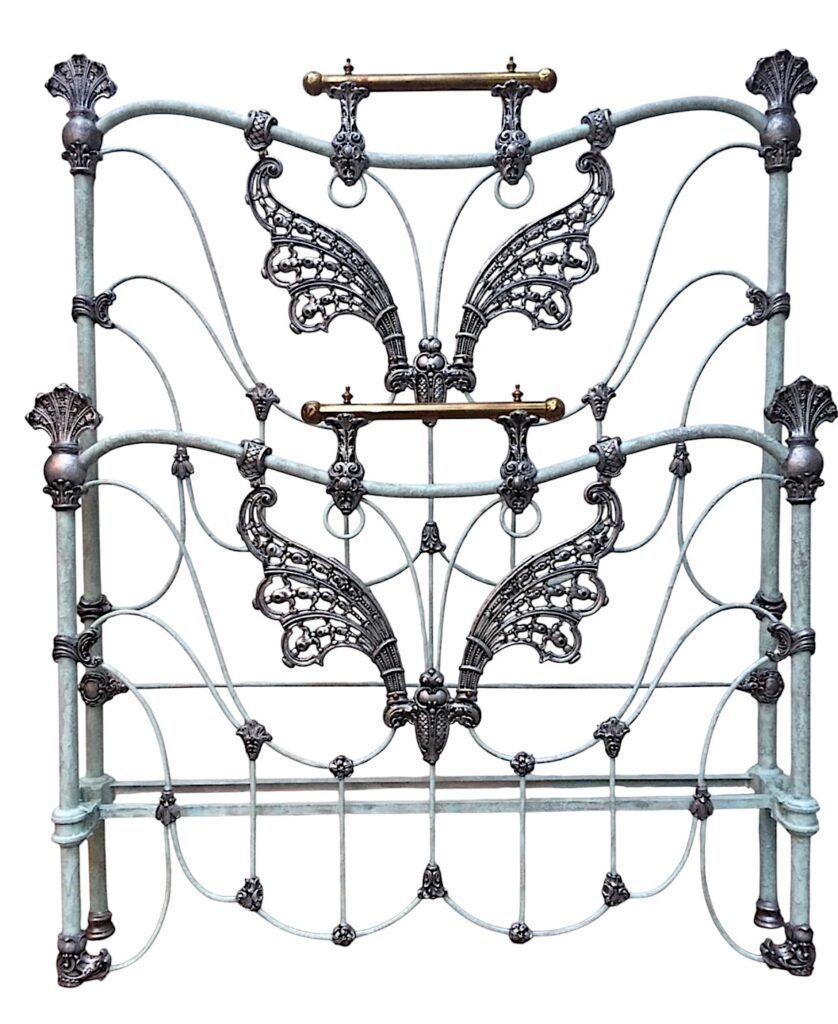
Some of the most remarkable antique iron beds ever made contain something that is easy to overlook: large “see-through” castings.
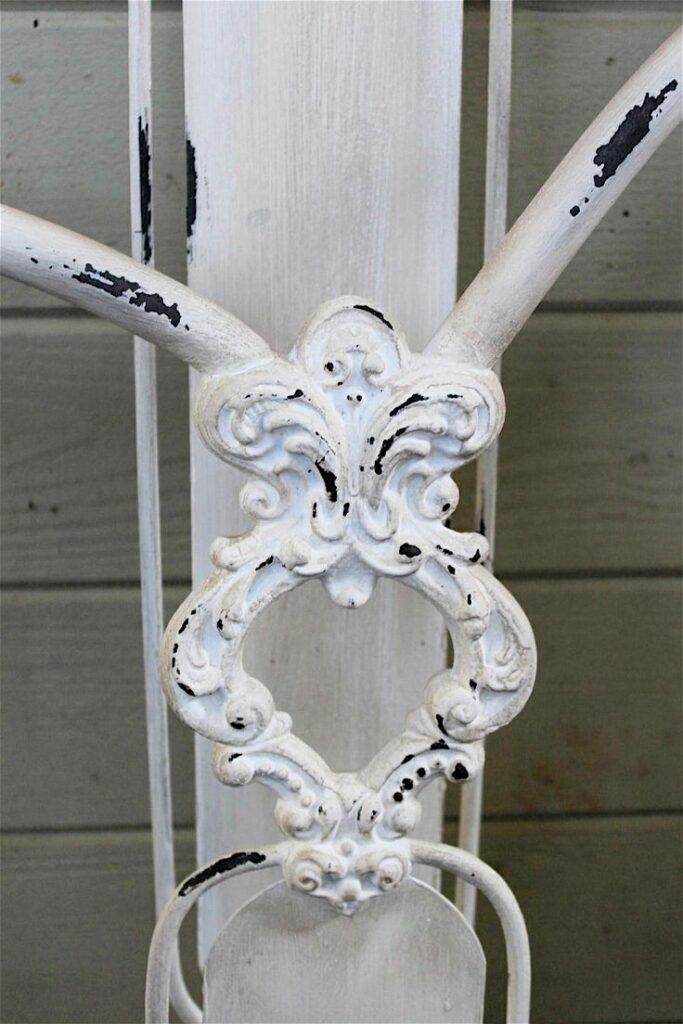
These are the decorative iron castings with open areas within the design—flowers surrounded by open space, intricate leaves and vines, geometric patterns, hearts, medallions, or elaborate Victorian motifs that were cast as a single piece while still retaining the openings that make the design appear almost lace-like.
Today, it is easy to look at one of these castings and assume that making it must have been relatively simple.
It wasn’t.
In fact, the larger and more intricate the casting, the greater the challenge facing the foundryman who had to produce it.
Every Casting Was Individually Poured
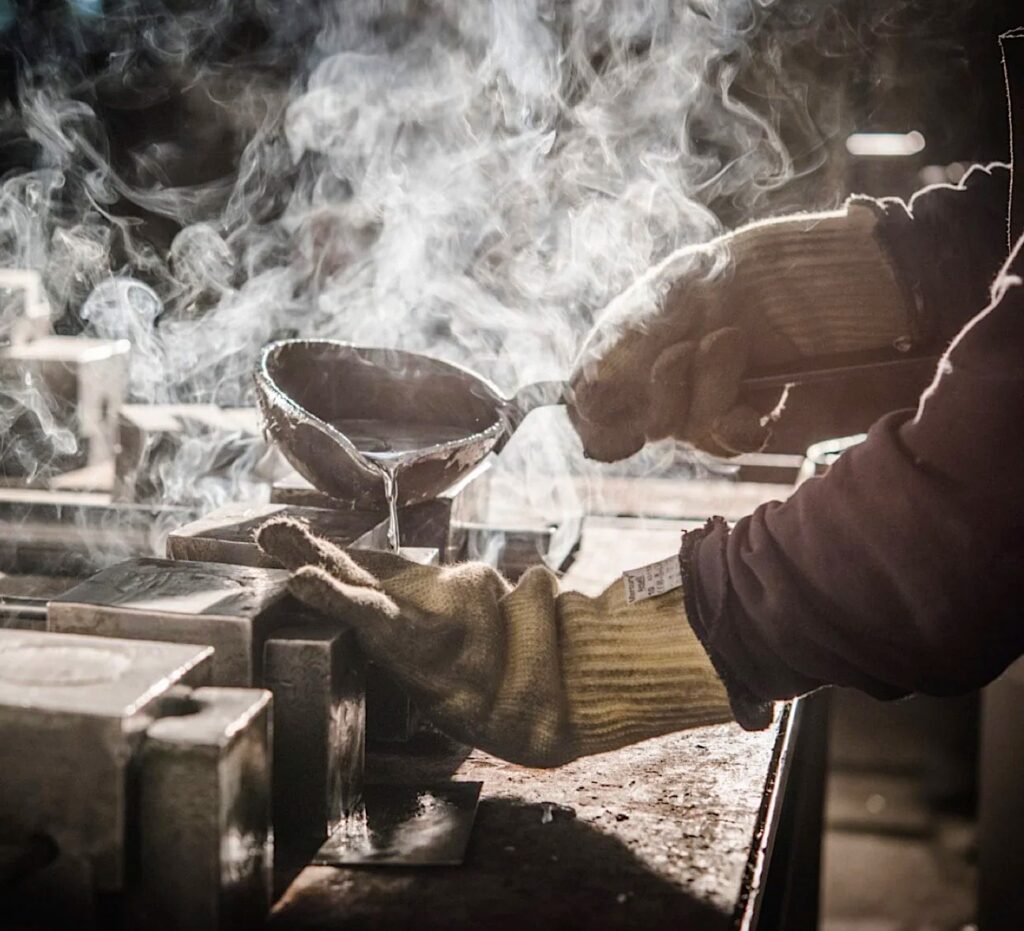
One of the things that is difficult for people to appreciate about antique iron beds is that the decorative castings were not simply stamped out of a machine.
Each casting had to be produced individually in a mold.
Molten iron was heated to an extremely high temperature and then carefully introduced into the mold so that it could travel through all of the passages and openings necessary to reproduce the intended design.
There was no modern computerized process controlling the pour.
There was no push of a button that guaranteed the metal would enter the mold at exactly the right rate.
The foundryman had to rely on experience, judgment and an exceptionally steady hand.
And with a large “see-through” casting, that skill became even more important.
The molten iron had to flow sufficiently to fill the mold before portions of it cooled and solidified. If the flow was too slow, the iron could begin cooling before it reached the furthest portions of the mold. If the pouring process was interrupted or inconsistent, the result could be incomplete areas, imperfections, unwanted seams or other irregularities.
The person doing the pouring was therefore not simply filling a hole.
He was trying to control a very unforgiving material while working against the clock.
Why “See-Through” Castings Were So Difficult
 Think about what is actually happening inside one of these molds.
A solid decorative casting is comparatively straightforward because the molten metal has a relatively large continuous area to occupy.
A “see-through” casting is different.
The design may contain numerous narrow sections of iron surrounding open spaces. The molten metal has to travel through the mold in a way that fills those narrow areas completely while maintaining the shape of the design.
The larger the casting becomes, the more difficult this can be.
The iron begins losing heat the moment it leaves the furnace or pouring vessel. The foundryman therefore had to maintain a consistent pour and allow the molten metal to reach the various portions of the mold before it cooled too much.
Pour too slowly, and the metal could begin to freeze before the mold was completely filled.
Pour too quickly or inconsistently, and the flow could create its own problems.
The goal was a smooth, controlled fill that reproduced the pattern exactly as it had been designed.
That sounds simple until you remember that the person doing it was dealing with molten iron.
The Importance of Consistency
One of the most important aspects of a successful casting was consistency.
The molten iron needed to continue flowing at a controlled rate throughout the pour.
If the flow slowed dramatically, portions of the iron could cool prematurely.
If the flow was interrupted, the next portion of molten metal could encounter metal that had already begun to cool. Depending on the design and the casting conditions, this could result in visible imperfections or weaknesses.
This is particularly important when examining an elaborate antique casting today.
A casting that looks perfectly continuous to us may have required an extraordinary amount of skill to produce.
The foundryman could not see the molten iron traveling through the mold.
He had to understand what was happening inside the mold based upon his experience with the material, the mold and the design.
In other words, he had to know what the iron was going to do before he could see the finished result.
Large Castings Required Even More Skill
 There is an important rule I have learned from examining antique iron beds over the years:
The larger the casting, the more impressive the accomplishment.
A small decorative casting may be intricate, but its size gives the molten iron less distance to travel.
A large casting with extensive open areas is another matter entirely.
The molten iron has farther to travel, more narrow sections to fill, and more opportunity for the metal to cool before reaching every part of the mold.
This is one reason some of the large Victorian iron beds I have encountered have always impressed me.
When you stand in front of one of these beds and look through an enormous floral or ornamental casting, it can almost look as though the design were somehow cut out of a solid sheet of iron.
It wasn’t.
The openings were part of the casting itself.
The foundryman had to successfully reproduce those openings and the iron surrounding them as one finished casting.
That is a very different accomplishment from simply attaching several pieces of decorative iron together.
The Beauty Was Also Structural
The castings on antique iron beds weren’t necessarily added merely because someone wanted to make a bed look fancy.
In many designs, castings served both decorative and structural purposes.
They could connect components of the bed while simultaneously providing the elaborate ornamentation that made Victorian iron beds so distinctive.
This is one of the things that makes antique iron beds so fascinating.
The decoration and engineering were often intertwined.
A floral casting might be beautiful enough to attract attention from across a room, yet it could also be an important component of the bed’s construction.
The foundryman therefore had two jobs to accomplish.
The casting had to look right.
And it had to work.
Why Imperfections Matter
When you examine original antique iron beds today, you will occasionally encounter small irregularities in the castings.
These shouldn’t automatically be interpreted as defects that diminish the bed’s authenticity or value.
In many cases, they are simply evidence of how the piece was originally made.
These were handcrafted foundry products, produced more than a century ago.
There could be subtle variations from one casting to another. Slight differences in surface texture, small imperfections or variations in the way a decorative element appears can actually tell us something about the manufacturing process.
Modern reproductions can sometimes look almost too perfect.
That isn’t necessarily a compliment.
The original foundryman wasn’t working with a computer-controlled machine producing identical pieces to microscopic tolerances.
He was working with molds, molten metal, tools and experience.
And he was doing it one casting at a time.
The Foundryman’s Skill Has Been Overlooked
 I think one of the great tragedies of antique iron beds is that we tend to admire the finished object without thinking about the people who actually made it.
We see the bed.
We don’t see the foundry.
We don’t see the furnace.
We don’t see the molten iron.
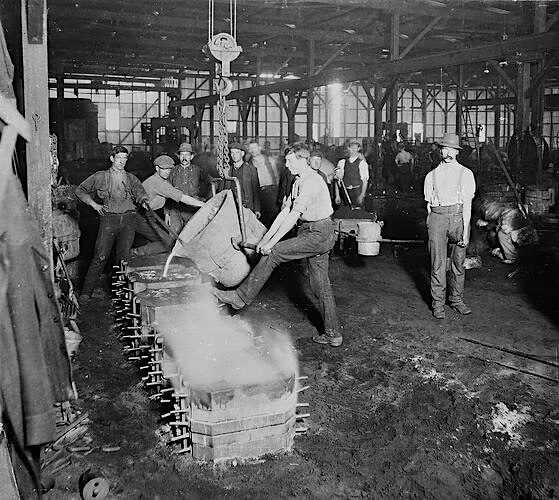
And we certainly don’t see the person carefully pouring that molten iron into a mold and hoping that every portion of the design fills correctly.
Yet that person is responsible for much of what we admire today.
Imagine standing in a 19th-century foundry and watching a large mold being filled with glowing molten iron.
There was no room for casual work.
The temperature was extreme. The material was unforgiving. The timing mattered.
And once the pour began, the foundryman had to get it right.
There was no “undo” button.
Look Through the Casting
The next time you see an antique iron bed with a large open or “see-through” casting, don’t just look at the decoration.
Look through it.
Notice the spaces between the flowers, leaves, scrolls or other ornamentation.
Then consider what had to happen to create those spaces while simultaneously filling all of the iron surrounding them.
That is where the craftsmanship becomes much easier to appreciate.
The open areas aren’t simply empty spaces.
They are evidence of the precision required to reproduce the design around them.
And when the casting is especially large, elaborate and cleanly formed, the accomplishment becomes even more remarkable.
This Is One Reason Original Antique Iron Beds Are So Special
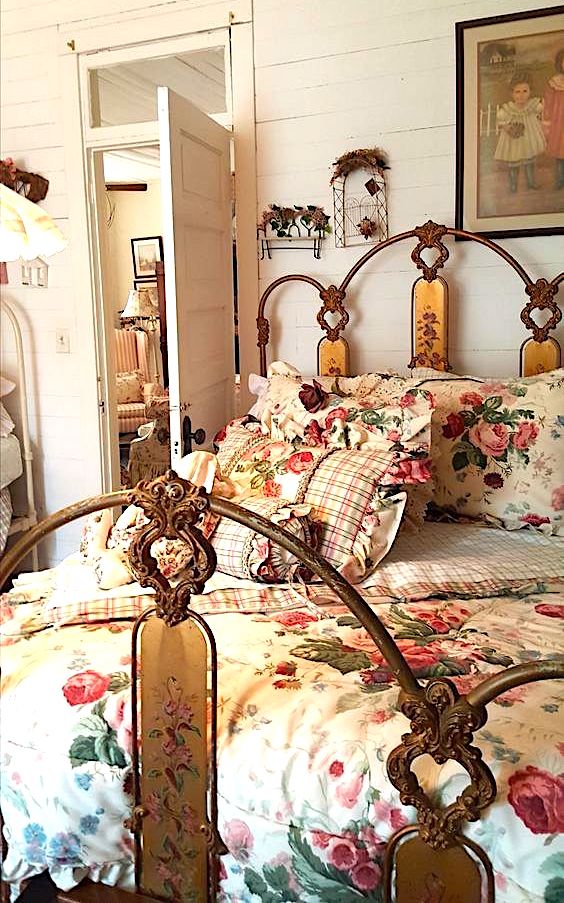 At Cathouse Antique Iron Beds, I have had the opportunity to examine an enormous number of original antique iron beds over the years.
Some are relatively simple.
Others are astonishing.
The beds that have always fascinated me most are often the ones where the foundryman’s craftsmanship is easiest to see—the beds with large, elaborate castings and substantial open areas that allow you to look directly through the design.
Those beds aren’t impressive simply because they are old.
They are impressive because of how they were made.
More than a century later, we can still see the result of an individual craftsman’s ability to take molten iron, control its flow and reproduce an intricate design inside a mold.
And that is something worth remembering when looking at an antique iron bed.
The next time you see a beautiful “see-through” casting, take a moment to look beyond the flowers, scrolls and ornamentation.
Think about the molten iron.
Think about the mold.
Think about the person holding the pouring vessel.
And think about the fact that he had one opportunity to get that pour right.
That is craftsmanship.
And perhaps the most remarkable thing of all is that, more than a hundred years later, we are still sleeping on—and admiring—the results of it.