There is an unfortunate irony surrounding many of the finest antique iron beds made during the Victorian era. They were built so well that they have survived for more than a century, yet the sizes in which they were originally made can make them difficult to use in today’s bedrooms.
That is where a properly executed antique iron bed king conversion can give an extraordinary old bed an entirely new life.
At Cathouse Antique Iron Beds, we don’t look at converting an antique double iron bed to a king as simply making it wider. We look at it as resurrecting an original piece of American craftsmanship while respecting the intentions of the people who created it more than a century ago.
The goal isn’t to redesign the bed.
The goal is to imagine:
What would this bed have looked like if its original manufacturer had offered it in a king size in 1890?
That question guides everything we do.
King Size Beds Didn’t Exist in the Victorian Era
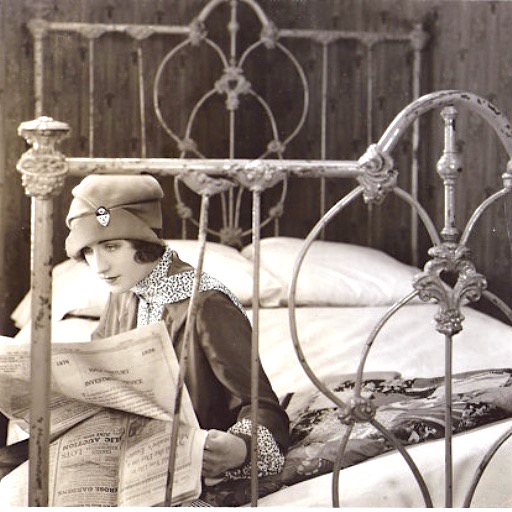 When most American antique iron beds were manufactured during the 1800s and early 1900s, bedrooms—and mattresses—were very different from what we know today.
The common sizes were twin, three-quarter and double beds.
The queen and king mattress sizes familiar to us today didn’t become standardized and widely available until decades later. By the time larger mattresses began becoming popular in the mid-20th century, the great era of American iron-bed manufacturing had already passed.
That creates an interesting problem for anyone who loves authentic antique furniture.
You may find a magnificent Victorian iron bed with wonderful castings, heavy steel tubing and beautiful proportions—but discover that it was originally made for a double mattress.
For many people today, particularly couples accustomed to a king mattress, that simply isn’t practical.
Without conversion, thousands of beautiful antique double iron beds could eventually become little more than decorative artifacts.
We think they deserve better.
Saving Antique Iron Beds by Making Them Useful Again
Preservation doesn’t necessarily mean freezing an antique in time.
Sometimes the best way to preserve something is to make it useful enough that someone wants to live with it for another hundred years.
That is exactly what a good king conversion of an antique iron bed accomplishes.
Instead of an original Victorian bed being relegated to a guest room—or never used at all—it can once again become the centerpiece of a primary bedroom.
But there is an enormous difference between simply widening an old bed and properly converting an antique iron bed to king size.
The difference is craftsmanship.
A King Conversion Shouldn’t Look Like a Conversion
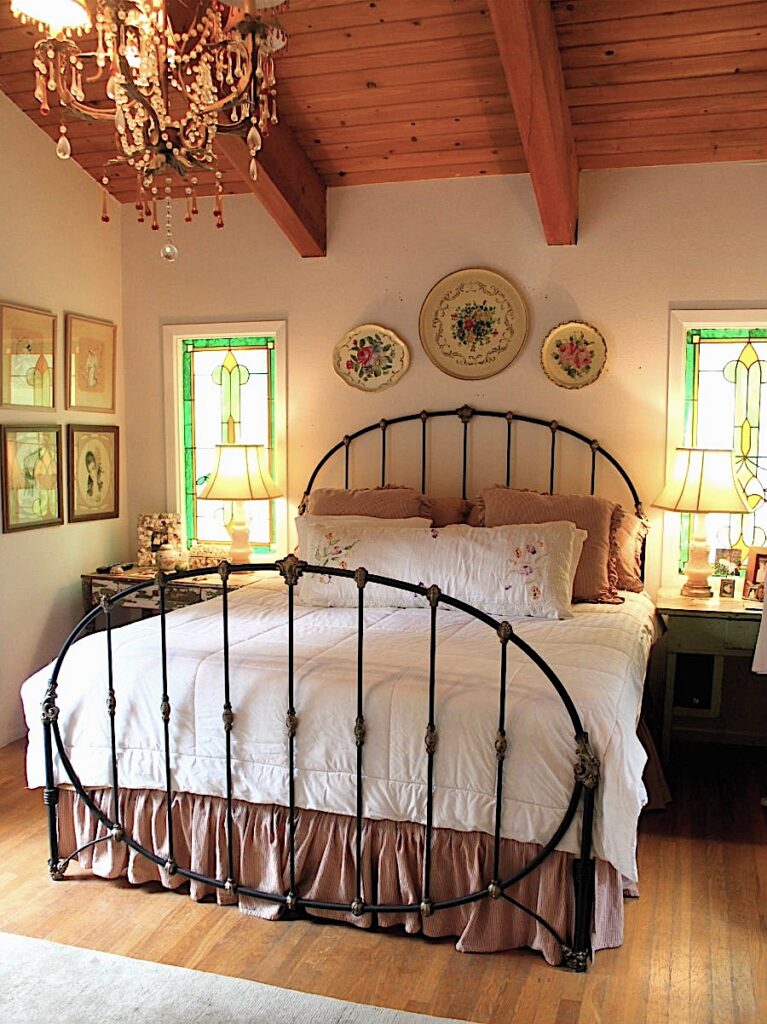 This is probably the most important principle behind the conversions we do at Cathouse.
When we’re finished, you shouldn’t immediately be able to tell what we did.
We don’t want someone looking at the bed and thinking:
“Oh, I can see where they welded the additional pieces in.”
Quite the opposite.
Ideally, someone unfamiliar with antique iron beds should look at the finished king and assume that’s the way the bed was originally manufactured.
Achieving that requires far more than cutting the headboard and footboard in half and welding additional tubing between them.
The original proportions have to be considered.
Where are the castings located?
How much additional width can be introduced without making the center section look empty?
Does the existing decorative pattern repeat?
Will additional castings be required?
What diameter is the original tubing?
How were the original joints constructed?
How can the additional material be incorporated without disturbing the visual rhythm of the original design?
Every antique iron bed presents a different problem.
And that is why every conversion has to be approached individually.
It Takes More Than a Welder
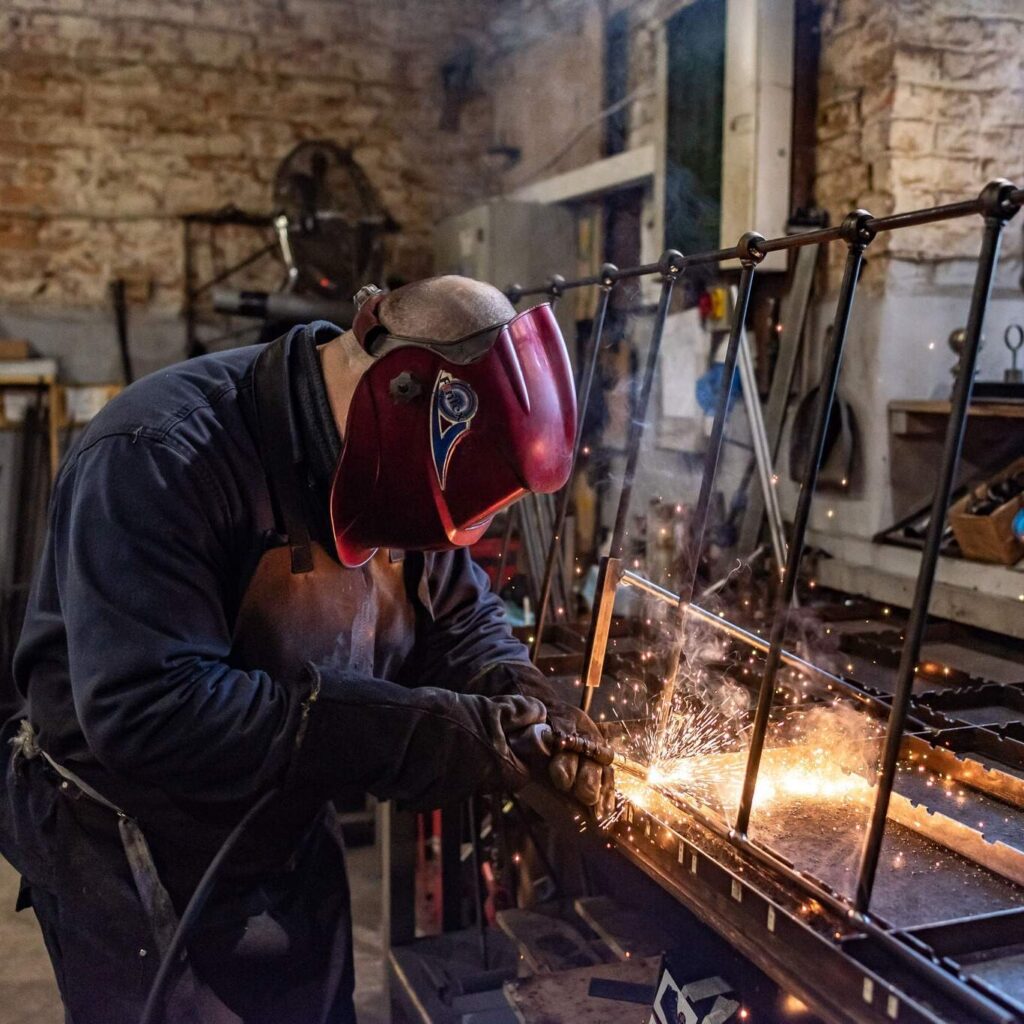 People are sometimes surprised by how many different skills can be involved in converting an antique double iron bed into a king size bed.
A talented welder is certainly essential—but welding is only one part of the process.
There may be metal fabricators and fine metal workers involved in preparing and fitting the additional pieces. Once welding has been completed, those welds have to be carefully ground, shaped and finished so the new connections don’t look like pieces that were simply added onto an old bed.
Then there are the castings.
Many Victorian iron beds incorporated beautiful cast-iron decorative elements—flowers, scrolls, leaves, wreaths, ribbons and countless other motifs.
When a bed is enlarged, the original decorative spacing may no longer work.
That can require another disappearing American skill:
foundry work.
Re-Creating Antique Castings
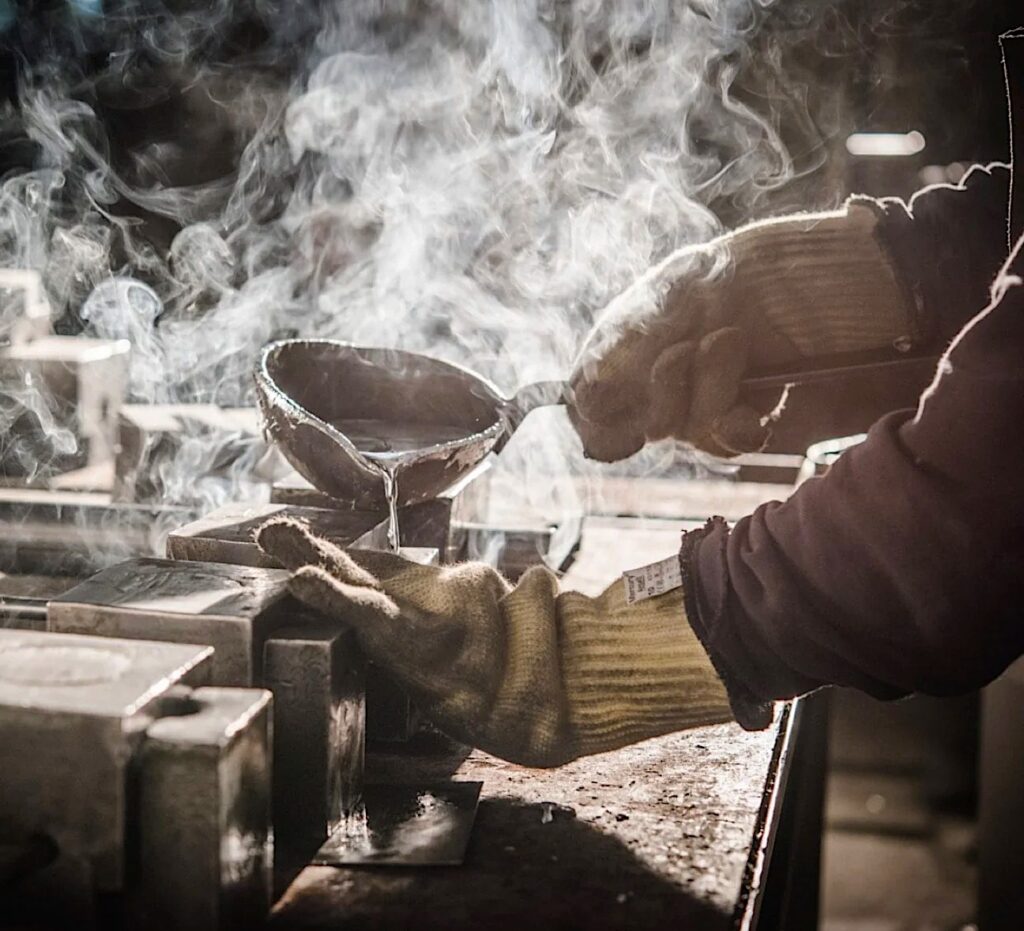 Sometimes a proper king conversion requires additional castings to maintain the balance of the original bed.
Obviously, we can’t telephone the manufacturer and order another casting.
They may have gone out of business 120 years ago.
Instead, an existing original casting can sometimes be used to create a mold. A foundryman can then pour additional castings so the newly added sections maintain the visual vocabulary of the original bed.
This is an important distinction.
We aren’t introducing some new decorative element because we think it would look good.
We’re reproducing what is already there.
If the original bed has a particular floral casting, the enlarged portion should use that floral casting. If it has a repeating geometric motif, the conversion should continue that motif.
Again, the objective isn’t redesign.
It is continuation.
Respecting the Integrity of the Original Design
We’ve been working with antique iron beds for more than 50 years, and one principle has become increasingly important to us:
The original designer deserves a seat at the table.
We may never know his name.
We may not know the name of the foundryman who poured the castings, the metalworker who fitted the tubing or the person who assembled the finished bed.
But their decisions are still visible.
The proportions tell us something.
The placement of the castings tells us something.
The curves, spacing, tubing and symmetry all tell us how that bed was intended to look.
Our responsibility is to listen.
When converting an antique double bed to king size, we don’t ask, “How can we improve this design?”
We ask:
“How can we enlarge it without changing what made it special in the first place?”
That is a very different philosophy.
The Problem of Proportion
A double mattress is approximately 54 inches wide. A standard king mattress is approximately 76 inches wide.
That’s a significant difference.
Adding approximately 22 inches to a bed’s width can dramatically change its appearance if it isn’t handled carefully.
Imagine taking a beautifully proportioned Victorian facade and simply stretching the center section. Technically it might become wider, but aesthetically it could lose everything that made the original architecture work.
An antique iron bed is no different.
Some beds lend themselves naturally to king conversions because their decorative pattern can be repeated.
Others require additional castings.
Some need tubing sections carefully reproduced and integrated.
Still others may require more creative solutions to preserve symmetry and proportion.
The conversion has succeeded only when the finished king looks balanced.
Not stretched.
Not modified.
Not patched together.
Balanced.
Keeping the Old Bed Old
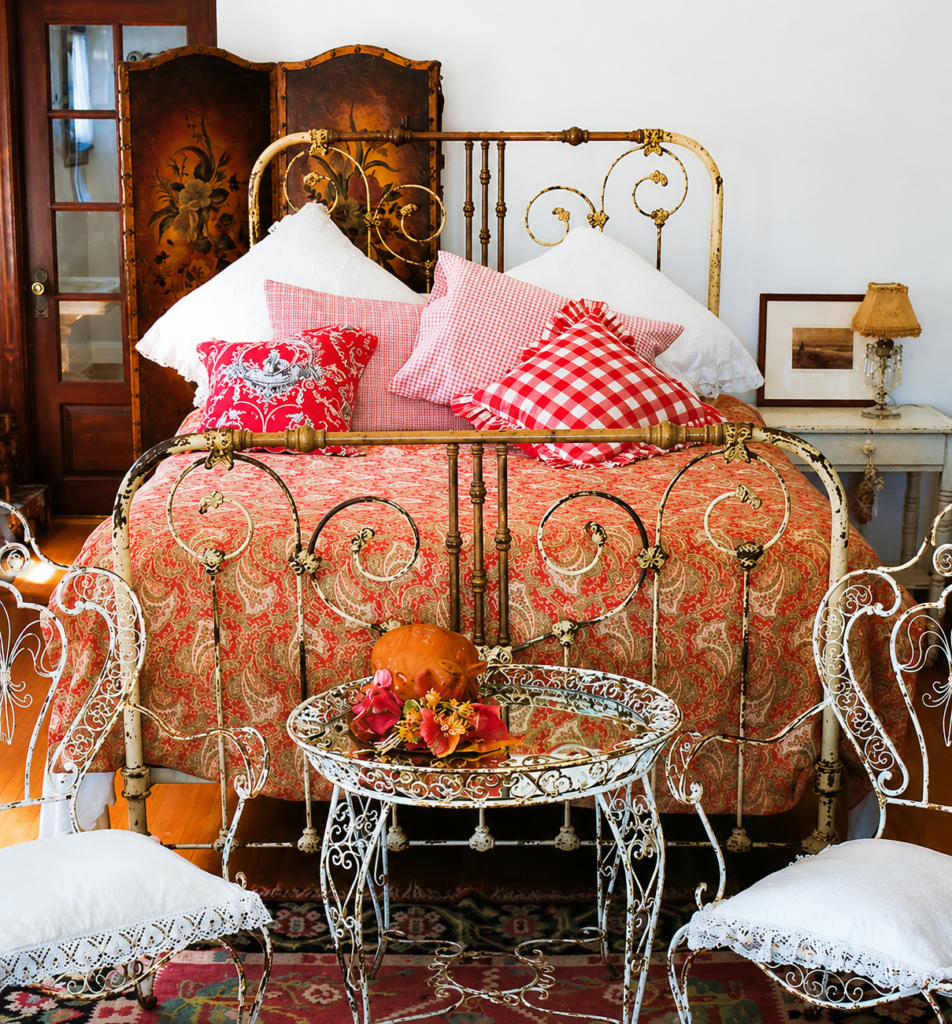 Another consideration is the original character of the bed itself.
Many antique iron beds have acquired wonderful evidence of age: old paint, oxidation, worn surfaces, chips and layers of finish accumulated over generations.
Whenever practical, those characteristics can be preserved.
We’ve always believed that age isn’t necessarily something that needs to be erased from an antique.
After all, an antique iron bed has already spent 125 or 150 years becoming what it is.
Why make it look as though it was manufactured last Tuesday?
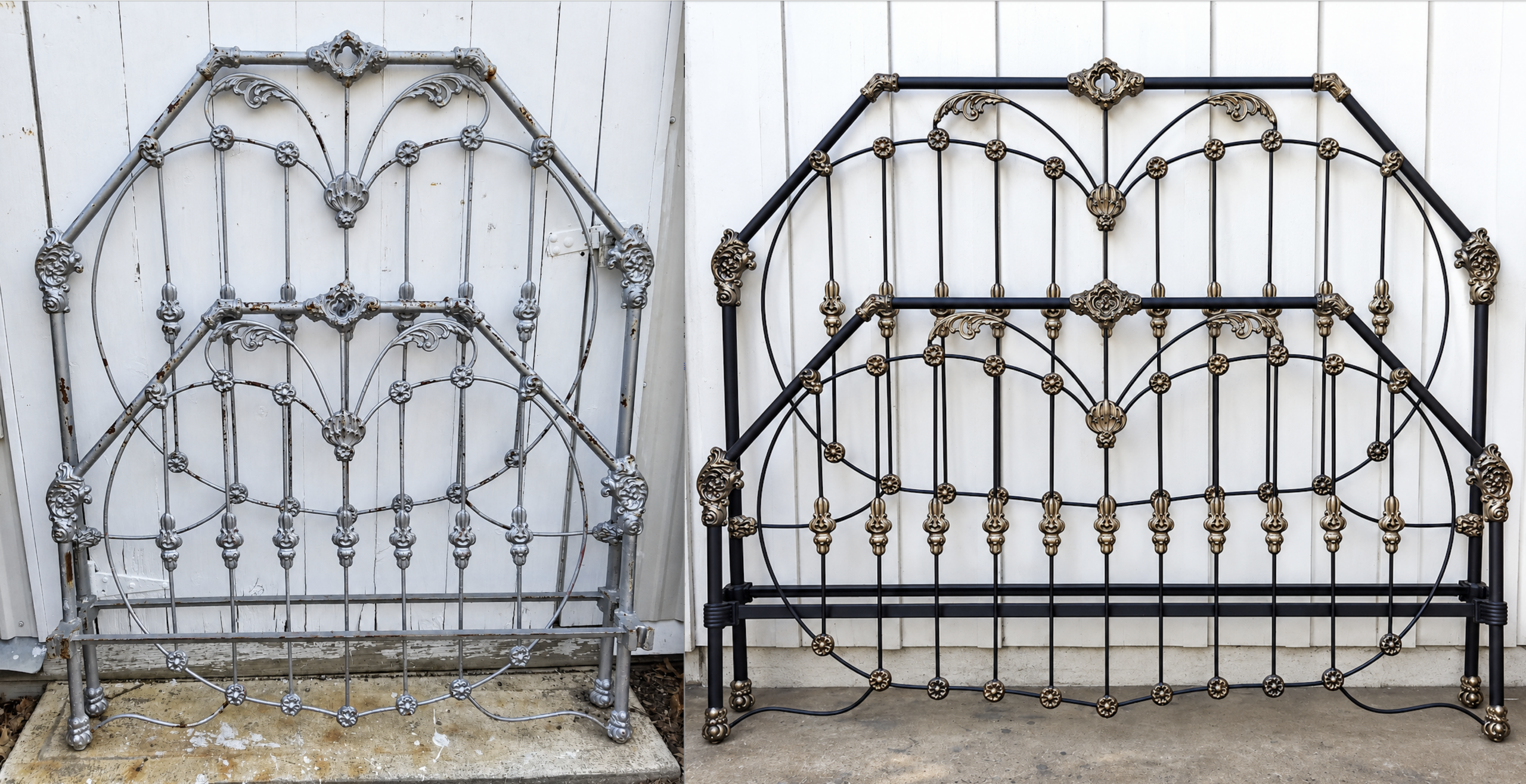
Depending on the bed and the wishes of the client, an original surface can sometimes be cleaned and sealed, allowing the scars and patina of its history to remain visible. Other beds may call for a restored or custom-painted finish.
Either way, the structural conversion itself should remain sympathetic to the original.
From Obsolete Size to Modern Heirloom
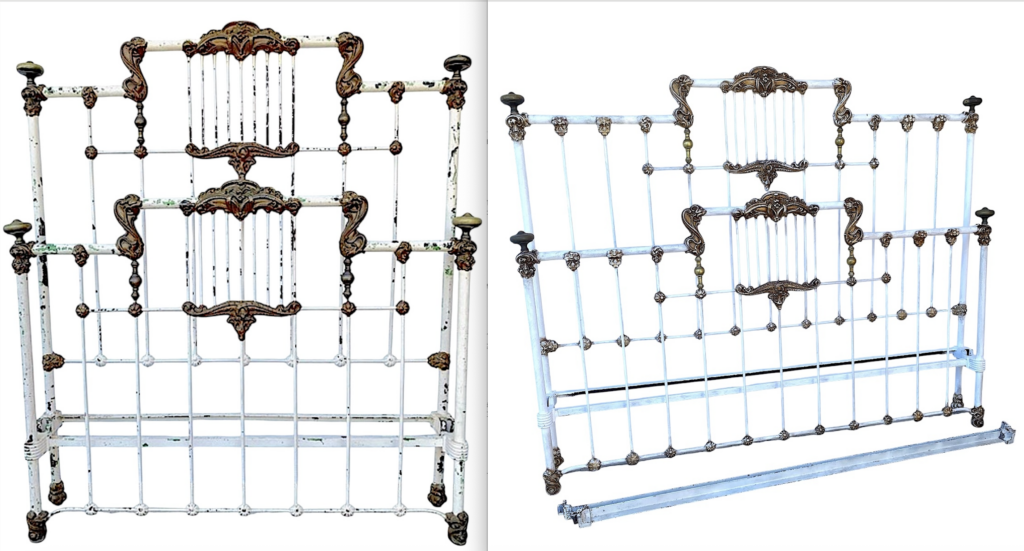 This is what makes king conversions so rewarding.
Before the work begins, we may have a spectacular 19th-century double bed that very few modern households can comfortably use as their primary bed.
Afterward, we have something rather remarkable:
an authentic antique king size iron bed that never existed historically—but looks as though it should have.
The original headboard and footboard are still there.
The original design is still there.
The original castings, tubing and Victorian character are still there.
We’ve simply allowed the bed to accommodate the way people sleep today.
And in doing so, we’ve dramatically increased the likelihood that the bed will remain useful, appreciated and cared for for generations to come.
Antique Iron Bed Conversion Is Really Preservation
There will always be people who believe an antique should never be altered under any circumstances.
We understand that argument.
But after spending more than half a century working with these beds, we’ve developed a somewhat different perspective.
An unusable antique is vulnerable.
Eventually it gets put into storage. Then perhaps into a garage. Then an attic. Then an estate sale.
And eventually someone decides they have no use for it.
A beautiful antique double iron bed converted properly to accommodate a king mattress suddenly becomes relevant again.
It becomes the centerpiece of a bedroom.
People build rooms around it.
Interior designers specify fabrics, wallpaper, rugs and furnishings around it.
Families live with it.
And something made by American craftsmen more than a century ago begins another chapter.
To us, that’s preservation.
Giving Victorian Iron Beds Another 100 Years
One of the things we’ve learned during more than 50 years in the antique iron bed business is that we’re really only temporary custodians of these beds.
They were here long before us.
And if we do our jobs properly, they’ll be here long after us.
That’s why we believe a great antique iron bed king conversion should never be about imposing today’s ideas onto yesterday’s craftsmanship.
It should be about respect.
Respect for the original design.
Respect for the foundrymen and metalworkers who created it.
Respect for the materials that have already survived more than a century.
And respect for the next owner who wants to actually sleep in and enjoy the bed rather than merely admire it.
At Cathouse Antique Iron Beds, our goal when converting an antique double iron bed to king size is remarkably simple:
Don’t redesign history. Make enough room for it to continue.
Because sometimes the best way to preserve an antique isn’t to leave it exactly as you found it.
Sometimes you have to give it a new reason to survive.