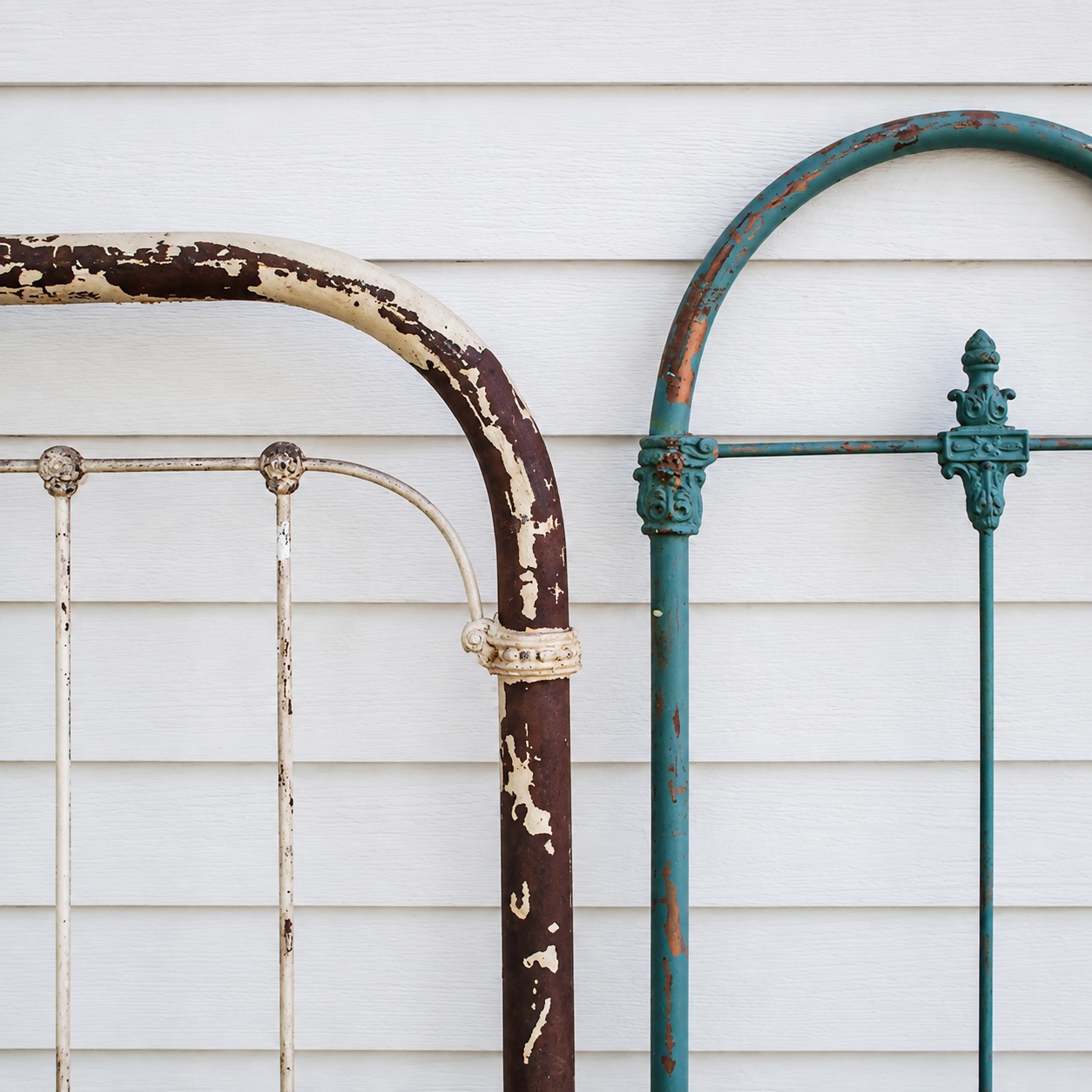
When most people look at an antique iron bed, their eyes naturally go first to the decorative details—the castings, the curves, the height of the headboard, the original paint, or perhaps the brass accents.
After more than 50 years of buying, selling, restoring, and converting antique iron beds, I tend to notice something else almost immediately:
The tubing.
More specifically, I look at its diameter.
It may sound like a minor construction detail, but the size of the tubing used in an antique iron bed can tell you quite a bit about the bed: how it was made, the quality level the manufacturer was trying to achieve, the amount of iron that went into it, and sometimes even the period in which it was produced.
There is, however, an important catch.
Bigger did not always mean better.
For much of the 1800s, increasing tubing diameter generally accompanied heavier construction and more substantial beds. But by the turn of the century, some manufacturers took tubing size in an entirely different direction. Suddenly, inexpensive beds appeared with enormous 2-inch tubing.
So when judging an antique iron bed by the size of its tubing, there is a point at which the old rule of thumb begins to reverse itself.
Let’s start at the beginning.
The Typical Antique Iron Bed: 7/8-Inch Tubing
The majority of American antique iron beds produced during much of the 1800s were constructed with tubing approximately 7/8 inch in diameter.
Some manufacturers stepped that up to approximately 1 inch.
Those dimensions provided manufacturers with a very practical combination of strength, weight, appearance, and cost.
Remember that these beds were not being made as decorative reproductions. They were everyday pieces of furniture expected to withstand years—often generations—of use.
The tubing also had to work in conjunction with the bed’s cast-iron fittings and decorative castings.
On a well-made antique iron bed, all of these elements were designed as a system. The tubing supported the castings, the castings helped define the design, and the entire headboard and footboard had to remain structurally sound.
That becomes particularly important when we look at the more elaborate beds.
More Iron Usually Meant More Money
 Iron was material, and material cost money.
That simple fact explains a great deal about antique iron bed construction.
Manufacturers trying to produce an inexpensive bed could reduce the amount of material used. Less iron meant a lower manufacturing cost, a lighter finished product, and potentially lower transportation costs.
Some economy beds therefore used tubing around 3/4 inch in diameter, along with much thinner 3/8-inch interior rods.
These weren’t necessarily bad beds. Many survived remarkably well, which is why we still encounter them today.
But when you place one next to a substantial Victorian iron bed constructed with heavier tubing and elaborate castings, the difference becomes apparent very quickly.
You can see it.
And when you pick up the headboard, you can certainly feel it.
This is one of the reasons weight can provide clues when evaluating an antique iron bed. Weight alone doesn’t establish quality, but substantial construction frequently tells us something about the amount of material and workmanship that went into producing the bed.
When Large Castings Required Larger Tubing
\
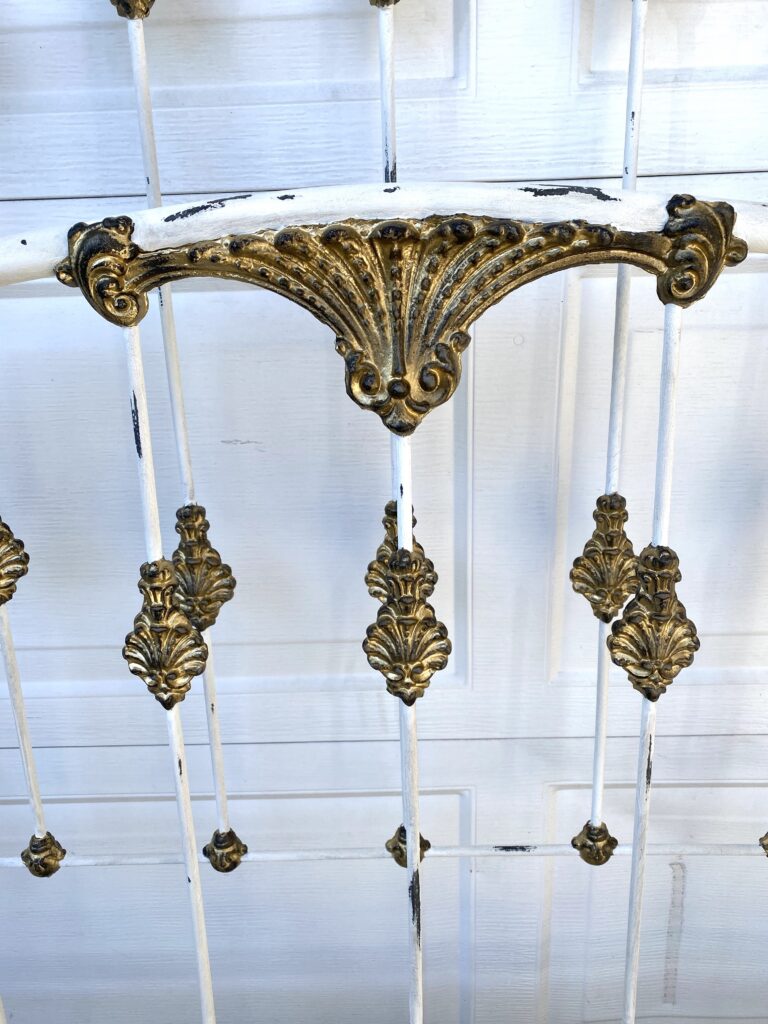 At the opposite end of the spectrum were some of the finest and most elaborate antique iron beds being produced.
Manufacturers couldn’t simply attach enormous, heavy cast-iron decorations to lightweight tubing and expect the bed to remain structurally sound.
The construction had to support the design.
Some high-end antique iron beds therefore used tubing as large as approximately 1 1/8 inches in diameter, often with substantial wall thickness.
This gave manufacturers the structural strength necessary to incorporate larger and more detailed castings into their designs.
And this is where tubing diameter becomes particularly interesting to collectors.
A large, elaborate casting isn’t simply decoration. It represents additional material, more complicated foundry work, greater weight and additional manufacturing expense.
Supporting that casting required an appropriately substantial framework.
Consequently, when you see a heavily decorated 19th-century iron bed with large castings combined with substantial tubing, you’re often looking at a bed that was considerably more expensive to manufacture than one of its simpler contemporaries.
In the 1800s, There Was a Fairly Good Rule of Thumb
For much of the 19th century, you could make a reasonable generalization:
The larger and more substantial the tubing, the better the bed was likely to be.
Not always.
There are very few absolute rules when dealing with antiques.
But as a general indicator, it works surprisingly well.
A manufacturer using more iron, heavier tubing and larger castings was putting more material—and usually more labor—into the finished product.
Then something interesting happened.
Tubing became even larger.
And the rule stopped working.
When 2-Inch Tubing Arrived
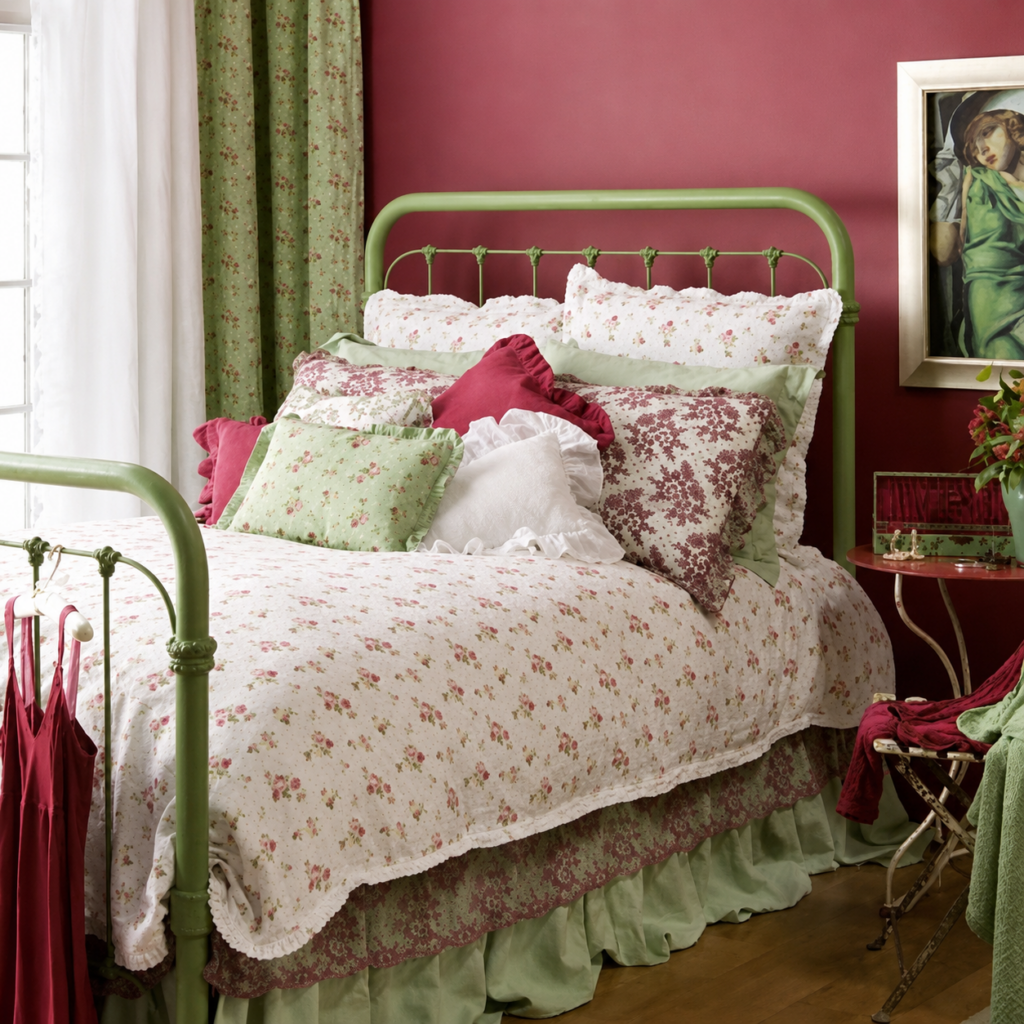 Toward the end of the 1800s and particularly as manufacturers moved into the early 1900s, iron bed design began changing.
Beds started appearing with dramatically oversized tubing—sometimes approximately 2 inches in diameter.
At first glance, you might assume these enormous tubes represented the ultimate evolution of the heavy Victorian iron bed.
Generally, they did not.
Quite the opposite.
Many of these beds were designed to be simple, economical and easy to manufacture.
Instead of using numerous decorative elements and complicated castings, manufacturers could create visual presence through the scale of the tubing itself.
Two-inch tubing looked substantial.
It filled visual space.
And it allowed a relatively simple bed to have a bold appearance without requiring the elaborate foundry work seen on many earlier Victorian examples.
We often refer to these simpler beds as austere-style or Depression-era iron beds, although examples of this broad construction style began appearing before the Depression itself.
They became extremely common.
And generally, they were inexpensive beds.
Bigger Had Reached the Point of Diminishing Returns
This creates one of the more interesting contradictions in antique iron beds.
If you compare a 3/4-inch economy bed with a beautifully constructed 1 1/8-inch Victorian bed, the larger tubing may indeed point you toward the more expensive and elaborate piece.
But move all the way up to 2-inch tubing and that assumption can fall apart.
Bigger was no longer necessarily better.
In fact, oversized tubing could sometimes be part of an economy-minded design.
Manufacturers had discovered that visual mass could substitute for decorative complexity.
Instead of numerous intricate castings, complicated bends and elaborate interior designs, a bed could rely on several enormous tubes to create its appearance.
From a manufacturing standpoint, that could be a very practical solution.
From a collector’s standpoint today, however, it means tubing diameter must always be considered in context.
But Never Judge an Antique Iron Bed by One Feature
This is where experience becomes important.
Just when you think you’ve developed an absolute rule about antique iron beds, an exceptional bed comes along and proves you wrong.
Over the years, I’ve owned some outstanding 2-inch-tubing antique iron beds.
Instead of the simple construction normally associated with that style, these beds incorporated beautiful, large and remarkably detailed castings.
The oversized tubing wasn’t being used as a substitute for decoration.
It was supporting it.
Those beds can be impressive.
And they remind us why no single measurement—tubing diameter, weight, number of castings or anything else—should determine whether an antique iron bed is desirable.
You have to look at the entire bed.
What Tubing Can Tell You When Shopping for an Antique Iron Bed
If you’re examining an antique iron bed, tubing size should be considered one piece of a larger puzzle.
Look at the diameter of the outside posts.
Then look at the interior rods.
Examine the castings. Are they small and simple, or large and intricately detailed?
Look at how much iron appears to have gone into the construction.
Look at the bends and curves.
Examine the side-rail connections.
And, most importantly, look at how all of those components work together.
A beautifully proportioned antique iron bed doesn’t need the largest tubing.
In fact, some of the most graceful Victorian beds depended on the relationship between relatively slender tubing, curved interior rods and highly detailed castings.
Their beauty came from proportion—not sheer size.
That is an important distinction.
Tubing Diameter Can Also Help Tell the Story of the Bed
One of the things I enjoy most about antique iron beds is that construction details reveal the priorities of the people who made them.
A thin, simple bed tells one story.
A massive Victorian bed covered with elaborate castings tells another.
And a 2-inch-tubing bed from the early 20th century tells yet another.
They represent different markets, different manufacturing decisions and different periods in American furniture history.
This is also why two antique iron beds that appear approximately the same size in photographs can be remarkably different when you encounter them in person.
One may feel light and almost delicate.
Another may require two people just to comfortably move the headboard.
The amount of iron used in their construction can be dramatically different.
Does Tubing Size Affect Value Today?
It can—but tubing diameter by itself does not determine the value of an antique iron bed.
Rarity matters.
Condition matters.
Original paint can matter tremendously.
The quality and intricacy of the castings matter.
Proportion matters.
Age matters.
Design matters.
And ultimately, beauty matters.
A relatively delicate antique iron bed with wonderful lines and original paint may be far more desirable than a heavier bed with larger tubing and an uninspired design.
Conversely, a massive Victorian bed combining heavy tubing with exceptional castings may represent exactly the kind of construction collectors and designers find difficult to duplicate today.
This is why I would never recommend evaluating an antique iron bed with a tape measure alone.
Use the tape measure as a clue.
Then look at the bed.
More Than 100 Years Later, Construction Still Matters
There is something remarkable about handling an antique iron bed made 125 or 150 years ago and realizing that the people who built it expected it to be used.
They weren’t trying to make something that would survive long enough to become an antique.
They were simply trying to make a bed.
Yet the quality of the iron, the tubing, the castings and the construction allowed many of these beds to survive multiple generations.
Today we restore them, preserve their original finishes, convert some of them to modern mattress sizes and put them back into service.
And sometimes one small measurement—the diameter of a piece of iron tubing—helps tell us a surprisingly large part of their story.
So, does size matter when it comes to antique iron bed tubing?
Absolutely.
Just not always in the way you might think.
For much of the 1800s, larger and heavier tubing often accompanied more substantial and expensive construction. Move into the oversized 2-inch tubing that became increasingly common around the turn of the century and into the early 20th century, however, and bigger could just as easily represent an economical approach to manufacturing.
And then, every once in a while, you’ll encounter a magnificent 2-inch-tubing bed covered with enormous detailed castings that breaks the rule all over again.
That’s one of the reasons I’ve enjoyed working with antique iron beds for more than half a century.
There are rules.
There are exceptions.
And the beds themselves usually tell you which is which.