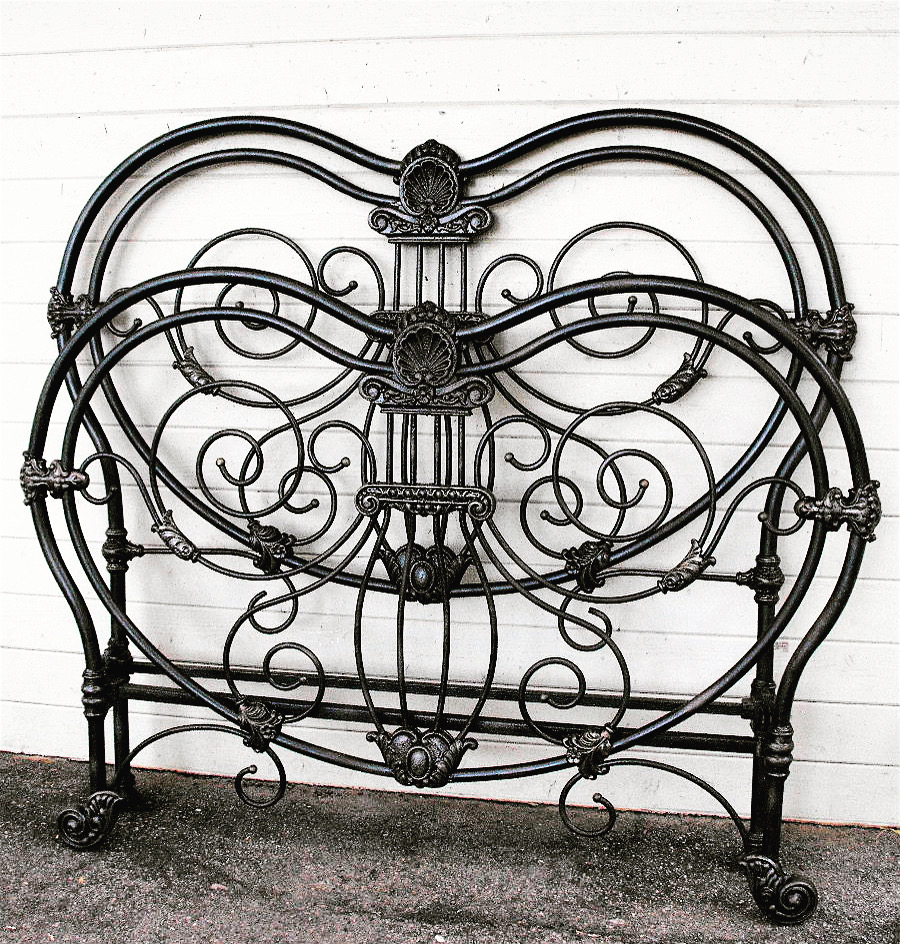
When people shop for antique iron beds today, weight is often considered a sign of quality. Pick up the headboard of a substantial Victorian iron bed and there is no mistaking what you are handling. Heavy steel tubing, solid iron components, substantial castings and thick decorative elements can make some of the finest surviving beds extraordinarily heavy.
But there is an interesting irony hidden in all that weight.
More than a century ago, the tremendous weight of an ornate iron bed could actually work against it.
The heavier the bed, the more difficult and expensive it was to manufacture, move, ship and deliver. Lighter and simpler iron beds were easier to handle and could be produced and distributed in greater numbers.
Today, that equation has almost completely reversed.
Many of those relatively lightweight, inexpensive beds survived in large numbers. The massive, heavily cast and highly ornamented examples—the beds that could be inconvenient monsters to move in the late 1800s—are often among the most desirable and valuable antique iron beds we encounter today.
Weight went from being a liability to becoming part of the attraction.
Why Did Antique Iron Beds Weigh So Much?
 To understand the difference, you first have to understand how these beds were made.
Original American antique iron beds from the latter half of the 19th century were not made from the lightweight materials commonly associated with modern metal furniture. Manufacturers used substantial steel tubing, solid iron rods and heavy cast-iron decorative components.
The more elaborate the design, the more material was often involved.
Simple iron beds might consist primarily of relatively straightforward tubing with a limited number of castings. More expensive beds could incorporate elaborate scrollwork, multiple vertical rods, large corner castings, decorative junctions, ornamental crowns and other cast-iron details.
All of that added weight.
And weight added cost—not only to manufacture the bed, but to move it after it left the factory.
Remember that we are talking about an era before interstate highways, modern trucking, forklifts and inexpensive nationwide freight.
A bed weighing several hundred pounds represented a very different logistical problem in 1890 than it does today.
The Sears Iron Bed: When More Was Almost Too Much
 One of my favorite examples is an extraordinary antique iron bed once offered through Sears.
It is a magnificent bed.
It is also enormous.
The headboard and footboard each weigh approximately 135 pounds. Add the side rails and the complete bed weighs more than 300 pounds.
From today’s perspective, that weight helps make the bed remarkable. It has tremendous presence, elaborate styling and the kind of construction that immediately distinguishes it from more ordinary examples.
But imagine trying to distribute a 300-pound bed in the late 1800s.
Every stage of transportation became more complicated.
It had to leave the manufacturer. It had to be loaded. It might travel by wagon, railroad or ship. It then had to be unloaded and transported to a store, warehouse or customer’s home.
Weight cost money every step of the way.
The very qualities that make a bed like this so impressive today could make it less practical when it was new.
And that helps explain an important part of the antique iron bed market that people sometimes overlook:
The most spectacular bed wasn’t necessarily the easiest bed to sell.
The Mississippi River Story I Was Told When I Started Buying Antique Iron Beds
When I first entered the antique business more than 50 years ago, I was fortunate enough to learn from people who had already spent decades buying and selling old furniture.
One old-timer gave me a piece of advice I never forgot.
He told me that if I was serious about finding original old antique iron beds, I would do well to travel up and down the eastern side of the Mississippi River.
His explanation was fascinating.
In the days when people traveled with horses and wagons, crossing a major river could mean loading the wagon and its contents onto a manned ferry or barge. Goods being transported across could be subject to charges based, in one way or another, on what was being carried.
And according to the story passed along to me, that created a problem for iron beds.
Imagine a family moving with everything it owned.
Furniture. Clothing. Tools. Household possessions.
And one extremely heavy iron bed.
When the cost and inconvenience of getting everything across the river became apparent, that heavy bed could suddenly stop looking essential.
The old-timer’s version of the story was wonderfully simple:
Some of the iron beds didn’t make the crossing.
They were left behind.
Whether every detail of that story happened exactly as it was passed down is difficult to document today, but the practical lesson behind it certainly made sense to the antique dealers of that generation: weight influenced where heavy furniture traveled and where it accumulated.
And when I began buying beds, there really were places where old iron beds could be found in surprising numbers.
The Scrap Yards Were Once Full of Them

www.rarehistoricalphotos.com
When I started buying antique iron beds, scrap yards could still be extraordinary hunting grounds.
Beds that today might be restored, photographed, marketed and shipped across the country were once simply considered old metal.
Some had been discarded.
Some had been dismantled.
Others had sat outside for decades.
You could find headboards separated from footboards, missing rails, broken castings and beds covered with layer after layer of paint and rust.
At the time, comparatively few people were looking at them as valuable pieces of American decorative history.
That began to change.
Dealers started searching.
Decorators discovered them.
Collectors began recognizing the better examples.
And eventually those old sources were picked over.
The supply that once seemed almost endless wasn’t endless at all.
Heavy Versus Lightweight Antique Iron Beds
 This is where the modern antique market becomes particularly interesting.
Not every old iron bed was elaborate, and not every old iron bed was heavy.
Manufacturers had different markets to serve.
There were expensive beds and inexpensive beds, just as there are expensive and inexpensive pieces of furniture today.
Simpler vintage iron beds and antique metal bed frames could be manufactured with less ornamentation and fewer costly castings. They were easier to produce, easier to transport and accessible to a larger group of customers.
Because practical, moderately priced beds could sell in greater numbers, more of them were originally produced.
That matters today.
Rarity is partly determined by survival, but it begins with how many examples existed in the first place.
If thousands of a relatively simple model were manufactured while only a small number of an expensive, extraordinarily heavy and ornate model were sold, it isn’t surprising that the ornate bed may be considerably harder to find 125 years later.
Why Weight Can Be Important to Antique Iron Bed Value Today
I want to make an important distinction here.
Weight by itself does not make an antique iron bed valuable.
A heavy bed isn’t automatically a great bed.
Value is influenced by many things: age, design, rarity, condition, manufacturer, proportions, originality, casting quality, decorative detail and overall desirability.
But weight can tell us something.
When substantial weight comes from thick tubing, complex construction, large castings and extensive ornamentation, it can be evidence of the amount of material and labor that originally went into producing the bed.
That is very different from saying:
“Heavier is always better.”
It isn’t.
I have seen beautifully proportioned antique beds whose appeal comes from delicacy rather than massive construction.
But when you encounter one of the exceptionally ornate American beds with extraordinary castings and tremendous physical weight, you are often looking at a bed that was expensive and difficult to manufacture even when it was new.
And relatively few people could afford—or wanted to deal with—the biggest ones.
The Irony of Survival
There is another side to all that weight.
Heavy construction could make a bed difficult to transport, but it could also help it survive.
A substantially built antique iron bed frame can tolerate an extraordinary amount of use. Iron and steel do not suffer from many of the vulnerabilities associated with other furniture materials.
Paint may chip.
Finishes may deteriorate.
Surface rust may appear.
A casting may occasionally break.
But the fundamental structure can remain intact generation after generation.
That is one reason we are still restoring American iron beds that were manufactured during the Victorian era.
They were built to last.
I often say that with a true antique, we are caretakers, not owners.
A bed that has already survived 125 or 150 years will probably outlive us as well.
Yesterday’s Problem Can Become Today’s Rarity
This is what makes the relationship between weight and antique iron beds so fascinating.
In the 1800s, manufacturers and customers had practical concerns.
How much would the bed cost?
How difficult would it be to deliver?
Could it be transported long distances?
How many people would it take to move it?
Would a customer pay extra for all those castings and additional iron?
Today we ask very different questions.
How rare is it?
How elaborate are the castings?
How substantial is the construction?
How many examples survived?
Is the original finish still present?
How difficult would it be to reproduce that craftsmanship today?
The characteristic that could once discourage a buyer can now help distinguish an exceptional survivor.
The Beds Nobody Wanted to Move
 There is something wonderfully appropriate about that.
Some of the heaviest antique iron beds may have spent much of their lives exactly where they were originally placed simply because nobody wanted to move them.
Others may have been abandoned because moving them wasn’t worth the trouble.
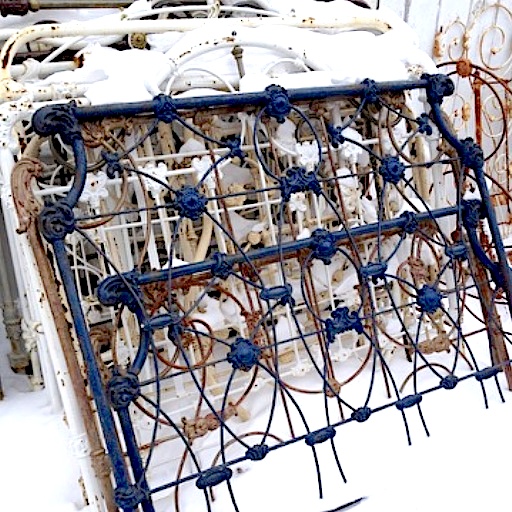
Some ended up in barns, sheds, basements or scrap yards.
And occasionally that neglect helped preserve them until someone came along who recognized what they were.
Today, when we encounter a massive 19th-century iron bed with beautiful castings and elaborate construction, its weight tells part of its story.
It tells us about the amount of material that went into it.
It tells us something about the difficulty of manufacturing it.
It reminds us of the challenges of transporting furniture in another era.
And sometimes it helps explain why relatively few examples survived.
The irony couldn’t be better:
The antique iron bed that was once too heavy to move may now be the one everybody wants.
After more than 50 years of buying, restoring and selling original antique iron beds, I have learned that their imperfections, their construction and even their inconveniences are often inseparable from their history.
That 300-pound Sears bed may have been excessive when it was new.
Today?
We’d call it exceptional.