There is an easy answer to the question.
Because they’re beautiful.
But I don’t think that’s the whole answer.
After more than fifty years of buying, selling, restoring and living around antiques, I’ve come to believe that people who are truly drawn to antique iron beds are often responding to something they can’t quite put into words.
It isn’t simply the shape.
It isn’t simply the craftsmanship.
And it certainly isn’t just because an antique iron bed is old.
Perhaps it is because an antique iron bed has already lived a life before it ever arrives at ours.
A new bed begins with us.
An antique iron bed doesn’t.
It comes with a past.
And for some people, that makes all the difference.
An Antique Iron Bed Has Already Spent 150 Years Becoming What It Is
 Think about that for a moment.
Many of the original antique iron beds we handle today were manufactured in the late 1800s. They were made at a time when iron foundries were producing the castings, rails and decorative components that would eventually become part of someone’s bedroom.
They weren’t made to look antique.
They were new.
Someone bought one.
Someone brought it home.
Someone slept in it.
And then life happened.
The bed may have remained in the same house for decades. It may have been moved across the country. It may have belonged to a child who eventually became an adult. It may have survived a family moving from one home to another—or even one generation to another.
It may have been painted several times.
It may have developed scratches, worn edges, little imperfections and variations in its finish.
And somehow, through all of that, it survived.
That’s what we are looking at today.
Not simply an old piece of furniture.
We’re looking at something that has spent approximately 150 years becoming what it is.
That is an enormous distinction.
You Can’t Manufacture History
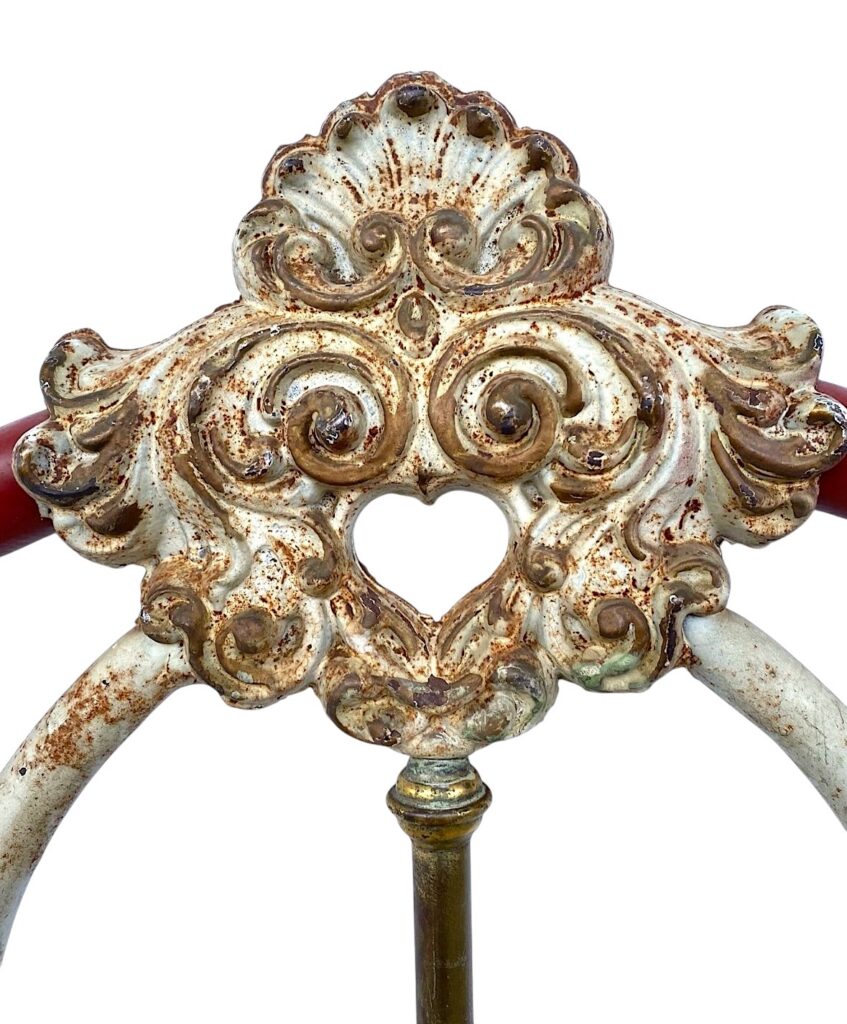
Every casting tells us something about the craftsmanship of another era.
A reproduction can copy the shape of an antique iron bed.
It can copy the scrolls.
It can copy the decorative castings.
It can even be deliberately distressed to make it appear old.
But there is one thing it cannot reproduce.
What actually happened to it.
You can make something look old.
You cannot manufacture 150 years of life.
That distinction is becoming increasingly important in a world where so many things are designed to look perfect.
Perfectly smooth.
Perfectly finished.
Perfectly new.
Antiques offer something completely different.
They offer evidence.
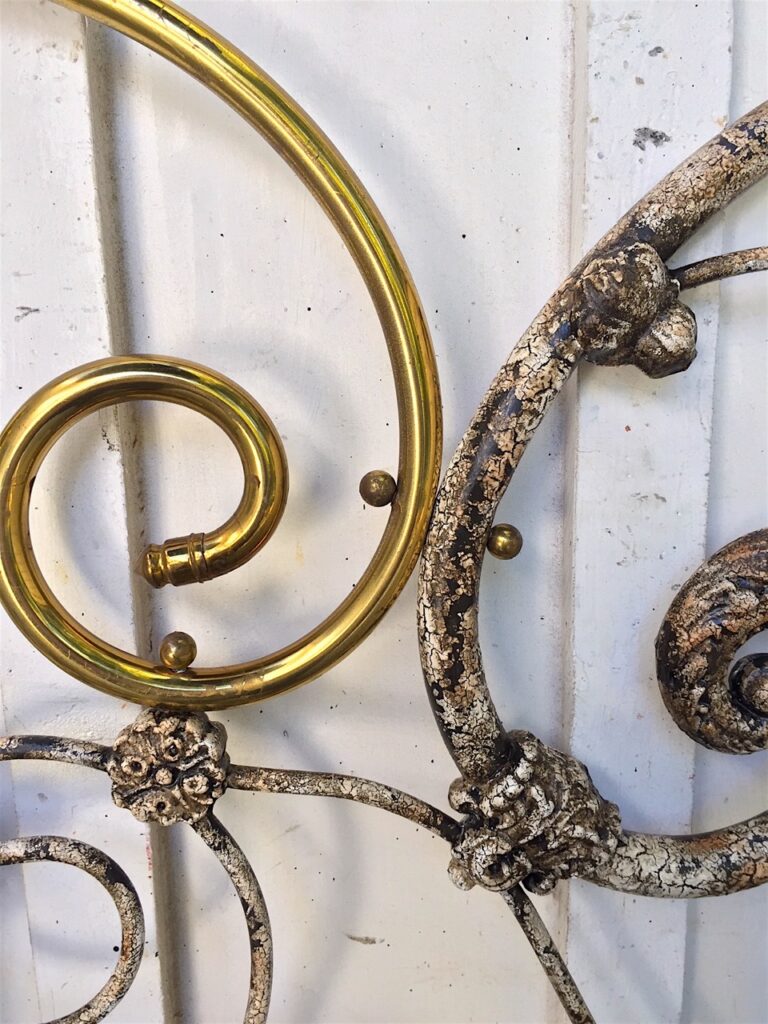
The worn area on a piece of iron isn’t necessarily a flaw. The layers of old paint aren’t necessarily something that needs to be stripped away. A small imperfection in a casting isn’t necessarily a defect.
Sometimes those things are the history.
They are physical reminders that the object existed long before it arrived in our hands.
What Were We Looking At Before We Looked At the Bed?
 This is where I think antique iron beds become especially interesting.
When you look at an antique iron bed, you’re not required to know who owned it.
In fact, you may never know.
But your imagination is allowed to wonder.
Who slept here?
Was it a young couple?
A child?
A grandmother?
Was it sitting in a farmhouse bedroom somewhere in Pennsylvania?
Was it in a Victorian home in New England?
Was it part of a family home that had been passed down for generations?
Was it in a hotel?
Was it in a room overlooking a sleeping porch?
Was it there during a time when bedrooms looked nothing like the bedrooms we know today?
We don’t necessarily need the answers.
In some ways, not knowing is part of the magic.
The bed leaves the story open for us to finish in our own minds.
And that is something a new piece of furniture simply cannot offer.
A new bed hasn’t had the opportunity.
Its story begins when we bring it home.
An antique’s story began long before we ever met it.
There Is an Emotional Depth to Some Objects
I think this is where the popularity of antiques becomes difficult to explain using ordinary words like “style,” “decor” or “design.”
Some objects seem to have an emotional depth that goes beyond their physical appearance.
They aren’t human.
They don’t have memories.
They don’t actually know where they’ve been.
And yet, when we look at them, they can make us think about people and places that existed before us.
That’s a remarkable quality.
An antique iron bed can sit quietly in a bedroom and, without saying a word, suggest another time.
Perhaps that’s why some people become attached to antiques.
They’re not necessarily buying the object alone.
They’re buying the possibility of a story.
They’re buying something that has already survived.
Something that has already been important to someone.
Something that has already had a place in the world.
And now, somehow, it has found its way to them.
Why Do Some People Prefer New?
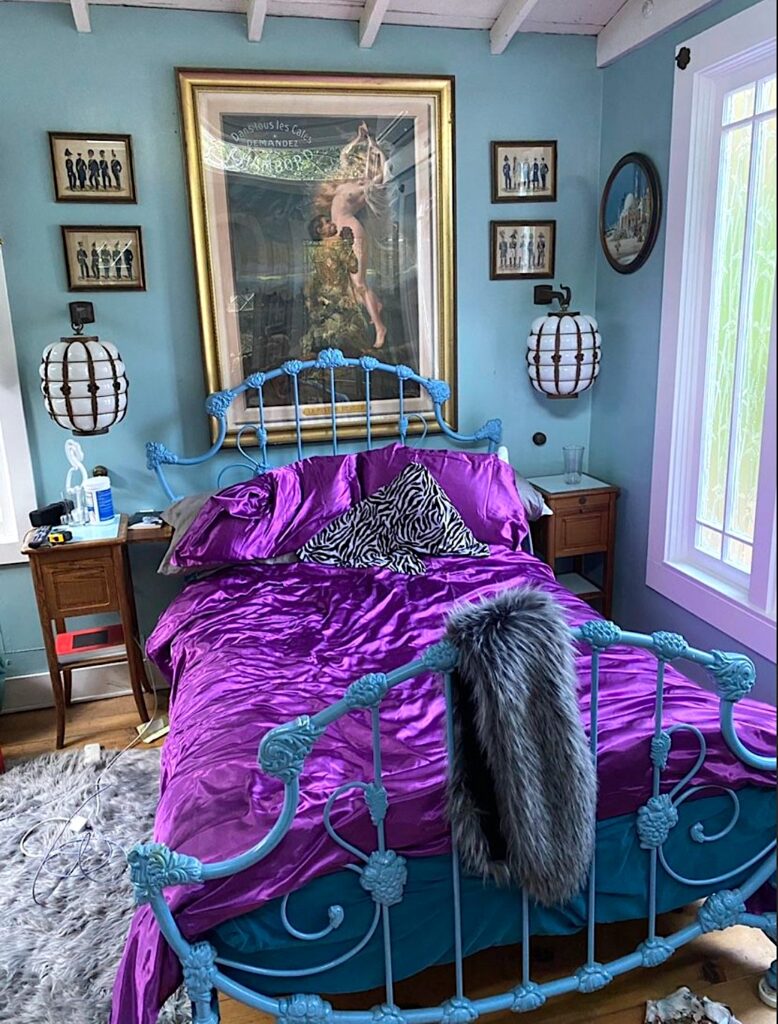 I think this question is just as interesting.
Why do some people immediately connect with antiques while others don’t?
Perhaps it has nothing to do with taste.
Maybe some people simply want their surroundings to tell their own story.
A new piece of furniture has no history that needs to be understood. No previous owner. No mystery. No questions about where it came from or what happened to it.
Its story begins with you.
And there is something very appealing about that, too.
For some people, an unfamiliar past may feel irrelevant.
For others, it may feel uncomfortable.
Why bring someone else’s history into your home when you would rather create your own?
I don’t think either response is wrong.
But I do think there are people who instinctively understand that an object can become more interesting because it has lived a life before them.
They don’t see the past as baggage.
They see it as a gift.
The Imperfections Are Part of the Attraction
One of the things I’ve learned over the years is that restoring an antique isn’t necessarily about making it look new.
In fact, sometimes making an antique look new is the very thing that takes away what makes it special.
There is a difference between preserving an antique and erasing its history.
A good restoration should stabilize the piece, make it useful and allow it to live comfortably in another generation.
But it should also respect what is already there.
Its first 150 years are history. Its next chapter can begin in your bedroom.
Those little scratches.
Those layers of paint.
That slight variation in color.
The evidence of age.
The imperfections created by time.
Those things can tell us that the bed is genuine.
They can make us stop and look twice.
And perhaps that is why an original antique finish can be so much more interesting than a perfectly executed imitation of one.
The Beauty of Giving an Antique Another 100 Years
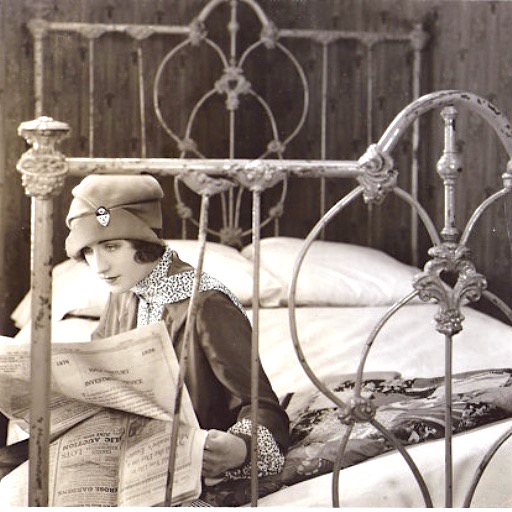 There is another reason I believe antique iron beds remain so popular.
They aren’t finished.
Their first 100 or 150 years are over.
But their next chapter hasn’t been written yet.
That’s where we come in.
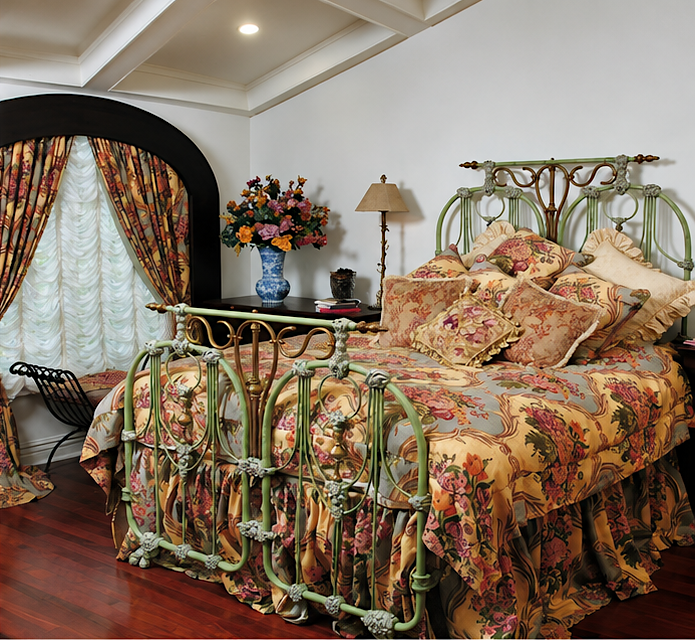
An antique iron bed can be placed into a completely different kind of bedroom than the one it originally occupied.
It can be painted.
It can be restored.
It can be converted to accommodate modern mattress sizes.
It can be used in a traditional home, a contemporary home, a country house or a sophisticated modern bedroom.
And somehow, it still remains itself.
That is one of the great advantages of an antique.
It doesn’t need to remain frozen in the past to retain its history.
It can move forward.
Before it became an antique, it was simply someone’s bed.
There is another reason I believe antique iron beds remain so popular.
They aren’t finished.
Their first 100 or 150 years are over.
But their next chapter hasn’t been written yet.
That’s where we come in.
An antique iron bed can be placed into a completely different kind of bedroom than the one it originally occupied.
It can be painted.
It can be restored.
It can be converted to accommodate modern mattress sizes.
It can be used in a traditional home, a contemporary home, a country house or a sophisticated modern bedroom.
And somehow, it still remains itself.
That is one of the great advantages of an antique.
It doesn’t need to remain frozen in the past to retain its history.
It can move forward.
Why Antique Iron Beds Are Still Popular
Perhaps the popularity of antique iron beds has less to do with fashion than we think.
Styles change.
Colors change.
Bedrooms change.
What doesn’t change is our attraction to things that have meaning.
An original antique iron bed represents craftsmanship from another era, but it also represents survival.
It has already spent approximately 150 years becoming what it is.
It has passed through hands we will never know.
It has occupied rooms we will never see.
It may have been part of lives we can only imagine.
And now it has arrived at ours.
That gives us an unusual choice.
We can look at it simply as an old bed.
Or we can look a little deeper.
We can see the casting, the curves, the old finish and the craftsmanship.
And then we can wonder.
Who slept here?
Where has this bed been?
What did its room look like 100 years ago?
What was happening in the world when someone first climbed into it at night?
We may never know.
And maybe that’s exactly why we enjoy asking.
Because an antique doesn’t insist on telling us its entire story.
It simply gives us enough of the past to let our imagination take over.
A new bed has possibilities.
An antique iron bed has possibilities and a past.
And perhaps that is the real reason antique iron beds continue to be so popular.
They don’t merely furnish a bedroom.
They bring another piece of time into it.
And after all these years, I think that’s a pretty remarkable thing.
An antique iron bed has already spent 150 years becoming what it is. Why erase the very thing that makes it special?