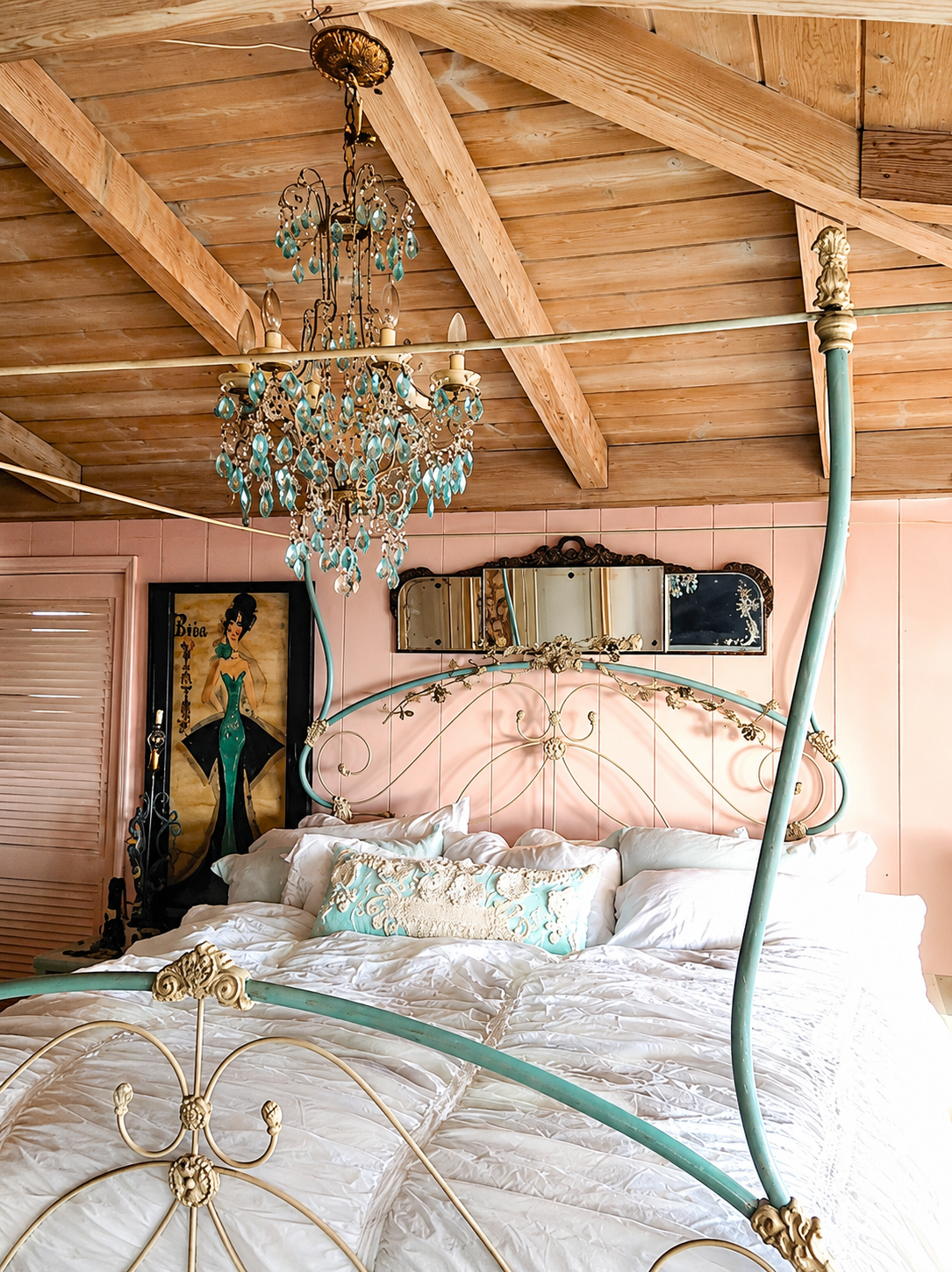
One of the questions we are frequently asked at Cathouse Antique Iron Beds is, “What color should I paint my antique iron bed?”
My answer is usually another question:
“What else is going into the room?”
Choosing a finish for an antique iron bed shouldn’t necessarily begin with the bed itself. It can begin with the wallpaper, a favorite fabric, an antique chandelier, a collection of old copper pots, a rug, the upholstery on a chair—or almost anything else that establishes the character and color palette of the room.
Over the years, clients and interior designers have sent us some wonderfully unexpected things and asked us to coordinate an antique iron bed finish with them. We’ve worked from wallpaper samples, fabric swatches, photographs of chandeliers, decorative accessories and even collections of antique copper cookware.
And that’s one of the advantages of working with an original antique iron bed: the finish can become part of the design of the room without changing the historical character of the bed itself.
The Bed Doesn’t Have to Determine the Room
There is a tendency when decorating around a large piece of furniture to assume everything else in the room has to coordinate with it.
With antique iron beds, we often approach things from exactly the opposite direction.
Find the antique iron bed you love because of its design, proportions, castings and history. Then determine what finish will allow that bed to live naturally in the room you’re creating.
An original antique iron bed might have wonderful Victorian castings, graceful curves and beautifully proportioned tubing, but perhaps its existing finish doesn’t work with your room.
That doesn’t mean it’s the wrong bed.
It may simply be the wrong finish.
That’s an important distinction.
We would never want to redesign a beautiful 130- or 150-year-old antique iron bed just to accommodate a current decorating scheme. But changing or modifying its finish can allow that same bed to work in an extraordinary variety of interiors.
Sometimes the Inspiration Comes From the Most Unexpected Place
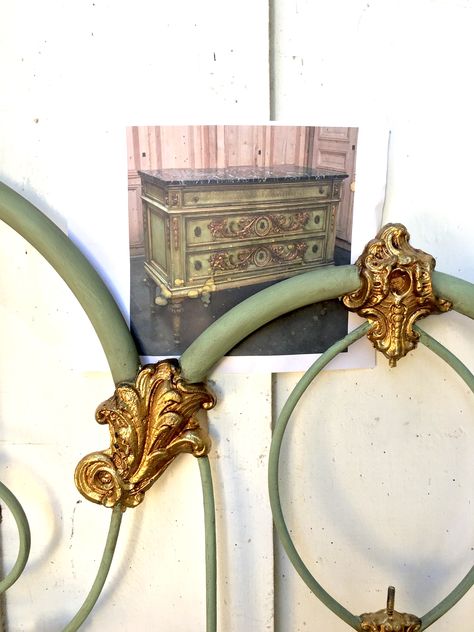
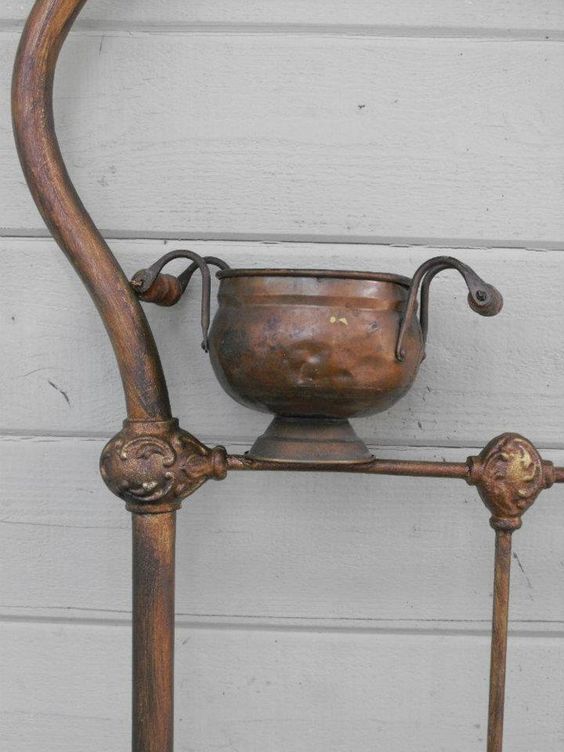 We’ve had clients send us photographs and samples of almost everything imaginable.
A chandelier may have an aged bronze or distressed gold finish that establishes the feeling for an entire bedroom.
Someone else may have a collection of antique copper pots with decades of naturally developed patina and want their iron bed to complement those warm copper and brown tones.
A designer may send us a small piece of wallpaper containing five or six colors and say:
“This is what we’re working around.”
Another client may send fabric being used for curtains, upholstery or bedding.
Those references tell us much more than simply requesting a “blue bed,” “green bed” or “white bed.”
There are hundreds of variations of any one color.
More importantly, the way a finish is aged can be just as important as the color itself.
Matching Doesn’t Always Mean Making It Identical
This is where things become interesting.
When we talk about coordinating the finish on an antique iron bed with something else in the room, we don’t necessarily mean creating an exact color match.
Sometimes an exact match is precisely what the room needs.
Other times it isn’t.
If a room contains wallpaper with a muted sage green background, for example, painting the bed exactly the same shade could cause it to visually disappear into the wall.
Instead, we might use a related green that is slightly darker or lighter and then introduce a second color on the antique castings.
The bed coordinates with the wallpaper without becoming camouflaged by it.
The same principle applies to brass, copper, bronze and gold tones.
A room containing an aged brass chandelier doesn’t necessarily need an entirely gold bed. Highlighting selected castings in an aged gold or brass tone may be enough to visually connect the bed to the chandelier.
Coordination is usually more interesting than duplication.
Antique Iron Bed Castings Give Us Another Opportunity
One of the wonderful characteristics of many 19th-century antique iron beds is their cast-iron decoration.
Flowers, scrolls, leaves, ribbons, medallions and elaborate architectural castings were frequently incorporated into the designs.
Historically, manufacturers often highlighted these castings in contrasting colors.
There was a reason for that.
Why go to the expense and trouble of creating a beautiful detailed casting and then paint it exactly the same color as everything surrounding it?
Unfortunately, we frequently see antique iron beds that have been painted completely white—or black—and much of their original detail visually disappears.
A carefully selected contrasting color can bring those castings back to life.
A predominantly cream-colored bed might have softly aged gold castings. A pale blue bed might have ivory highlights. A dark bronze bed might incorporate subtle copper tones.
These aren’t attempts to modernize an antique.
Quite the opposite.
Used properly, contrasting finishes can actually help us rediscover details that were intended to be noticed when the bed was originally manufactured.
Wallpaper Can Be an Excellent Starting Point
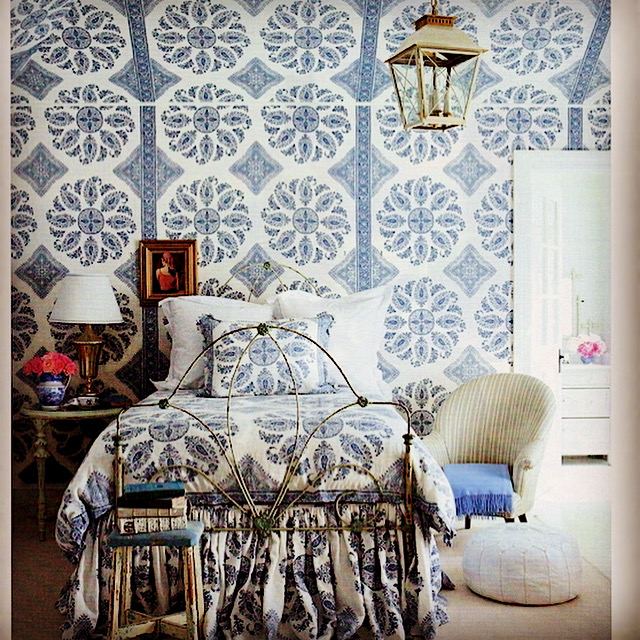
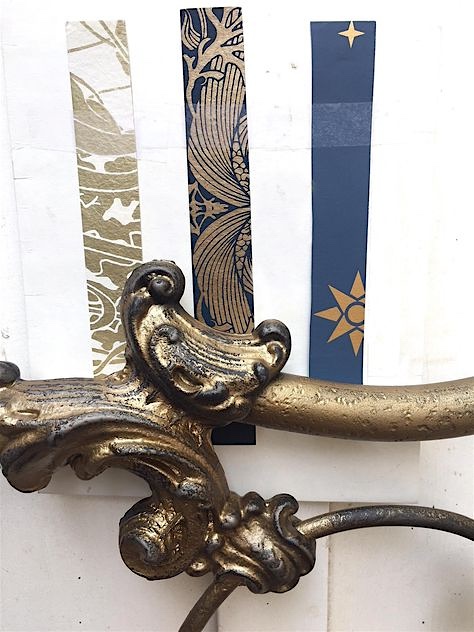 Wallpaper is particularly useful when establishing a custom antique iron bed finish because it often provides an entire palette rather than a single color.
Suppose the wallpaper contains muted blue, cream, pale green and touches of gold.
We might use one of those colors for the tubing, another for the castings and perhaps introduce subtle aging that relates to the overall warmth of the paper.
The result isn’t a bed that looks as though someone simply tried to “match the wallpaper.”
Instead, the antique iron bed looks as though it belongs in the room.
That’s the goal.
The best custom finish shouldn’t call attention to the fact that it was custom matched. It should simply look right.
Fabric Swatches Tell Us More Than Color
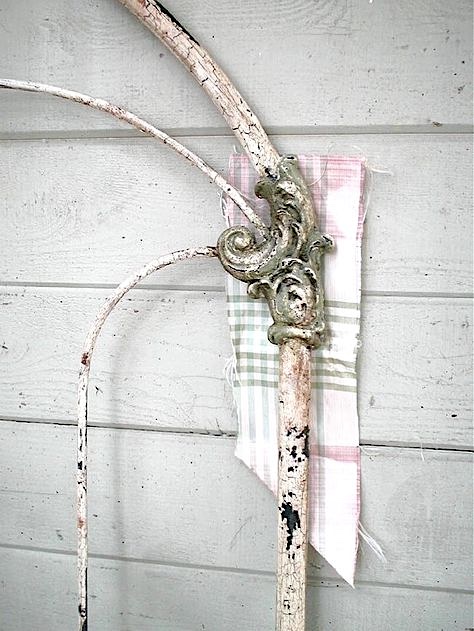
Fabric can provide another excellent source of inspiration.
A designer might send us upholstery fabric, curtain material or a piece of the bedding being used in the room.
Again, we’re looking beyond the obvious dominant color.
Is the fabric crisp and formal?
Soft and faded?
Heavily textured?
Does it look old even though it may be new?
Those characteristics can influence how we finish the bed.
A heavily distressed antique iron bed finish might look completely appropriate next to faded linen or vintage-inspired floral fabric, while the same finish could look out of place in a room built around very crisp, formal textiles.
The finish needs to relate not only to the color of the room, but also to its personality.
Sometimes Imperfection Is the Perfect Finish
Sierra Exif JPEG
This is especially important with antique iron beds.
New furniture generally tries to look new.
Antiques don’t have to.
In fact, one of the biggest mistakes that can be made with an original antique iron bed is refinishing it so perfectly that it loses every indication of its age.
Chips, wear, subtle variations in color and layers of old paint can contribute enormously to the character of an antique bed.
When we’re creating a custom distressed finish, the objective isn’t simply to damage new paint so it looks old.
A convincing aged finish needs to make sense.
Where would the bed naturally have worn?
Which underlying colors might have appeared?
How much aging is appropriate for this particular design and the room it’s going into?
There’s a considerable difference between something that looks old and something that looks as though someone spent an afternoon trying to make it look old.
The Finish Should Complement the Antique—not Overpower It
This is probably the most important rule.
The bed came first.
In many cases, it came 125 to 150 years before the room we’re decorating today.
Our job isn’t to erase that history.
It’s to find a way for that history to coexist with today’s interior.
That’s why we believe the design and integrity of the original antique iron bed should always remain the priority.
Color can change.
A finish can change.
The surroundings can certainly change.
But the wonderful old castings, heavy tubing, proportions and craftsmanship that survived all those generations should remain the star of the show.
Antique Iron Beds Work in Far More Interiors Than People Expect
People sometimes associate antique iron beds exclusively with Victorian bedrooms, country cottages or traditional interiors.
They certainly work beautifully in all of those environments.
But we’ve also seen them used extremely successfully in contemporary rooms, sophisticated city apartments, ranch homes, beach houses, mountain homes and highly eclectic interiors.
Often, the finish is what creates the bridge between the antique bed and its new surroundings.
A 19th-century bed in its original chipped paint can provide wonderful contrast in an otherwise polished contemporary room.
That same antique iron bed in a sophisticated custom finish can become surprisingly elegant.
And a carefully distressed finish can make it feel as though the bed has occupied a country house for generations.
The antique doesn’t have to match the age of the room. It simply has to belong there.
Start With the Bed You Love
After more than 50 years of working with antique iron beds, I’ve learned that people sometimes pass on a wonderful bed because they’re concentrating too much on its current color.
That’s unfortunate.
Paint is temporary.
Great design isn’t.
If you find an antique iron bed with extraordinary castings, wonderful proportions and a design that speaks to you, don’t automatically reject it because it’s green and your room is blue.
Look at the bed for what it can become.
Send us the wallpaper.
Send us the fabric.
Send us a photograph of the chandelier.
Send us the copper pot.
We’ve probably been asked to match something stranger.
The important thing is finding a finish that allows an original antique iron bed to become part of your room while still respecting what made the bed special in the first place.
At Cathouse Antique Iron Beds, that’s always our objective.
We aren’t trying to make 150-year-old beds look new.
We’re trying to make them look as though they’ve always belonged exactly where they are.
Cathouse Antique Iron Beds
Original antique iron beds, custom restoration, period finishes and size conversions
CathouseBeds.com