The Hidden Reason Many Elaborate Antique Iron Beds Didn’t Sell
When people admire a magnificent Victorian antique iron bed with towering castings, heavy iron tubing, and dozens of hand-crafted decorative details, they usually assume one thing:
“They just don’t make them like this anymore.”
That’s certainly true.
But very few people realize there was another reason these spectacular beds became so uncommon.
It wasn’t simply because they cost more.
It was because they weighed more.
That one factor—weight—quietly influenced the entire antique iron bed industry during the late 1800s and early 1900s. It affected manufacturing costs, shipping expenses, retail pricing, and ultimately how many of these magnificent beds were ever produced.
Today, that hidden piece of history is one of the reasons collectors treasure the finest examples of original antique iron beds.
 Bigger, Better… and Much Heavier
Walk through any collection of authentic antique iron beds and you’ll quickly notice something.
Some beds feel almost delicate.
Others feel as though they were built to last several lifetimes.
The difference isn’t your imagination.
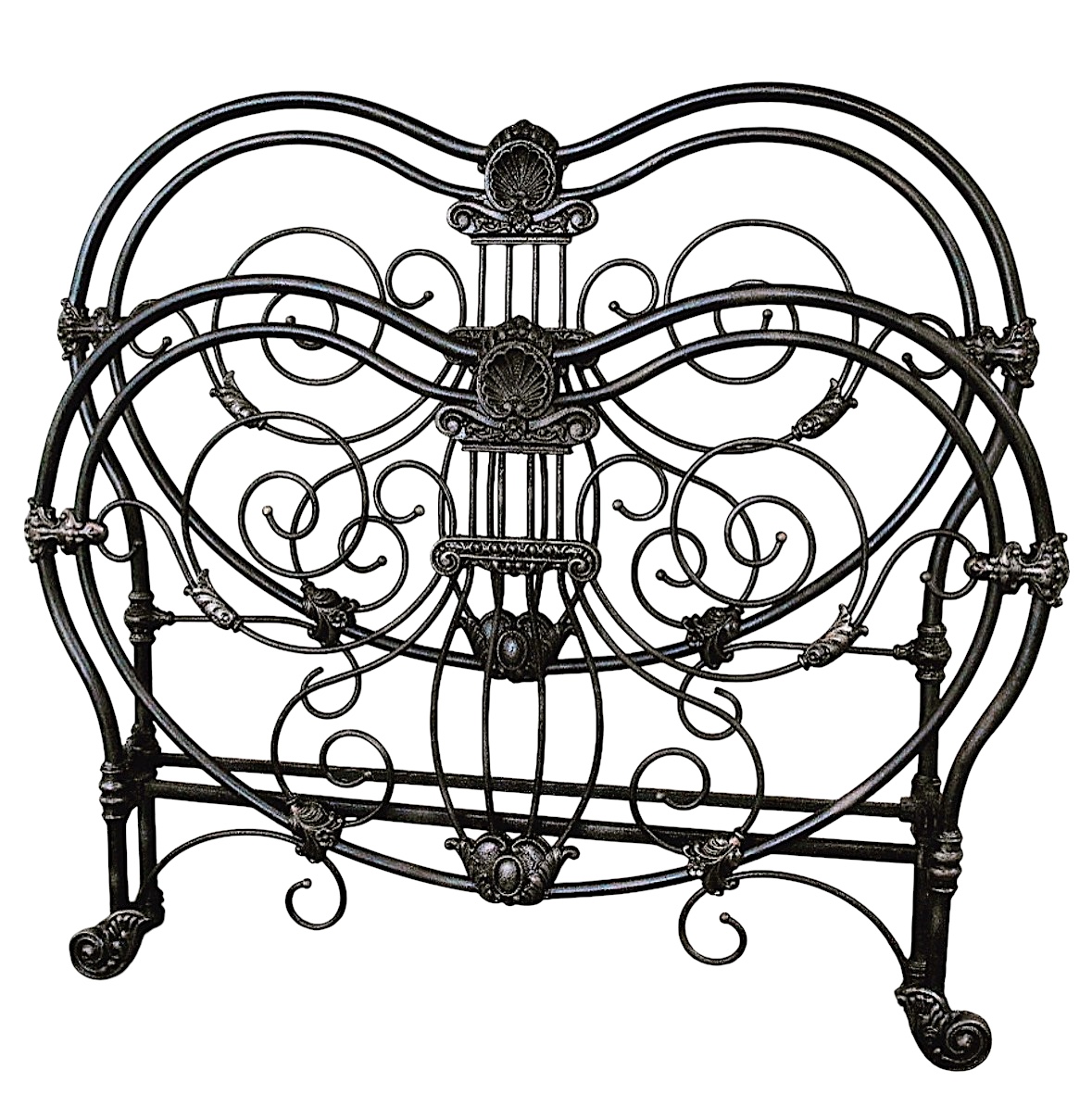
Victorian manufacturers often used thick-wall iron tubing, oversized decorative castings, massive corner posts, and dozens of individual rods and cross members. Every decorative flourish required additional iron, additional labor, and additional weight.
A simple, understated bed might have relatively few components.
A highly decorative Victorian masterpiece might have hundreds.
Every casting…
Every rod…
Every decorative scroll…
Every heavy post…
Added pounds.
The result was a bed that looked magnificent—but was considerably more difficult and expensive to manufacture, transport, and deliver.
Weight Meant Money
Today we think about shipping charges when ordering furniture online.
The same basic principle existed well over a century ago.
The heavier an item became, the more expensive it was to move.
Railroads, freight companies, delivery wagons, warehouse workers, and retailers all had to handle these beds.
A heavier bed meant:
- Higher freight costs
- More labor to load and unload
- Greater delivery expense
- More difficult installation
- Increased overall selling price
Those costs added up quickly.
Manufacturers understood this perfectly.
While they loved producing spectacular Victorian designs that showcased their foundry’s craftsmanship, they also had to build products that dealers could actually sell.
Sometimes, lighter simply made better business sense.
The Difference Can Be Astonishing
Over the years I’ve handled thousands of original antique iron beds.
The weight differences can be remarkable.
Some headboards weigh as little as twenty pounds.
Others weigh well over one hundred pounds.
That’s not a small difference.
It’s enormous.
A headboard weighing 120 pounds represents an entirely different level of construction than one weighing only 20 pounds.
The heavier examples typically feature:
• Thick-wall iron tubing
• Large decorative castings
• Multiple vertical rods
• Heavy corner posts
• More elaborate craftsmanship
• Greater structural strength
When you lift one of these extraordinary antique iron beds, you immediately understand why they survived for well over a century.
They’re built like bridges.
 More Iron. More Craftsmanship.
Weight wasn’t simply about using more metal.
It also reflected the amount of craftsmanship invested in each bed.
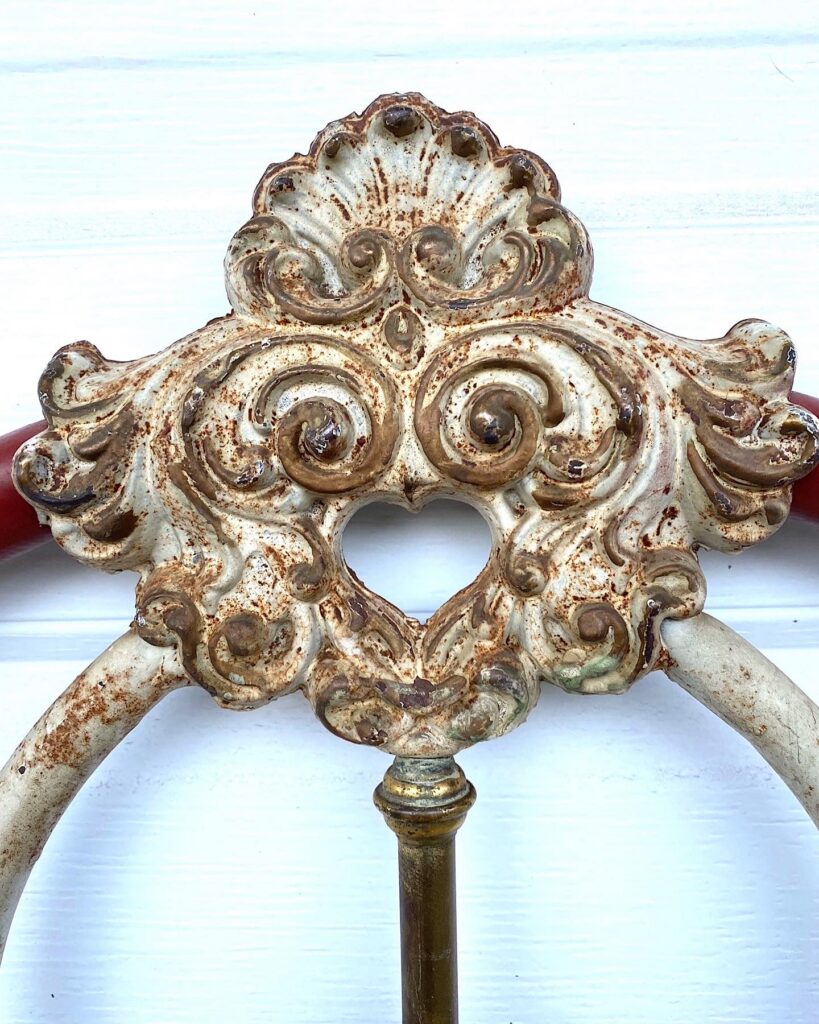
During the Victorian era, every decorative casting had to be designed, molded, poured, cleaned, finished, drilled, fitted, and assembled by skilled craftsmen.
Every additional decorative feature represented another step in production.
Unlike modern furniture built on high-speed assembly lines, these antique iron beds required hands-on craftsmanship from beginning to end.
The more elaborate the design became, the more time skilled workers invested.
More craftsmanship usually meant more iron.
More iron meant more weight.
Everything was connected.
Why Manufacturers Began Simplifying Designs
As the nineteenth century gave way to the early twentieth century, manufacturers recognized changing economics.
Consumers still appreciated beautiful furniture.
But affordability mattered.
Shipping mattered.
Efficiency mattered.
Many companies gradually introduced simpler iron beds using:
- Thinner tubing
- Smaller castings
- Fewer decorative components
- Cleaner, less ornate styling
- Reduced overall weight
These beds were easier to manufacture.
Less expensive to transport.
More affordable for retailers.
More affordable for families.
From a business standpoint, the strategy made perfect sense.
From today’s collector’s standpoint…
It unintentionally made the earlier heavyweight Victorian masterpieces much rarer.
Scarcity Creates Desirability
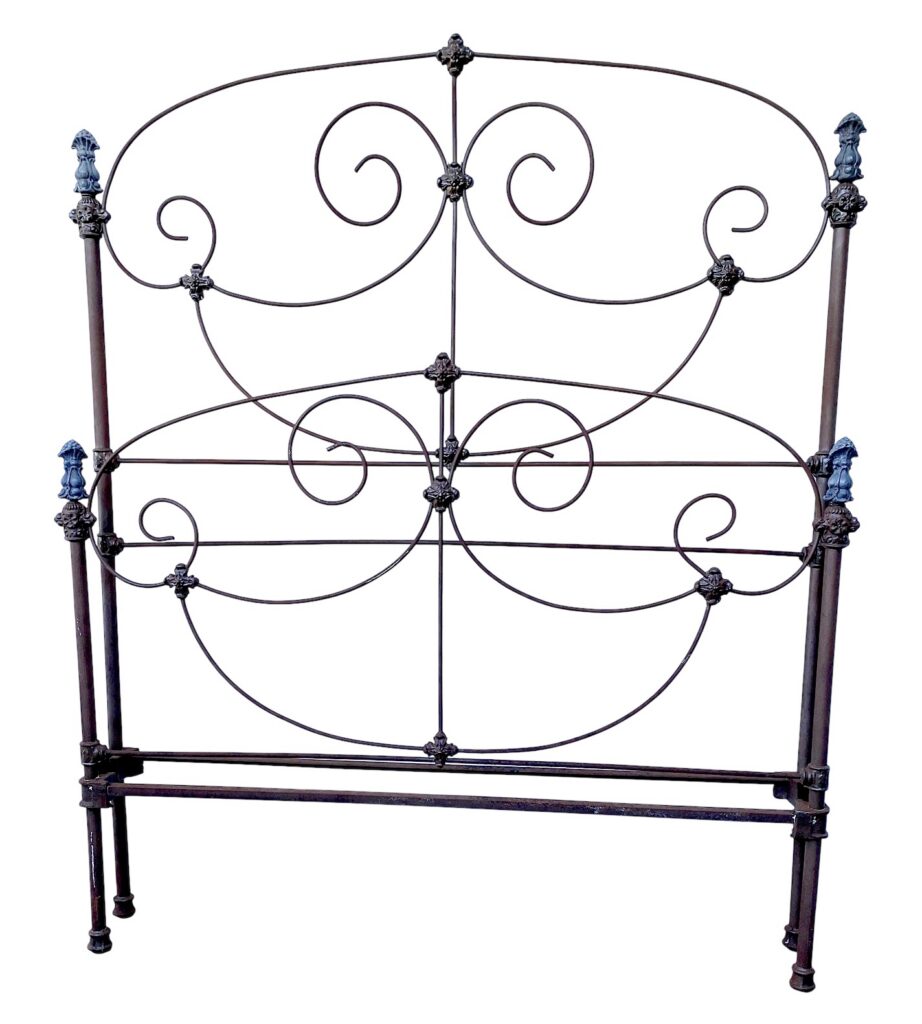 Here’s something every collector understands.
The fewer examples that survive…
The more desirable they become.
Since fewer of these elaborate heavyweight antique iron beds were manufactured in the first place, naturally fewer remain today.
Many disappeared over the decades through neglect, demolition, scrap drives, or simple wear and tear.
Every year the available supply becomes a little smaller.
Yet appreciation for authentic antique iron beds continues to grow.
Interior designers seek them.
Historic homeowners seek them.
Collectors seek them.
People furnishing luxury homes seek them.
The supply continues shrinking while interest continues increasing.
That is exactly what creates rarity.
Heavy Doesn’t Always Mean Better…
But It Often Means More Exceptional
It’s important to understand that weight alone doesn’t determine quality.
There are many wonderful antique iron beds that are relatively light.
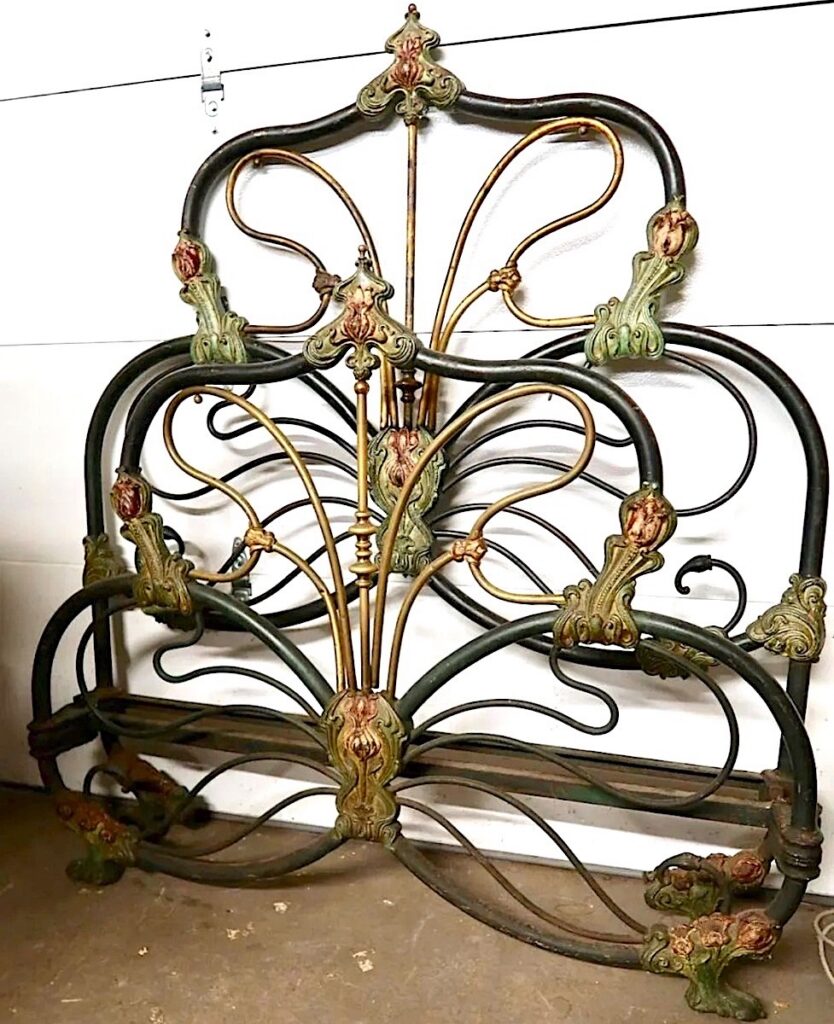
Some Art Nouveau designs, for example, intentionally emphasized graceful flowing lines rather than massive construction.
Some country iron beds were purposely simple.
Some painted farmhouse beds were designed for practicality rather than grandeur.
All have their place.
But when you encounter an exceptionally heavy Victorian iron bed featuring thick-wall tubing, oversized castings, dramatic proportions, and intricate detailing, you’re usually looking at a bed that represented the very best its manufacturer could produce.
These were often showroom pieces.
Beds designed to impress.
Beds that demonstrated what skilled craftsmen could accomplish when cost wasn’t the primary concern.
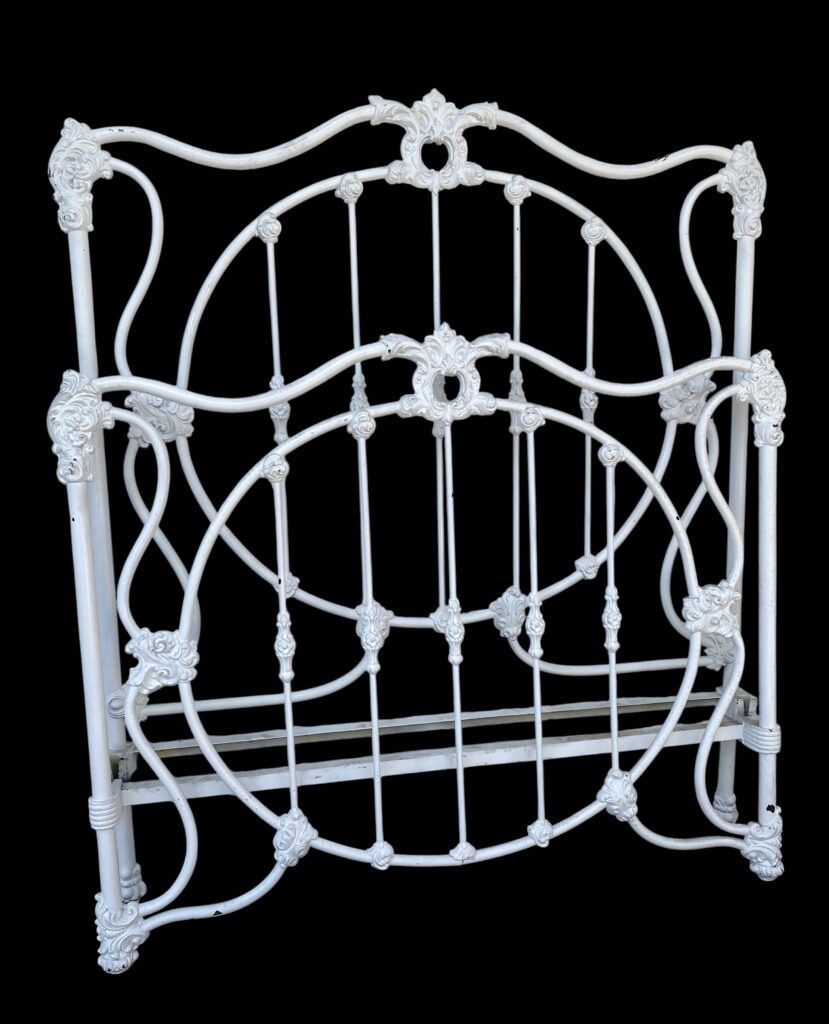
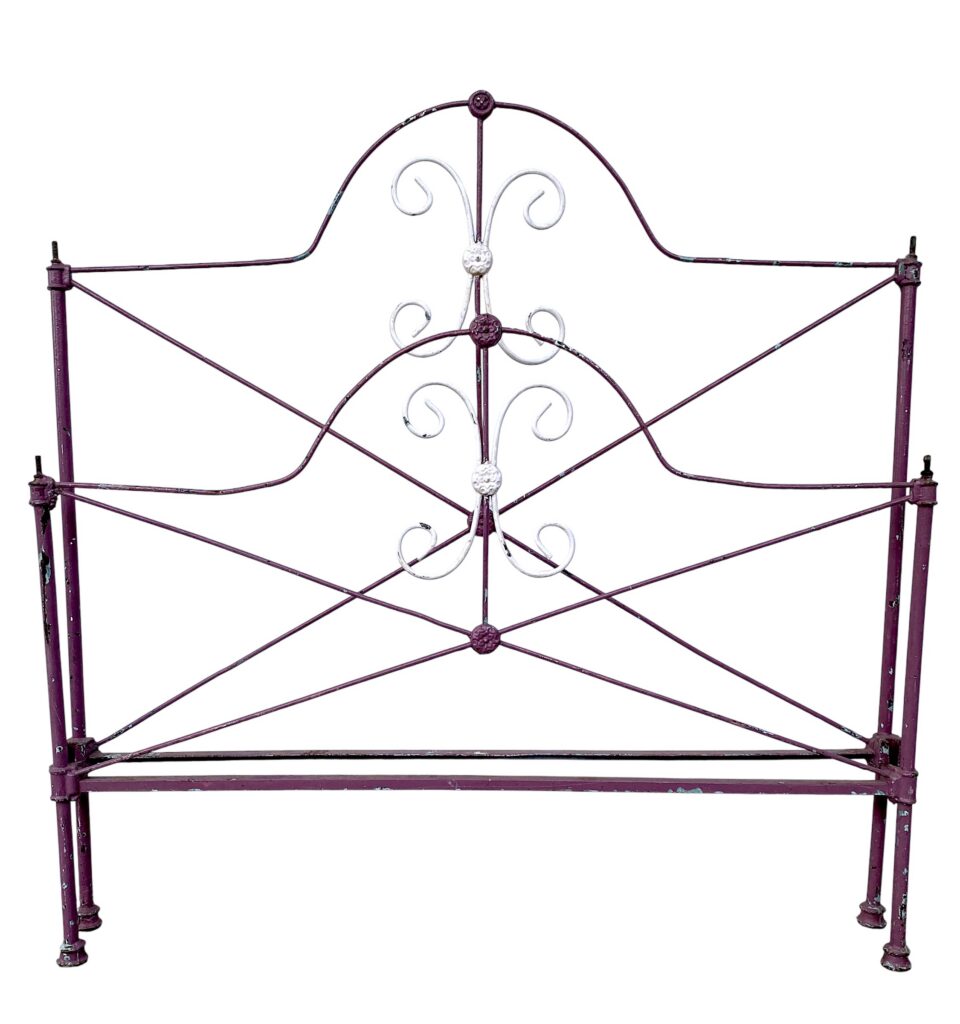
Compare Them Side by Side One of the easiest ways to appreciate this difference is by placing two beds next to each other.
 On one side…
A lighter, more economical iron bed with thinner tubing and minimal decoration.
On the other…
A grand Victorian antique iron bed with heavy castings, massive posts, and intricate detailing.
The comparison tells the story instantly.
One was designed to be affordable and practical.
The other was designed to become the centerpiece of an entire bedroom.
Photographs can illustrate this beautifully.
But seeing them in person makes the contrast unforgettable.
Why Collectors Value These Beds Today
Today’s buyers often ask what gives certain antique iron beds greater value than others.
The answer is never one single feature.
Condition matters.
Originality matters.
Design matters.
Craftsmanship matters.
Rarity matters.
But substantial construction plays an important role as well.
Those magnificent heavyweight Victorian beds represent an era when manufacturers competed by showcasing artistry rather than minimizing production costs.
Every decorative casting reminds us of the foundry workers who poured molten iron into sand molds.
Every thick iron post reflects confidence that furniture should last for generations.
Every extra pound tells part of the story.
A Legacy Built to Last
Perhaps that’s why these extraordinary antique iron beds continue to fascinate collectors over one hundred years later.
They weren’t built with planned obsolescence in mind.
They weren’t designed to last ten years.
They were built to become family heirlooms.
Many already have.
As fewer of these remarkable beds remain available, their historical importance only grows.
Their weight, once considered a drawback because it increased shipping costs and made delivery more difficult, has become one of the characteristics collectors admire most.
It represents substance.
Durability.
Exceptional craftsmanship.
And a level of manufacturing that is unlikely ever to be repeated.
The Irony of History
The very feature that once made these magnificent antique iron beds more difficult to sell has become one of the reasons they are so highly prized today.
Their impressive weight reflected superior materials, remarkable craftsmanship, and uncompromising construction.
Because fewer were produced, fewer survive.
Because fewer survive, they have become increasingly desirable among collectors, designers, and homeowners searching for authentic pieces with history and character.
When you stand beside one of these remarkable antique iron beds, you’re looking at far more than bedroom furniture.
You’re looking at a masterpiece of American craftsmanship—a piece whose extraordinary weight once challenged freight companies but now reminds us why the finest iron beds continue to stand apart from everything that came after.
At Cathouse Antique Iron Beds, we’ve had the privilege of restoring and preserving many of these remarkable originals. Every heavyweight Victorian bed that passes through our workshop tells the same story: true craftsmanship was never measured by convenience. Sometimes it was measured in pounds.