If you’ve followed Cathouse Beds for any length of time, you’ve probably seen one phrase appear time and time again:
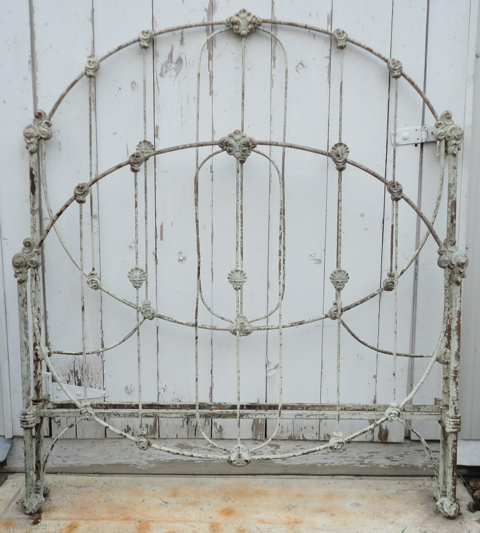 “Why Erase History?”
It’s a simple question, but one that goes to the heart of how I believe genuine antique iron beds should be restored.
One of the most common requests I receive from customers is whether an antique bed can be powder coated. For many years, powder coating became the fashionable way to “restore” antique iron beds. It was marketed as being durable, maintenance-free and capable of producing a flawless finish.
On the surface, that sounds ideal.
However, when it comes to authentic nineteenth-century and early twentieth-century iron bedsteads, powder coating is often one of the most destructive refinishing methods available—not because it damages the metal itself, but because it permanently removes much of the bed’s original history and character.
Restoration or Reproduction?
There is an important difference between restoring an antique and making it look brand new.
When you buy a genuine antique iron bed, you’re purchasing more than a piece of furniture. You’re buying craftsmanship, history, and a tangible connection to another era. Every slight imperfection, every gentle wear mark, every layer of old paint tells part of that story.
Unfortunately, powder coating begins by removing all of it.
Why Sandblasting Is Required
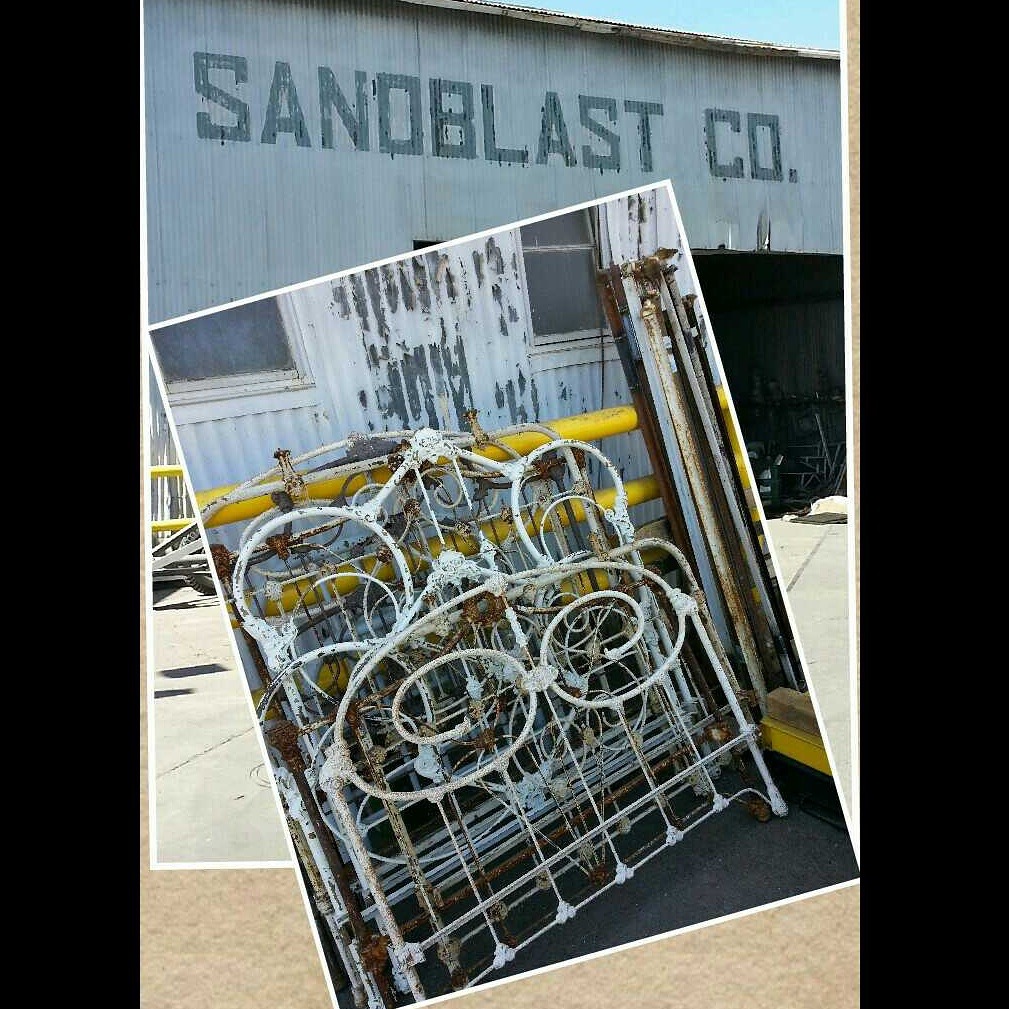 For powder coating to work properly, the entire bed must first be stripped back to completely bare metal.
This is normally achieved through aggressive sandblasting (or modern abrasive blasting).
The reason is straightforward.
Powder coating is applied as a dry electrostatically charged powder before being baked in an oven at high temperatures. Any traces of old paint, rust, grease, previous finishes or contamination remaining on the metal can interfere with the coating and create imperfections in the final finish.
To avoid these problems, every trace of the original finish has to be removed.
And that’s where the real loss occurs.
Over a Century of History Disappears
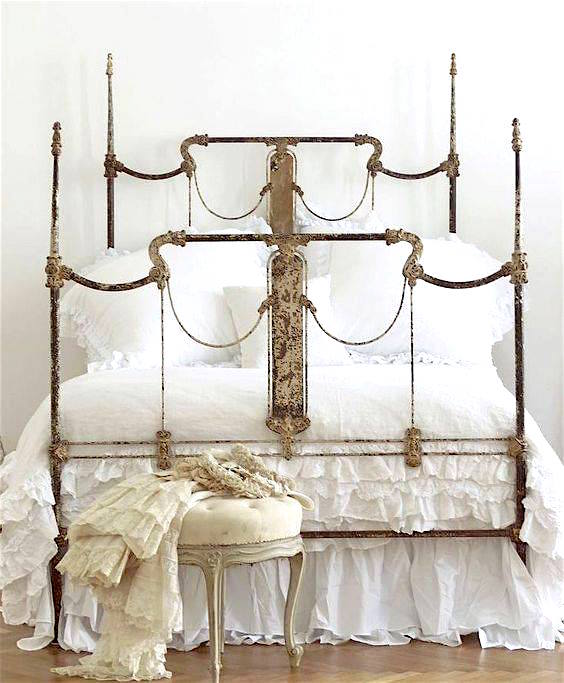 Many Victorian and Edwardian iron beds have survived for well over 100 years.
During that time they have developed a wonderful patina that simply cannot be recreated artificially.
Some have been repainted several times during their lives.
Others still retain surprising amounts of their original decorative finish.
Many show the gentle evidence of generations of family use.
Once the frame has been blasted back to bare iron, every one of those historic layers has gone forever.
There is no way of putting them back.
As restorers, we have to ask ourselves:
Are we preserving history—or erasing it?
Antique Character Isn’t a Defect
One of the biggest misconceptions in furniture restoration is that old automatically means damaged.
An antique bed shouldn’t necessarily look factory fresh.
It should look authentic.
Collectors of antique furniture rarely expect perfection. In fact, originality is often one of the qualities they value most.
Small casting marks.
Gentle wear around joints.
Subtle variations in the paint.
Soft ageing.
These are not faults.
They’re evidence of authenticity.
When every surface becomes perfectly smooth beneath an even plastic-like coating, much of that individuality disappears.
The Powder-Coated Problem
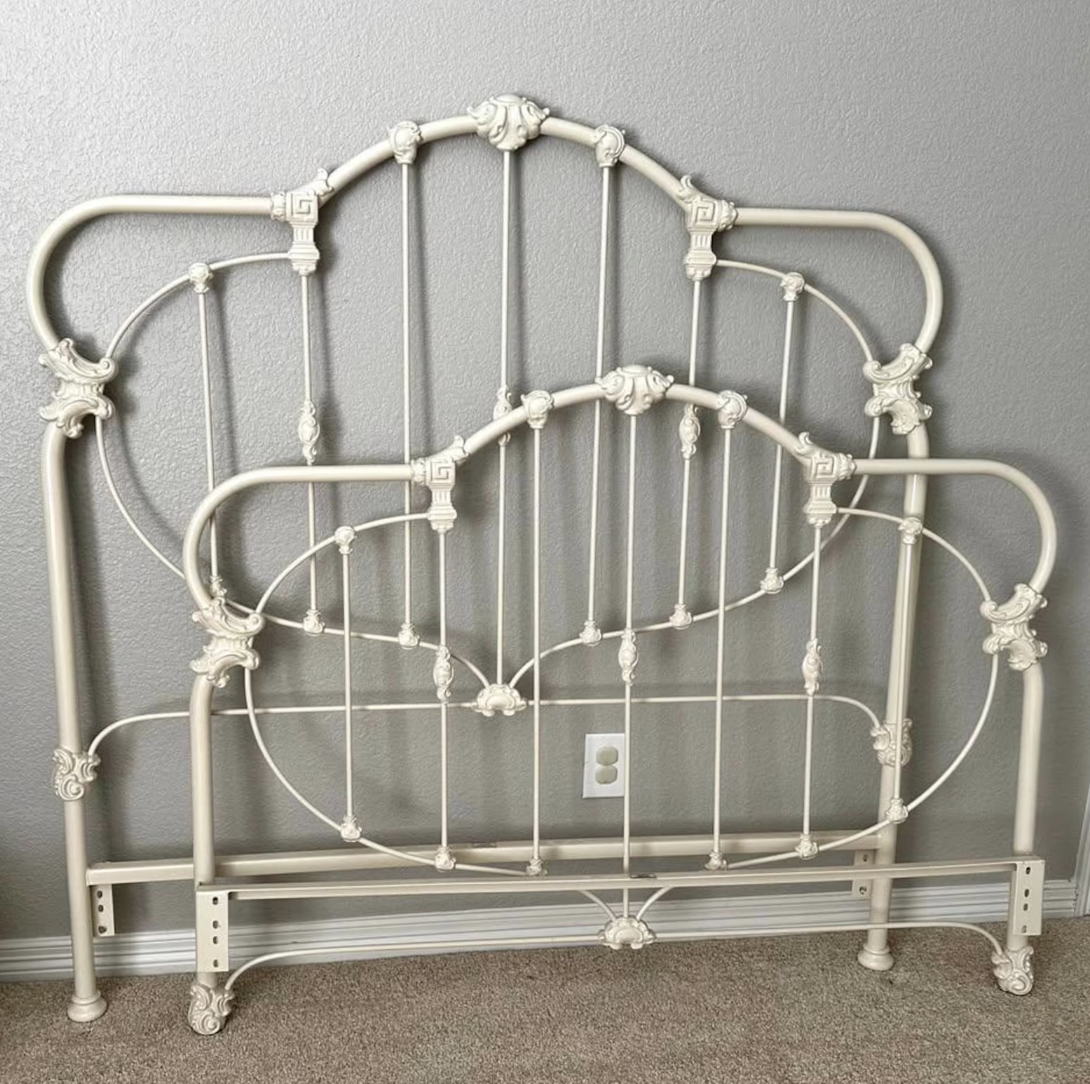
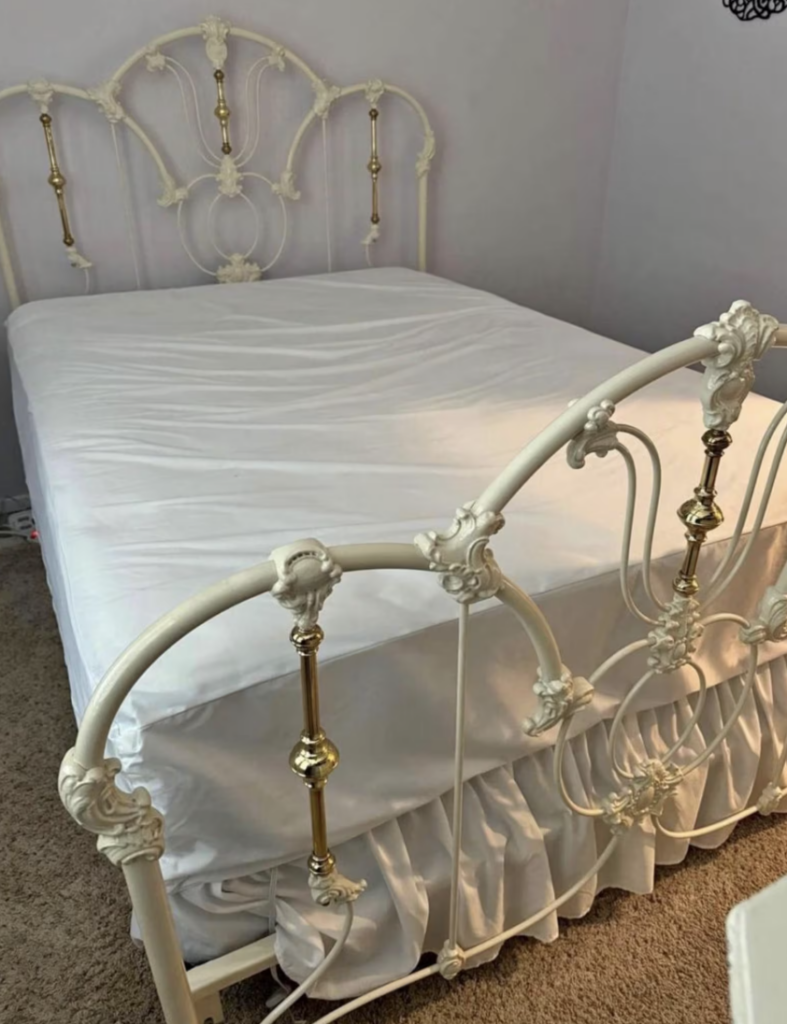 One of the greatest ironies is that after powder coating, an original antique iron bed often becomes almost indistinguishable from a modern reproduction.
The crisp castings remain.
The elegant design survives.
But visually, the bed can lose the warmth and character that immediately tells an experienced eye it is genuinely Victorian.
Instead, it takes on the appearance of something recently manufactured.
This raises an obvious question.
Why spend time searching for an original antique iron bed only to make it resemble a brand-new reproduction?
The unique character that attracted you to the bed in the first place has largely disappeared beneath a modern industrial finish.
Not Every Bed Is the Same
Of course, every restoration should begin by assessing the condition of the individual bed.
Some iron bedsteads have unfortunately spent decades in damp outbuildings, barns or garages.
Others have suffered severe corrosion.
Occasionally the rust is so extensive that abrasive blasting becomes unavoidable simply to stabilise the metal and allow proper repairs to be carried out.
In these situations, preserving the bed itself must come first.
Removing rust is sometimes essential.
Saving the structure is more important than saving a failing finish.
But even when blasting has become necessary, there is still a choice to be made about the final appearance.
Recreating the Spirit of the Original
One of the aspects of antique iron beds that fascinates me most is the enormous variety of original finishes that manufacturers produced during the nineteenth century.
There wasn’t just one “Victorian black.”
Far from it.
Manufacturers used decorative japanned finishes, hand-lined details, faux bronzes, rich creams, deep greens, burgundies, olive tones, highlighted mouldings, stippling, marbling, gilt decoration and countless combinations that varied from one maker to another.
Thousands of beautiful original finishes once existed.
Rather than covering an antique bed in a uniform modern coating, I believe restoration should respect this heritage.
When an original finish has been lost, our aim should be to recreate the look and feel of period craftsmanship—not disguise the bed beneath a finish that immediately signals twenty-first century manufacturing.
Authenticity Matters
 Collectors have long understood that originality affects desirability.
Whether we’re talking about classic cars, antique clocks, vintage watches or period furniture, retaining original character generally adds interest.
Iron beds should be no different.
While a pristine powder-coated finish may initially appear attractive, it often removes many of the subtle visual clues that distinguish a genuine antique from a modern copy.
Authenticity isn’t always perfect.
And perfection isn’t always authentic.
A Restoration Philosophy
At Cathouse Beds, restoration has never simply been about making something look new.
It’s about respecting the craftspeople who made these beds over a century ago.
It’s about preserving their work wherever possible.
It’s about allowing the next owner to appreciate not only the design, but also the remarkable journey that each bed has taken through history.
Every bed carries its own story.
Every scratch.
Every layer.
Every mark.
These are reminders that this isn’t just another piece of furniture—it has lived through generations of homes and families.
Whenever possible, I believe that story deserves to remain visible.
Why Erase History?
That phrase has become something of a motto for Cathouse Beds because it captures exactly what restoration should strive to achieve.
Not replacement.
Not reinvention.
Preservation.
There will always be situations where extensive restoration is unavoidable.
Some beds genuinely need major intervention simply to survive another hundred years.
But whenever there is an opportunity to preserve original character rather than remove it, I believe that is the better path.
An antique iron bed has already proven its quality by surviving for over a century.
Its age isn’t something to hide.
It’s something to celebrate.
The goal of restoration should never be to convince people that an antique is brand new.
The goal should be to honour its history, respect its craftsmanship, and ensure that future generations can appreciate the character that only time can create.
Because once history has been sandblasted away…
it can never be put back.