
For decades, restoring an antique iron bed followed a fairly predictable path. The bed would be completely stripped by sandblasting, every layer of old paint removed, every mark of its past erased, before being refinished to look almost factory new.
It was considered the gold standard of restoration.
Today, however, we’re seeing a noticeable shift in the way people think about antique iron beds. More and more of our customers are choosing a completely different approach—one that celebrates age rather than hides it.
Instead of asking us to remove every trace of the bed’s history, they’re asking us to preserve it.
At Cathouse Beds, one phrase has become something of a motto:
“Why erase history?”
It’s a simple question, but one that reflects a much broader change in the world of antiques and interior design.
 A Growing Appreciation for Authenticity
For many years, perfection was the goal. Antique furniture was stripped, polished, painted and restored until it looked almost new again.
But tastes evolve.
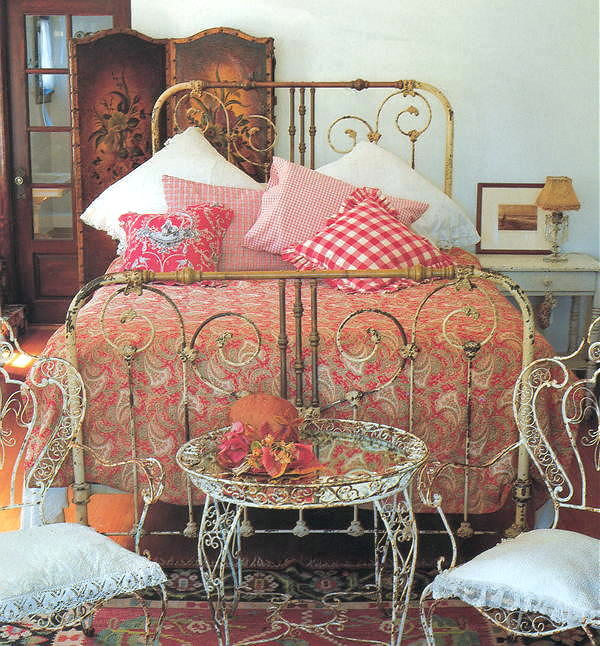
Today’s collectors, interior designers and homeowners increasingly appreciate authenticity over perfection. They understand that every chip, every worn edge and every faded layer of paint tells part of the story.
An antique iron bed that has quietly survived for well over a century carries with it evidence of the homes it has lived in, the families it has belonged to and the countless nights it has provided comfort.
Those imperfections aren’t flaws.
They’re history.
Every Layer Has a Story
One of the fascinating things about antique iron beds is that many have been painted several times during their lives.
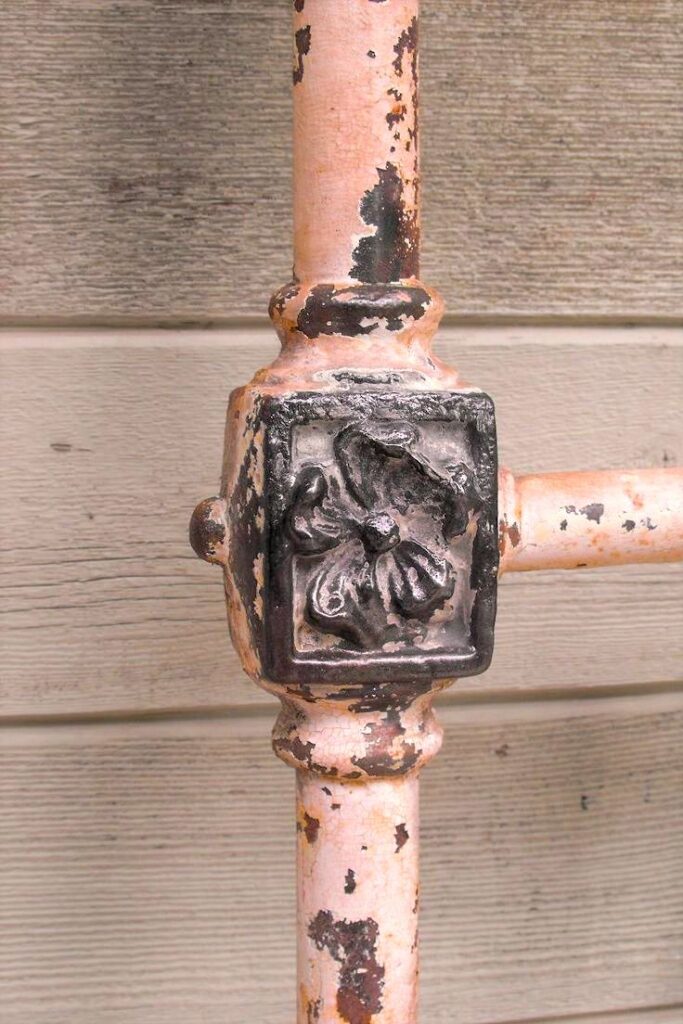
As we carefully remove loose and flaking paint with wire brushes, we often uncover glimpses of earlier colours hidden beneath more recent finishes.
Cream beneath green.
Black beneath cream.
Perhaps an old Victorian colour scheme beneath a twentieth-century repaint.
These layers are like chapters in the bed’s life. Each owner has left their mark, intentionally or otherwise.
Completely sandblasting the frame removes all of that forever.
Once it’s gone, it can never be recreated.
 The Beauty of Timeworn Finishes
Not every antique bed has pristine paintwork.
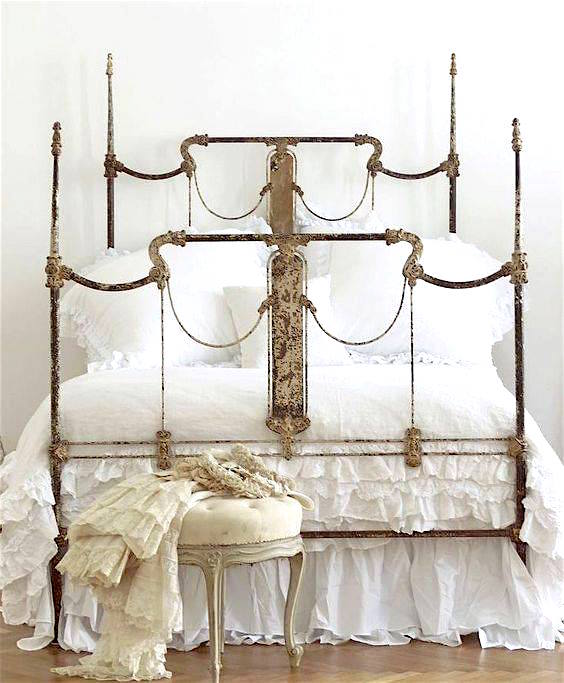
Some have areas where the paint has weathered naturally over decades. Others display gentle rust staining, tiny chips or beautifully worn edges where generations have climbed in and out.
Rather than seeing these as defects, many people now see them as exactly what makes an antique special.
No modern paint technique can truly imitate a finish that has evolved naturally over 100 or even 150 years.
It’s honest.
It’s authentic.
And it’s completely unique.
A Gentle Alternative to Sandblasting
This doesn’t mean neglected beds are simply left untouched.
Far from it.
When a customer chooses to preserve the original finish, we still carry out careful conservation work.
Loose and flaking paint is gently removed using wire brushes and hand preparation.
Any unstable areas are cleaned back while preserving as much of the original surface as possible.
Once the frame is sound, we apply a clear protective sealant that locks in the remaining finish and helps protect it for years to come.
The result is a bed that still wears its age with pride while being perfectly suitable for everyday use.
It’s not about restoring something to look new.
It’s about preserving what has survived.
Why This Style Works So Well
The popularity of preserved finishes isn’t difficult to understand.
Interior design has become far more relaxed and personal than it once was.
People mix old with new.
Industrial with traditional.
Country house with contemporary.
An original antique iron bed with its aged finish can sit beautifully in almost any setting.
Whether it’s a Victorian townhouse, a converted barn, a country cottage or a modern loft apartment, the natural patina adds warmth and character that freshly painted furniture simply can’t replicate.
Designers often speak about creating rooms with “soul.”
Original finishes bring exactly that.
 Conservation Rather Than Restoration
Perhaps the biggest change we’ve noticed is in the language people use.
Customers are less interested in complete restoration and far more interested in conservation.
The distinction is important.
Restoration often aims to return an object to a previous condition.
Conservation aims to stabilise and preserve what already exists.
Museums have worked this way for years, carefully protecting original finishes wherever possible rather than replacing them.
Increasingly, private collectors are adopting the same philosophy.
Not Every Bed Is Suitable
Of course, preserving an original finish isn’t the right option for every antique bed.
Some have suffered decades of neglect.
Others have severe corrosion or multiple failing paint layers that simply cannot be stabilised.
In those cases, sandblasting and refinishing remain the best long-term solution.
A professionally restored and repainted antique iron bed can be absolutely beautiful and will continue giving pleasure for generations.
Our job isn’t to push one approach over another.
It’s to help each customer choose the method that’s right for their particular bed.
Every bed is different.
Every history is different.
Every decision should be too.
Why We Love Seeing This Change
As restorers, we’ve had the privilege of working with antique iron beds from many different periods and makers.
No two are ever quite the same.
Some still retain remarkable original finishes despite being well over a century old.
Others have fascinating evidence of previous repairs, repainting or alterations that tell us something about the lives they’ve lived.
When customers ask us to preserve those features rather than remove them, it’s genuinely rewarding.
It feels less like changing history and more like protecting it.
There’s a certain honesty in allowing an antique to look its age.
After all, we don’t expect historic buildings to look brand new.
We admire weathered stone, aged timber and worn flagstones because they remind us of the passage of time.
Antique iron beds deserve that same respect.
The Emotional Connection
Perhaps that’s why this approach resonates with so many people.
An antique isn’t valuable simply because it’s old.
It’s valuable because it has survived.
Every scratch represents use.
Every worn corner suggests years of everyday life.
Every faded patch reminds us that these beds weren’t made to sit in museums—they were made to be lived in.
By preserving those signs of age, we’re preserving the human stories attached to them.
Looking Ahead
Will sandblasting disappear altogether?
Almost certainly not.
There will always be beds that require complete restoration, and there will always be customers who prefer a beautifully refinished frame in a traditional colour.
But we’re undoubtedly seeing a growing appreciation for originality.
More clients than ever are asking us to conserve rather than replace, preserve rather than repaint.
For us, that’s an exciting development.
It reflects a wider appreciation for craftsmanship, authenticity and the unique character that only genuine antiques possess.
At Cathouse Beds, we’re delighted to help customers explore both options. Whether a bed needs a complete restoration or simply careful conservation of its original finish, our aim is always the same—to ensure these wonderful pieces continue to be enjoyed for generations to come.
Because sometimes the most beautiful finish isn’t the newest one.
It’s the one that has quietly stood the test of time.
And whenever we’re asked whether an antique iron bed really needs to be sandblasted, we’ll often smile and ask the same question we’ve been asking for years:
“Why erase history?”