One of the questions I’m asked more than almost any other is:
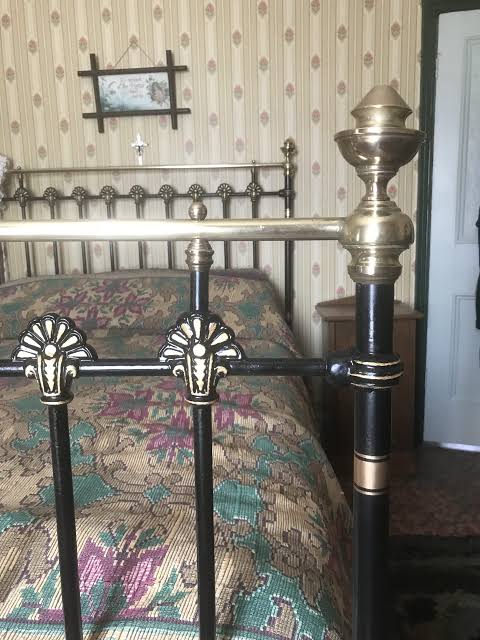 “How do I know whether my antique iron bed is British or American?”
It’s a great question, and while there isn’t one single feature that gives it away every time, there are several telltale signs that become obvious once you’ve handled enough antique beds.
Having restored antique iron beds for many years, I’ve had the privilege of taking apart, repairing, refinishing, and reassembling hundreds of beds from both England and the United States. After working with so many examples, you begin to notice differences that simply don’t show up in photographs or auction listings.
Most people look first at the decorative castings or the style of the bed. Those are certainly clues, but the real story is hidden inside the construction. The quality of the steel tubing, the weight of the castings, the hardware, and even the way the bed fits together often reveal far more than its appearance.
America’s Steel Industry Produced a Better Bed
To understand why American beds are generally different, it helps to look at history.
During the late nineteenth and early twentieth centuries, Pittsburgh, Pennsylvania, became the steel-making capital of the world. Mills such as Carnegie Steel produced some of the finest steel available anywhere. Furniture manufacturers benefited enormously from that quality.
The result was iron beds that were built using heavier tubing, stronger castings, and more precise manufacturing methods.
England had a long tradition of ironworking, and many beautiful Victorian beds were produced there. However, in my experience, British manufacturers generally used lighter materials than their American counterparts.
That’s not criticism—it’s simply one of the easiest differences to recognize after restoring both.
The Tubing Tells the Story
If I could inspect only one part of an antique bed to determine where it was made, I’d probably choose the tubing.
American beds almost always use heavier gauge tubing. The steel walls are thicker, the tubing feels more substantial in your hands, and the entire bed has an unmistakable sense of strength.
British beds, by comparison, usually use thinner tubing.
Many people don’t notice this until the beds are disassembled. Once the headboard and footboard are separated from the side rails, the difference becomes surprisingly obvious.
That extra thickness matters.
Over the course of a century, thinner tubing is more likely to dent, bend, or develop stress around the joints. The heavier American tubing simply holds up better after decades of everyday use.
Weight Is Often Your First Clue
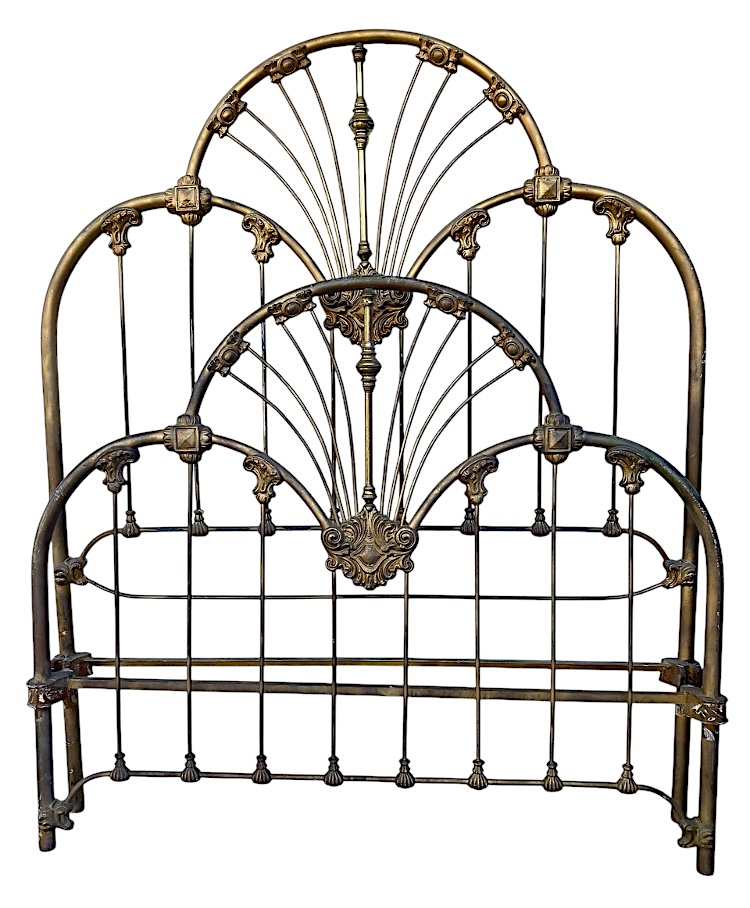 Customers are sometimes surprised when I tell them that not all iron beds weigh the same.
American beds are generally much heavier.
That additional weight doesn’t come from one single component. It comes from everything working together:
- thicker steel tubing
- heavier castings
- stronger corner connections
- more substantial side rails
- heavier hardware
When moving an American-made bed, you can feel the difference immediately.
I’ve often joked with customers that you don’t need a scale—you simply need to try carrying both beds up a flight of stairs!
The Difference Is in the Castings
Decorative castings are another area where American manufacturers often excelled.
When I strip decades of old paint from an American bed, I’m continually impressed by how crisp the original details remain. Flowers, scrolls, leaves, rosettes, and decorative flourishes usually have sharp definition and very few casting flaws.
The molten iron used by many American foundries was remarkably consistent.
British castings can certainly be attractive, and many are beautifully designed, but I often find the iron to be slightly softer and more porous. It’s not unusual to discover tiny air pockets, rougher surfaces, or small imperfections once the old finish has been removed.
Those differences aren’t always visible beneath layers of paint, but during restoration they become much easier to see.
Hardware That Was Built to Last
One thing restorers quickly appreciate is good hardware.
American manufacturers engineered many of their beds with incredibly robust side rail fasteners and locking systems. Even after one hundred years, the original hardware often still functions exactly as intended.
That’s a testament to the quality of both the materials and the machining.
British beds sometimes require more attention during restoration because the fasteners can show greater wear after decades of use.
Again, this isn’t true of every bed, but it’s a pattern I’ve observed repeatedly throughout my career.
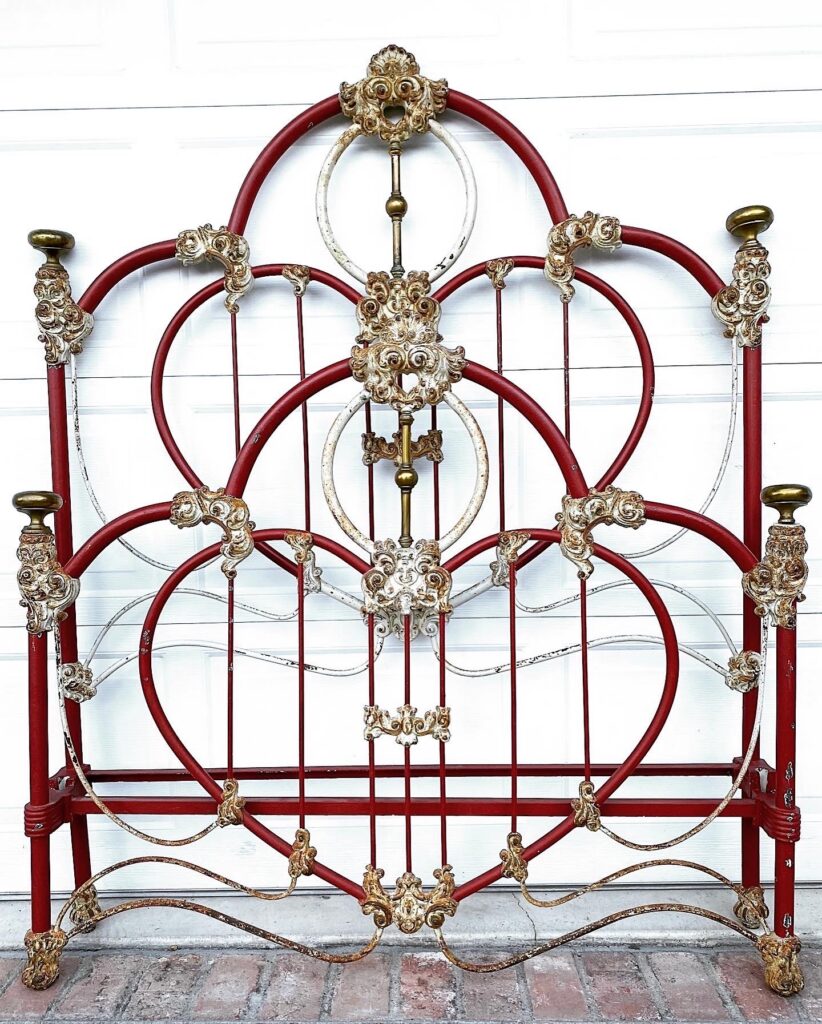 Victorian Doesn’t Always Mean British
One of the biggest misconceptions is that every ornate Victorian iron bed must have come from England.
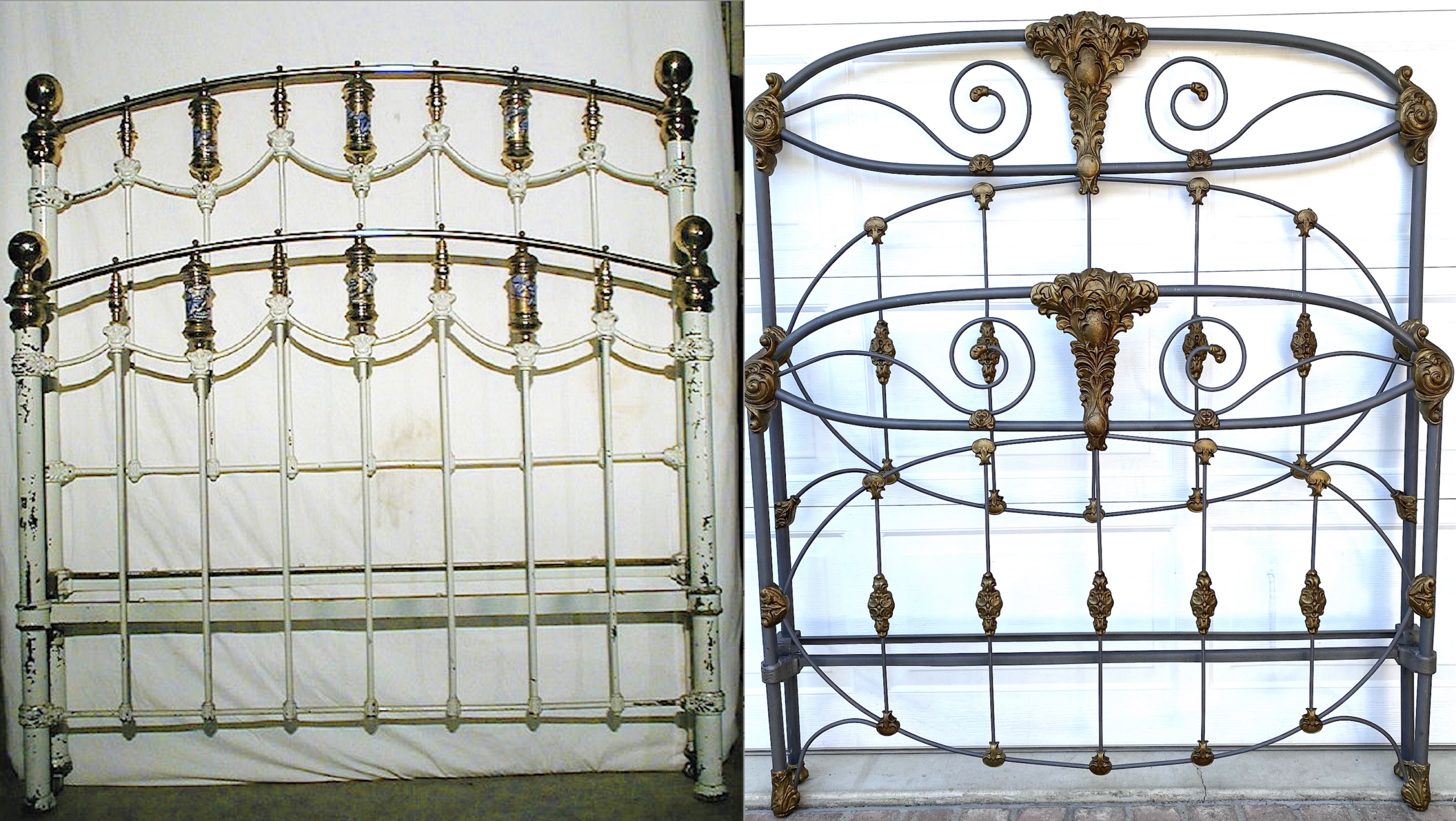
In reality, American manufacturers produced enormous numbers of Victorian beds featuring elaborate castings, brass accents, porcelain decorations, and beautifully detailed designs.
Many American beds were every bit as decorative as those produced in Britain.
That’s why appearance alone can be misleading.
Two beds may look nearly identical across a showroom, yet once they’re disassembled, the construction differences become immediately apparent.
Size Can Be Another Clue
Modern buyers are often surprised to learn that antique beds were built before mattress sizes became standardized.
British beds frequently measure differently from today’s mattresses and may require custom-sized bedding or careful modification.
American beds also varied, but many later examples are much closer to today’s Full and Twin dimensions, making restoration and everyday use somewhat easier.
Whenever I evaluate an antique bed, accurate measurements are among the very first things I record.
Restoration Reveals the Truth
One of the advantages of restoring antique beds is that you get to see everything hidden beneath generations of paint.
Old enamel, rust, repairs, and filler all disappear during restoration, exposing the original craftsmanship underneath.
This is often where the differences between British and American beds become unmistakable.
You begin to notice the quality of the welds.
The thickness of the tubing.
The density of the cast iron.
The precision of the machining.
The quality of the threads.
Those are details that most buyers never see, but they tell the real story of how the bed was built.
Does That Mean American Beds Are Better?
People occasionally ask me whether American beds are superior.
From a structural standpoint, I’d generally say yes.
The heavier steel, better castings, and overall construction often make American beds more durable and better suited for another generation—or two—of everyday use.
But that doesn’t diminish the appeal of British beds.
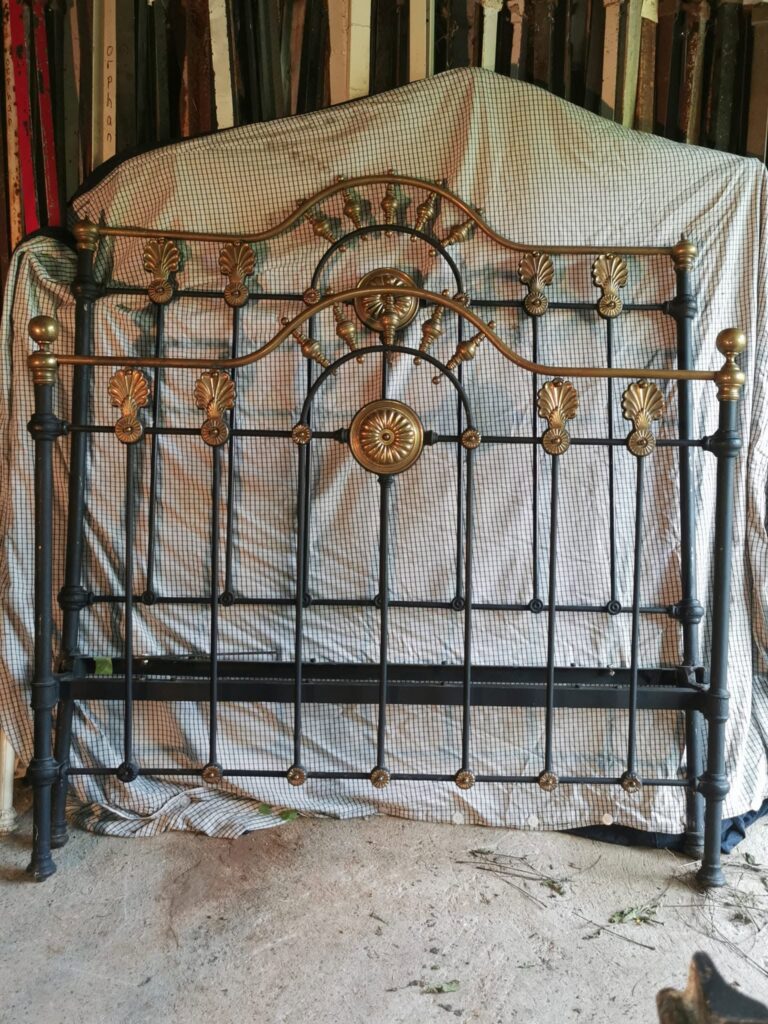
Some of the most elegant antique iron beds I’ve restored were made in England. Their proportions, graceful curves, and understated Victorian styling have a character that’s difficult to duplicate.
Beauty and engineering aren’t always the same thing.
Some collectors fall in love with delicate English designs.
Others appreciate the substantial feel of American craftsmanship.
Fortunately, there’s room to admire both.
 My Advice to Anyone Buying an Antique Iron Bed
If you’re shopping for an antique iron bed, don’t let appearance be your only guide.
Look beyond the paint.
Examine the tubing.
Study the castings.
Feel the weight.
Inspect the hardware.
Ask whether the bed has been professionally restored and whether replacement side rails or modern mattress supports have been fitted correctly.
A well-restored antique iron bed should be every bit as functional today as it was more than one hundred years ago.
Final Thoughts
Every antique iron bed carries its own history.
Some spent decades in country farmhouses. Others graced elegant Victorian homes or historic hotels. Each one has a story to tell.
After restoring hundreds of these remarkable beds, I’ve developed an enormous respect for the craftsmen who built them. While British manufacturers created many beautiful designs, American makers—benefiting from the exceptional steel produced in Pittsburgh and other industrial centers—often built beds that were stronger, heavier, and engineered to withstand generations of daily use.
Whether your bed was made in Birmingham, England, or Pittsburgh, Pennsylvania, preserving these pieces means preserving a small part of our shared history.
And that’s one reason I continue to restore them today. Every bed deserves another chance to be appreciated, admired, and enjoyed for generations to come.