As Americans celebrate the Fourth of July, our thoughts naturally turn to the men and women who have served our country and the countless sacrifices made to preserve our freedom. We remember the soldiers who fought overseas, the families who endured separation, and the workers who transformed American factories into the “Arsenal of Democracy.” Yet there were other sacrifices made on the home front that have largely been forgotten. Among them was the quiet disappearance of countless antique iron beds.
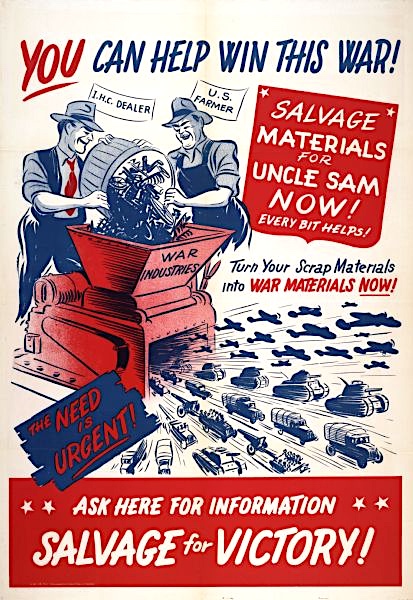 It may seem surprising today, but the humble iron bed played a small yet meaningful role in America’s wartime effort. While they were never as celebrated as ships, tanks, or aircraft, thousands upon thousands of iron beds were removed from homes, hotels, hospitals, schools, boarding houses, and institutions as Americans answered the nation’s call for scrap metal. In their own modest way, antique iron beds became part of the enormous industrial effort that helped the Allies win World War II.
Before the war, antique iron beds had become one of the most popular styles of bedroom furniture in America. Beginning in the late nineteenth century, manufacturers perfected the art of producing beautiful cast and wrought iron designs. Elaborate scrollwork, graceful curves, decorative castings, and durable construction made the antique iron bed an attractive and practical choice for families across the country.
As the twentieth century progressed, iron beds steadily gained market share. Their durability, affordability, and attractive styling helped them replace many of the once-fashionable brass beds that had dominated upscale bedrooms. Consumers appreciated that an iron bed offered much of the elegance of brass while being easier to maintain and considerably less expensive. By the late 1930s, beautifully designed antique iron beds had become a fixture in American homes.
Then history intervened.
On December 7, 1941, the Japanese attack on Pearl Harbor shocked the nation. The following day, December 8, 1941, the United States officially entered World War II when Congress declared war on Imperial Japan. Almost overnight, America’s manufacturing priorities changed completely.
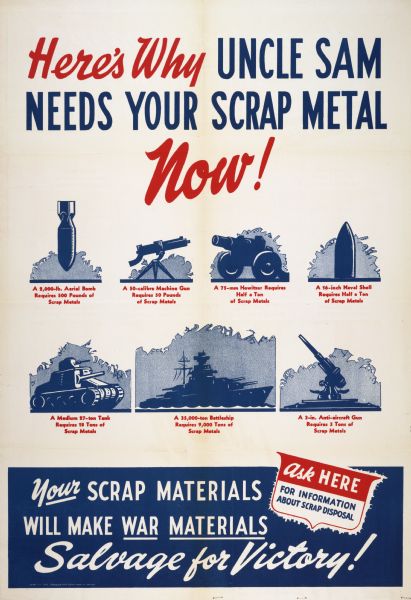
The country faced an enormous challenge. Ships, airplanes, tanks, artillery, trucks, ammunition, and countless other military necessities required staggering quantities of steel and iron. Every pound of metal suddenly had strategic importance.
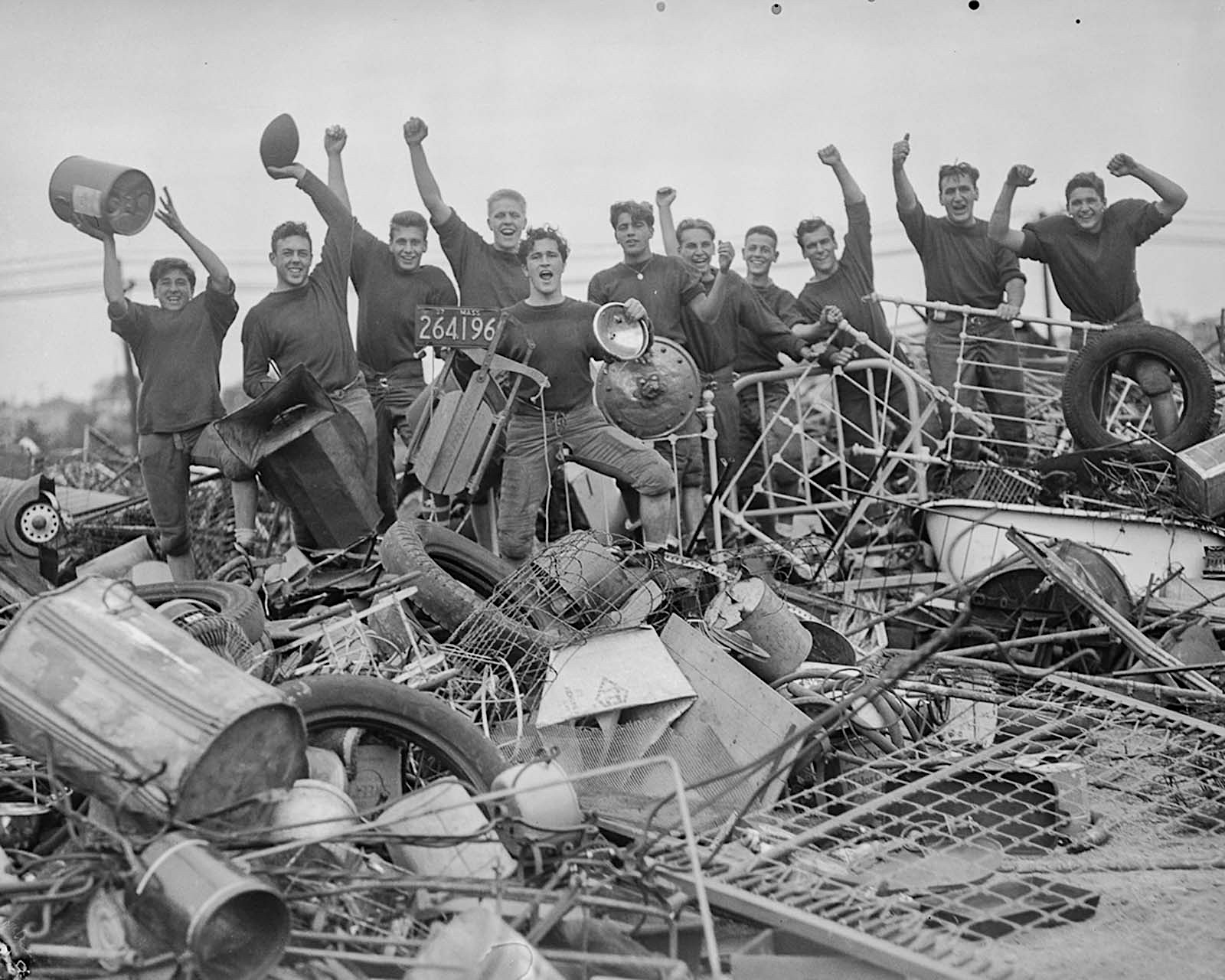
The federal government encouraged Americans to contribute to scrap drives unlike anything the country had ever seen. Communities organized collections of old machinery, farm equipment, fencing, pipes, cookware, tools, bicycles, and virtually any unused metal that could be reclaimed for wartime production.
Among the items that often found their way into these scrap collections were iron beds.
Many older antique iron beds had already served families for decades. Some had been handed down through multiple generations. Others furnished guest rooms, hotels, hospitals, military barracks, boarding houses, schools, and summer cottages. When communities organized scrap collections, these sturdy pieces of furniture represented a substantial amount of reusable metal.
Families proudly donated an old iron bed knowing the material might eventually become part of a military vehicle, naval vessel, or another essential wartime product. Although not every piece of collected scrap was ultimately suitable for direct military use, Americans believed they were helping the war effort, and that spirit of shared sacrifice became an important part of life on the home front.
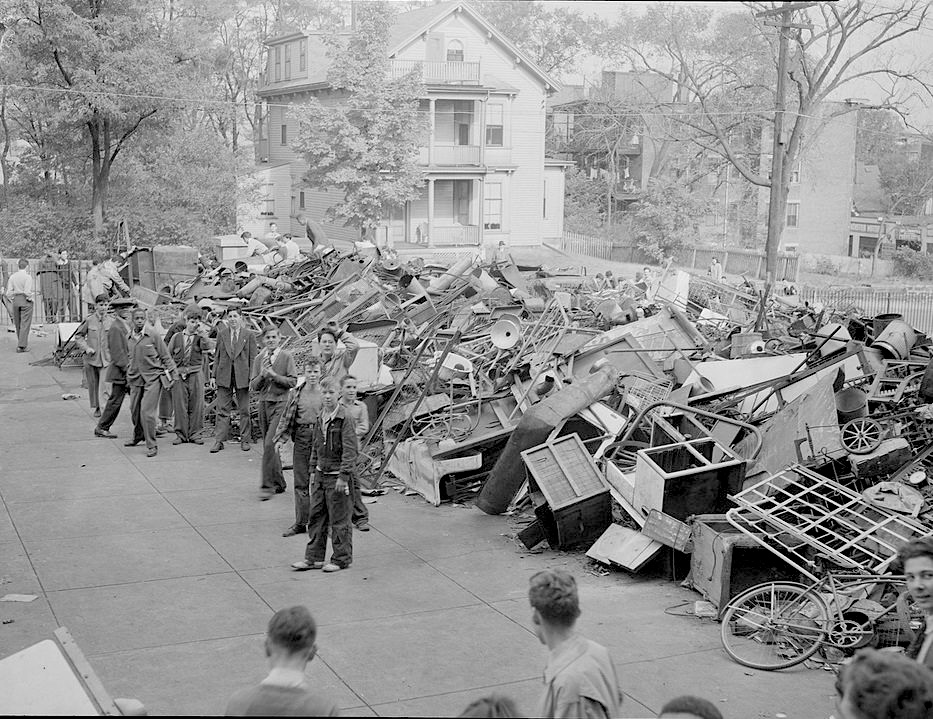
Scrap Metal drives World War II
Looking back today, it’s easy to forget how significant that sacrifice really was. A beautifully crafted antique iron bed was not simply an old piece of furniture. It often represented years of family history. Children had grown up sleeping in these beds. Newly married couples had begun their lives together in them. Generations had relied upon their remarkable durability.
Yet millions of Americans willingly gave up possessions they valued because the nation’s needs came first.
That willingness to sacrifice defined the World War II generation.
For collectors today, every surviving antique iron bed serves as a reminder of those extraordinary years. The beds that escaped the scrap drives often did so by chance. Some remained tucked away in attics or barns. Others stayed in continuous use because they were still needed. Many simply survived because an owner decided they could not bear to part with a cherished family heirloom.
Those fortunate survivors have become increasingly appreciated by collectors and homeowners alike.
Ironically, the end of the war did not bring back the golden age of decorative iron beds.
 By 1945, American manufacturing had changed dramatically. During the war years, factories had adopted new production methods emphasizing speed, efficiency, standardization, and reduced labor costs. Those same manufacturing techniques continued into the post-war economy.
Consumer tastes were changing as well. Mid-century modern design embraced cleaner lines, minimal ornamentation, and streamlined styling. The elaborate scrollwork, ornate castings, and intricate craftsmanship that had defined the classic antique iron bed required far more labor and expense than manufacturers were now willing to invest.
As a result, the richly detailed iron beds that Americans had admired before World War II gradually disappeared from furniture showrooms.
In their place came simpler, lighter, more streamlined iron bed designs. While practical and attractive in their own way, they lacked the craftsmanship and artistic detail that characterized the earlier generations of antique iron beds.
The change marked the end of an era.
Today’s collectors often marvel at the quality found in an original antique iron bed. The heavy castings, graceful scrolls, carefully fitted joints, and exceptional durability reflect a level of craftsmanship that is difficult to duplicate economically today. Many of these beds have already lasted well over a century and continue to provide both beauty and function.
Their survival is remarkable when one considers how many iron beds disappeared during the wartime scrap drives.
Of course, no one can accurately count how many antique iron beds were ultimately sacrificed for the war effort. Records were rarely kept for individual household items, and scrap metal was collected in enormous mixed quantities. But there is little doubt that countless decorative iron beds vanished during those patriotic campaigns.
Each surviving antique iron bed therefore tells two stories.
The first is the story of American craftsmanship during the late Victorian and early twentieth-century years, when skilled artisans transformed simple iron into elegant works of functional art.
The second is the story of national sacrifice. While the soldiers fought overseas, Americans on the home front gave what they could. They planted victory gardens, purchased war bonds, conserved fuel, rationed food, recycled materials, and willingly surrendered possessions that might help support the nation’s military needs. In some small way, many antique iron beds became part of that larger story.
As we celebrate Independence Day, perhaps it is worth remembering that history is preserved not only in monuments and battlefields, but also in the everyday objects that remain around us. Every surviving antique iron bed offers a tangible connection to the families who slept in it, cared for it, and, in many cases, watched similar beds disappear in service to their country.
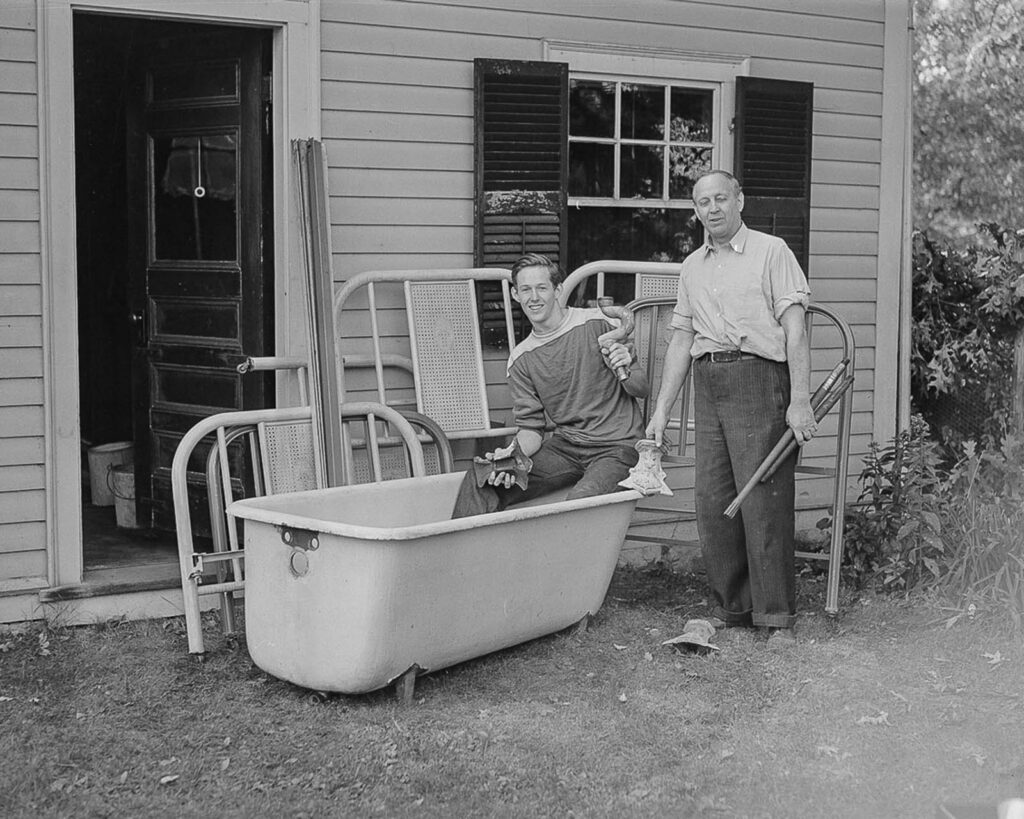
www.rarehistoricalphotos.com
When we restore an antique iron bed today, we preserve more than a beautiful piece of furniture. We preserve a small chapter of American history—a reminder of remarkable craftsmanship, changing industrial practices, and the extraordinary spirit of sacrifice that helped define the World War II generation.
This Fourth of July, as fireworks light the evening sky and we celebrate the freedoms secured through the sacrifices of so many Americans, it’s fitting to remember that even ordinary household furnishings played their own quiet role. Countless iron beds gave way to the demands of war, and although the magnificent decorative antique iron beds of the pre-war years never truly returned to production, the survivors continue to stand as enduring symbols of American craftsmanship, resilience, and patriotism.
Sometimes history rests not only in museums, but also in the timeless beauty of an antique iron bed that has survived against the odds.