Few design elements in antique furniture capture the imagination quite like the heart. Delicate yet bold, symbolic yet practical, the heart motif appears again and again in authentic antique iron beds from the 1800s. These graceful curves and thoughtful details were not merely decorative; they told stories of love, craftsmanship, and cultural values that still resonate today.
At Cathouse Antique Iron Beds, we specialize in original iron beds that have stood the test of time—beds that once anchored bedrooms across America and Europe, and now find new life in modern homes. Among the most frequently admired and requested designs are iron beds featuring the heart symbol. But where did this motif originate, why did it become so popular, and how did it evolve into the iconic designs we cherish today?
Let’s explore the history, meaning, and enduring appeal of the heart symbol in antique iron beds, and why it continues to captivate collectors and designers alike.
The Rise of Iron Beds in the 19th Century
Before diving into symbolism, it’s important to understand the broader context in which metal beds became popular. In the early 1800s, wooden bedsteads dominated bedrooms, but growing concerns over hygiene, durability, and fire safety led to a shift toward iron.
Iron beds offered several advantages:
-
Resistance to pests such as bedbugs
-
Greater longevity and structural strength
-
Improved sanitation, especially in hospitals and urban homes
-
Compatibility with mass production during the Industrial Revolution
By the mid-1800s, antique iron beds were no longer utilitarian objects alone—they had become canvases for artistic expression. Advances in casting and forging techniques allowed craftsmen to incorporate intricate details, including scrolls, floral patterns, geometric forms, and, notably, the heart.
The Heart as a Symbol: Ancient Roots, Enduring Meaning
The heart symbol long predates the Victorian era. Its origins can be traced back thousands of years, appearing in ancient art and symbolism across cultures. While the stylized heart shape we recognize today evolved gradually, its meaning has remained surprisingly consistent.
Historically, the heart symbol represented:
-
Love and affection
-
Union and marriage
-
Emotional and spiritual connection
-
The center of life and vitality
By the 18th and 19th centuries, the heart had become a widely recognized emblem of romantic love. As vintage beds were increasingly designed for private domestic spaces rather than shared sleeping quarters, the symbolism of the heart found a natural home in bedroom furniture.
When the Heart Appeared in Antique Iron Beds
The heart motif began appearing regularly in iron beds during the mid-to-late 1800s, particularly in Victorian America and Europe. This period emphasized sentimentality, domestic comfort, and emotional expression—values reflected in everything from architecture to furniture design.
Heart-adorned antique iron beds were especially popular in:
-
Newlywed households
-
Guest bedrooms meant to convey warmth and hospitality
-
Rural and small-town homes where craftsmanship held deep value
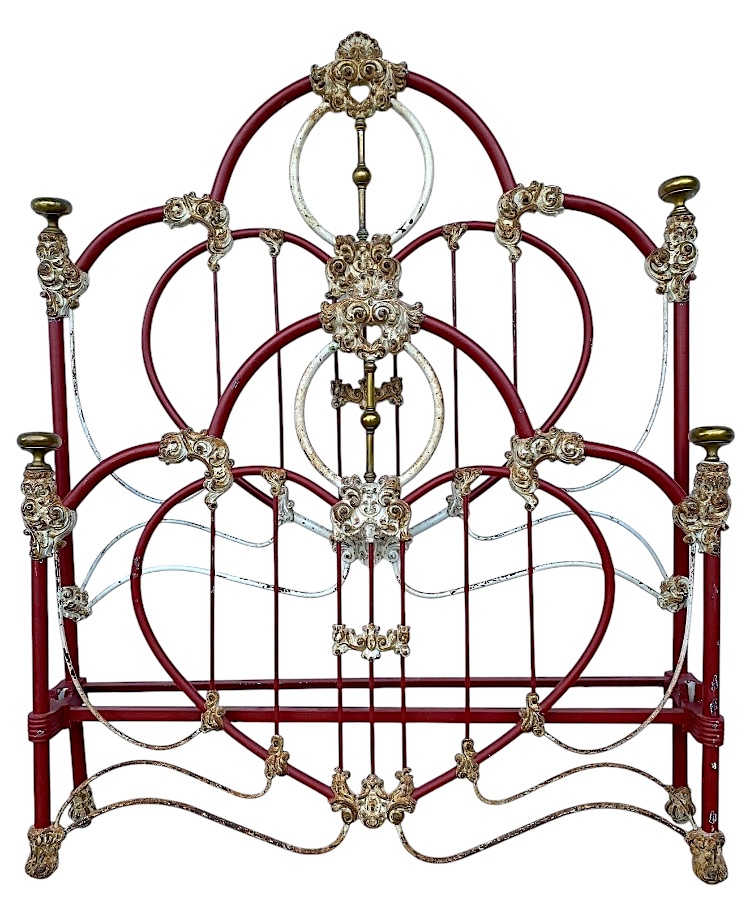
In many cases, the heart symbol was incorporated into the headboard, footboard, or both. Some designs featured a single prominent heart, while others displayed repeating heart patterns formed through scrollwork or casting.
Why the Heart Symbol Became So Popular
Several cultural and practical factors contributed to the popularity of heart motifs in metal beds.
1. Victorian Romanticism
The Victorian era celebrated romance, courtship, and marriage. Furniture reflected these ideals, and antique iron beds became symbols of domestic stability and affection. The heart was a visual shorthand for love and emotional security.
2. Accessibility Through Industrial Production
As ironworking techniques advanced, decorative elements became more affordable. Middle-class families could now purchase iron beds with elegant motifs that previously might have been reserved for the wealthy.
3. Personal Expression in the Home
Unlike earlier centuries, the 1800s placed greater emphasis on individuality and personal taste. Choosing a bed with a heart design allowed homeowners to express sentiment without extravagance.
Variations of the Heart Motif in Iron Beds
Not all heart designs were the same. In fact, the variety is part of what makes collecting vintage beds so fascinating.
Open Hearts
Many antique iron beds feature open heart shapes formed by curved rods. These designs feel light and airy, symbolizing openness and connection.
Double Hearts
Some iron beds include paired hearts, often interpreted as representing partnership or marriage. These are especially sought after by collectors and couples furnishing shared spaces.
Abstract Hearts
In certain designs, the heart is subtly suggested rather than overtly displayed. Scrolls and curves intersect to create a heart shape only visible upon closer inspection—a hallmark of skilled craftsmanship.
Regional Influences and Design Evolution
The heart symbol evolved differently depending on region and manufacturer.
-
American iron beds often emphasized bold, straightforward heart designs, reflecting practicality blended with sentiment.
-
European antique iron beds, particularly those from France and England, tended to feature more ornate interpretations with delicate detailing.
As the 19th century gave way to the early 1900s, tastes began to shift. Art Nouveau and later Art Deco styles introduced new motifs, and the heart became less dominant. Still, its legacy remained firmly embedded in the world of metal beds.
Why Heart-Motif Iron Beds Are Still Loved Today
Modern homeowners and designers continue to seek out antique iron beds with heart symbols—and for good reason.
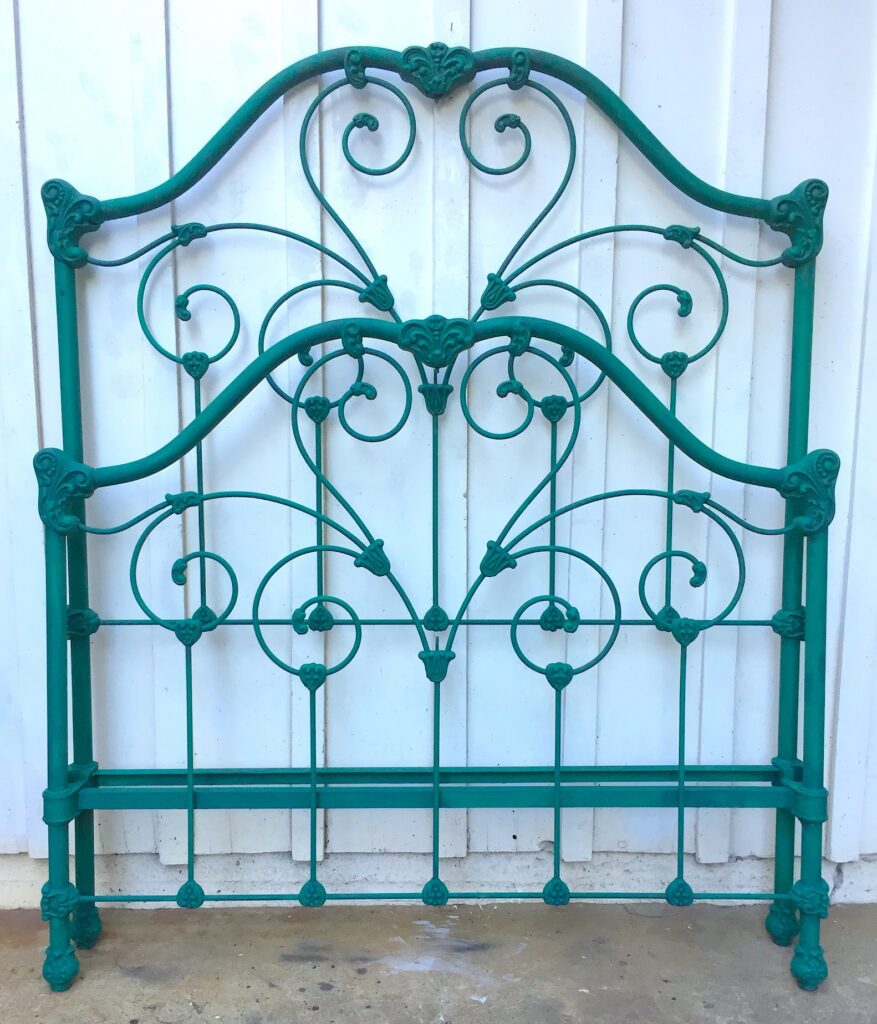
Timeless Romance
The heart motif never truly goes out of style. Whether placed in a farmhouse bedroom or a contemporary loft, these iron beds add warmth and character.
Authentic Craftsmanship
Each original iron bed tells a story. The hand-worked details and aged patina cannot be replicated by modern reproductions.
Emotional Connection
Many customers are drawn to heart-design vintage beds because they evoke nostalgia, comfort, and a sense of history—qualities increasingly rare in mass-produced furniture.
Collecting and Caring for Antique Iron Beds
At Cathouse Antique Iron Beds, every bed we sell is authentic and carefully restored with respect for its original craftsmanship. When selecting an antique iron bed with a heart motif, it’s important to look for:
-
Structural integrity
-
Original casting or forging details
-
Period-appropriate finishes
With proper care, these metal beds can last for generations, continuing to serve as both functional furniture and meaningful heirlooms.
A Symbol That Endures
The heart symbol in antique iron beds is more than a decorative flourish—it’s a reflection of human connection, artistry, and history. From the 1800s to today, these beautiful iron beds have carried messages of love and comfort across centuries.
Whether you’re drawn to their symbolism, their craftsmanship, or their timeless appeal, heart-motif vintage beds remain some of the most cherished examples of antique furniture. They remind us that even the most practical objects can be infused with meaning—and that true beauty endures.
At Cathouse Antique Iron Beds, we are proud to preserve and share these remarkable pieces of history, shipping authentic antique iron beds to homes across the country, where their stories continue.